EA’s Scrapped Dead Space 3 Would Have Been AMAZING
RIP Visceral Games.

EA doesn't have a great track record with threequels. At the start of the decade, it seemed as though every third entry in once promising series were completely crashing and burning, and one that still stings today is Visceral Games' Dead Space 3.
While not garnering the same fan backlash as Mass Effect 3, this final hurrah for EA's innovative survival-horror franchise came out to lukewarm reviews and weak sales, with many fans and critics agreeing that the third title had strayed too far away from what made the original two instalments so electrifying. It wasn't bad, but something somewhere had gone wrong, and series had lost its identity.
However, what Dead Space 3 ended up being was not the game the creators initially intended to create. Thanks to a great, candid and wide-ranging Eurogamer interview with the creative director on the project, Ben Wanat, as well as a bunch of other tidbits revealed in the years since launch, it's clear this troubled threequel was another casualty of the classic war between a developer's desire to do something creative, and a publisher's need to make as much money as possible.
Making Dead Space Scary Again

The Dead Space 3 we got, while mechanically satisfying and with a few great ideas (those sections where you were zooming through space and exploring wreckages of your own violation were particularly inspiring,) was clearly chasing a more mainstream audience. The moody space stations of previous titles had been swapped for bright snowy expanses, there were way more enemies, ammo was plentiful and, of course, players could now team up with a buddy to drink some mountain dew and blast once-terrifying monsters away together.
The developer's original vision, however, was much more in line with the horror pioneered in the very first game. The interview with Eurogamer confirmed that, despite edging towards all-out action with the second game, the third was set to fully embrace its horror roots by diving deeper into the psyche of Isaac Clarke.
That's because, after going through everything he did, and suffering through the mental manipulation of the alien markers linked to the necromorphs, everyone's favourite engineer is no longer the man he used to be. This title would have been all about diving into this element of the character, with Wanat mentioning that 'dementia' would have been a huge theme, and his psychological issues would manifest in game.
This approach would have been an awesome way to maintain the scares in this third instalment. The franchise's signature enemies, the necromorphs, while once terrifying had become familiar after players had mowed hundreds of them down. And, as Resident Evil's zombies can attest to, familiarity breeds contempt, and by going down a more psychological route the developers were attempting to make Isaac's personal demons as scary as the real ones he was facing off against.
As well as being an opprotunity to terrify players, it would have also provided a great continuation of Isaac's own story arc. As mentioned, hallucinations and his fractured psyche played a major role in the first two games - with the haunting manifestation of his dead girlfriend Nicole providing some of the most memorable scares of the whole series - so not only would doubling down on this element provide a new avenue for scares, but it would tie neatly into the themes of the previous instalments...
Solving The Co-Op Problem
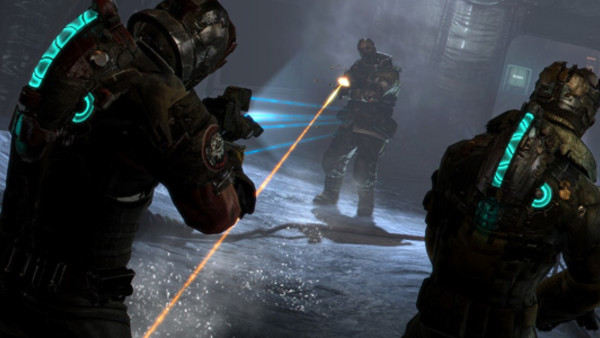
In their desire to open the game up to a wider market though, EA had a mandate that this sequel needed to include a multiplayer element. Reports vary on how the team reacted to this, with some suggesting they landed on co-op early on, while others suggest it was a late addition. No matter when it was concieved though, Visceral had a genius way to include co-op and still make a terrifying horror game.
Now, the closest analogue at the time for this shift was of course the Resident Evil franchise. The fifth and sixth main entries in that series added co-op, and it came under heavy scrutiny. In fact, it's the one feature many point to as being emblematic of publisher Capcom's desire to make the franchise appeal to a more mainstream action audience by sacrificing its horror roots.
Even worse, the secondary characters in these titles never felt like more than cyphers for a player two. Sheva was wholly under-utilised in Resident Evil 5, and Resi 6's secondary heroes fared even worse. I'd wager you can't remember most of their names.
To circumvent these issues and prove to players that co-op wouldn't sacrifice what they loved about Dead Space, Visceral were opting for an asymmetrical experience. Wanat explained that though the two players would start on level footing, they'd both experience alternate versions of the same set-pieces or story beats as the title progressed. Framed as hallucinations, one person might turn a corner to see a bloodbath in a hallway, while the other would see nothing noteworthy.
Shadow Isaac Twist
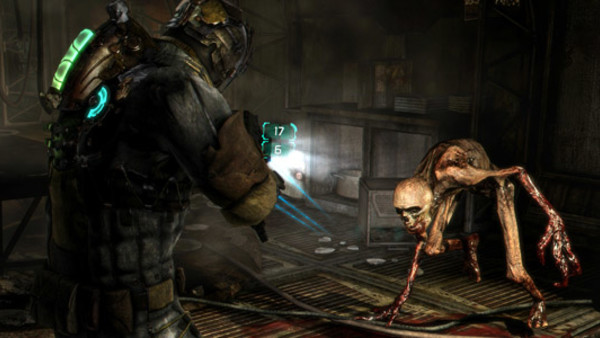
The idea was to get both players on edge, questioning what was and wasn't real, and wondering why they were seeing different things. To circumvent the power that comes with having another human being by your side, these discrepancies would sow doubt and distrust in the partnership, while making for an unpredictable horror experience. Just because one player might be safe didn't mean both would be.
Even better, this would have been capped off with a payoff directly linked to the story of Isaac's psyche. A late game twist would reveal that the second player wasn't just another character joining Isaac on the mission, but rather a manifestation of his own mind, dubbed "Shadow Isaac" by Wanat in the Eurogamer interview.
This would have been a huge reveal, and while it's unclear how the game would have progressed after this - whether the cooperative relationship would be inverted or not - it would have been such a Dead Space move and proven that co-op could be done well in this sub-genre.
Of course, this was Visceral's plan, and they hadn't factored in EA. According to Wanat, the publisher got cold feet over the whole dementia idea and scrapped it. Though the devs wanted to return to the series' horror roots, EA pretty much wanted anything but that. In fact, there's an argument to be made that Dead Space as a series represented everything the publisher didn't want from its games...
"Single-Player Games Are Dead"

For one, the franchise was kind of born during a period where EA was having a bit of a breakdown. After being named the worst company in America and criticised by fans for relying on the same old tired franchises, executives greenlit a bunch of new IP to prove that it still had passion for creativity. This boom resulted in some great games, including Mirror's Edge, Skate and Dead Space, with the latter being the most successful. However, it is telling that all three franchises are currently on ice.
Even from the off, it was clear that EA wanted to morph Dead Space into something it wasn't. As mentioned earlier, even the second game edged towards action over the slow approach of the first, and it also featured a huge mandate from the company: multiplayer.
Though they're not shy about the fact now, even a decade ago EA executives were making it clear that they thought single-player games were dead. Their worst nightmare was something like Dead Space that could be played solo, finished in a weekend, and then traded in. In a 2010 interview with Develop, then EA Games label president Frank Gibeau made the claim that single-player only titles weren't a viable model, saying: "I think that model is finished. Online is where the innovation, and the action, is at."
This directly impacted Dead Space 2, which had to crowbar in a competitive multiplayer mode to tick a box. Even Wanat agrees that nobody came to the game for this, and it wasn't treated as a vital component by either the devs or players.
Consequently, wanting to integrate multiplayer into the core experience in Dead Space 3, they came up with the asymmetrical approach. This felt like a more natural choice as the co-op idea wasn't something totally forced on them - they had tried and failed to implement it in the first game, with the executive producer on that title saying the experiment failed because "it was way too in development, [and] it didn’t make sense with the story."
"Horror Games Don't Sell"

The issue is, though, EA didn't just want multiplayer this time around, they wanted multiplayer that could sell. It's an infamous part of gaming history that the company essentially set the third game up to fail, making it clear before launch that it needed to sell a minimum of five million copies to be considered worthwhile. To put that number into context, the far more mainstream Mass Effect 2 only sold four million copies for EA, while the highest-selling Resident Evil game is Resi 5 with just over 7 million copies sold, and that's a sequel that benefitted from nearly two decades of audience building.
To hit that target they needed the game to appeal to as many people as possible, but they couldn't market the developer's original idea for Dead Space 3. After all, the entire appeal of its co-op was built around not knowing what was real and what wasn't, as well as a late game twist. Its biggest draw was something that would be butchered if revealed in trailers.
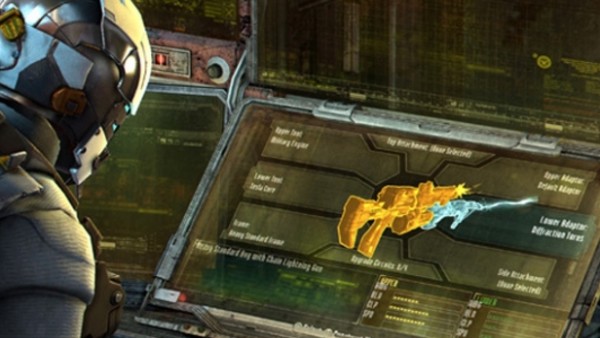
In the end, according to Wanat, EA opted for something far more conventional. This asymmetrical framing was all but ripped out, while Shadow Isaac was replaced with a generic soldier called Carver. It's unclear how late in development this was, but considering how little this second protagonist factors into the plot, often disappearing during pivotal moments, it's not unfair to guess that it was quite late. Likewise, other systems were retrofitted to suit EA's needs, including altering the crafting to include microtransactions for the raw materials.
The game was also made to be more action-focused, under the assumption that horror games don't sell. Apparently, that was a fact lamented within Visceral itself. In 2017, an ex-Visceral level designer explained in an interview: "Horror games in general are expensive to make and hard to sell," seemingly backing up EA's claims.
However, the 4 million copies Dead Space 2 sold is nothing to sniff at, and the justification probably shouldn't be "horror games don't sell" but rather "horror games don't sell as much" as other genres.
Visceral Games' Demise
Either way, these decisions wouldn't only all but kill Dead Space 3, but Visceral Games as a whole. After this, the writing was on the wall: EA wasn't interested in the kinds of games the studio both wanted to make and were good at making.
After producing Battlefield Hardline, the team was put onto a Star Wars project, renewed with Uncharted's Amy Hennig joining the company as a creative director. Sadly, their philosophies continued to rub against EA's, and the publisher canned the project and shut down the studio, which according to a thorough Kotaku post-mortem was partly because the game wasn't a multiplayer experience or a live service, but rather one closer to the single-player stylings of Dead Space.
The demise of the studio stings even more because there were also interesting plans for a Dead Space 4, again revealed by Eurogamer in 2018. This canned follow up would see humanity on the verge of extinction, as players scavenged much-needed resources from ruined space stations and overrun ships, building on similar well-received sequences in the shipped version of the third title.
Dead Space was a great franchise, but one clearly made by the wrong publisher. The original creator has argued that single-player titles like it are more viable in the current climate, but the reality is it was never a fit for EA. Thanks to these reports though, we can at least imagine what could have been.
Watch Next
The Ultimate Mass Effect 1 Quiz: How Well Will You Do?
