Every Iconic Bethesda Game Ranked From Worst To Best
An argument for the ages: The Elder Scrolls or Fallout?
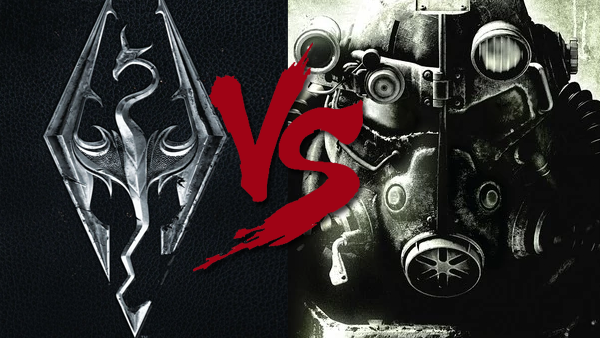
Even though they burst onto the scene way back in the early 1990s, Bethesda Softworks have only gone from strength to strength as the years have worn on. Growing to prominence as the house that The Elder Scrolls built, the iconic development studio has since picked up a myriad of exciting properties, begun developing new original games and become one of the best publishers working in the industry.
Still, while the Bethesda of today is known just as much as the company who saved classic franchises like Doom and Wolfenstein and continue to pioneer new IP, as a developer their core focus remains centred on creating epic, freeform RPGs.
Likewise, although their approach to gameplay and character customisation may have changed as trends came and went, the entrenched philosophies of the studio, based all around giving players the most diverse, dense and unique worlds to be let loose in, remains the same.
This core approach has cemented every single release the team have put out in their long history as a classic, but with over twenty years of stellar titles and two world-changing franchises to choose from, only one game deserves to come out on top...
7. The Elder Scrolls: Arena

Not originally intended to be an RPG at all, the first Elder Scrolls, like its title suggests, was supposed to be focused on tournament combat, without any of the exploration, side missions or role-playing the franchise would later become known for.
This was eventually changed of course, but the sudden evolution of the game's direction led to an end product that was a muddled, if ambitious, attempt at a first-person fantasy RPG.
Like most first attempts, you can see the strands of DNA that would eventually lead Bethesda to create something epic and world-changing, but the fully-formed idea of what The Elder Scrolls would later turn out to be isn't quite there in this release.
Be it because of the limitations of the technology of the time or simply from the lack of a strong enough focus on the mechanics the developers wanted to explore, Arena is a promising title that, unlike later games in the series, doesn't really hold up today.
6. The Elder Scrolls II: Daggerfall

With development beginning immediately after the first game wrapped up, Bethesda's role-playing ambitions that didn't make it into Arena were finally realised in their entirety in Daggerfall.
Set in the Breton homeland (aka the least popular race in Elder Scrolls history), the second game in the series began to build the structure of the RPG in a way that finally allowed its disparate mechanics to coalesce into one game-changing experience.
Role-playing was at the heart of the sequel, and every action completed by the player rewarded this style of play, right down to the new XP system. Not only were you allowed to choose your class in Daggerfall, but players could finally tailor their class to their own playstyle, for the first time in the franchise being able to pick and choose which abilities you wanted to improve and which you didn't care about dropping.
All of the staples of The Elder Scrolls were confidently experimented with in this sequel, and it made for a pretty damn good RPG that would pave the way for even more amazing games to come.
5. The Elder Scrolls IV: Oblivion

Oblivion was the first game to break Bethesda into the mainstream, becoming one of the most iconic releases of the Xbox 360 generation. Creating a revolutionary dynamic and lifelike world (despite the strange crushed-up faces of the NPCs), the Imperial City and its surrounding areas were more than just technical powerhouses, being packed with quests to pursue, people to meet and guilds to join.
The freedom found in the title set the precedent for an entire generation going forward, striking a chord with gamers that publishers have attempted to capitalise on ever since.
Despite how much it did for the developers as well as open world games in general though, the sequel itself is lacking when compared to other entries in the franchise.
The world, the quests and the characters are all there, but it lacks the sense of exploration and the rewards that promote venturing beyond the beaten path which would come to define Bethesda's more contemporary releases.
4. Fallout 4

Despite being the most anticipated game Bethesda have created so far, Fallout 4 fell off the radar soon after it released in October 2015. You can sort of tell why too; the long-awaited sequel isn't a bad game by any means, but it wasn't the paradigm shift most players expected after the seven-year wait following Fallout 3.
Very serious problems dragged the experience down, with the shift to a fully-voiced protagonist and a focus on Minecraft-esque crafting and building leading many to believe the franchise had lost the core of its identity that made it so special.
Still, while the game was certainly over-stuffed, that doesn't mean it wasn't also an incredibly stellar experience. The shooting and exploration were better than ever, and the densely populated and newly-colourful wasteland was a great-if-risky change from the drab desolation of third game and New Vegas' sandboxes.
So while it's easy to point towards its faults, players shouldn't forget that Fallout 4 is a deeply rewarding sequel, and shouldn't be marked down because of what it could have been, rather than what it ended up being.
3. The Elder Scrolls V: Skyrim

Although there's been a bit of a backlash against Skyrim since it first released (probably not helped by Bethesda continuing to sell different versions of the sequel to players who already own about five copies of it to begin with), there's a reason why it's the most popular game the developer has ever made.
That's not to say the criticism aimed at the title isn't valid, as although the combat and gameplay are tight, the complexity of the quests don't hold a candle to other entries in the franchise, making Skyrim much more of an action game than it is an RPG.
What the sequel lacks in quest structure and role-playing options though, it more than makes up for in its sense of adventure. Few games, Bethesda-developed or otherwise, have captured the thrill of exploration that this fifth game nailed so effortlessly. Every new landmark you came across had a story to tell, and unlike the copied-and-pasted dungeons of previous releases, the locations remained vibrant and distinct throughout.
Sure, there were occasions where decapitating the same skeletons for the hundredth time started to feel old, but these lulls were always rendered insignificant when you were taking in the wonder of the world under the glow of Skyrim's beautifully rendered night skies.
2. The Elder Scrolls III: Morrowind

Although Skyrim was a bona-fide phenomenon and Oblivion changed the shape of gaming forever, fans of the Elder Scrolls only have one real favourite: 2002's Morrowind.
The moment where Bethesda really found their stride as a development team, the third game in the classic franchise pioneered many of the staples and conventions that still crop up in the studio's RPGs today.
More than being significant only for its status within Bethesda's own history though, unlike later games in the series, Morrowind was a true role-playing experience through and through, with an emphasis on exploring the vibrant world the team had created in your own way rather than following one waypoint marker to the next.
Some would argue that the team has long since moved away from this style of game design, and even jumping back into the seminal sequel now, over a decade after it first released, you can see why so many people pine for Bethesda to make another title in the same vein as this incredible early effort.
1. Fallout 3

The first time the developers were really able to spread their wings and try something new, despite being reductively written off as "Oblivion with guns", Fallout 3 was a huge departure for Bethesda.
Maintaining the same engrossing quest structure and ostensibly the same rhythm of Oblivion, Fallout 3 felt much better to play thanks to the variety of enemies, the ridiculously gory combat and the ability to genuinely live and survive in this dangerous post-apocalyptic landscape.
Likewise, although The Elder Scrolls is a series full of distinct worlds with their own sense of place, neither the snowy mountain villages of Skyrim nor the urban areas of the Imperial City hold a candle to the character and personality found in the ironically desolate wastelands of Fallout 3.
Just hearing the opening bars of "I Don't Want to Set the World on Fire" by the Ink Spots is enough to transport players back to the first time they booted the game up. Fallout 3 was a genuine phenomenon, and although it may not be the most technically polished or consistent game Bethesda have released, it's the one that by far left the biggest impression.