Far Cry Primal Review: 10 Critical Reactions You Need To See

The riskiest Far Cry yet; did Ubisoft successfully bring a knife to a gunfight?
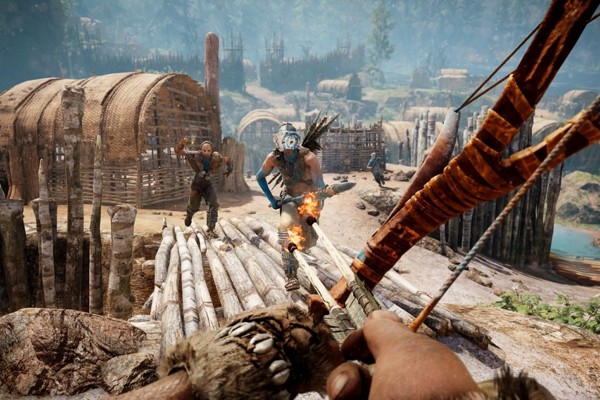
Changing everything fans knew and loved about Far Cry was always going to go one of two ways. Luckily for the most part, Far Cry Primal is a solid entry in the franchise but, in typically iterative Ubisoft fashion, thanks to a lack of major gameplay changes you can probably predict how the majority of review reactions are going to play out. Primal's animation set is by and large reused from the older games, which isn't necessarily a bad thing. Unlike Assassin's Creed, Far Cry is relatively new to being frequently trotted out and, for parts three and four in 2012 and 2014 respectively, Ubi established a surprisingly high bar of quality. One that the gaming public is still very much enjoying. They did that by sticking to their guns, by reusing assets and gameplay features to either a pleasing or off-putting degree, and it was with Primal that we were finally going to see a much-needed shakeup to not only the core formula, but also all the modern trimmings you associate with the series. Has that paid off? Well, yes and no. This is definitely 'more Far Cry', but whether or not you'll consider it better than the previous instalments will come down to the following 10 points...

10. No 'Big Crazy Villain' This Time

"Unfortunately, while Far Cry 3 and 4 both had charming, charismatic villains as their centrepiece, Far Cry Primal has no characters quite as memorable. The enemy leaders are only glimpsed in a few select cutscenes, so there€™s no Vaas or Pagan Min to get attached to." - Paul Tassi, Forbes"Primal falls flat here; neither of Primal€™s main villains are a patch on a character like Vaas. A considerable letdown for a series that€™s carved out a reputation for fascinating and nuanced bad guys." - Luke Reilly, IGN Personally, this is a massive sigh of relief. Far Cry was in danger of being too formulaic with even its narrative, as although you can apply the 'if it ain't broke' mentality to game mechanics, we don't want to see the same story setups time and time again. Granted, Pagan Min was a fun enough character and carried FC4 very well, but he was not only no Vaas, but also the last time we collectively thought "Okay Ubisoft, you can do this 'big crazy villain' shtick one more time, but that's it." Luckily, they've listened. The story is now split over focussing your attention on resource management, before deciding how best to tackle two warring tribes baying for your blood. To that end, there are tribal leaders heading up these factions, but the majority of their screentime is reconciled to fleeting appearances in cutscenes.

9. Your Character Is A Blank Slate

" is not a framework that allows for much character development: you start out a tough, capable caveman and end the game a somewhat tougher, more capable caveman with a bigger rucksack." - Edwin Evans-Thirlwell, Eurogamer."We also know he has a beard because, well, you can see it in his little icon on the in-game map screen. Unfortunately, that€™s more or less all we ever learn about Takkar and, as such, he isn€™t an especially engaging or interesting protagonist." - Luke Reilly, IGN Another point of contention fans raised over the years was the idea of fulfilling a particular role as a protagonist. The older Far Crys flitted between everything from super-powered Predator-esque warriors to interchangeable heroes, douchy gap year students and even prodigal sons. This time round, they've dropped all of that. Sure, you're still destined as 'the chosen one' by your tribe and designated as the only person who can truly commune with the animals (otherwise, you wouldn't have a game), but for the most part, it appears Takkar is a blank slate - a return to the protagonist of yesteryear, one that lets you project your own characteristics and drive onto their otherwise foundational motivations.

8. You (Probably) Won't Miss The Guns

"There€™s something very gratifying about the weight of the spear as you hurl it into an enemy and watch them launch backward from the impact. I even speared people into walls, something I didn€™t realize was possible until the end of the game." - Paul Tassi, Forbes."The bow and arrow is more satisfying than any gun from Far Cry 4" - Simon Miller, VideoGamer.com (Youtube Review) If you were playing Far Cry 'right', which is to say, if you were focussing on being stealthy, the bow and arrow would already be your weapon of choice. For Primal, this makes up an offensive trident of weapons alongside a club and spear, the latter of which will become your go-to pokey-stick of choice as you dodge and weave to hit enemies. It's worth pointing out that various reviewers have noted the choice to go full-on melee combat feels like playing such a class in Skyrim, which for better or worse means battles are mad scrambles of twitchy animations, seeing both sides attempt to skewer each other first. It all comes down to how these things feel when they connect, which if you role-play a little and take out settlements stealthily (read: 'realistically'), means you're rewarded with meaty animations and a game that prioritises tactics and thoughtful insertion methods.

7. Frame-Rate Holds Together

"The framerate is solid, with very little slowdown even during the more hectic moments." - Talal Musa, Standard"The Dunia 2 engine is comfortably optimised on PS4 to let you charge around without any distractions like pop-in, streaming all textures, shadows and plants with no visible hitches" - Eurogamer, Thomas Morgan How rare is this? A triple-A game, running smoothly?! Never let it be said Ubisoft don't learn from their mistakes, and granted Far Cry's engine has been solid for years now - but it's always worth pointing out that performance-wise, FCP holds together even in its most hectic moments. Texture-pop is also something that can ruin an exploration-heavy game (just look at Firewatch), and with a huge focus of Primal being to wander place to place on-foot, Ubisoft needed to ensure that was going to be as pleasurable as possible. Luckily, draw-distance is impressive, character models are detailed and the world itself streams in at a very high level of proficiency.

6. Very Formulaic - Can Feel Like Busywork
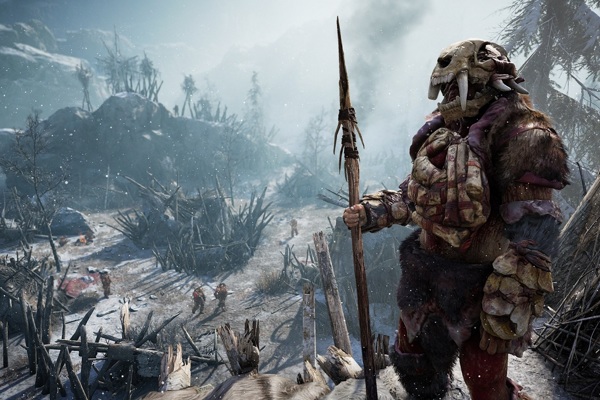
"Essentially you find a bunch of elite recruits for your tribe (a hunter, a trapper, etc) and end up doing missions for them all over the map. There are a few missions which further your specific fights against the Izila and the Udam, but there is no direct €œstory path€ that€™s immediately apparent. The game even ends with two separate final battles, one against each tribe, which can be done in whatever order you see fit. - Paul Tassi, Forbes"Takkar must work alongside several allies to gain the abilities he needs to defeat the leader of each tribe. Unfortunately this elevator pitch is also the entire plot synopsis, because that€™s pretty much all there is to Primal." - Luke Reilly, IGN"[...] Crafting and building feels essential from start to finish. Whether that's sculpting a new arrow for your bow, or smashing together a new club to whack someone in the face with, collecting resources is as important as doing missions." - Simon Miller, Videogamer.com The one thing that prevented Mad Max from truly hitting home (despite launching on the exact same day as MGS V), was that its narrative structure was intentionally set up to focus on side missions, exploration and grinding, both loot and progressional. Basically, you know how in past Far Cry titles, we'd rather take out scores of outposts than do any of the story missions, just to unlock the world map? Ubisoft listened to that, too. They've made a game that's specifically about doing the 'busywork'; all the little things that thousands of us indulge in anyway. This is almost the exact same approach as The Division, but where that game's beta fell down was in just how restrictive its basic gameplay feels, the 'standard Far Cry feel' is an engine bursting with options and things to see and do.

5. Building A Settlement IS The Game

"Serving as the game's point of progression, focusing on these RPG-like trees and increasing the population continually offers more rewards. These could be your standard level-up boosts €“ more health, better speed etc. €“ but it also ties into what animals you can tame, what extras are available to you and, quite nicely, how many resources you have flowing in your direction €“ every time night turns to day you'll be given a 'reward stash'. The bigger your miniature home, the more benefits you'll get." - Simon Miller, Videogamer.com

"By recruiting the aforementioned Wenja - such as the shaman Tensay or the warrior Karoosh - you'll unlock new items, weapons, and abilities. When you look past the facade, it's essentially a new skin for the franchise's traditional upgrade structure. But it lends character to what could be a lifeless system." - Mike Mahardy, Gamespot

To that end, Far Cry Primal is a more relaxed affair in terms of following a stringent narrative. Where Far Cry 3 had you attempting to find your missing friends and survive on the island, and FC4 pegged you as a returning son of the Ghale bloodline, freeing the people from the oppressive Pagan Min, Primal just wants you to see your own tribe thrive in the wilderness.

Sure, there are enemies and other tribes are doing the same, but it feels like a wise choice for Ubisoft to embrace the fact that the most fun you have in Far Cry is always away from the main missions, wandering from point to point and seeing which dynamic events trigger along the way.


4. World Design And Art Direction Is Outstanding

"The detailed character design and costumes on these allies is uniformly excellent, though, and they€™re covered in cracking facepaint and nasty scars and adorned with various furs, bones, and sticks." - Luke Reilly, IGN."When night falls on the rolling temperate landscape of Oros, wolfpacks can be seen ghosting through distant glades, strafing herds of deer. Bears wrestle over territory. Jaguars are speedy, writhing silhouettes in the tall grass, dangerously easy to miss." - Edwin Evans-Thirlwell, Eurogamer When Ubisoft decided they were going to fully re-skin the entire world around you to distance themselves from the relatively modern time periods of all the previous entries, you best believe they needed to knock this aspect out the park. Luckily, aside from some divisive dialogue implementation (more on that later), they've very much done so. Every reviewer mentions that the luscious scenery simply bursts with luscious vegetation, arching rock structures, powerful spraying waterfalls and intervening bodies of water. It's very much a nature-first approach, the picture painted one of a furtive humanity only just making our mark on the world, building various settlements and dealing with the realities of nature in between.

3. Beast Master Skill Tree Unlocks Different Gameplay Abilities
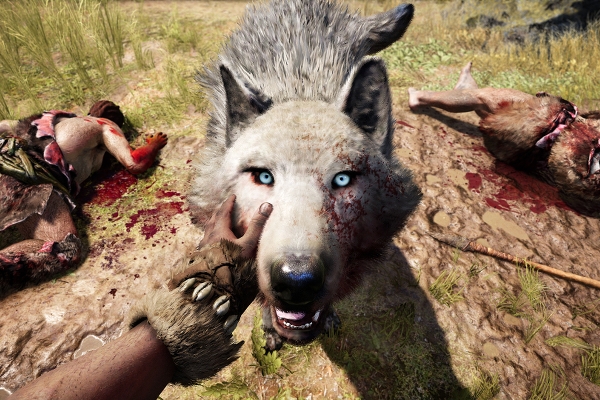
" allows you to tame the creatures in this ancient setting, recruiting them to hunt, fight, and travel with you. Learning the unique abilities of each animal, and taking the time to experiment with them, is essential for your survival. After a while, your predator allies become an extension of yourself. They become the powerful weapons otherwise absent in the the abrasive wilderness." - Mike Mahardy, Gamespot."[...] All the available beasts have certain individual strengths. The leopard will auto-tag nearby animals, and the badger can revive itself from death. Takkar€™s omnipresent owl companion - a deadly, drone-like creature that I relied on often and that can be trained to attack and kill enemies itself, as well as drop pots filled with deadly bees, toxic gas, or fire - is also exceptionally useful: don€™t forget about it. - Luke Reilly, IGN Furthermore from the 'man vs. nature' ideology, it appears the only way to go is to become one, and as such, Ubisoft have clearly been playing Metal Gear Solid V, letting you choose to harness the powers of a number of different animal companions. This is the big standout new feature of Primal, and although the abilities themselves aren't necessarily game-changing, it's great to see small modifiers tweak and improve the base gameplay loop we're already familiar with. What you'll find is Ubisoft have found new and unique ways of ensuring the modern elements of the formula translate across to the olden era - which turns into the biggest core appeal and reason to play. The owl you'll gain access to is essentially a better-functioning pair of binoculars, letting you fly ahead of Takkar, tag enemies and survey the landscape before you head in. This crossover and modifying of functionality will most likely be the biggest boon to Primal's success and its individuality in comparison to the past games - but will also put off those who revelled in the modern aspects of those same games.

2. Animal A.I. Can Ruin Your Approach
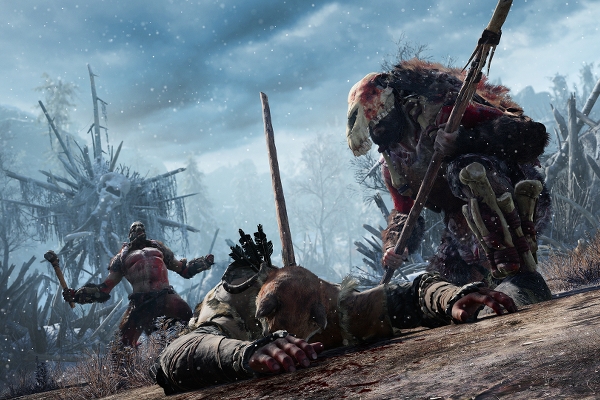
"They can get a stealth kill or two for themselves, but as soon as you stand up for even half as second and get yourself out of stealth mode, wherever they are, they will do the exact same thing, and either attack unprovoked, or get spotted and put the whole area on high alert." - Paul Tassi, Forbes The idea of baiting animals in to attack guards will always be one of the most fun ways to clear an outpost, but Forbes' review states that the very nature of having a deadly creature by your side will scupper any stealthy tactics by default. More of often than not, the animals supposedly under your control will get spotted, as the above reviewer, Paul Tassi, notes they are very much not "Ellie from The Last of Us" in terms of being invisible whilst the player character is. This will guarantee some people will have a terrible time trying to play Primal in this way, as its stealth mechanics, kills and tactical options befit an experience where you hang back, analyse the situation and act accordingly. It always feels supremely annoying when things go sour in any stealth game, forcing you to abandon a game plan in favour of swinging for the fences until the all clear is given again. If you don't mind just rolling with whatever the A.I. scripts can throw at you, it won't be an issue, but for the rest of us, this is going to become a major annoyance.

1. Dialogue Is Incredibly Unique - Also All Subtitled

"Ubisoft has gone to some lengths to weave an authentic script, bringing a pair of linguistics professors on board to craft two distinct languages for Primal's three vaguely North European tribes." - Edwin Evans-Thirlwell, Eurogamer"Even more remarkable is the script, which uses a fictional language built from the Proto-Indo-European tongue and boasts three distinct dialects for each tribe." - Jim Sterling, TheJimQuisition This shouldn't really be something to highlight necessarily, but I can guarantee there'll be a small (but vocal) minority of gamers who'll focus on the lack of English dialogue as a negative point - such is the common view whenever we're 'forced' to read subtitles to enjoy anything. On the flip-side, Ubi's work on Primal is reminiscent of Assassin's Creed III, where the settings themselves require travelling back through history to give an authentic voice to a language rarely seen onscreen. Primal goes back even further than ever before (12,000 years BC in fact), to the point where the studio's hefty purse strings have been flexed to consult professional linguists and researchers, assembling a realistic and unique portrayal of how ancient tribes used to communicate. At the very least, if you can 'tolerate' the subtitles (and honestly, after a few moments you'll forget about them altogether) you should learn quite a bit about how humanity used to survive back then, a feature that points to one of Ubisoft's greatest strengths; portraying a given time period better than anyone else ever could. Are you planning on picking up Far Cry Primal? Let us know in the comments if these features make you more excited, put-off or somewhere in the middle!

Gaming Editor
Gaming Editor

WhatCulture's Head of Gaming.