Hades: 14 Awesome Details You Totally Missed
Supergiant's masterpiece is LOADED with awesome secrets and character details.

The pretty much universally acclaimed Hades game took the gaming community by storm during its main release in September 2020, even though many knew of its great quality from its early access release in 2018. There's a reason it's gotten top ratings across the board, and was, for many, their "game of the year" of 2020.
Though most have already covered its meticulous detail, satisfying gameplay, and undeniably hot character designs, there's a lot to be said about how much story there is in this game - a strange thing to say about a game in the rogue/rogue-like/rogue-lite genre, known for its dearth of story.
This game is brimming with detail and references to mythology and even history, as well as elements of games that inspired it, and there's a lot of this detail that can be missed while fighting through Hades's underworld at a breakneck pace.
Some of it might be found in the art, and others in the dialogue, and others still in the different ways you can play the game and interact with characters, which encourages repeat playthroughs even when you finish the main story.
From the sweet to the hilarious to the heartbreaking to the surprising, here are just a few of the secrets and details in the game you may have missed.
--
Spoilers ahead for elements of the story.
14. The Embarrassing Baby Photo

One of the mechanics in the game for people who enjoy personalising their experience is the ability to decorate the House of Hades. Though some of the decorating choices do change certain story outcomes, which in turn change gameplay outcomes depending on specific relationships and abilities that come out of such, others are just for the sake of fun and aesthetic, decorating the house to your whims and annoying your father.
In one of the halls of the house is a clear space where Zagreus can get the House Contractor to hang portraits, paintings, and landscapes of his choosing.
A notable one among these is the picture of Cerberus, which is small enough that you don't get to see the details. Zagreus comments that it has the ability to "embarrass" most of the house's residents in one go, though those who haven't seen the painting's subject may question why. The portrait shows Cerberus playing with baby versions of Zagreus, Megaera, and Thanatos.

This painting is non-canonical, since both Megaera and Thanatos were fully grown long before Zagreus was ever born, but it's still hilarious, adorable, and mind-blowing to look at for fans of the characters they've grown to love.
13. The Shades And Their Gossip

It might be fairly common to see Shades milling about the house, and you can "listen in" on their conversations, finding out their cause of death in the process.
This can be a source of either awesome deep pulls from mythology or history, or absolute hilarity and terrible, fantastically-written jokes, such as the one shade whose thirst for Aphrodite was so strong they died from dehydration. Some notable ones include the one who was killed by an Elephant, implying he was killed during Hannibal's crossing of the Alps, as well as some funnier ones where a Shade who was trampled to death wonders why everyone keeps asking about the horse.
While their comments are, for the most part, relating to their lives and deaths, some of them gossip about "current events". When Zagreus is able to reunite Eurydice and Orpheus, some shades talk about it around the house. Similarly, when Zagreus reunites Achilles and Patroclus, some shades will comment on how Achilles is now absent from the house more often.
Sometimes the shades will even talk about Zagreus's relationships with Megaera and/or Thanatos, which is about as juicy as gossip can get.
12. Zagreus Doesn't Know Basic Surface Things

A hilarious running gag in the game involves Zagreus (understandably) not knowing what many surface things are, from animals to plants and even certain foods. While some of his surface discoveries are portrayed for dramatic effect, such as the first time he ever sees the sun rise or the first time he feels snow under his feet, others are just plain hilarious.
He doesn't know what a tan is (understandably, since the underworld has no sun), he doesn't know how to eat onions properly (which Eurydice is horrified by), he doesn't know what birds are (based on his comment about Hermes's symbol, which he likens to a bat wing).
He only knows of bears through Artemis's bear friend Callisto and because he gets killed by one on the surface, he doesn't know that other fruits besides pomegranates exist (until his mother tells him otherwise). He also has no idea snakes can kill him, given that he befriends snakes in the Underworld and went up to greet one on the surface.
This attention to worldbuilding detail makes Zagreus so much more interesting than his initial, seemingly edgy introduction, and makes his character all the more delightful.
11. Dionysus Zagreus

A nod to the confusing and contradictory myths behind Zagreus's existence, one of the recurring gags in the game is Zagreus feeding Orpheus either exaggerations of real achievements or simply outright lying. It eventually comes to a head when Zagreus and Dionysus play a prank on Orpheus, telling him "they're the same god".
This is in reference to the myths in which Dionysus and Zagreus are the same god, with connections being made between Zagreus and the Orphic Dionysus.
The song, "Hymn to Zagreus", talks about how Zagreus was born of a serpent, torn to shreds by the titans, with only his heart remaining, from which Dionysus grew anew.
Hades comments on the song in amusement if you catch him at his desk, and Zagreus laments his own prank soon enough. The best part, however, is not knowing whether Orpheus is playing Zagreus or not, and enough of his dialogue in the game implies that his guileless belief in all of Zagreus's bragged feats might just be the biggest and longest troll in existence.
10. The Intricate Menu Animations

Despite only being onscreen for less than a second, the varied and beautiful animations for each menu matches each of their themes, from Charon's well to picking boons.
The process for Charon's well in particular shows the mind-blowing amount of work, thought, and detail put into the experience of checking the well, from colours matching Charon's design to the way the animation loop works with the floating coins and liquid effects, and even how colours and other details direct the player's eye to the important parts of the screen.
So much work is put into something as quick and easily missed as UI animation, and for the Hades game, each menu is designed to the letter to match the theme of what it's presenting. That's not even mentioning the perfect sound effects unique to each design.
Hades in particular does a fantastic job with this, but it's also important to highlight that it's not the only game to put this much work into design, and that the game designers and animators and other hardworking craftspeople deserve praise for how much depth of thought is put into something so seemingly small, to make for an overall satisfying gameplay experience.
9. Theseus And Asterius's Story Reflects Achilles And Patroclus

A strange coincidence if not fully intended by the writers of the game, the backstory for Theseus and his giant bull friend Asterius is almost identical to that of resident separated warrior lovers Achilles and Patroclus.
Both Patroclus and Asterius were originally not in Elysium when they first died, though it is not made clear where they ended up. Asterius was likely in Erebus or Tartarus due to his monster status, and Patroclus possibly in Tartarus or Asphodel, either because he wasn't a "hero" like the rest of Elysium's shades (which is unlikely due to his status as a warrior), or because he accidentally murdered a child when he was young.
Both Theseus and Achilles both ended up in Elysium originally, and made a pact with Hades to bring their respective partners to Elysium. That's not even mentioning parallels in their appearance in-game, Theseus's portrait concept art looking strikingly similar to Achilles's design, as well as their use of spears in combat.
Another fascinating detail is seen in their character art. Achilles and Patroclus are somewhat faded and translucent early on while they're separated, but become opaque after their reunion, whereas the unified Theseus and Asterius are opaque throughout.
8. Achilles's Keepsake Belonged To Patroclus

Though all three of the special characters you meet in each level of Hades gives their own intriguing tale, with Sisyphus's trials and his and Bouldy's friendship, and Eurydice's warm, vibrant welcome and rocky past with Orpheus, Patroclus is unique in that you could go many, many runs without finding out who he is at all.
There are actually multiple ways a player can discover his name, which he at first refuses to give - one way is to simply immediately check the codex and find out, though not everyone remembers to do that. Another is to wear the bracer of the myrmidons, a keepsake from Achilles, when you meet him, since Patroclus will notice it and reveal their past relationship.
The bracer itself, when you look closely at the character art for both Achilles and Patroclus, actually matches the design for Patroclus's bracer rather than Achilles. His right arm is bare, while his left has the same exact bracer design as the keepsake art.
In Patroclus's second, happier character art where he's standing, after he and Achilles are reunited, you can see him wearing Achilles's bracer on his right arm instead, replacing the one Zagreus now owns.
7. Hermes, God Of Speedrunning

Hermes is unique among the gods of Olympus, being the only god among them that can operate in the Underworld fairly regularly, and thus actually interacting with Zagreus as opposed to sending him one-sided messages.
He's also one of the most meta of the gods, commenting on things outside of the game's story, such as the player turning their in-game timer on or off, or using speed-based pacts such as Forced Overtime or Tight Deadline. He even points out how the timer stops in certain chambers or during dialogue. Given how much attention Supergiant gave to the feedback of their Early Access playerbase, especially that of the speedrunning community, it's genuinely sweet and clever to see that one of the Olympian gods comments on their actions directly.
Hermes also makes a quick comment when you interrupt him mid-sentence, which makes him unique from every other character in the game. At one point, he even asks if you want him to keep quiet or keep talking (though what monster would ever want their favourite godly cousin to stop talking?).
These little details make it easy to see why Hermes is a fan-favourite in a game full of fantastic characters.
6. Hades Comments On The Decor

One of the more hilarious and enjoyable aspects that highlight the weirdly mundane concerns of powerful gods is the act of decorating the House of Hades when Hades himself is around to criticise almost all of your design choices.
Sometimes, it's not even worth upgrading the designs without Hades's presence (or when he's occupied with another issue that locks his dialogue prompts). He'll make snide comments about Zag's choices in paintings, pillars, and the like, very rarely giving his approval when Zag makes the House more terrifying for the Shades who gather there.
In a very dad-like fashion, the only time he's truly happy is when Zagreus buys him a sundial (like buying your dad a fancy watch he's wanted for years), despite the Underworld having no sun by which to tell the time.
It's almost worth replaying the game once you realise decorating while Hades isn't present, or busy with other issues, takes away the unique experience of having dad make rude, and at times, hilarious comments whenever you decide to change the colour of the curtains.
5. Meg's Relationships In The House Of Hades

Despite her harsh and deathly demeanour, hang around the House of Hades long enough and you'll find that Meg actually has a great relationship with most of the people there.
Oftentimes she's found drinking in the lounge with Achilles or having a "girl's night" with Dusa, or even gossiping with Thanatos. She also asks Nyx often for advice, and shows dutiful loyalty to Hades as overseer.
Meg comforts Achilles about his ill-fated separation from Patroclus and attempting to encourage him to go see Patroclus again, even before Zagreus finds a way for them to be together.
With Dusa, Meg shares a close, sisterly bond, and when Dusa is briefly fired, Meg is the most upset and angry about the mess until Zagreus finds a way to fix it.
With Thanatos, depending on their relationship with Zagreus at the time, both are either hostile or warm, flirtatious, and welcoming to their shared problem / lover.
She even shows concern for Hypnos at one point, despite him annoying her (and many others) in the house. Her love for the House and those in it permeates with multiple interactions, giving many more layers beneath her hard outer shell.
4. Skelly's Boss

A mystery that's only solved when you get close to the resident masochistic skeleton training dummy is who his mysterious employer is. Zagreus could ask Skelly over and over who hired him, and even ask others in the House, such as Nyx and Achilles, if they were the ones who put him there to help him, and get no answers.
However, a quick look at his character design tells you exactly who employed him long before that confession.
Skelly has a coin in his mouth - specifically one of Charon's obols.
While that's fairly commonplace for any of the dead buried in ancient Greece or Rome, either with gold coins over the eyes or on the tongue, the fact that Skelly has one of Charon's obols in his character design makes it a fairly logical assumption that Charon is his boss - apart from the fact that he's paid at all, the commerce of coin in Hades specific to Charon himself.
When Zagreus eventually figures it out, Hermes - Charon's Professional Associate - comments on it, and Zagreus is able to talk to Charon himself about it as well.
3. Heracles

Heracles (or Hercules, his more popular Roman name) pops up very often throughout the game, despite the figure himself not actually being present.
When Zagreus first hears of a Champion in Elysium, he immediately assumes it's Heracles, even causing Theseus to feel jealousy (which he vehemently denies) over it. There are "Nemean Chariots" in Elysium which reference the Nemean Lion Heracles slew in life.
Hades himself speaks ill of Heracles, alluding to his awful acts in life (such as the murder of his own family), and also possibly the way he was able to escape punishment by being given a seat on honour in Olympus.
There's even a late game decor choice where you can put up an enormous statue of Heracles in the House of Hades, which Achilles slyly comments isn't the worst thing to stare at while he's on guard duty. Achilles himself mentions he met the hero during his brief stint in Tartarus, the contrast made between Heracles's strength and Achilles's speed, despite their similar demigod bloodlines.
2. Hades And Zagreus's Autumn Laurels
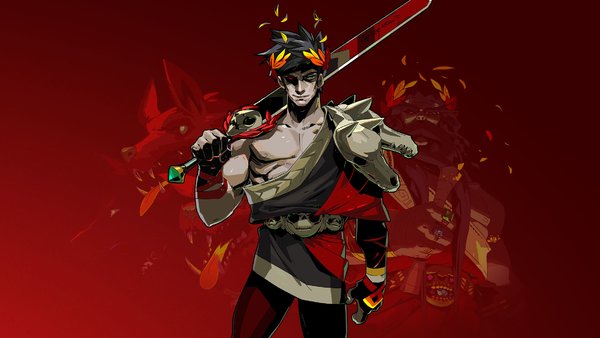
Even if you weren't familiar with the relationship between Hades and Persephone from Greek Mythology, there's still a big clue as to Zagreus's parentage in his design alone.
Both Hades and Zagreus wear uniquely designed autumn laurels, starting red at the base and turning orange, then yellow at the tips. Both their laurels appear to burn away and lose leaves in a subtle yet beautiful animation loop.
Whether or not these laurels existed before Persephone in the game's canon, it's not a stretch to think that the devs designed Zagreus with his autumn laurels and his one green eye as a tribute to his mother, with her own background as a goddess of verdure and in reference to her story in the myths.
The changing of the seasons is explained in the time Persephone spends in the Underworld, with autumn and winter happening when Demeter misses her daughter, and spring and summer coming when she spends time on the surface.
And for the short span of time Zagreus's parentage seems a mystery, these laurels probably clued players in very early on as to the identity of his mother.
1. The Game Was Originally About Theseus And Asterius

Though mostly confirmed through documentaries and interviews, the fact that the original Supergiant rogue-like (rogue-lite?) was supposed to focus on Theseus still has remnants throughout the final game.
The Yarn of Ariadne from Charon's well is a reference to Asterius's half sister Ariadne, who led Theseus with a ball of yarn through the Labyrinth to slay her minotaur brother. If you bring the yarn into Elysium stadium, Theseus mentions how Ariadne meant nothing to him apart from bringing him and Asterius together.
Dionysus mentions Ariadne, who in some myths became his wife after Theseus abandoned her on an island, and when you use Dionysus's call against Theseus, he asks if it's because of Ariadne.
Of the decor in the House of Hades, a few reference early concepts for the Theseus-centric game, including a portrait of what many believe to be Ariadne entitled "Girl From Crete" as well as an early concept, long-haired, nude Theseus.
The concept of Theseus descending the Labyrinth to fight Asterius, only to later descend into Hades to fight King Minos, one of the Underworld's judges, would make for a fantastic game, even if the beloved Hades game, as it is now, could never be replaced.