Hellblade: Senua's Sacrifice Review: 3 Ups & 2 Downs
A fascinating experience, but not a great video game.
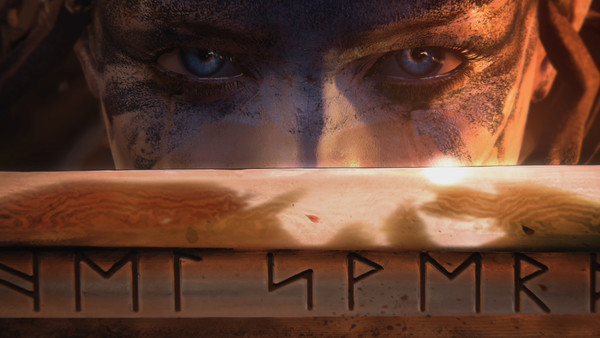
At the heart of Ninja Theory's (Devil May Cry, Enslaved) new video game, lays perception.
Deeply engulfed in Norse mythology, Senua's journey to hell to save the soul of her lover is much more than a simple narrative that serves as reason to do some hacking, slashing and exploration. This is a game about feelings and emotions not only of the main character, but mostly about the way she evokes them in others. And how this all leads to an illusion that's created for the character and the gamer as well.
The idea of an unreliable hero who's subject to trauma and/or emotional disorder is clearly nothing new, as it has been explored in games like Max Payne or Spec Ops: The Line, but here it seems that presenting the illness was more important than the actual enjoyment you're supposed to have during gameplay.
Yes, the topic itself is not enjoyable, but it influences the experience to the point that some people have become discouraged and even have crucial, ruinous problems completing the game.
What works and what doesn't? Well...
Ups
3. An Incredibly Affecting Mood

The game is really hypnotic. Ever since the beginning, as Senua is swimming on her canoe to what she believes is the land of the dead, the gamer feels strange and uneasy.
What are these voices that I hear, and why are there so many of them? Why are they saying such confusing, contradictory things? Whom should I listen to?
This, combined with a foggy aura and the overall look of the in-game world is an experience that is mystical, scary and breathtakingly beautiful at the same time.
There are moments of light and brightness, like when Senua reminisces about meeting her partner, Dillion, but the predominant emotion is not so much fear, as uncertainty. The player is supposed to question what is real and what is not.
Is this really the land of the dead she arrived in, or is she just fighting imaginary demons in her head? There's no way to know what is real and what is a figment of her imagination, and that itself is a fantastic reason to continue.
2. A "Hero's Journey" With A Twist

The story is presumably simple - a woman warrior arrives to Norse hell (Helheim) to save her lover's soul - but it becomes more complex and layered as the player progresses.
In a way, it is reminiscent of Apocalypto, where the stronger, more organized Mayas plundered a village of a more primitive tribe and sacrificed its members for their gods.
In Hellblade, Senua, originally a Celtic goddess outside the game, "invades" Norse mythical lands in order to restore normality.
For the story to be truly understood and appreciated, it's necessary to watch the 24-minute documentary attached to the game. Even though it's advised to watch it AFTER completing, as it contains spoilers, only after watching it do the characters/images that appear become clear.
While it can be argued that all of these aspects should be more stressed and explained in the actual game, there's no denying the depth of the story.
1. The Premise

The premise is really ambitious and well executed. Senua has psychosis; referred in the game as the Darkness cast on her by the Shadow, which causes her to hallucinate. The intention of Senua's Sacrifice is to make the gamer feel what is felt by a person suffering from this mental illness.
This is why the aforementioned uncertainty is so crucial: the gamer is supposed to question what's real and what's fake. Hellblade even lies to you multiple times in regards to where to go or how close you are to completing a puzzle.
Another important element of the game is trauma, which is closely associated with what Senua is experiencing. At some point Dillion says: "You cannot overcome suffering if you refuse to look at it." Hence the gory imagery - that's the unspoken element of war.
Being a warrior is not only adventure and glory, it's also decapitated bodies and bloody sacrifices to unknown gods. The game is informing the player about real-life consequences of violence, and it does so very successfully.
Downs
2. Continued Walking & Puzzles Kills The Pace

For such a short game, as it takes about six hours to complete, Hellblade sure takes its time. This doesn't only involve pushing the story back through puzzles, which are interesting at the beginning, but with time become frustrating.
Since Senua is supposed to be a special warrior that saw patterns no one else did during battle, she is too often left walking around, looking for shapes. In the land of Surt there's some real danger involved when looking for patterns, and you have to run in order not to get burned, but in other levels, not so much.
Walking and running are the crucial words in the last two sentences, because even when Senua's running, she's not moving very fast.
It's a carefully planned move by Ninja Theory, as that way it can tell the story and the player doesn't have to sit through another cutscene, but can actually feel like they're doing something. That "something" is still a bit of a drag, though.
1. It's Not Very 'Fun'

This entry is obviously connected to the previous one and stands in opposition to the premise of the game.
Hellblade is not supposed to be a 'fun experience', but a very real simulation of psychosis. The binaural microphone used to record audio and the research involved in creating the game - interviewing not only esteem professors, but people suffering from mental illness as well - are praiseworthy. Taking on the topic itself is brave and praiseworthy, as well.
That said, the problem is that Hellblade is more like an interactive movie with some very fun gameplay elements. In his video, WhatCulture Gaming Editor Scott compares it to a student project, and that seems the best way to describe it. The fighting is fun, although the recyclable enemies are a bit of a disappointment since there's really not that many of them, as opposed to the puzzles, which are too many and although fun at first, become frustrating.
Granted, Hellblade is supposed to be a frustrating, confusing experience, and it succeeds at that, however a video game should be enjoyable as well.