How Nintendo Helped Create (And Beat) The Yakuza
Mario once jumped along the 'extreme path'.
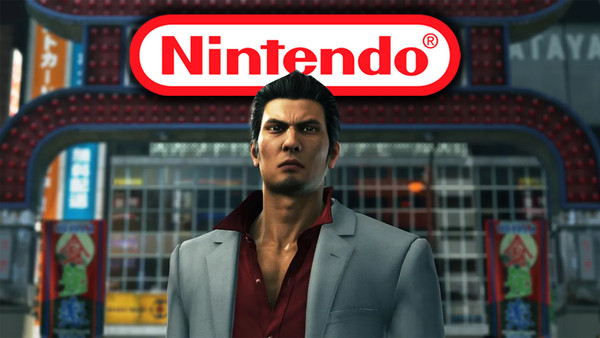
Anyone who's played Sega's Yakuza series will know that the Japanese mafia isn't all tattoos, missing pinkies and generally being baddies with hearts of gold. Turns out there's also a surprising amount of frivolity implicit in the gangster lifestyle - fannying about, that is - such as bowling, karaoke and racking up the high score on Virtua Fighter.
Though besting Dural as quickly as possible without taking a single hit is obviously serious work, there was a time when the Yakuza's interest in video games was less about spending quarters and more about earning them. Appropriately enough, legitimate business dalliances with the digital entertainment industry found the crime group going head to head with Sega's great rivals: Nintendo.
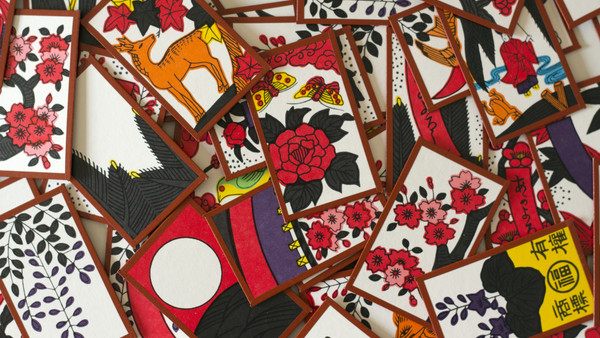
Though today famed for their family-friendly reputation, Nintendo didn't once merely walk along the 'extreme path', but effectively helped paved it. The Kyoto based outfit started life way back in 1889 as a manufacturer of hanafuda - playing cards crafted from mulberry bark, each ornately decorated with illustrations of flowers. Though an ostensibly wholesome, artisanal business, it soon attracted the custom of local bookies, who furnished their gambling parlours with decks. To avoid tampering, professional dealers would begin each game with a fresh stack of cards - and Nintendo were more than happy to supply.
One of the most popular games in kimono-clad kursaals was oichokabu, in which a hand of 8-9-3 - yattsu, ku, san - would score zero points. Hence the abbreviation 'yakuza' meaning 'pointless', or 'useless', in other words. This expression later transformed to refer to the gamblers themselves, many of whom were tattooed with the same elaborate floral patterns painted onto the cards. The Yakuza were, as far as society deemed, 'useless people'.
Continued on the next page...
They certainly weren't useless to Nintendo, however. It was thanks in part to this early stream of capital that the card company were able to branch out into other business ventures. Unfortunately, few of them excited the hefty wallets of crime bosses - or any member of the Japanese public, for that matter. Only the most amorous or ageusic of Yakuza had any need for a sordid love hotel or tasteless instant rice.
Nintendo, in operation for over half a century, had played their cards badly. By the time the Tokyo '64 Olympics had been and gone, hanafuda was passé, and the company badly needed fresh ideas.
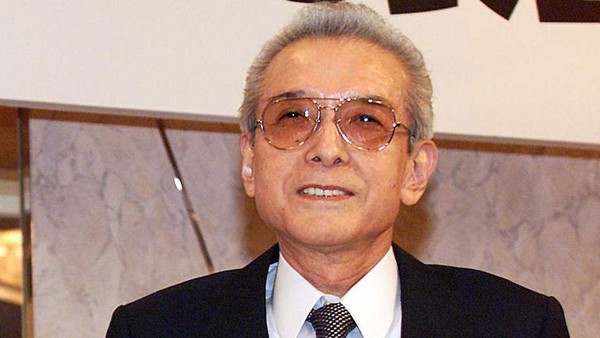
It wasn't until Gunpei Yokoi, a maintenance engineer in one of Nintendo's factories, demonstrated an innovative extendable arm to boss Hiroshi Yamauchi that they lucked upon a new revenue source: toys. The Ultra Hand, as it was known, flew off the shelves, and soon Yamauchi's entire attention was diverted to making gizmos and playthings.
However, they remained at heart a family-ran cottage-industry in comparison to veteran ludologists such as Tomy and Bandai. This often meant that, even when Nintendo devised a hot new product, they simply could not meet the manufacturing demand. It was this ability - or perhaps inability - to keep stockists sufficiently supplied that ultimately placed the Yakuza in direct competition with a company they'd once indirectly financed.
Continued on the next page...
In the early '80s, the advent of the arcade industry saw Nintendo transform from a popular domestic toy merchant into an internationally recognised commodity. Looking to expand into the USA Shigeru Miyamoto was asked to repurpose one cabinet, Radar Scope, which had failed to hit the target in the country. Americans went absolutely ape over his new game, Donkey Kong, and the brand raked in currency at the coin-ops. The burgeoning new demographic informed their next move - one that'd turn Nintendo into a global phenomenon.
Following the catastrophic video game crash of 1983, after which retailer confidence in consoles dramatically dropped - they were disregarded as a passing fad - Yamauchi and co. bravely stepped in to fill the vacuum. The Nintendo Entertainment System - which had released two years prior as the Famicom in Japan - was billed as anything but a toy. This was serious equipment. Nintendo's own gamble proved far from 'useless'; the market was reinvigorated, and they subsequently cornered it for the next seven years.
With such dominance at home and abroad, it was perfectly natural for Nintendo to rest on their laurels, milking the Famicom/NES for maximum profit before discontinuing it. However, patience soon became complacency; Yamauchi had not bargained on Sega, whose feeble SG-1000 had barely dented the Famicom's sales, producing a high-tech, rival product that'd decimate Nintendo's American market share.
The Sega Genesis, in an echo of the NES' own launch some four years earlier, was presented to North American kids as the opposite of Nintendo's child-friendly fare. 'Sega do what Nintedon't', was the lawyer-baiting strapline. The truth is, it still promoted the same array of cutesy platformers and sports sims, but it did so with a technical prowess that made the NES look as prehistoric as BC Kid, the mascot of failed pretenders NEC. Nintendo had to act - and quickly.
Continued on the next page...
What followed was two years of intense R&D by Famicom designer Masayuki Uemura and his team, as Nintendo were drawn into the sort of technological arms race today anathema to their ethos. They concocted a behemoth of a system, capable of 256-colour graphics, 8-channel sampled audio and the novel Mode 7 function which allowed for a range of hitherto unimaginable sprite sorcery. It all came at a slight cost to processing speed; the Genesis would run faster games, but none of them would look anywhere near as good. That hardly mattered: In the early-'90s console wars, the first and last bites were nearly always with the eyes (and ears).
Japan, naturally, was first to taste the fruits of Uemura's labour. Aside from the handheld Game Boy, Nintendo had not launched any appreciable new hardware since 1983. Public anticipation at exactly what the industry leaders had in store to crush their impertinent, neophyte rivals was rabid. Rumours about the impending 'Super Famicom' first dropped in October, after which Japanese electronics stores became immediately flooded with calls.
When Nintendo formally announced the 21 November 1990 launch date shortly after, shops began presales. Within a week, demand outstripped the potential supplies of wholesalers, with many making additional profit by launching lottery schemes to give eager customers a chance of going home happy.
The astonishing fervour - and the obvious challenge Nintendo once more faced to satisfy everybody - is what drew the Yakuza's attention back to their historic providers. As they had at the turn of the century, the mobsters planned to acquire huge quantities of Nintendo's product - or rather, seize it. This time, it'd be them making the profits.
Word reached Hiroshi Yamauchi that the Yakuza planned to steal the country's hottest commodity right from under the company's noses, with a view to moving them on at extortionate prices via the black market. Drawing on their history of clandestine love hotels, Yamauchi and general affairs manager Hiroshi Imanishi concocted a top-secret plan straight out of a James Bond movie to foil the would-be thieves. In the small hours of launch day, Operation Midnight Shipping would commence.
A chilly autumn morning was briefly disturbed in one small pocket of Kyoto by workmen quietly loading unspecified packages into enormous ten-ton trucks. Without ceremony or fanfare, each separately vanished into the night as a ghost. All but the most essential members of the logistic chain were given the full details; nobody but key stockist knew when the trucks would leave, arrive, or the details of their manifest. Before Japan had awoken to its rising sun, 300,000 Super Famicoms had already dispersed across the land, not a single one was nabbed in transit.
Continued on the next page...

Though Nintendo had fought off organised crime through their dusk drama, shopkeepers weren't so lucky with the disorganised chaos which followed that morning. Such was the frenzy for the undersupplied Super Famicom that the Japanese government later told Nintendo to only release consoles at weekends in the future. They were happy to accept the reprimand. Some bureaucratic censure was a small price to pay for one of the most successful hardware launches ever.
There's an ironic denouement to this story. Some fifteen years later, the bitter war between the Kyoto giants and Sega was over, the latter squeezed out of the hardware market by the same force which ultimately meant Nintendo never had to devise such a sneaky launch again: Sony's PlayStation. Now happy to cooperate, Sega's Toshihiro Nagoshi approached Nintendo with a new pitch: a satire of Japanese organised crime, known as... you guessed it... Yakuza.
Nintendo, perhaps reflecting on their past, politely declined. They'd been betrayed by such an association once before, after all.