How Pac-Man Is The Most Influential Game Of All Time
Doom? Metal Gear? They wouldn't be here without Pac-Man.

Although Pac-Man is considered one of gaming's founding fathers, synonymous with the medium and what your grandparents still think it looks like today, the franchise's influence on the industry is often criminally overlooked.
Sure, the iconography connected to the games is entrenched in pop-culture, showing up everywhere from Guardians of the Galaxy 2 to Adam Sandler's terrible Pixels, but gamers in general know little of its history outside of the fact that it was originally titled "Puc-Man" but was changed out of the fear vandals would scratch out the "p" and replace it with an "f" . And even that was only popularised because of Scott Pilgrim Vs. The World.
Lumped in with the likes of Tetris, Space Invaders and Pong, Pac-Man's impact is far more significant than it simply being one of the first video game phenomenons, as this tiny, unassuming release ended up paving the way for the industry as we know it today, all on a mere 24kb of code.
4. Gameplay Loops

From a pure gameplay perspective, Pac-Man is deceptively simple. As easy to pick up and play as any release similarly designed to part you with as many quarters as possible, nabbing a high score while avoiding ghosts (Blinky, Inky, Pinky and Clyde) - and then hunting them in turn for brief periods - created a compelling gameplay loop long before anybody really knew what a gameplay loop even was.
Writing back in the 1980s, author Chris Crawford argued it ushered in a design philosophy that developers still use to this day, saying:
"An important trait of any game is the illusion of winnability. If a game is to provide a continuing challenge to players, beginners and experts, it must also never truly be winnable or it will lose its appeal."
The same is true for Pac-Man which, unlike other releases from the time that were punishing tests of might which required you to practice and practice, endowed players with colourful buffs and power-ups, constantly making each playthrough feel winnable.
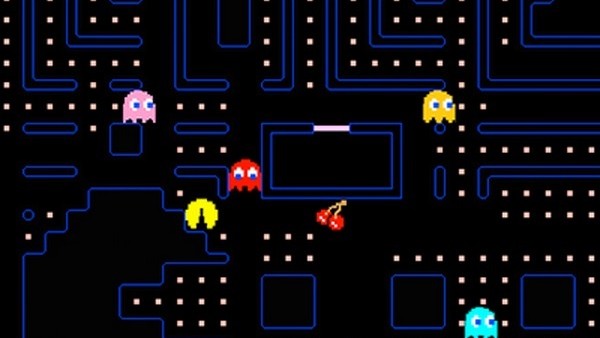
The use of power-ups in particular was a huge addition at the time, and the game was actually the first title to ever include the feature as we know it today. The "power pellet" awarded players a window where they could finally go on the attack, not only transforming the gameplay style but also adding effects that altered the presentation from both a visual and musical perspective. Even if it's rudimentary now, the pellet was revolutionary at the time, imbuing players with a sense of agency that kept them coming back to the game over and over again.
Not only was the power-up a great way to give players some positive feedback, it also functioned to create a proper three-dimensional gameplay loop that similar arcade titles lacked. The shift between defensive and offensive play added a whole new dynamic to the game, bolstering the tactical options and ensuring every round would be different in some way.
It resulted in a gameplay loop which created the illusion of winnability through rewards and positive reinforcement, which isn't all that different from popular loot shooters of today. A game like Destiny isn't "winnable" in the conventional sense, but it keeps players coming back with the promise that it could be, based on a compelling gameplay loop that strengthens the player character with new weapons, upgrades and colourful positive feedback.
3. Moving From Niche To Accessible
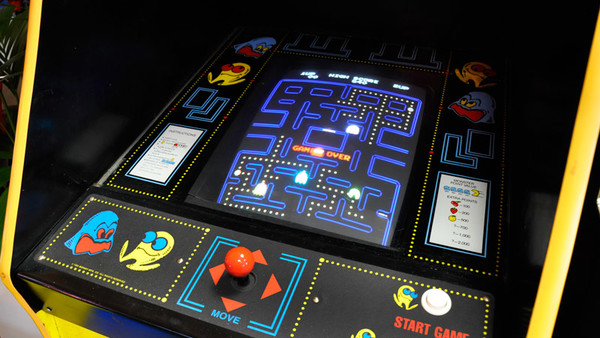
Though developers had tried and failed to balance their games for both experts and beginners before, in their attempt to keep players engaged and coming back to arcades, difficulty was treated in a very specific way. Often being accessible and easy in the first stage or so, the challenge would spike quickly to the point where the idea of it being "winnable" was so far out that players would have to dedicate themselves to overcome the challenge.
This certainly meant those players who classed themselves as "experts", taking pride in their high scores, would return to try and "beat" the game, but the more casual market would be alienated even more, with the assumption that video games "weren't for them".
Crawford further explains this tightrope that each game had to walk when it came to gameplay loops and difficulty, stating:
"If players perceive their failure to be a result of their own limitations and decide that winning the game requires superhuman performance, they reject the game as unfair and unwinnable situation. But if players perceive failures to be attributable to correctable errors on their own part, then they believe the game to be winnable and play on in an effort to master the game."

Pac-Man was the first real game to nail the second half of that equation. Sure, the difficulty ramps up the longer you play, but it never devolves into a screen of bullets or enemies that require superhuman reflexes or practice to beat. Instead, mistakes are presented as slight errors on your part - from an ill-advised turn or squandering the use of a power-up - resulting in problems that always appear to be correctable.
Instead of criticising the game for being broken or too demanding, Pac-Man instead encourages you to keep playing with the promise that you're constantly getting better, correcting your errors in a way that will eventually allow you to win the unwinnable.
This balanced design philosophy influenced the tough-but-fair approach that some developers are lauded for relying on today. Dark Souls obviously gained huge acclaim for offering a ridiculous challenge that still felt winnable because the combat encounters were never unfair or insurmountable. Every death was on you: a mistake you had made and something you could improve upon if you just kept playing.
Super Meat Boy is perhaps an even better example, presenting players with death-trap screens that look absolutely impossible at first glance, but appear winnable because the challenges are always fair. All of these experiences were made possible because Pac-Man normalised that design approach years prior.
2. Direct Influences

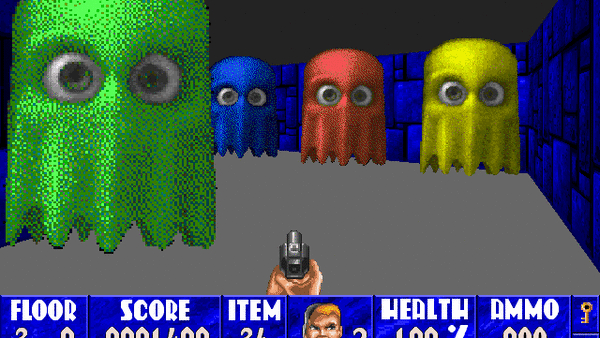
While Pac-Man was certainly influential in a more abstract way that influenced the general approach to game design, it also directly impacted some of the biggest titles in the industry. John Romero, the key creative on Id Software's Wolfenstein 3D and Doom, has gone on record multiple times to explain how the simplistic game design of Pac-Man acted as the basis of those revolutionary shooters.
Though obviously positioned from two completely different perspectives, the layout of those labyrinthine shooters, scattered with hidden collectibles and power-ups, were based partly on the different stages in Pac-Man. Though you could argue they're completely different games, the idea of becoming familiar with a level, and knowing the best way to traverse it, is key to succeeded in both titles. That's the foundation of each game, and the systems added on top of that - be it shooting demons or keeping one step ahead of Inky and Blinky - would fall apart without it.
The complexity yet accessibility of these systems has also been cited as setting the groundwork for the stealth genre, in particular the Metal Gear games. Metal Gear Solid in particular, despite being a technical revolution and one of the first cinematic 3D releases, boasted a gameplay style that wasn't actually all that different from Pac-Man. Most of the game can be played by looking at the 2D, top-down mini-map rather than the actual player-space, which awards you with far greater tactical awareness and the lay of the land, evoking Pac-Man's visually-simplistic layout.
Likewise, Pac-Man was the first game to really expand what video games could be. Before it, the most popular genres - hell, the only genres - were shooters and racers that didn't really have defining spaces or characters. There were some releases experimenting with new ideas, such as rich RPG text adventures such as Colossal Cave Adventure, but even they were limited, confined to the privilege of expensive home computers and away from easily-accessible arcades. Pac-Man, on the other hand, boasted everything, while at the same time teasing the future of games as a storytelling medium by introducing early versions of animated cutscenes.
Despite its limitations, Pac-Man was one of the first titles to have a personality, attempting to build character and even deliver a rudimentary "story" that, without dialogue, created compelling characters and mascots players could attach themselves to. These short cut-scenes, then, not only delivered essential information on gameplay mechanics in a nonverbal way, but allowed basic sprites to have distinct personalities, engaging with a player in a completely different way than any arcade game before it.
1. Mascots And Marketability
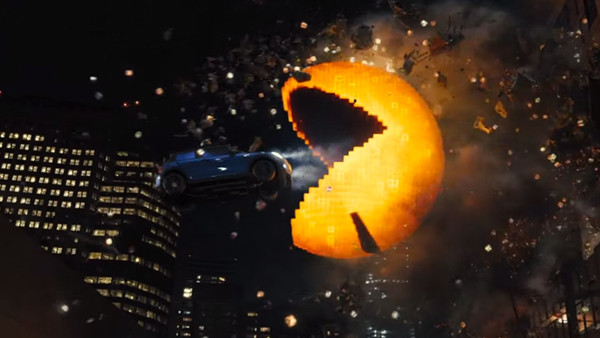
Consequently, while the gameplay itself was obviously integral in propelling Pac-Man into the gaming stratosphere, it was actually the main character himself who was the biggest draw. Despite, you know, being a circle with a mouth, the title character single-handedly birthed gaming mascots as we know them today. Before he came along, no game really had any identifiable personalities or features outside of a title. Everyone remembers the Space Invaders, but nobody remembers who was fighting them.
Over the years, gaming mascots have solidified some of the biggest names in the industry. 30 years after they launched, Mario and Link are still the faces of Nintendo, while characters like Crash Bandicoot - and to an extent Master Chief - allowed Sony and Microsoft not only a foothold in the industry, but popular culture in general. Pac-Man accomplished the same thing in 1980, but not only was he tasked with making a name for a platform holder, but making a name for all of gaming itself.
Though mascots might be seen as "childish" or something the industry has moved on from, their role in normalising gaming shouldn't be overstated, with it being argued that:
"Pac-Man not only popularised electronic play in the early 1980s, but also put a friendly and understandable face on the similarly new world of personal technology."
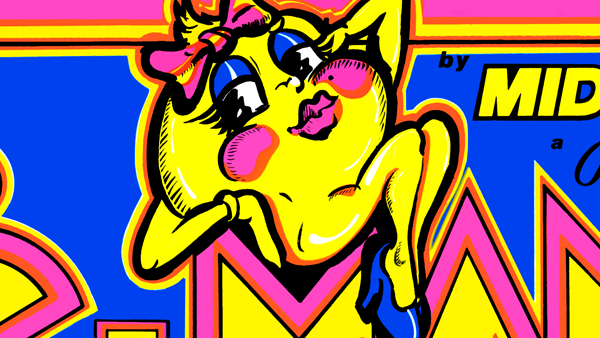
Combined with the accessibility of its gameplay, Pac-Man as a marketing figure broke boundaries, single-handedly shifting the perception of video games being only for dorky dudes living in arcades, to a pursuit beloved by people of any age and gender. This universal appeal was something the developers were eager to capitalise on, with other releases like Ms. Pac-Man broadening the appeal to women especially (even if sexing her up was probably a bit of a dodgy decision in hindsight), relying on mascots to usher in a new wave of fans.
In a way, the power of that marketing is probably why most people only know Pac-Man as a symbol today. It was powerful enough to cross boundaries that had limited games before, acting as an image of inclusion, accessibility and mainstream acceptance that's endured despite countless technological innovations. Put simply, he's a mascot that deserves more respect than being a throwaway gag in a terrible Adam Sandler movie.