Indiana Jones: Why Are There No New Video Games?
Indy was at the height of his popularity in the '90s, so what went wrong?
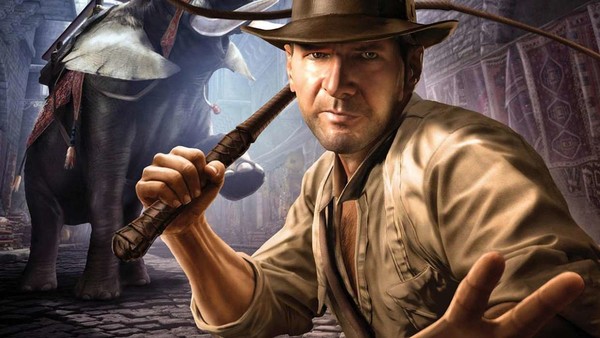
Indiana Jones is a staple of 20th Century cinema. Entertaining and engaging, Steven Spielberg’s trilogy of movies are iconic in their own merits and have succeeded far beyond the cinema screen into other platforms. Video games have accompanied the Indiana Jones movies since the release of Raiders of the Lost Ark in 1981 and have followed the franchise all the way up until 2009 with many titles developed.
In early incarnations of Indiana Jones on consoles and PC, the games were usually just video game versions of the films, using the plot of the movies and their settings although there were the occasional outliers. Indiana Jones in the Lost Kingdom and Indiana Jones in Revenge of the Ancients were original stories released in 1984 and 1987 respectively but this didn’t stop the release of four games revolving around the plot of The Last Crusade between 1989 and 1994.
Consequently, Indiana Jones video games proved to be a profitable market. After the release of The Last Crusade and after the licensed movie games had died down, creativity began to flourish with original stories flooding the market. These included Indiana Jones and the Instruments of Chaos, The Infernal Machine, The Fate of Atlantis and The Emperor’s Tomb. However, the release of LEGO Indiana Jones 2: The Adventure Continues marked the end of the franchise and it seemed like the demand for a new instalment had dwindled.
But why? Shouldn't there still be enough potential in Indy's world to warrant more games? Well, to find out why, you need to look into another adventurous character. And it all started with dual wielded pistols...
5. A New Rival...

This gradual shift away from the Indiana Jones product, in its early stages, is likely due to increasingly popular Tomb Raider series of video games. Lara Croft’s gun-toting trilogy of third person action platformers were met with relatively positive reception and allowed for a new character to assert its strong position in the industry. A more acrobatic game with a focus on action and exploration, Tomb Raider allowed for a light-hearted and modern take on the genre compared with Indiana Jones’ historic setting of Pre-Second World War.
The trilogy of Tomb Raider games, releasing every year from 1996 to 1999, was so successful that the series continued to release sequel after sequel into the early 2000’s. From the first Tomb Raider in 1996 up until 2008, nine mainline entries had been developed and released compared to the two Indiana Jones games.
Even with these releases, the exploits of Dr. Jones had been completely overshadowed by a franchise which was a clear influence of Steven Spielberg and George Lucas’ source material. Furthermore, Indiana Jones And The Infernal Machine, although receiving favourable reviews was criticised for allegedly being too similar to Tomb Raider. The Indiana Jones brand had effectively been cast aside, a massive hit for fans of the series who were hoping for more adventures.
To make matters worse for Indy fans, Tomb Raider had ascended into a multi-platform brand. Two movies were made and grossed a decent amount of money although the second chapter did not do as well financially. These movies were panned quite harshly by critics like most movies based on video games however this indicated the significance of the brand in comparison to Indiana Jones, a franchise which had not released a movie since 1989.
[NEXT: Tomb Raider Doubles Down - Page 2 of 5]
4. Fuel To The Fire

Lara Croft’s acrobatic endeavours was rejuvenated in 2013 with a reboot of the Tomb Raider franchise, catering to a new demographic of players who were interested in more mature experiences compared to the downright comical interpretation of Lara Croft in the originals.
The game ditched the signature handguns for a bow and climbing axe and focused more on climbing, platforming and cover shooting with an occasional puzzle. A stronger emphasis on blood and gore, some of the death scenes the player could witness if you underestimated a jump or didn’t roll away from a spike in time were stomach curdling to say the least.
The success of Tomb Raider allowed Sqaure Enix to develop the game into a new trilogy. Following the 2013 reboot, Rise Of The Tomb Raider was released in 2015 and Shadow Of The Tomb Raider finished the series in 2018.
With all of this in consideration, any hopes of an Indiana Jones game were dead in the water. They had been sidelined by a more profitable franchise where developers would be accused of copying the formula if they were brave enough to go through with a new release as seen with The Infernal Machine in 1999.
[NEXT: Nathan Drake Enters The Game - Page 3 of 5]
3. The Rise Of Nathan Drake

It is inevitable that Uncharted would be mentioned at some point. Developed by Naughty Dog Studios and released in 2007, Uncharted: Drake’s Fortune was an instant success on the PlayStation 3. Presented with impressive graphics and likeable characters, Nathan Drake’s adventure to find the lost city of El Dorado focused on climbing and exploration, like both Tomb Raider and the Indiana Jones series of games. Additionally, like Tomb Raider, combat and shooting had a heavier emphasis with more action set pieces. Puzzles were also included however their simplicity was not a gameplay priority or main reason for picking up the controller.
In retrospect, Uncharted: Drake’s Fortune has been viewed as a weaker game than its successors however it was a great starting point for Naughty Dog to expand and develop their next games. Uncharted 2: Among Thieves added to Naughty Dog’s rising reputation by fixing some of the clunkier controls that its predecessor had. Additionally, it doubled down on action set pieces moment such as the legendary train sequence.
Where Tomb Raider had overshadowed Indiana Jones games in terms of its popularity and number of instalments, the Uncharted series had replaced it completely by introducing players to Hollywood-esque action sequences, compelling and well-rounded characters, better gameplay and sequels spanning a decade.
With Uncharted 4’s terrific ending to the series as well as the new Tomb Raider trilogy’s finale, there is the chance that an Indiana Jones game does have the potential to survive with a successful release now that both titans have at least thrown in the towel for now at least. However, the release of Uncharted: The Lost Legacy, a standalone sequel to Uncharted 4, may result in the development of future spin-offs. This is especially notable due to Naughty Dog’s primary project, The Last Of Us: Part 2, releasing soon allowing for the company to potentially concentrate their focus on new instalments after the release.
In fact, they may have already started.
But to look at Indiana Jones' recent gaming failures, you can't just look at the competition. That would be shifting the blame too much. Because Indy did it to himself, at least partly.
[NEXT: Indiana Jones And The Staff of Kings - Page 4 of 5]
2. The Disaster Project

Indiana Jones And The Staff of Kings was the last original game in the franchise to be released to fans. It is a game which not many have heard of and for good reason because Indiana Jones And The Staff Of Kings was essentially the final nail in the coffin for the prospect of video game featuring an original Indy story.
Announced in 2005, The Staff Of Kings was set to be the third 3D Indiana Jones title and it was first shown at E3 in 2006 by LucasArts. It was developed at a similar time to Star Wars: The Force Unleashed and was said to run on the same engine. Additionally, a novelisation of the title was in the works by Robert MacGregor who had written previous Indiana Jones books. Euphoria physics were also mentioned which was a new element of creating detailed animations.
Indiana Jones And The Staff Of Kings seemed very advanced for its time with the intention of being released on the Xbox 360 and Playstation 3. There was a lot of optimism regarding the game and its overall quality. However, this all went wrong very quickly.
Three years after the game’s announcement, rumours began to circulate about whether the game had been cancelled or not. LucasArts had remained quiet on the development which allowed theories to grow about layoffs of budget problems. However, DailyGame reported that LucasArts had responded to these rumours, stating that the game was still very ‘deep into development’ for the Xbox 360 and PlayStation 3
It may have been time constraints or lack of hardware, but Indiana Jones And The Staff Of Kings was only going to be released on the Nintendo Wii and PlayStation 2 as well as the Nintendo DS in 2009. With this came major graphical downgrades, scaled back game mechanics, and shortened story missions. Essentially, the game had been cancelled and degraded into an inferior product, taking away many of the more promising aspects of the game.
Reviews were negative, lambasting the various gameplay problems such as the controls. The Nintendo Wii edition of The Staff Of Kings based its gameplay elements around motion controls which were deemed unresponsive and tedious. Furthermore, the game restricted the player by placing them onto lengthy on-rail shooting segments. Other reviews criticised the lack of detail, poor animations, and graphics.
Indiana Jones And The Staff Of Kings was a severe disappointment for fans of the franchise who were thirsty for the first game since 2003. Since then, Youtube videos showcasing early gameplay footage of the Xbox 360 and PlayStation 3 editions allow for the ex-fans of the series to look back at what the game could have been.
Oh, Robert MacGregor's novelisation of the game? Although it was finished, it was not published. He revealed this on Reddit, posting that the publishers failed to publish the book when the game was released. MacGregor, upon asking why they didn't publish the novel, was told that 'there was not enough Indiana Jones fans to support another novel.' It's disappointing to think that there is a fully developed novel of what Indiana Jones And The Staff Of Kings could have been if it hadn't been downgraded.
But what of the future?
[NEXT: The Future? - Page 5 of 5]
1. Is There Any Hope?

It seems that the window of opportunity has passed for Indiana Jones’ return to consoles and PC. Uncharted and Tomb Raider have proven to be far more profitable and successful franchises and with the negative reception from The Staff Of Kings, it's likely that smaller development teams wouldn’t want to associate themselves with the Indy branch of video games, knowing that it would be a poor investment.
Then again, since Disney owns the rights to Indiana Jones, the chances of a small indie development team somehow acquiring the license would be practically impossible.
Speaking of small teams, a glimmer of hope had shone in 2019 when Den Of Geek reported that a small team of passionate fans had began developing a point and click pixelated adventure game titled ‘Raiders Of The Seven Cities Of Gold.’ Seemingly, the project is still under development although its without a doubt that the omniscient powerhouse that is Disney is likely watching closely. Although it isn’t an official Indiana Jones video game, it is a clear passion project by fans who want to provide others with an enjoyable Indy-related experience. In fact, there is a short Windows compatible demo that can be played.
It is a sad admittance however Indiana Jones seems to have drifted completely from the public eye. Since Kingdom Of The Crystal Skull, the archaeologist has sadly lost popularity, notably amongst younger audiences and children who would probably have no idea who Dr. Henry Walton Jones, Junior is if you asked them. Yet, there is still a market; A smaller market compared to Star Wars definitely, but there is the minimal chance.
Despite this unfortunate news, the fifth Indiana Jones movie is in the works despite the constant changing of directors and the deafening silence about any information regarding the film. Nevertheless, with a new adventure set to be released in July 2022, perhaps the moment has arisen for Indiana Jones to don the leather jacket and fedora again in polygon form?
Probably not.