L.A. Noire: The True Story Behind The Black Dahlia
Myth and reality collide in Team Bondi's painstaking recreation of post-war Los Angeles.

Team Bondi's L.A. Noire is one of the greatest games of the last console generation, combining detective gameplay with third-person shooter elements to embody the spirit of classic film noir as best it can. Of course, that spirit can be seen in more than just the title's gameplay.
The game's story, told through the use of then innovative motion scanning technology, combines all the classic tropes of film noir with a keen eye for historical detail, ensuring myth and reality collide to impart one of the most unique gaming experiences seen on the last generation of consoles.
Nowhere is this relationship better embodied than in the game's homicide desk, which sees lead protagonist Cole Phelps plunged into an LAPD wracked by corruption, and a grizzly murder with no leads or breakthroughs.
The year is 1947, and the Black Dahlia has made headlines across the globe. The LAPD investigation is going nowhere, and with more bodies turning up, it's down to Phelps and the cantankerous Rusty Galloway to crack the case. But what did the game get right, and where does its story diverge from reality?
MAJOR SPOILERS AHEAD!
[Article continues on next page...]

First, a little context. The 'Black Dahlia' is the posthumous name given to Elizabeth Short, a 22-year-old woman who was murdered in Los Angeles January 1947. The name is believed to have been derived from The Blue Dahlia, a film noir released the previous year. 'B.D.' was widely adopted by the press and was chillingly repeated by Short's killer in a letter sent to newspapers which contained several of her belongings, including her birth certificate. (The killer doused the envelope with gasoline to remove any fingerprints.)
Short herself had been severed in two, drained of all blood, and had her face mutilated by her killer, implying the suspect had a medical background.
The nature of the crime, the subsequent correspondence from Short's murderer and the failure of the LAPD to apprehend the suspect have all contributed to the Dahlia legend, of which L.A. Noire could accurately be described as being a product of. The game itself echoes many of the theories that have emerged since Short's death, both in its immediate aftermath and in the ensuing decades. Was Short the killer's only victim, or was the B.D. murderer a serial killer, connected to other grisly crimes like the Cleveland Torso Murders or other crimes in the L.A. area?
[Article continues on next page...]
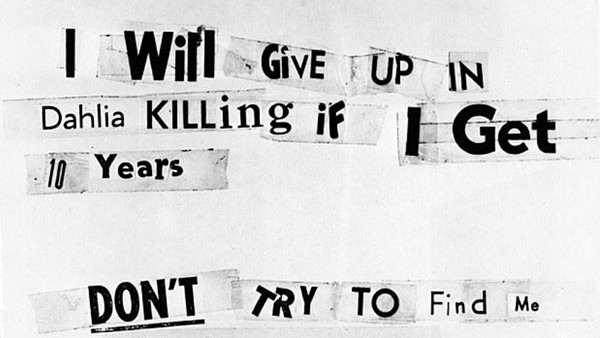
L.A. Noire takes the latter view, eventually revealing that a barman called Garrett Mason was responsible for Short's death, as well as five other murders. Cole and Rusty kill Mason in a shootout, but are asked to bury their discovery by Captain Donnelly, who says that Mason is well connected to a senior US politician. This is all a complete fiction obviously, but it does more than just play off the Dahlia legend; it highlights a very real possibility that corruption within the LAPD was to blame for the case going cold.
Police corruption was endemic in the LAPD during the 1940s, and it's a key pillar of L.A. Noire's story - especially once you get to the Vice and Arson desks. Police incompetence is also pervasive, with both factors having been optioned as causes for why the B.D. case went unsolved.
One suspect in the case, a physician called George Hodel - who was later accused by his own son (now a retired LAPD detective) of being the B.D. killer, among other things - was said to have connections within the department, which may have enabled him to evade justice. Not quite the far-reaching political scandal as told in the game, but still, its inspirations are clear.

Hodel was never formally charged by the LAPD even after also being suspected of killing his secretary, Ruth Spaulding, further raising the possibility that connections to the department got him off the hook, just as Mason's did in L.A. Noire. The character may not be an exact copy of Hodel, but as an analogue to address how police corruption may have impacted the Dahlia case, he works well enough.
In summary, L.A. Noire is itself emblematic of the Dahlia legend. However, it's also possible to view the game as a valuable approximation of the LAPD in 1947, one as beholden to the tropes of film noir as it is conscious of the historical realities of the time. It may differ on some crucial details, but L.A. Noire's handling of the Dahlia murder illustrates a rich understanding of its source material, as well as how genius a title it really was.
--
What did you think of L.A. Noire's approach to the Black Dahlia? Let us know in the comments below.
Watch Next
Rockstar Games Quiz: How Well Do You REALLY Know The Studio?
