Mass Effect 2: 10 Reasons It's Overrated As Hell
One of the greatest RPGs of the decade? Think again.

As we enter 2020, everyone is running out to declare their greatest games of the last ten years, if not all time.
Mass Effect 2 is such a title, and it regularly appears near the top of so many of these lists. The game is lots of fun, its combat streaks ahead of Mass Effect 1, and it didn't have Mass Effect 3's multi-colored ending (although there were problems with 2's finale, which I'll will discuss later).
That doesn't mean that it was a brilliant game, though. Its story fluctuates between absurdity and banality. Boring mechanics and watered down choices are some of the reasons why this game doesn't deserve the universal praise it so often receives.
In many respects, Mass Effect 2 marks the watershed moment where BioWare started to transition from the developers of epic, story-driven RPGs like Baldur's Gate, Dragon Age: Origins, Knights of the Old Republic etc., to the creator of second rate shooters with role-playing elements.
Sound like hyperbole?
Let's take a stroll down memory lane as I dissect everyone's favourite darling, Mass Effect 2.
10. A Shock Opening, Quicky Diminished

Don't get me wrong, the opening moments of the game where your character dies are shocking and extremely moving. However in a move straight out of the JJ Abrams playbook, your death is overturned in two minutes.
See, Commander Shepard is killed in one of the most horrific ways imaginable - obliterated without much of a body, yet it can be rebuilt with new technology.
Surely Cerberus have better things to spend their money on?
The resurrection of Shepard creates further complications for the game's continuity. If your character can be resurrected, why can't everyone else? What stakes are there in a suicide mission, when people can be brought back from the dead? Kill the citadel council in the last game? Why not just resurrect them?
While we are at it, why would the Illusive Man invest a fortune into resurrecting Shepard as the ultimate leader of humanity, only to place him in constant danger?
Surely an asset of such absurd value is not someone you place in the front line of all of the most dangerous quests the universe has to offer? This crazy premise sets a tone for the rest of the game.
9. Planet Probing Is A Compulsory Grind

You have been resurrected to save humanity and your ship needs upgrades to survive a suicide mission. Instead of going on exciting missions to achieve this goal, you are tasked with scanning and probing planets for resource.
Doesn't Cerberus have other people who can do this? Perhaps someone they haven't spent an inordinate amount of money bringing back from the dead?
So begins the dull and repetitive mineral gathering mini-game. You are tasked with rolling your cursor over planets like a giant metal detector and clicking the launch button until you have collected all the materials you need. This process is only lengthened by having to restock probes periodically, given the limited supply on your ship.
Sure, the Easter Egg that pops up when you probe Uranus is mildly amusing in a pre-school kind of way, but it hardly justifies the time wasted on this most blatant of fetch quests.
If you don't undertake this dull activity, your team dies as a result, punishing players for valuing their time.
At least with the Mako in Mass Effect 1, you got to drive around and shoot things to acquire minerals
8. Watered Down RPG Mechanics

At its heart the original Mass Effect was an old school RPG. You could swap your companions armor and armor was class restricted. You invested in skills like decryption and electronics to open chests and complete objectives. Players sacrificed combat skills in order to progress in other areas.
In Mass Effect 2, all classes could wear all armor. All classes could open anything. Tech/rogue characters no longer had the utility they had in the previous game. Removed was any pretext that your character's class mattered outside of combat (with the exception of one interrupt that only an Engineer can do in the Omega DLC).
No longer could you change your companion's armor. Instead you could change your companions' appearance by completing their loyalty missions or by paying for additional skins.
However, unlike armor in Mass Effect 1, alternative appearances don't change statistics. At least Jack and Miranda could now wear slightly less skimpy outfits, I guess?
7. Sacrificing The Council Or The Human Alliance Fleet Reduced To "Good Vs Bad"

In the television show Red Dwarf, The Cat asks Rimmer to sacrifice his life to save everyone else, saying " Come on, man, you gotta sacrifice your life. I'm not asking you to do anything I wouldn't do," to which Rimmer responds "You? You'd sacrifice your life for the good of the crew?" to which Cat clarifies "No! I'd sacrifice your life for the good of the crew".
The Cat, the epitome of selfish characters, knows there is nothing heroic in directing others to die.
When Shepard is asked if he wants to save the Destiny Ascension with the Council on board or protect an entire human fleet, the consequences of protecting humanity are unclear, (which is why you earn both paragon and renegade points).
However in Mass Effect 2, if you chose to save human soldiers you're seen as a space racist who doesn't care about aliens.
Later in Mass Effect 2, Shepard reveals that saving the Destiny Ascension not only saved three incompetent government leaders and a ship, but there were far more people in that one ship than the human vessels.
Had the real consequences of my choices explained, I know I wouldn't have been such a dick.
6. You're No Longer A Player On The Universal Stage.

When Mass Effect was released, we were promised a galaxy of choices and that these choices would have an impact over three games.
Beyond a few token nods, all but a few choices in Mass Effect 1 have no impact on the second game. Some quests are lucky enough to have a line of dialogue, but in most cases your heroic efforts in the first game, will only be referred to in an email on your personal terminal.
As the first human Spectre, Commander Shepard not only engages in a quest to defeat Sovereign and Saren but you also have a role representing the fourth most influential species on The Citadel. Had you continued in this role for the second game these quests could have been developed further. But your new role with Cerberus makes continuing these plots an impossibility.
Sure it is technically possible to have your Spectre status reinstated, but no one trusts you now and your ability to influence galactic events is greatly reduced. Mass Effect 2 having half the number of side quests reflects your diminished role in the universe.
5. Collecting Friends And Not Influencing People

Instead of completing "Uncharted Space Assignments" and roaming the galaxy for clues, your task is to rescue eight individuals. All of whom have their own loyalty mission.
With this move, the game changes from a dynamic adventure where you are roaming the galaxy engaging in missions for the Human Alliance to a friends collect-a-thon.
You have to track down these particular people because they are supposedly the best... yet none of them are effective soldiers, unless you spend time with each of them completing their loyalty mission.
What, humanity is at stake? First help me find my sister/father/child/orphanage or I wont be any use.
The structure of Mass Effect 2 is literally collect eight individuals, followed by making each of them happy by doing something for them, and your two starting squad mates.
For an expansive universe, the structure of Mass Effect 2 is incredibly repetitive.
This very transparent check list of tasks with the same basic premise and some variations also diminishes your sense of danger as completing this checklist (and completing the grind of probing planets for minerals) basically assures your success in the final mission.
4. The Completely Broken "Morality System"

Morality metres in games are awful. Players stop thinking about what they or their character would do, and instead start thinking about how to earn brownie or frownie points.
Mass Effect had the paragon/renegade spectrum, but it didn't really mean paragon of virtue (moral puritanism) vs. renegade acting outside the law. Usually the game coded paragon as being a suck-up, and renegade as being a dick. This is exemplified by the most quotable line from Mass Effect 2, "I'm Commander Shepard and this is my favorite store on the Citadel!"
You receive discounts by threatening shop owners or by doing product endorsement (hence the quote). In no universe is it a "paragon" move to act as a shill for gun-sellers.
You can do this at multiple stores and without consequence. Why aren't shop owners pissed after offering a discount for having their brand described as "the best" only to find out Shepard endorsed everyone the same way?
Problems are solved by using "paragon" dialogue, whether it is to get discounts or to settle disputes between crew members, click the be nice to everyone button and you will be rewarded.
No need to make difficult choices, being nice will always net the results you want.
3. Day One DLC Impacts Gameplay

Mass Effect 3 players rightly complained that day one DLC pack "From Ashes" was an essential part of the story, yet they were required to pay extra for it. Javik, the Prothean squad mate, provides a pivotal backstory.
The only reason people weren't similarly outraged by the hiving off of DLC character Zaeed behind a paywall in Mass Effect 2 is that most players didn't really care about Zaeed. He was poorly fleshed out when compared with the other NPC's and he contributed little to the plot. However, in a game about collecting all the squad mates, making you pay extra for them is poor form.
What's more, in a game that that so heavily focused on its final "suicide mission," having Zaeed in your team further increased your chance of survival. While "pay to win" is generally a reference to multiplayer mechanics, Zaeed was a boost to your team if you paid for him.
Kasumi Goto was likewise a DLC squad mate that contributed to your team, but at least her DLC wasn't released until two months after the main game came out.
2. A High Stakes Suicide Mission... With A Silly Final Boss

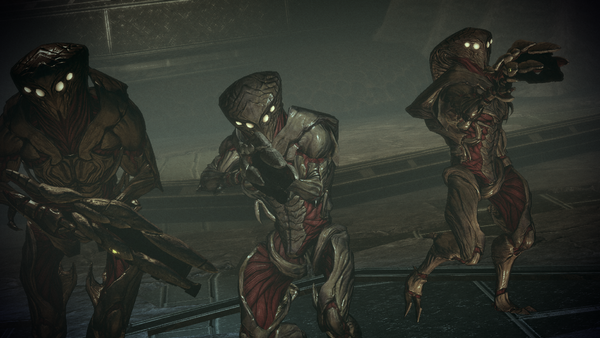
Mass Effect 2 culminates in the 'suicide mission.' The stakes are high, squad mates may be dying, (unless you make a series of obvious choices and grind). Then you meet the final boss, a giant human looking robot. All of the little humans whom have been abducted throughout the game are transformed into one gigantic human thing.
Imagine, you are a highly intelligent artificial intelligence with the goal of eradicating sentient life across the galaxy. You abduct human beings across the galaxy, stealing their life force to forge a super weapon and the best thing you come up with is a giant version of the species you have abducted?
Do the Reapers have no imagination, or common sense? With all the grotesque creatures science fiction and horror have provided the Human Reaper feels like a joke.
The Human Reaper looks like a Marvel villain like a sentinel from the X-Men (or perhaps Galactus). The gameplay is similarly uninspiring, using the greatest cliche of lazy boss design, shoot the glowing parts until it dies.
1. The Least Player-Driven Ending Of The Entire Franchise
The Mass Effect 3 ending sucked. The Star Child made little sense, thematically it was wrong and you were greeted with one of three different coloured montages. However at least for a game series supposedly about choice, you were given one.
Mass Effect had two binary choices in the end. You are asked if you want to save the council or the human fleet and then you are asked who should be humanities representative. In Mass Effect 2 there is only one main decision in the end, whether to destroy The Collectors base or hand it over to the Illusive Man.
The Illusive Man is an archetypal bad guy. He is a homage to the Cigarette Smoking Man on the X-Files. His betrayal of you in Mass Effect 3 surprises no one. The choice to blow up this base is so clearly the 'right' choice, that if you don't make it EVERY single companion will tell you that you made the wrong choice, even Miranda, your Cerberus handler.
Blowing up the enemy after a series of action set pieces is a fine conclusion for a half decent action game, not for a thought-provoking RPG where your decisions 'matter.'