Metal Gear Solid: Ranking The Series From Worst To Best
From Outer Heaven to Mother Base and back again.
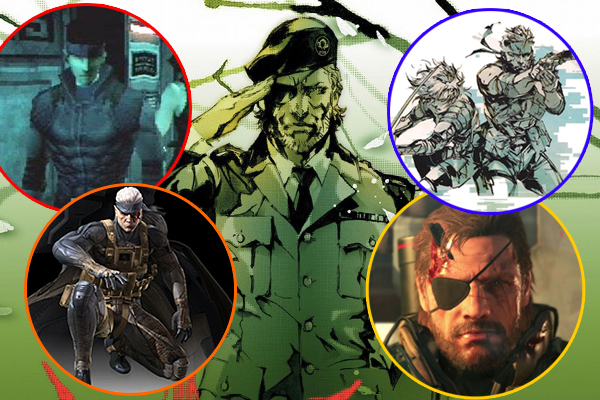
It's all over. Finally, after a 28 year stint that's seen more intersecting and overlapping plotlines than the LOST writing room waste paper basket, creator Hideo Kojima has put out his last instalment in the legendary Metal Gear Solid on September 1st, 2015.
The Phantom Pain has seen mostly positive reviews thanks to some of the finest gameplay the franchise has seen yet, but a number of behind-the-scenes issues sadly plague its retail state, stemming from a huge amount of corporate interference from Konami when it came to crunching deadlines in various ways to get the game on shelves.
Still, like the seams of a perfectly knitted garment, if you're not looking for them, you can't tell; and regardless, it's a far better tact to think back on the series as a whole now we can definitively say it's come to an end.
Remember the first time you sleuthed your way through Shadow Moses on the PS1 ("A surveillance camera?!")? How about realising the Tanker section was only one tenth of the entire game for MGS 2, battling The End in an intense sniper battle Snake Eater, witnessing some of the finest fan-service of all time in MGS 4, or air-ballooning out all sorts of soldiers in both Peace Walker and Phantom Pain?
The legacy of Metal Gear will carry on as a bastion for artistic-minded creativity, and in the spirit of that, let's try to get a handle on a definitive listing of the games, from worst to best.
Note: Spin-offs Metal Gear Acid, Ghost Babel, MGS Mobile etc. don't count - we're talking about the main entries in the canon. The ones that contribute to the mythology and have truly shaped the series.
9. Metal Gear Solid: Portable Ops

Kojima's first 'proper' foray onto portable territory following the fantastic (yet thoroughly-overlooked) card-based battler Acid, was Portable Ops, the game that elected to give PSP owners the 'full Metal Gear experience' they'd been missing.
It worked fairly well considering the technical limitations of the hardware, and would see the series' first take at getting you to amass a large army that could be analysed, customised and deployed in various ways.
As the PSP's UMD discs couldn't handle 'proper' cutscenes, instead MGS graphic novel artist Ashley Wood was brought in to create motion comic variations, their rough, angular and occasionally primitive aesthetic dividing fans right down the middle.
All things considered PO was fine enough, but its story was almost completely forgettable aside from a couple of key character cameos (Grey Fox FTW). Still, the appeal was playing as an eyepatch-wearing Big Boss for the first time since the close of Snake Eater, going up against the renegade Fox unit headed up by the mysterious Gene as we got the first look at how the hero from MGS 3 could start to turn into the villain of the later chronology.
8. Metal Gear Solid V: Ground Zeroes

I went back and forward on whether to include this or not, being it was clearly siphoned off from the main game by Konami as a proof of Phantom Pain's increasingly expensive development being something they wanted to pursue.
Thankfully, there's enough story here to make it worthwhile, despite price tags and half-hour long runtimes facing in opposition. MGS fans across the globe lapped it up, and although it was essentially a paid-for version of MGS 2's Tanker section or MGS 3's Tselinoyarsk demo, we were eager to get hands on how everything would look and feel on the newest hardware.
The answer was "Better than ever", as Big Boss was immediately responsive, had a ton of fleshed out CQC moves ranging from sprinting slams to round-corner grapples, and overall Ground Zeroes brought about a very tactile feel to your movement that Phantom Pain would build on.
It can't be recommended even remotely now than PP is out - unless you really want to hear the villainous horrors of Skull Face's rape-filled torture techniques - but its place in the canon and overall real-world Metal Gear timeline is a very important one.
7. Metal Gear & Metal Gear 2: Solid Snake
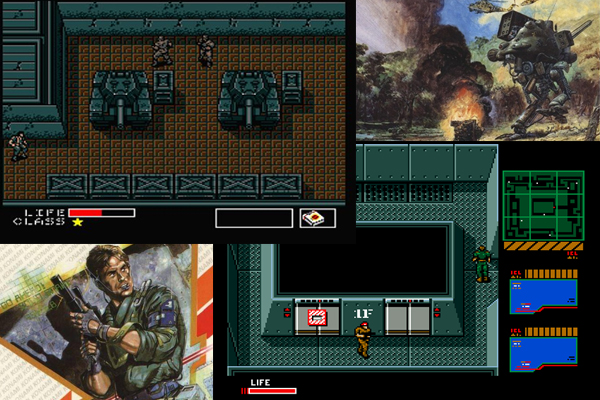
I'm grouping these two together as honestly, time hasn't been kind to the original MSX Metal Gears.
From extremely strict (yet completely applicable to the time) checkpointing to level designs that you'll tire of within minutes, these original games stand up more as archival museum pieces, showing you the earliest seeds of stealth game design that Kojima would later build on to truly cement his legacy.
Both games tell the tale of Solid Snake going up against Big Boss, the second having the best setup for the Darth Vader "I am your father"-moment that's later been built on exponentially in the other games, yet when it comes to actually having fun going through them, that's where 1980s game design will swiftly remind you just how far we've come since.
6. Metal Gear Solid 4: Guns Of The Patriots
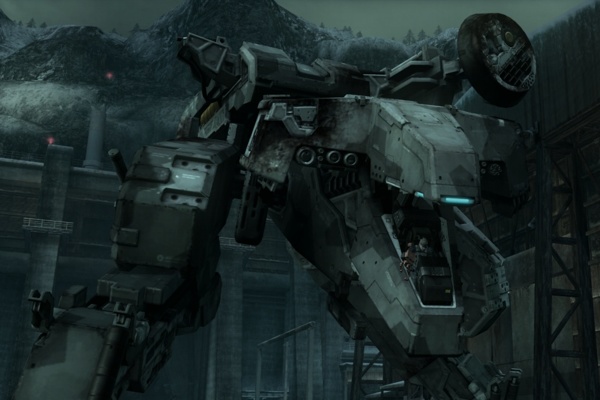
Over to the first of the main instalments, and as the series was making another cross-generational leap from the PS2's architecture to that of the PS3, Kojima and his gifted team of programmers did their utmost to create one of the most hyper-detailed and narratively explosive games possible.
As such, we got around seven and a half hours of cutscenes tying every last possible plot thread up with a neat bow, gameplay essentially playing second fiddle to Koj being in full Hollywood Mode as he orchestrated his baby's (supposedly) final moments.
Many people tout MGS 4 as the best of the lot thanks to its refined gunplay and myriad of infiltration options, but in terms of actual gameplay there's only three main level-stretches that are worth replaying, a paltry amount compared to its predecessor, Snake Eater.
Guns of the Patriots has the best cutscenes and the most satisfyingly insane plot stuff, but it's all hands-off. When it comes to replayability or moments you'd like to actively play again, they're practically non-existent - and that's where this next game comes in...
5. Metal Gear Solid: Peace Walker
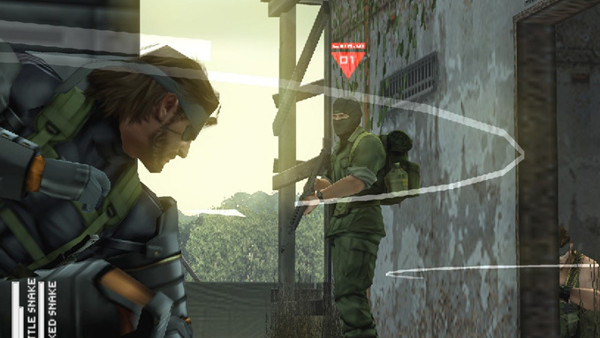
Following MGS 4's cutscene-overload, Kojima revisited his plans for Portable Ops and decided to double down on gameplay. Ashley Wood was brought in yet again to helm cutscene aesthetic, but this time Hideo had learned from his past portable mistake; this time there'd be a story - and one so important it'd form the crux of both Ground Zeroes and The Phantom Pain.
Only Kojima would do such a thing - having a portable instalment of a console-born franchise contain some of the most important and impactful plot points of them all - but there you go. The immediately enticing idea that The Boss survived being shot in the face at the close of Snake Eater was a brilliant one, but that was only the tip of the insanity-iceberg as everything from warring governmental factions to singing flying robots got in on the action.
Peace Walker contains some of the best talking-points in the series when it comes to the notion of automated nuclear defence systems and the accountability of humanity, but its off-the-wall (and into the sea) approach will put off anyone who already didn't like the direction MGS 2 headed.
4. Metal Gear Solid 2: Sons Of Liberty

Speaking of which, 2001 saw the realisation of the first major sequel to Metal Gear Solid as it existed across the late 90s and early 2000s. Stealth as a genre was firmly established thanks to the PS1 version, and with its Hollywood sensibilities and overall production value, the string of teasers and trailers made for a game that was hyped up with wide-eyed anticipation.
What happened next fractured the fanbase. It established Kojima's "F*** my fans, I'll do what I want" mentality, and cemented the expectation that if you're going on the Metal Gear ride, you're going to need to cheer whichever direction the tracks take you - that being; Snake was no longer the main playable character.
It's the stuff of gaming history now, the whole 'You're actually going to be Raiden' switcheroo, but he didn't come with any sacrifice gameplay-wise. Quite the opposite in fact; the foppy-haired whiner could do everything Snake could and more, still managing to frame David Hayter's character in a far stronger light by comparison, as back then Snake was cooler than Sub-Zero's mini fridge.
We popped headshots, held up and interrogated guards, played with explosives and fought life-regenerating vampires - and when the game's themes of socio-political control, family ties, virtual reality and A.I. programs overtaking human thought were as fleshed out and detailed as they were, it all came together in a way that truly made this a landmark release.
3. Metal Gear Solid V: The Phantom Pain
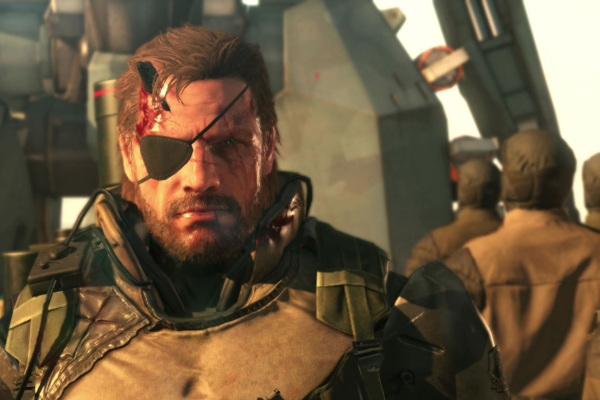
Ironically, Phantom Pain is both the most feature-complete Metal Gear of all time - thanks to a staggering amount of weapons, items infiltration options and combat animations - whilst also being the only one to have substantial chunks of content held back.
The end result is something that plays absolutely spectacularly, honestly when it comes to the weighty feel of being a skilled operative deploying to rescue hostages and take down country-threatening mechs, there's nothing better. The thing that doesn't sit too well though, is the story - which in stark contrast to the other entries in the canon, has its biggest emotional beats reconciled to cassette recordings you must opt to listen to, rather than through cutscenes or upfront exposition.
In fairness they still work very well, but you can't shake the notion that the narrative side of things is undercooked, despite still having some of the best twists and thematic messaging of them all.
The cutscenes you do get are absolutely impeccable, and that's why this doesn't drop too many points as one of the best. Kojima's clearly been watching the likes of Alfonso Cuaron or Birdman director Alejandro González Iñárritu, as he's developed a fantastic 'one constant take' style that fits the intensity of MGS perfectly, emphasising the tone of MGS V and giving it one hell of an identity.
Taken as a whole, Phantom Pain is still an immaculate game. Its graphical wallop and overall presentation are second to none, there's a seamless Dark Souls-style dynamic multiplayer that (optionally) will keep you on your toes, the perfected version of Portable Ops' soldier-rescue formula, and a story that's rather brilliant - yet just not showcased as best as it could've been.
2. Metal Gear Solid
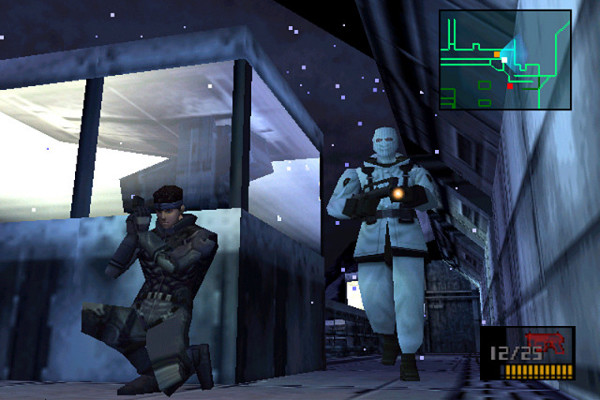
Sometimes a band's debut album is one of their best. They're eager to get out there and show the world what they can do, they've got all sorts of quirky, unique ideas to set them apart from the crowd, and when everyone sits up and takes notice, they're quite rightly blown away.
1998's Metal Gear Solid was such a phenomenon in game form, remaining one of the finest action/stealth titles you'll ever play. Story-wise it has some of the best revelations in the series, delivered by perfectly-realised villains that walk the line between being alluring and evil, and features Solid Snake walking himself into gaming's history books with every stride.
That's not to mention the game mechanics themselves, which feature downright genius designs as having a telepathic character read your memory card, hinge someone else's life on how much 'torture' you can withstand by hammering away at a button, or giving you just enough of an excuse to experiment with the items and weapons at hand, whilst guiding you through an otherwise linear narrative.
Kojima's first 3D Metal Gear changed gaming forever, and providing the biggest plot-reveals aren't already common knowledge going in, will still knock anyone for six no matter when they experience it.
1. Metal Gear Solid 3: Snake Eater

1998 may have seen Kojima out to prove himself to the world, but we got a refined sense of that drive through Snake Eater in 2004. Hot off being told he was on the cusp of writing a truly great story if he just knew how to hold back on over-explaining every last piece of dialogue in MGS 2, he promptly did just that with Snake Eater, switching up expectations and heading back to the 1960s to expand the timeline in a completely new direction.
We'd always heard of Big Boss in the 3D games, the mythically prodigious super-soldier who Solid Snake was cloned from, but now we were going to play as him. However, rather than be such an over-powered reputation-spreader, Snake Eater told the tale of the rookie, Naked 'Jack' Snake, on a mission to recover a Russian scientist, only for his mentor to betray him and turn the whole thing into one big revenge mission.
The final twist is one for the ages, proving Kojima does know when he's over-indulging and when he can reign things in to play with your heartstrings. That's all without mentioning how MGS 2's experimental gameplay was expanded upon to include in-the-field injury repair, a camouflage system that literally let you grab guards out of nowhere, the best collection of bosses since the original, areas ranging from indoor factories to mountainsides and crocodile-infested waters - and such an enjoyably perfect story making you want to see the next cutscene just as much as tackling the next stretch of gameplay.
It's that potent mix of narrative and gameplay that makes Metal Gear Solid what it is, and Snake Eater is the one game of them all that got it completely spot on.
--
What's your favourite Metal Gear Solid of them all? Place your vote below and let us know why in the comments!