Outer Worlds: 10 Ways It Blows Fallout 4 Out The Water
Finally, a dialogue system that works.

Even though it's still a few months out from release, The Outer Worlds is shaping up to be one of the most defining RPGs of the generation. After enjoying the confident pre-release trailers, WhatCulture was invited down to play the title, enjoying a two-hour chunk where we had free reign to go wherever we wanted and engage with the game on its own terms, exploring one of its vast open-worlds.
The first impressions from that session have been covered in detail here, but it's safe to say that the taster more than lived up to the hype. Obsidian's title has long been touted as the spiritual successor to Fallout: New Vegas, embracing old-school RPG mechanics, systems and storytelling to fill a gap that Bethesda have moved away from over the past few years.
The Outer Worlds wears its desire to dethrone Bethesda on its sleeve, and if the entire game is reflective of the couple hours we played, it might just be able to do it.
8. Companions Feel Even More Fleshed Out

Companions had been a staple of Fallout for a while, but the fourth game pushed the feature even further, giving each character far more dialogue, their own unique stories and quests, and all around tried to make them feel like real-life people, and not just extra storage for when you were over-encumbered.
The Outer Worlds, however, is taking this system to the next logical level. All the hallmarks of the regular companion system remain - two people in your party at any given time, unique, personalised quests to tackle, and individual combat styles to be utilised - but every element feels even more robust, with a couple new features thrown in for good measure.
For one, they're even better in combat, not only because of their signature weapons, but because each has a special ability you can activate with the push of the D-pad.
In general though, the companions I spoke to simply felt like larger parts of the world than ever before. At one point during my playthrough, a companion ran into someone they knew out in the wastes, kicking off an emergent conversation between them that felt so rewarding to uncover.
They made the world seem more dynamic and lived in, and that’s essential for an RPG like this.
7. Quests Aren't Just Checkboxes
Though Fallout 4 still had a wealth of varied, creative content to tackle, it did admittedly rely on some pretty basic quest structures for a chunk of its side missions. Everyone remembers Preston Garvey's constant nagging for you to do procedurally-generated busywork for him, while other missions required you to find specific items or build certain structures - essentially little activities without any real story behind them.
It was never as bad as an Ubisoft game, but at times it did just feel like you were mindlessly checking items off a list while completing quests, rather than engaging with the game in a genuinely substantial way - being told to do things rather than discovering them for yourself.
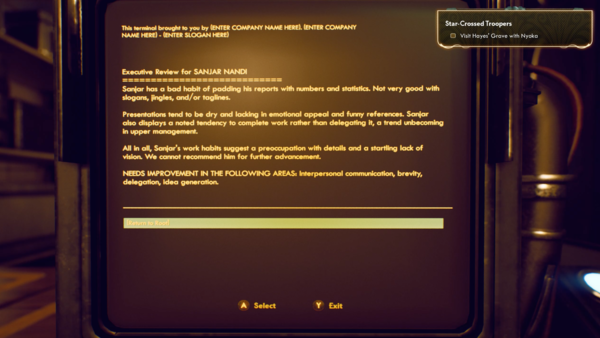
Even in the few hours I spent in The Outer Worlds, that doesn't seem to be the case. While you of course still have quest givers, each mission felt varied, and didn't just have one static way of completing it.
Likewise, more often than not missions would begin in an emergent way, rewarding you for simply interacting with the world. Whether this came from listening to a man claiming he'd found a dead body or trying an intercom at a random settlement and discovering someone in need on the other side, missions always felt spontaneous, rather than gameified and fed through the U.I.
6. Character Builds Have More Depth

While aesthetically, no two people who played Fallout 4 would look identical, they probably would have ended up with pretty identical character builds. Instead of letting you tweak individual stats each time you levelled up like in Fallout 3, the sequel instead tied your attributes to the S.P.E.C.I.A.L. system, and then used perks to incrementally increase attributes like accuracy, power and defence.
It was fine, but it felt a little limiting and a step back from the previous games, encouraging you to be a jack of all trades rather than building a specific character with strengths and weakness. The Outer Worlds, however, essentially adopts the same system as New Vegas, giving you a certain amount of points with each level to directly increase specific attributes, which are also boosted by naturally using them.
Likewise, the perk system gives you an extra boost, allowing you to unlock certain gameplay changes or buffs to features like inventory space and cool-downs. Throw in the Flaw system, which actually lets you trade off permanent debuffs for more perk points, and there's just more to consider when it comes to your character - all on top the regular weapon and armour systems you'd expect in an RPG like this.
It seems you can really tailor your playstyle to your choosing, which is of course helped by the mission design, which doesn't seem to prioritise one specific answer to a problem over another.
5. Dialogue Options Are More Robust

One of the biggest complaints coming out of Fallout 4 was how the new dialogue system limited player choice. By opting for a voiced protagonist, it meant that the freedom Bethesda usually had in crafting dialogue exchanges had to be reigned in, as paying and recording a voice actor to bring all these lines to life had to be accounted for.
It gave your character a distinct voice (as well as, er, an actual voice) but it also made the responses vaguer, with only a couple binary ways of responding. In contrast, Obsidian haven't attempted to give their protagonist a voice, and instead dialogue is handled in the classic Fallout way, with a whole batch of varying responses to choose from depending on the conversation.
Not only does this deepen the role-playing possibilities, as there's more than just "good", "bad" and "neutral" dialogue options, but it deepens the conversations themselves, and allows you to discover more about these characters and the world.
Pursuing specific dialogue trees and saying the right things in the right situation can unlock elements of quests that weren't originally signposted, while talking your way through missions isn't only based on your charisma, but other skills, which opens up dialogue even more.
It's awesome, the writing is solid, and it increases the role-playing possibilities massively.
4. You Don't Have To Shoot Your Way To Victory
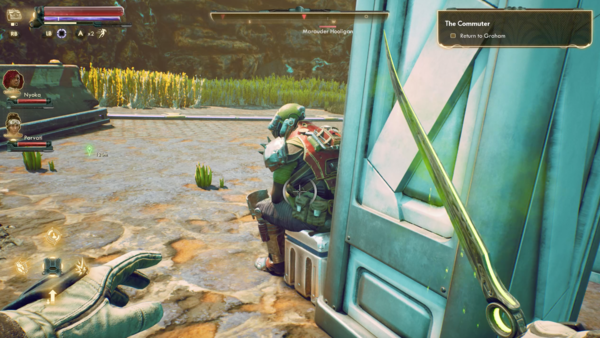
Complimenting the robust dialogue system is the design of the quests themselves, which thankfully factor in a whole bunch of solutions that aren't just "shoot the man to win". Fallout 4 sadly suffered from this kind of quest design, and for all its bluster that you could play the game any way you wanted, it struggled to support approaches to mission that weren't combat based.
While The Outer Worlds hasn't remedied this entirely (as a lot of the exploration outside of missions will no doubt have you running into gangs of aliens or mercenaries that need to be forcefully put down) for the most part there's a whole bunch of freedom inside quests to complete them without firing a shot.
Whether that's by simply utilising stealth, talking your way through problems (making use of tech skills or natural charisma to pass speech checks) or using your wits to effectively vacate an area to complete your objective (for instance, in one mission it was possible to hack into a pump system and gas the marauders inside), there's always a multitude of ways to go about finishing quests.
Hell, a solution to one quest, after finding someone stuck behind a locked door, was literally telling them to push the handle up and open it from the inside. It sounds basic, but when these solutions are discovered naturally, it makes quests feel much more personal.
3. Combat Is Weighty And Impactful

However, while you don't have to shoot your way to victory in every single quest, you might actually want to, because the combat in The Outer Worlds is surprisingly solid. Not only was the combat the weakest element of both Fallout 3 and New Vegas, Obsidian haven't tackled a big open-world shooter like this in the years since working on Fallout, so there was some worry that the gunplay might have felt a little undercooked, or secondary to the exploration and dialogue options.
Fortunately, that's not the case, and everything from the weight of weapons to the fluidity of movement makes engaging in combat a joy. The enemies are varied, with plenty of colourful aliens to take on as well as your regular goons with guns, and there's a decent amount of tactics to consider both during and before gunfights.
The weapons themselves are varied and customisable, while the explosive gore is enough to shock even longtime shooter fans. Melee is punchy as well, and there's some devastating tools of destruction you can get your hands on to crush enemies with.
The Outer Worlds was always going to be a great RPG, but the biggest surprise is that it's also a great shooter.
2. Factions Have More Nuance And History

One of the most defining features of Fallout: New Vegas, even all these years later, is the faction system. The Mojave wastes were full to the brim with different settlements and gangs with their own motivations and cultures. Even better, it was more than just a case of "these are the good guys and these are the bad guys, choose a side", and you had to get to grips with the moral and political complexities of each one.
Fallout 4 attempted to cast their major factions in similar shades of grey, but sadly a lot of that work came crumbling down once you had to side with one at the end and destroy the rest, no matter how closely tied you were with them.
Of course, there's no saying how the storylines of these factions will wrap up in The Outer Worlds, but even a taste of the selection on display makes it clear Obsidian have attempted to grow what they established in New Vegas. Getting to know the Iconoclasts or the inhabitants of Steeler Bay was a joy, and neither were painted as straight up good or straight up evil.
1. There's A Sense Of Wonder To The Worlds

Fallout 4 made a pretty major step in the right direction when it came to the variety of its post-apocalyptic wasteland. Introducing some much-needed colour to the dour landscape, the sequel was decidedly more cartoonish than its predecessor, with clearly defined regions and interesting oddities, like the Glowing Sea.
The Outer Worlds, however, has the benefit taking place across a bunch of multiple worlds, each with their own distinct look, occupants and native nasties to kill. There's a real sense of wonder as you explore these uncharted areas, with the alien vegetation and popping colour making for some striking images.
However, it's the overall, retro-space aesthetic that's the real winner. Acting as a strange mashup of Fallout and Bioshock's signature styles, the art style of The Outer Worlds is so, so charming, packed with so much personality that already tells you a lot about the worlds featured in the game.
Put simply, Obsidian has crafted environments that encourage you to investigate every nook and cranny, rather than rocket through to get to the next combat encounter. All that it’s missing is a killer licensed soundtrack.