Ranking Every Uncharted Game From Worst To Best
From Nate to Chloe and back again.
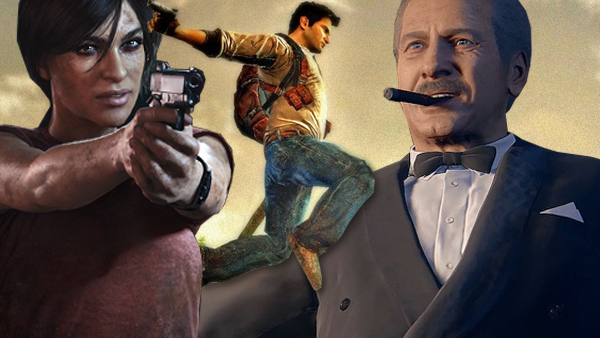
As one of the most prolific, game-changing and all round well-received franchises in gaming history, Naughty Dog reached a defining period of their own career with Uncharted.
Yes, we had Crash Bandicoot commanding the world to take notice of PlayStation back in 1996, and Jak & Daxter delivered possibly the finest trilogy of the studio's career, but Uncharted was something else entirely. Alongside Metal Gear Solid and Hideo Kojima showing how well video games could emulate the cinematography and blockbuster feel of Hollywood, Uncharted, Nathan Drake and voice actor Nolan North gave the 2000s another kind of gaming icon.
10 years later, Naughty Dog have shown pretty remarkable restraint in not releasing endless sequels, instead hanging back and working on their craft, ensuring each subsequent Uncharted was a landmark event.
Even Uncharted 4 - which when it was first announced, scared the living hell out of all the fans who really didn't think there could be such a thing as a worthwhile fourth instalment in any formerly closed series - was an exemplary video game. And now we've got Lost Legacy effortlessly showing there's a life outside of Nathan Drake, and where the franchise goes from here is anybody's guess.
For now though, let's rank the highs and lows of what remains one of gaming's finest works.
6. Uncharted: Drake's Fortune
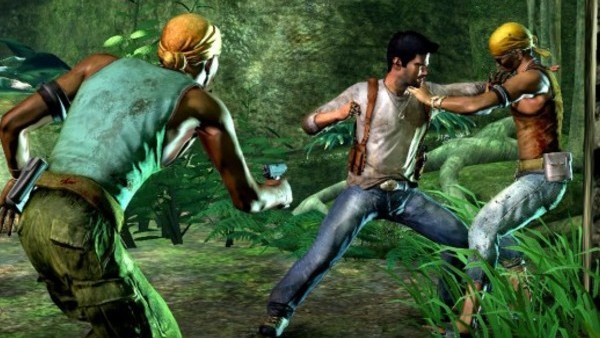
Did you know that the first Uncharted didn't actually live up to expectations? There's a very good reason many people point to the sequel as when things truly took off. Drake's Fortune - despite having immaculate production values and some of the best-written characters in gaming - wasn't all that fun to play.
Far away from the combat-platforming sandbox Uncharted would grow into, back in this original we had a very basic cover shooter with all sorts of waist-high walls to leap between. Nothing more - at least where gameplay was concerned.
Melee operated on a rhythmic three-hit system and again, outside the characters, this story was nothing to write home about. Still, we got introduced to Drake, Elena, Sully and their combined chemistry together, which was more than enough to make everyone look forward to more.
A classic case of the sequel nailing everything the original was going for, Drake's Fortune is incredibly important, but the least enjoyable to revisit or play through, especially today.
5. Uncharted 3: Drake's Deception
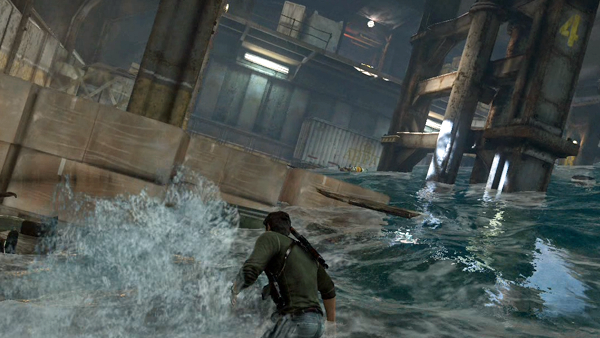
Somewhat buckling under its own weight, Uncharted 3 closed off the trilogy by literally seeing Naughty Dog challenge themselves to code increasingly OTT spectacles and set-pieces.
Enter the 'sinking tanker' sequence; an entire ship coded with realistic water to rise and flood the place over time - all as Drake attempted to survive in the centre.
Sadly, whilst it's a technical marvel and well worth playing, this was symptomatic of the larger problem with Uncharted 3: EVERYTHING was OTT. From the Sully death fake-out to the protracted wandering desert sequence and trying to cross a wharf with a thousand laser sights blasting your shins off, after a while, it just started to become a bit of a slog.
Drake's Deception tussles frequently with Uncharted 2: Among Thieves in many peoples' top lists, but for me it was never even close. Uncharted 3 boasts some of the best level design Naughty Dog have ever coded, but without natural cut-off points making them fun to take in, past the initial few moments.
Add in yet another forced supernatural element in the finale with the seemingly immortal Talbot, and ultimately - for forced rankings like this - it costs Uncharted 3 valuable points.
4. Uncharted: Golden Abyss

Yes, this was done on a handheld. Eat your heart out, Nintendo Switch.
Though the combination of not being made by Naughty Dog and releasing on a format Sony refuse to ever market effectively pretty much killed it, Uncharted: Golden Abyss is actually one of the most gameplay-focused Uncharteds of the bunch.
A prequel tale, we see a Nathan Drake actually putting together his trusty notebook full of secrets, developers Sony Bend taking full advantage of the touch screen and dual cameras for some really neat puzzles. Story-wise this is a mostly simplistic 'Nate gets roped into helping a friend' tale, but that's precisely why it works.
Freed from whatever shackles are imposed from triple-A budgets and being part of a trilogy, Golden Abyss sees Nate shine as an adventurer - not to mention it applies a ton of gameplay innovations from the main games to create some of the best combat scenarios in the franchise.
3. Uncharted 4: A Thief's End

Formerly thought of as being an unnatural extension of a trilogy that already ended with a bow on top, Uncharted 4 introduces us to Nate's long lost brother Sam, seeing him shake up a now-retired Drake as the pair galavant off on a youth-rekindling adventure.
This happens without wife Elena's say-so, and it's here where A Thief's End plays its most masterful, important and game-saving card: The fact that if you've really found your significant other, they'll embrace all your best and worst qualities, occasionally enhancing them tenfold.
Sadly, and again, we're talking fractions of qualitative reasoning for the sake of this list, it does mean that when Elena re-enters the story towards the back third, the entire narrative stops dead whilst Nate realises just how perfect the pair are together. Ultimately, this then becomes part of a larger pacing issue that calls into question the entire narrative structure of the game.
It's absolutely, hands-down the finest combat Naughty Dog have ever created - and has a jeep sequence that's jaw-dropping in motion - but if we're really getting down to the nitty gritty, Uncharted 4 loses ground to tighter entries in the franchise that hold themselves together better overall.
2. Uncharted: Lost Legacy

I had zero - if not negative - expectations for Uncharted: Lost Legacy, and it came out of nowhere to surpass and exceed every one of them. You can read a full comparison to the mighty Uncharted 4 here, but sufficed to say, less is more when it comes to delivering 'an Uncharted experience'.
By taking all the things you love about Uncharted - the characters, the dialogue, the action set-pieces, light puzzle-solving and gorgeous graphics - and rolling it into an efficient six hour package, it lets those highs stand tall, mitigating any potential lows along the way.
Everything from Chloe and Nadine's brains n' braun dynamic to Lost Legacy's own Last of Us-influenced 'giraffe moment' flows into how the pair grow as real people, climaxing in genuinely the most impressive set-piece Naughty Dog have ever coded.
Lost Legacy proves that when condensed and made to click into place, the Uncharted formula is one of the most satisfying in all of gaming.
However...
1. Uncharted 2: Among Thieves

Before the overblown runaway plot structures of Uncharted 3 and 4, and with just the right amount of groundwork still to be laid, Uncharted 2 is that sweet spot between what a video game can do for controllable action ephemera, and how Hollywood has taught us to take it in.
Uncharted 1 laid some solid foundations, but truly, the franchise's empire was built with Among Thieves.
New soon-to-be-beloved writing duo Neil Druckmann and Bruce Straley were behind the pen, with Naughty Dog's coding department ratcheting up the sheer amount of spectacle on offer. Most notably are the train sequence - where an entire physics-dependant train barrelled through an environment with zero interruptions - and a perilous jeep convoy chase where Nate leaps between multiple moving vehicles, trading fire as he goes.
Such things might be more commonplace now, but realising you were actually controlling the sort of thing on-screen we'd seen for years in cutscenes was outstanding - not to mention these set-pieces are just as fun today.
Then you've got all the overlaid story stuff, mixing a Nate, Elena and fan-favourite Chloe Frazer love triangle with double-crossing former friends and father figures like Sully forever coming to the rescue.
It might go a tad off the boil in the very last set-piece in terms of believability, but Uncharted 2 did so much right, it never really mattered.