Red Dead Redemption 2 Is About The Death Of Rockstar
The end of an era.
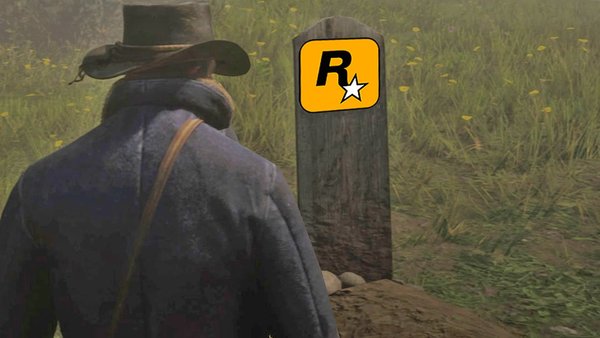
After close to two decades, embarking on one of the most legendary hot streaks in gaming history, the fundamental creative minds behind Rockstar's biggest titles have departed the studio.
Save for one of the founding members, Sam Houser, staying behind, his brother - and lead narrative designer - Dan Houser stepped away in February 2020, long-time producer Leslie Benzies departed back in December 2014, and very recently, Lazlow Jones - another veteran writer and producer - left as well.
It can't be overstated how ludicrously important and influential these individuals have been, not just spearheading every release from GTA III to GTA V, but in Dan Houser's case, being head writer on Bully and Max Payne 3, alongside pitching in on pretty much every major Rockstar title.
Whilst the reality of their combined departure is shrouded in mystery - save for Benzies who got involved in a bitter legal dispute over unpaid royalties from Take Two - it leads me to Dan Houser's final Rockstar game; their newest title, Red Dead Redemption 2, and a potential sense of closure.
Now, I'm going into full fan theory territory, but the connection between Red Dead 2's core thematics and messaging lines up perfectly with a reputable veteran of the industry hanging up their hat.
Why? Well, for the longest time, Rockstar's games have had a problem.
Cont.

It started way back in 2008 with GTA IV, and the company's first real attempt to get away from the "bad boy" image that came from the first "3D GTAs", Bully and Manhunt.
Essentially, the studio were growing up. Founders Sam and Dan Houser, alongside Leslie Benzies, Lazlow Jones and a regular team of creatives, were now in their thirties. As many people do when ageing through this period where the last vestiges of immaturity die off and the "real you" takes hold, they were no doubt assessing the legacy of Rockstar as a studio.
Dan Houser later noted to The Guardian in 2012 that with GTA IV, after years of aping films like Scarface and Boyz N the Hood with Vice City and San Andreas respectively, "It was time to move on and do our own thing."
GTA IV's push for realism was an attempt to "make a world that feels like it exists [...] The old graphics were far more cartoony because that was all we could do, so the story and the writing needed to be as well”
“It's all about tone. What we're aiming for is to make everything consistent. The whole game should feel like an integer where everything is balanced against itself and all bits are equally good.”
Interestingly though, it's these older, more "cartoony" games that became the signature element of early Rockstar.
Cont.

GTA catapulted Stephen Bliss' iconic box art into millions of households, and Bully was like a Little Rascals game, or the Beano made playable. Total gore-fest Manhunt actually originated in the envelope-pushing 90s, coming back into development across the 2000s as Rockstar could now use GTA's engine to bring it to life.
Even The Warriors felt like a "Sure, why not" direction, and the game's animations embraced an over-the-top sensibility as you launched opponents through fences and windows, delivering roundhouse kicks and brutal slam finishers.
Dan's later comments make it feel like the team had to go down a more rounded out, hyper-coloured look for the most part, but they were clearly relishing this experimental "rebel period" as well. Things like San Andreas being developed with multiple sex scenes or bondage minigames showed a willingness to push boundaries, and Sam Houser's leaked email regarding an Adults Only patch that would "Unlock the darkness" after launch says it all.
That story by the way, confirmed that the Hot Coffee scandal was always somewhat planned by Sam Houser at the top, as the scenes were left intact under the proviso that once San Andreas had cleared the censors, Rockstar would patch in the ability to take part in sex scenes.
Point being: There were twin mentalities at the heart of Rockstar. The knowledge that they could do better from Dan, with the primal human reality that mischief, pushing the boundaries of gaming or all-out rule-breaking can be fun, from Sam.
These latter elements are largely what we all fell in love with, but as the industry moved on, matured and refined itself, you can almost ask the question:
"Is there a place for GTA?"
Cont.

I'm not talking about the multi-million dollar selling, refined product of a GTA that is part five, but the messy, punk rock, garage band feel of the originals.
I hazard to say that the response to that question - when taken through the lens of its ageing creators who've put these days behind them - is "No". GTA V is every bit the GTA of old in terms of base features and overblown car chases, but it lacks the rougher energy of that original run.
It almost feels like Dan Houser and the team made a purposeful decision to "get the franchise back on track" after the divisively received GTA IV, and that came with the realisation that Grand Theft Auto does have limits as a creative outlet.

Enter Red Dead Redemption 2 - a game Dan Houser was lead writer on - and you have the swansong of a veteran writer for gaming's most notorious studio putting all his thoughts on the page.
2018's game is a huge, weighty, painful extrapolation on the death of lawlessness; of those who made their living dancing between moralities and exploring wanton nihilism. Arthur Morgan's journey is one of maturity and in many ways spiritualism, as he writes in his journal about a new world of regulations being bizarre and off-putting.
As America changed its ways to incorporate judicial systems and a clearer cut notion of "right and wrong", so to has the gaming industry moved away from the likes of Carmageddon, State of Emergency, Postal or Manhunt.
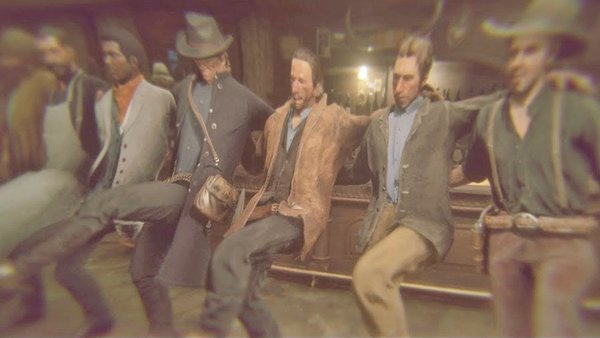
Red Dead 2 is one last hurrah for the cowboys, the rule-breakers and those who play Rockstar games to rack up wanted levels and cause chaos. Pre-tuberculosis Arthur Morgan routinely beats people up for money, robs trains or throws a few punches down the local saloon before ending the night three towns over with a killer hangover.
He's the embodiment of reckless youthful abandon in a world that doesn't provide any penalty, and in many ways, it's the last time we'll see that old school Rockstar spirit made playable.
Cont.

Fascinatingly, the close of Red Dead 2 makes a 50/50 judgement call on how you played. Get in the top half with enough Honor accrued from not robbing people or slaughtering at will, and Arthur will pass away in relative peace on a mountaintop, watching the sunrise.
Land in that bottom half, though, and Morgan gets put down like a rabid dog, screaming at antagonist Micah Bell as he's ready for it all to be over.
In pretty stark terms, Dan Houser's final comment on his own legacy is writ large right here.
Rockstar's crime sandboxes created two types of player - those that see the story through, and those that go on endless crime sprees. Play Red Dead 2 ignoring the reality of the world around you - the building blocks of modern day civility and mutually-assured community - and Arthur's story ends on a bum note.
Find a reason to survive with purpose, stay away from unnecessary crimes and help out your fellow human, and you're gifted an altogether more uplifting finale.
GTA in particular has always been a black mirror to those who play it. When given full autonomy to drive sports cars, fire machine guns, kill people and whatever else comes to mind, how far will you go?
By wrapping all those thoughts into one final project - in itself thematically dissecting the role of society, wellbeing and camaraderie - Dan Houser speaks mighty powerful parting words, without actually saying anything.
Cont.
Rockstar will continue without Dan Houser, Leslie Benzies and Lazlow Jones, but it won't be the same. Publisher Take Two now have a vested interest in keeping GTA V's online component front and centre, being their profit from its mode alone was a cool $300 million across 2019.
Today, GTA as a franchise is GTA Online.
Where the 2000s saw GTA III, Vice City, San Andreas, GTA IV, Liberty City Stories, Vice City Stories and two sizeable add-ons for GTA IV, the 2010s has been GTA V, its re-release, then GTA Online for the remaining six years. Even GTA V's single player DLC was cancelled and Rockstar's logo appearing before the PS5 reveal only meant GTA Online will continue onto next-gen hardware.
With no overarching creative forces in lead writing or producer positions anymore, you're left - like Arthur Morgan - reminiscing about the past. About a time GTA hadn't hit its glass ceiling, and a group of youthful designers stumbled onto a genre that would change gaming forever.
Along the way they broke many rules and wrote others in stone, actively changing the industry for the better and giving us many of the best games of all time.
I adore this period, it's what I grew up with, and it's one I'm glad to have witnessed year by year.
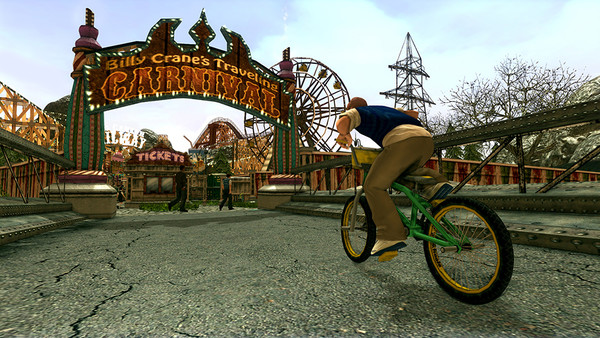
Rockstar's had one HELL of an innings, but like Bioware and Bungie, the key staff that brought you so many iconic scenes, lines of dialogue, music choices, gameplay ideas and more, just aren't going to be contributing going forward.
What that means for how we view the company; what direction their IPs take and whether they can replicate such a phenomenal run, remains to be seen.
For now, just be glad you were there at the beginning, as Rockstar's output will be talked about for the rest of gaming history.
Watch Next
Rockstar Games Quiz: How Well Do You REALLY Know The Studio?
