The Biggest Missed Opportunity In Rockstar History
L.A. Noire should've been a franchise - but maybe not the way you think.

While there have been plenty of incredible highs, it wouldn't be a stretch to say that the last decade of Rockstar Games has been a bit of a weird one. In between successes like Grand Theft Auto V and Red Dead Redemption 2 - in particular the cash cow multiplayer mode of the former, GTA Online - the studio has also presided over several noted disappointments. Red Dead Online was all but abandoned following lofty teases of future content when it originally launched, GTA: The Trilogy - The Definitive Edition had a bonfire release in 2021, and there has also been criticism relating to the volume of Rockstar's output and what has also been perceived as missed open goals. Discounting remasters, Rockstar published just two major games from 2013 onwards, while long-awaited remasters and re-releases of the likes of Red Dead Redemption and Max Payne 3 either underwhelmed or never materialised.
Masterpieces like Red Dead Redemption 2 will of course mitigate any sense of disappointment we might get looking back at the last decade of Rockstar, but the sense of lost momentum and excitement with regard to a perceived lack of fresh ideas is difficult to shake. For some, these feelings may be exemplified in the treatment of Red Dead Online, or perhaps the studio's unwavering focus on the microtransaction-heavy GTA Online. For me, though, if there's any Rockstar franchise that sums up the studio's years of missed potential, then it must be L.A. Noire.
Developed by Team Bondi and published by Rockstar Games in 2011, L.A. Noire was a love letter to hardboiled detective fiction and the noir genre more generally, taking cues from the works of James Ellroy (the writer behind the L.A. Quartet, which includes L.A. Confidential), as well as more classic genre cinema from the 1930s, '40s, and '50s. It was largely a critical and financial success for Rockstar, but apart from a 2016 remaster and a much-memed VR edition of the game, L.A. Noire as a franchise has - like Cole Phelps himself - been swept away with the currents, a sequel seemingly now out of reach.
This is frustrating for a whole host of reasons but undoubtedly the biggest is that, outside of GTA, L.A. Noire is the one franchise in Rockstar's locker that boasts the largest scope as far as potential sequels are concerned. Even though the '40s and '50s are the decades we're most quick to think of when we hear the word "noir", that genre isn't confined to one era of history. Yes, there's plenty more that could be gained from keeping the series there, but L.A. Noire to me would be far more exciting if it took an evolutionary approach to the genre, transcending its post-war roots to tackle gritty '70s detective fiction a la Clint Eastwood's Dirty Harry, synth-set and glossy '80s neo-noir in the vein of Michael Mann, or even a more bombastic and action-oriented approach to the '90s with a game inspired by Tony Scott or Shane Black.
The idea of an L.A. Noire sequel may instantly conjure imagery of '50s excess and returning characters like Jack Kelso, Elsa, and the Mickster, but by taking a different approach, the amount of potential Rockstar has been sitting on gets even clearer.
[Article continues on next page...]
The Best L.A. Noire 2 Setting Probably Isn't What You Think
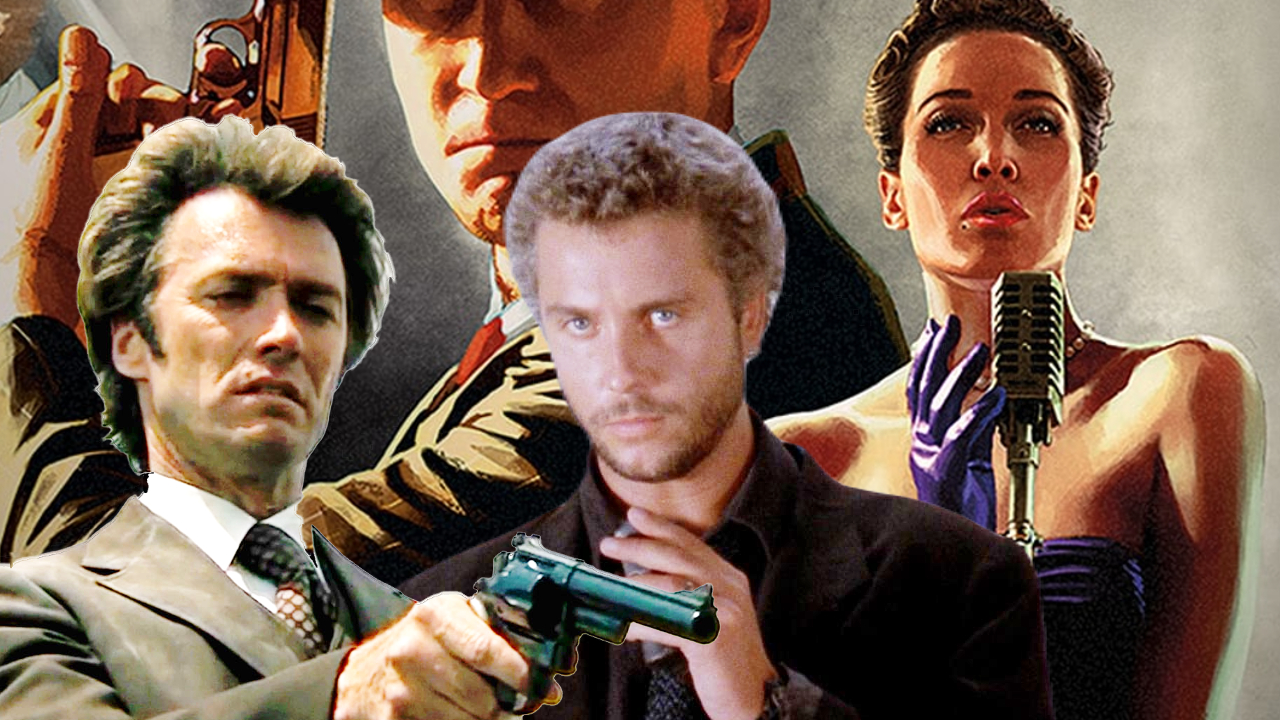
There's no doubt that another '40s or '50s-set L.A. Noire game would be a worthwhile endeavour, but it would - any potential gameplay innovations aside - be more of the same. Team Bondi so expertly brought together the influences of Ellroy and classic Hollywood spectacle that taking the same path again in a sequel, while not without logic, would almost feel redundant. Is there more to be explored with the likes of Jack Kelso and antagonists Captain Donnelly and Roy Earle? Undoubtedly, and thinking in terms of introducing a new generation to the franchise, there is logic in a return to those genre roots. But Rockstar has a history of anthologies - of sequels that switch locations and timelines - and L.A. Noire is the perfect series to inherit that GTA-style approach.
Rockstar as a studio has made no secret of its love for cinema, with both the Grand Theft Auto and Red Dead Redemption series paying homage to crime films and Westerns aplenty, and the studio's iterative approach to Grand Theft Auto has afforded plenty more opportunities to do that than it would have had it been restricted to just a contemporary setting. Whether it's the Miami Vice stylings of GTA: Vice City or the '90s blockbuster approach to action evident in San Andreas, Rockstar has been at its strongest when its games are immersed in a set milieu, and moving through the decades has meant that GTA has been able to redefine its identity across multiple iterations.
Now apply that same approach to L.A. Noire, a game immersed in its genre namesake and post-war setting. What you're left with is an opportunity to explore the evolution of a genre and a city, with each entry departing on a stylistic and tonal front to mirror previous on-screen depictions and capture the zeitgeist of each decade respectively. L.A. Noire 2 would, in this concept, serve as a bridge between classic film noir and neo-noir, taking cues from Don Siegel and Dirty Harry, John Boorman and Point Blank, Peter Yates and Bullitt, with a game set in the mid-to-late 1960s or early '70s.
Where the original L.A. Noire saw Cole Phelps tussle with the likes of Mickey Cohen and the Black Dahlia, a '70s set game could see the player character get embroiled in the Zodiac, cults inspired by Manson and the Peoples Temple, as well as cases drawn from the fiction of the day. Rock, funk and soul would reverberate on your car radio, while in place of a .45 semiautomatic, you could use Harry Callahan's iconic .44 magnum. Hangar 13 channelled these exact influences in its underrated 2016 effort, Mafia III, and it's easy to envisage how Rockstar could transplant those themes into L.A. Noire.
The series could go decade by decade with this approach, paying homage to genre landmarks while entangling itself in the history of the day. For an L.A. Noire game set in the 1980s, that would mean taking cues from Michael Mann - namely his work on the original Miami Vice TV series and the movies Manhunter, and Thief, as well as William Friedkin, whose 1985 neo-noir masterpiece To Live and Die in L.A. provides a perfect visual moodboard of neon and fire for the concept. Throw in some Tangerine Dream, a few MTV hits and some loud, Don Johnson-esque hairstyles, and you're pretty much set for a killer Reagan-era neo-noir.
As for the '90s, Rockstar could take cues from Tony Scott, David Fincher, and Mann again, fusing high contrast, Bruckheimer-esque action with dark and gritty subject matter. Who wouldn't want to tear up L.A. as a coked-up Vincent Hanna surrogate, or as a down-on-his-luck private eye along the lines of Bruce Willis' Joe Hallenbeck in The Last Boy Scout?
The point in and amongst all this noir gushing is that the genre is diverse, and L.A. Noire need not be beholden to one era or setting. Moving forward through history would provide an avenue for Rockstar to exploit its deep affection for popular culture, as well as one that would challenge its storytelling abilities. Outside of Red Dead, Rockstar's games have largely been defined by their irreverent approach when paying tribute to their cinematic forebears. Taking on Team Bondi's world, however, would hopefully play more to the strengths we saw the studio exert in Red Dead Redemption 2, a game that ranks among the very best as far as narrative and performance is concerned.
[Article continues on next page...]
Rockstar's GTA Focus Makes Sense, But It's Also Boring
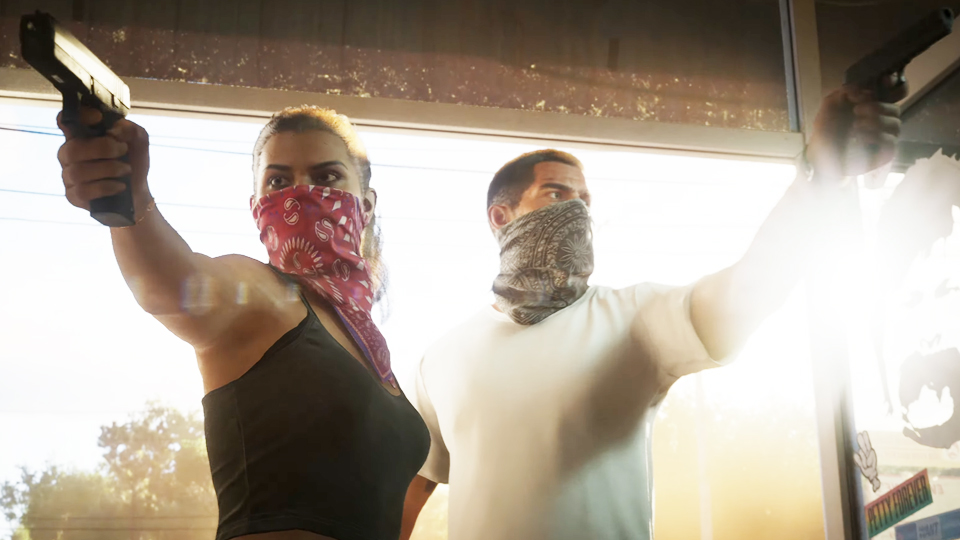
And this is the other reason why I'm holding out hope for Rockstar to resurrect L.A. Noire - GTA, while very much a beloved, stupidly successful pillar of the industry, has gotten stale. There's no doubt in my mind that the upcoming sixth mainline entry is going to be an industry leader across every metric that matters - and also become the fastest, highest-selling video game of all time - but its overdue arrival isn't without some notable asterisks.
For one, there's the saturation of GTA V, a game that has been re-released across multiple console generations and whose multiplayer component, GTA Online, has swallowed up so much of Rockstar's attention over the last decade because of its cash cow status. That's a lot of time to spend in one iteration of a franchise, no matter how good it is, and that sense of overfamiliarity not only lessens the shine of GTA, but also draws attention to the lack of investment and attention given to other areas of Rockstar's stable - specifically Red Dead Redemption, Max Payne, and of course L.A. Noire. There's no denying the quality or potential in GTA, but its vortex-like grip on Rockstar makes the company less interesting.
Compare Rockstar's 2007-2013 period to the 10 years that immediately followed. Within those six years, Rockstar developed and published a variety of titles, including two GTAs (plus accompanying single-player DLC), a cult-favourite Max Payne sequel in Max Payne 3, and two new franchises in Red Dead Redemption and L.A. Noire. The studio followed up that period with arguably its greatest work to date in Red Dead Redemption 2. Still, even that seemed to play second fiddle to GTA V once the dust had settled on its release, with Rockstar releasing constant updates for GTA Online during and after RDR2's launch, as well as a next-gen remaster - something that Red Dead Redemption and Red Dead Redemption 2 are still yet to receive.
Economically speaking, the neglect of Rockstar's other franchises makes a frustrating amount of sense. GTA rakes in billions of dollars each year, and that's without having to release a new instalment. L.A. Noire and Red Dead Redemption both sold well, but they didn't reach GTA numbers, and likely never will. Grand Theft Auto is a cultural behemoth, and between that and the reality that game development is getting longer and more costly, pursuing those less popular franchises will make less business sense to Rockstar and Take-Two - even if the end result is a cannibalised and fundamentally more boring iteration of an industry-leading studio.
[Article concludes on next page...]
Could Max Payne Remakes Give Hope For L.A. Noire 2?
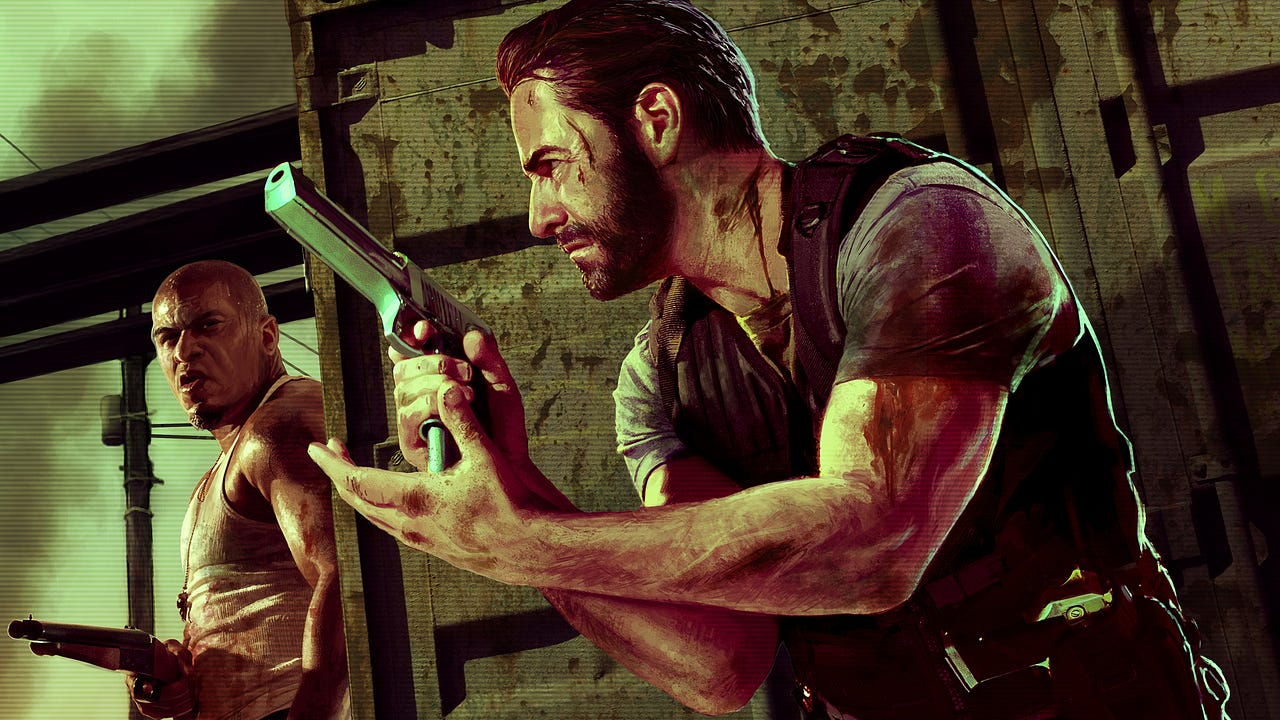
While all eyes are currently on Rockstar as it develops GTA VI, the company is also set to publish its first non-GTA/RDR game since 2012 in the coming years - remakes of Max Payne and Max Payne 2, developed by Remedy Entertainment. Remedy's new project will update and repackage the first two Max Payne games as one epic remake, marking the first new instalment in the franchise since the Rockstar-developed third entry dropped 12 years ago. They're fundamentally Remedy titles, but their release feels somewhat significant as far as Rockstar is concerned. It's been non-stop GTA and Red Dead Redemption since 2013 - give or take one L.A. Noire remaster - and the fact Rockstar is funding and publishing the effort is the first sign we've seen in a while that it's still enthusiastic about pursuing its back catalogue outside of GTA and Red Dead.
This obviously doesn't mean a new L.A. Noire game is happening, or will ever happen, but it's a positive indication that Rockstar may finally be branching out beyond its GTA bubble for the first time in years. If that is the case, and with the likelihood being that Rockstar will be kept busy with GTA VI and its Online component, there could exist the possibility for other studios to step into the world Team Bondi vacated and for Rockstar to retain involvement as publisher. It might be a long shot, and there's no doubt Rockstar itself could develop a killer L.A. Noire title, but of all the outcomes that could lead to an L.A. Noire sequel, it does seem like it'll take an external studio to get some movement going.
In any case, L.A. Noire is too hot a commodity to be ignored for as long as it has, and the lack of a sequel typifies how even with critical successes and a new landmark title on the horizon, Rockstar today feels smaller than it used to. There's still plenty to look forward to with GTA VI, but that can't just be it for another generation of Rockstar.