The Dark Truth Behind The Sinking City's Nightmarish Enemies
An interview with community manager Sergey Oganesyan reveals what really goes into monster creation.
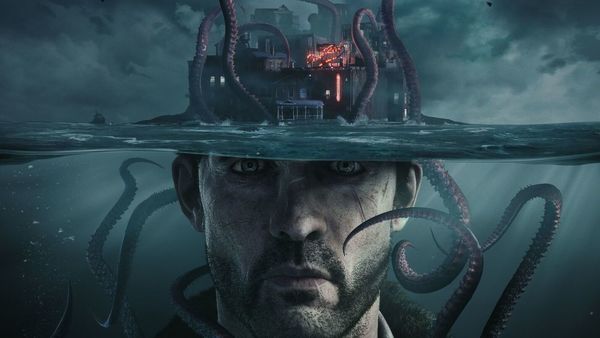
Horror games come in all shapes and sizes. From the weird, transformative gore of Silent Hill and The Evil Within to the slow, creeping dread of Alan Wake, there's plenty of ways that a video game will try and get inside your head. The most recent release from developer Frogwares - known for their detective extravaganza Sherlock Holmes titles - has taken the idea of mind-melting horror and ran with, creating The Sinking City, a world where psychological trauma manifests itself in psychical form.
Taking inspiration from the works of H. P. Lovecraft, The Sinking City is the story of private investigator Charles Reed, who's travelled to the island of Oakmont by way of strange hallucinations and nightmares that he wants to learn the cause of. Oakmont has recently suffered a supernatural flood, bringing with it freakish monsters from the deep and a wave of hysteria that is sending people mad - adding an extra layer of difficulty for the population already embroiled in tensions between cross-species humanoids. It's a bizarre premise, but one that commits so wholeheartedly to the weirdness that it's impossible not to be drawn in, and then be swiftly disturbed by what you find lurking in the darkness.
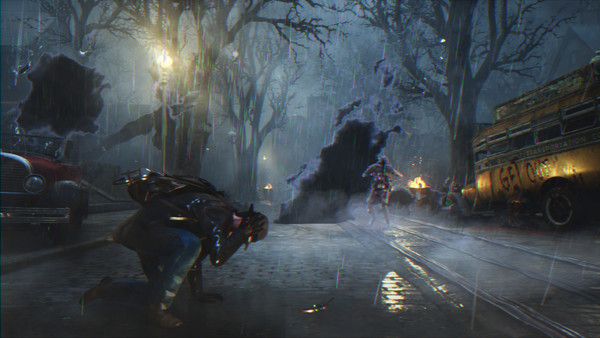
One of the high points of how the game plays comes from the incredible monster creation as you work your way through the various crime cases. Seeing these distorted figures and fleshy abominations is part and parcel of The Sinking City experience, with the unnatural entities known collectively as Wylebeasts informing a large part of the game's horror. It begs the questions of quite how the developers brought these Lovecraftian monsters to life, and what the inspiration is behind something quite so unsettling - which unsurprisingly, is exactly what we asked community manager Sergey Oganesyan at the game's recent launch event...
[Continued on Page 2]
H. P. Lovecraft's fingerprints are all over this game, which Oganesyan mused on initially:
"The best part about Lovecraft for us is that there's a lot of descriptions but they're all very vague. You don't really know the exact outlines of a creature from Lovecraft's novels, and it means that things are open to our interpretation. Whenever we design monsters, it goes from narration, to coming up with the design in words, then it goes to the concept artist, and then it goes to the 3D modeller, who actually shapes the monster."
"At each stage the decision is influenced by the people who actually do the job, and people who love Lovecraft have a pretty good idea of what a Lovecraftian monster would look like. It's not only tentacles! It's the shapeless figures, unnatural stuff. When I spoke to the concept artist who designed the monsters, the best idea that he gave me is that we're trying to mix Lovecraftian monsters with something else."
And that 'something else' can be anything from spindly collections of hands to various other decomposed body parts, as the game gleefully combines human nature and Lovecraftian horror for its otherworldly monsters:
"There is this idea that when you see creatures that look human - or they have human parts - they look like a human, they act a little bit like a human, but at the same time they are not exactly human. And when you notice this difference that's when your mind goes 'Okay, there's something very wrong here.' [...] And we are pursuing this idea with some of the monsters in The Sinking City."
He summarised it as so: "We want to give them humanoid features. We feel it's the best kind of monster, it's something you can relate to but not exactly. It's really weird."
[Continued on Page 3]

The idea of the uncanny springs to mind with this description, where a feeling of familiarity is set up but distorted ever so slightly so that it's not the same thing you know and are comfortable with. Human-based robots and dolls are the most explicit example of conjuring this creepy feeling, but creating people in a video game would also stretch to the uncanny by way of them being pixellated recreations of our every day that are then manipulated to fit a fantastical narrative.
This is important, as it's not just the enemies that get this treatment, with the inhabitants of Oakmont also succumbing to Frogwares' conception of the uncanny - from the fish-faced Innsmouthers to the hybrid ape family of the Throgmortons. Oganesyan explained:
"The idea was to normalise these kind of people. You see them in the game and they act like - it's the same idea probably as monsters - they act normal, and they are definitely part of this world. But you're not part of this world, and we wanted to bring this idea that it's natural for this society but it's not natural for you."
Of course, it's not as easy as deciding what would look a little weird and slapping it all together though, with the developers working through different avenues of their ideas as the game grew. The application of blood is always a big one in these types of games for how effective gore can be in terms of their enemies:
"There's a lot of variations of the monsters, we'll look at them and then examine if we feel any emotions when encountering the creatures in the game. We have different styles, we had ones with more gore, more violent creatures, but at the same time we decided that there's only so much violence we can implement in a Lovecraftian game."
[Continued on Page 4]

"Some people will not find them terrifying because they're really all just blood and gore. Some people will. But at the same time, we decided to go with a slightly more subtle way for Lovecraft - it's the same with jump scares, people won't appreciate a lot of gore in a game like that. That's why we decided to tone it down a little bit."
Interestingly, whilst the gore doesn't make it to the screen in a big way, behind the scenes was a completely different story. Oganesyan gave us an insight into the foley that goes into giving monsters explicitly creepy sound work, and the process isn't what you'd expect:
"To create one of the sounds for one of the monsters we actually bought in a chicken - it was obviously from a store, it wasn't a live chicken - but we dismembered it. And we decided to do all sorts of weird stuff with that to create sounds - it's the sound of dead meat, basically, and we put it in the game as we felt it was good. One of the other ideas was one guy at home with his recorder on, and he took a ride in the elevator. And it sounded really cool, really supernatural and otherworldly. Sometimes it takes a bit of improvisation."
Even the most innocuous of items were utilised to their most creepy effect: "We were walking inside the office and the door was squeaking, and we were like 'okay that's a really weird squeaking, we've gotta put this in the game!"
[Concluded on Page 5]
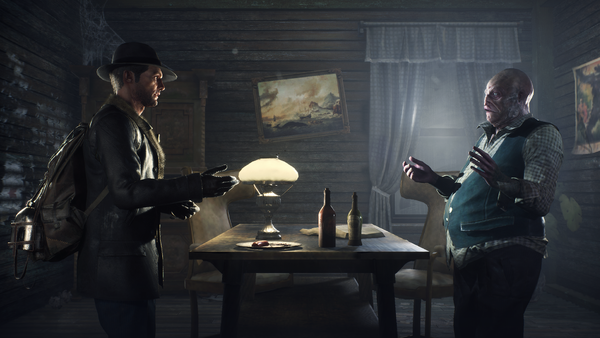
The point that was driven home really lay in Frogwares' ambition to translate the known, the comfortable, into something quite different - toying with players' sense of reality by presenting them with weirdly familiar and horrifyingly otherworldly creations at each step of the game's progress. The Sinking City replicates Charles Reed's own hallucinations and loss of sanity by superimposing this uncanny feeling throughout, making us never quite sure when something terrifying is going to rear its ugly head - and quite how it's going to effect us in the process.
Overall, the intent was for something akin to the horror greats that influenced the genre originally. Oganesyan mentioned Silent Hill a number of times on a comparative basis, but it was his closing thoughts about that game and his own that summarised The Sinking City's eerie magnetism:
"Silent Hill was disturbing, but scary at the same time. We're more going for a really disturbing and weird kind of theme. Silent Hill was all about scaring you, not like jump scares, but with suspense and atmosphere. We have taken this idea of a psychological thriller, where it's really disturbing - but I wouldn't say it's really scary."
Frogwares wanted something that would sit with you mentally rather than playing up to shock value, wanting to leave a lasting impression psychologically instead of instant fear. And with their approach to eldritch monsters, fleshy soundscapes, and pervasive, gloomy tone - they definitely hit the nail on the head.
This interview has been edited and condensed for clarity.