The Horrible Truth Behind Microsoft Buying Bethesda
The gaming industry should be extremely worried about Microsoft's $7.5bn acquisition.
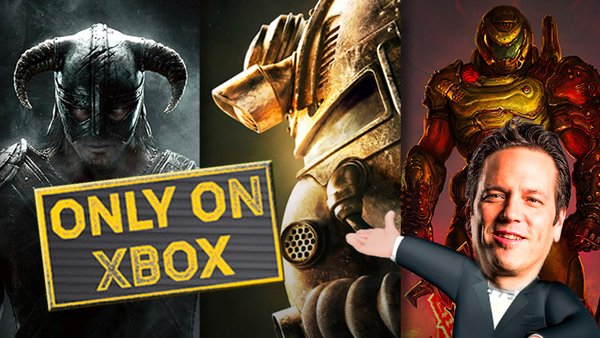
After years of gamers teasing Xbox for its lack of exclusives and in-house game development, Microsoft clapped back by buying Bethesda’s parent company for $7.5bn.
Microsoft’s acquisition of Zenimax Media includes the rights to Doom, The Elder Scrolls, Fallout, Wolfenstein, and many more. To put the deal in perspective, Disney purchasing LucasFilms and Marvel totalled to just over $8bn, so Microsoft has hedged its bets on Zenimax and its child studios raking in the cash during the next generation of gaming.
Of course, it’s no coincidence that Microsoft made its move now. We’re fast approaching the Xbox Series X’s and PlayStation 5’s release dates, and with both the consoles’ specs and prices appearing neck-and-neck, it may be up to the consoles’ libraries to clinch undecided console buyers.
Acquiring gaming studios to gain launch titles is a tried and tested strategy for Microsoft. 20 years ago, Microsoft bought Bungie, who was working on a little game called Halo: Combat Evolved. Microsoft made the game a launch title for the Xbox console and in the following years, Master Chief became Xbox’s ubiquitous mascot, amassing a net worth of $5bn in 2015.
In recent years, however, Halo has had more stumbles than smash-hits. While Halo Infinite boasts a new, exciting adventure for Master Chief, the Halo franchise can’t be Microsoft’s one-trick pony forever.
So, Microsoft went ahead and bought the keys to the biggest gaming franchises today. PlayStation fans are rightly worried that upcoming Bethesda fan favourites could end up as Xbox exclusives. Yet Microsoft has been relatively amenable so far. Ghostwire: Tokyo and Deathloop will remain as PlayStation exclusives for the time being, and The Elder Scrolls Online will continue to be supported on the PS4.
On paper, this deal seems like a positive move with plenty to be excited for; Fallout New Vegas could finally receive a sequel with Obsidian and Bethesda working under one roof. However, Microsoft’s purchase signifies a massive change in the gaming industry, one which may prove to be a horrific case of history repeating itself in the long run. And it all has to do with the Xbox Game Pass.
Fallout, Elder Scrolls & More Locked Behind Game Pass?

In advertising for the Xbox Series X and S, Microsoft has spent a lot of time and energy promoting the Xbox Game Pass and its cross-gen play. Game Pass is a reasonably priced monthly subscription that gives players access to over 100 games. The platform also promises that all Xbox Game Studios titles will be available to play from Day One, incentivising potential Xbox buyers. However, as the console release dates loomed, the calendar for Xbox-made game releases was seriously lacking.
Wouldn’t it be great if Microsoft acquired some universally adored games for Game Pass? Well, that’s what Microsoft has been doing long before the Zenimax Media acquisition. Ninja Theory (Hellblade), Double Fine Productions (Psychonauts), and Undead Labs (State of Decay) are all now a part of the tech giant's flagship.
Microsoft can steer its army of gaming studios towards building a library of exclusives for Game Pass and doesn’t even have to make massively popular games like The Elder Scrolls 6 Xbox-only. Microsoft can make a profit from PlayStation players by releasing ES6 as a non-exclusive, but can also incentivise prospective Xbox consumers if newly-released Bethesda games become available on Game Pass from the launch date.
Of course, it won’t be long before Microsoft starts using Bethesda’s namesake for exclusives. Starfield is a likely candidate as it's a brand new IP, with Zenimax Online (responsible for Elder Scrolls Online) announcing a new AAA game in pre-production. What we’re seeing is the beginning of Microsoft’s take-over of the gaming market, as the company capitalises on the next biggest gaming trend: streaming subscription services.
The Console Wars Are Over, Subscriptions Are The Future

As we enter the new gaming generation, paying for a subscription to a library of games, rather than buying each separately at extortionate release prices, will become the norm. And Microsoft seems to be leading that brigade with the well-established Xbox Game Pass.
PlayStation Now is, of course, a worthy competitor, yet Microsoft has significantly improved its portfolio with the Zenimax acquisition. Microsoft could pull the licenses to games like Doom, Wolfenstein, and Fallout from PlayStation Now. That seems like a drastic move to many, but to Bethesda’s ex-founder Christopher Weaver, it's not impossible:
"There are only a limited number of proven creators of AAA. What Microsoft owns, Sony cannot get."
In all honesty, Microsoft doesn’t need to spite PlayStation players. Microsoft can make a profit licensing Zenimax and Bethesda IPs to PlayStation Now, resting easy in the knowledge they’re paying zilch to put those games onto Game Pass.
Sony is also financially unable to make big acquisitions, while Microsoft has the cash to spend expanding its franchise empire. The company has already incorporated EA Play into Xbox Game Pass, and rumours have circulated for years that Microsoft has its eyes on Sega. Microsoft CEO Satya Nadella has said herself that Microsoft is looking for more studios to buy:
"We'll always look for places where there is that commonality of purpose, mission and culture."
Amazon's new Luna platform may have a shot at competing with Microsoft financially, but Amazon Game Studios has only just turned its head away from mobile games and onto AAA game development. Microsoft is, in every way, ahead of the competition in the game streaming market. Not even PC gamers are safe, with the beta version for PC Xbox Game Pass now online. With other companies scrambling to follow Microsoft's footsteps, we only have to look at past problems with other entertainment streaming services and monopolies to see the dark future looming for the gaming industry.
Why Wouldn't You Get Game Pass?

Xbox Game Pass has quickly become the most affordable way to play AAA games, with players spending as little as £7.99 a month to stream Doom Eternal, Destiny 2, and Gears 5. With the service reaching 15 million subscribers, it won't be long before streaming games become a popular option for players. Yet platforms like Game Pass could lead to devastating results in the future.
With games becoming available on Game Pass from Day One, it will become more costly to buy games as hard-copies. The incentive to buy discs is slowly dying out, with many hard-copy AAA games, making players spend hours downloading content once they get home and insert the disc into their favoured consoles.
With more and more games bought digitally, many players are only paying for a license of a game. If game companies decided to unlist a digital game you "own", it may become lost forever. P.T. is a prime example of a game that is unfortunately no longer available after being removed from PSN, dwindling out of existence. The preservation of games becomes increasingly difficult as streaming becomes more commonplace.
Modding is also a concern. With players no longer owning the hard copy of a game, it’s significantly more challenging for fan-made mods to be implemented, especially on consoles. It’s no secret that Bethesda would like to monopolise on the modding community, after their highly-criticised move of forcing paid mods onto Skyrim. Hopefully, the company has learned from the backlash it received, but there are no guarantees. Under the helm of Microsoft, Bethesda could make bolder moves to restrict free, easy-to-install mods in future titles.
Something Doesn't Feel Right

Looking at the video streaming industry could provide insight into the horrific direction the gaming industry may go down. The original idea behind Netflix was to give viewers more freedom with what they could watch, without being restricted by television schedules. Over the years, however, streaming services became an infuriatingly pricey market where consumers have to shell out extortionate amounts of money over multiple streaming platforms to watch all the exclusive content.
If streaming services like Xbox Game Pass, PlayStation Now, and Luna decide to compete via exclusives, they will force players to choose between libraries, rather than what console and system best fit their needs. And with Microsoft currently holding the most lucrative IPs in the gaming industry, they are fast becoming the optimal choice. After all, the streaming services with the best content libraries lead the market.
Microsoft appears to be going down the Disney+ path of having both nostalgic classics and modern-day smash-hits supply its library. They are on track to become the monopoly that swallows promising studios. This is a worrying thought considering Microsoft has been known to quietly shut down studios they don’t need.
While the Xbox Game Pass is well-priced now, with more titles added to its library and less consumer choice, price-hikes are more than likely. You only have to look at the US's Standard Netflix price that has risen four times in the past eight years. With Microsoft getting a stranglehold on the market, it isn’t a stretch to believe they will increase prices, and even have players fork out more money for “premium” games, akin to Disney+ subscribers having to pay an additional £19.99 to watch the live-action reboot of Mulan.
Make Love Not Console Wars

Of course, Microsoft could prove me wrong and go down a different path, continuing to provide hard-copy games, keeping titles non-exclusives, and conscientiously buying new studios to produce outstanding products. But looking at Microsoft’s behaviour so far and their shopping spree of respectable game studios, the most financial option for Microsoft would be to expand the Xbox Game Pass.
If gaming companies are going to make streaming services their primary source of income, they have to learn from the mistakes of TV streaming services that competed via exclusives. Better UI, multiplayer perks, and faster streaming are all more healthy alternatives streaming platforms can compete over, putting the consumer first by allowing them to pick the platform that provides, from their perspective, the best service.
If Sony, Microsoft, and other companies share licenses with each other, we could enter a new golden age of gaming.
On the other hand, Microsoft’s acquisition of Zenimax Media provides the company with a tempting choice of first-party exclusives, something they desperately need if they want to sell Xbox Series consoles. With big-brand names like Bethesda, Microsoft may have nudged their consoles into gamers’ first choice.
In any case, Microsoft holds the power to shape the gaming industry for better or for worse. Over the next few years, we'll have to watch closely how Microsoft release new Xbox Game Studio games to see what future is in store for us gamers. Microsoft: the ball's in your court.
Watch Next
Elder Scrolls Quiz: How Well Do You Know Skyrim?
