The Last Of Us Episode 3 Review - 8 Ups & 0 Downs
The Last of Us just delivered one of the best TV episodes of the year.

Focusing on the relationship between prepper (sorry, survivalist) Bill and his partner Frank across the previous 20 years, unlike the first two episodes which were defined by trauma and loss, The Last of Us episode three gives us a bona-fide love story. And in doing so, Craig Mazin and Neil Druckmann might have also delivered one of the best TV instalments we see all year.
While Ellie and Joel both still feature, this is absolutely guest stars Nick Offerman and Murray Bartlett's time to shine, with the pair playing unlikely lovers attempting to survive -- and more importantly, live -- in a walled off and well fortified street just outside Boston.
With tremendously rich writing, incredible performances and directorial subtly that conveys huge pathos, The Last of Us episode three deviates greatly from the source material to deliver the show's first creative knockout.
--
UPS
8. Nick Offerman's Emmy-Worthy Performance
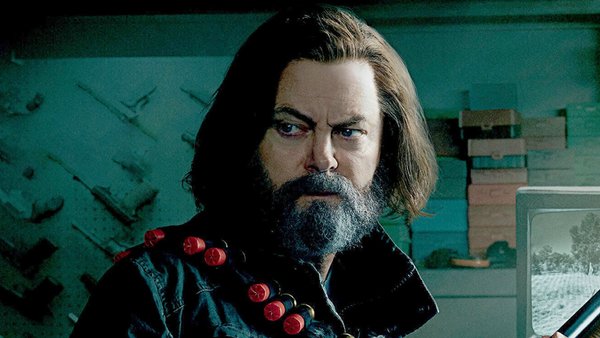
After watching episode three, it’s absolutely nuts to think Nick Offerman wasn’t always the first choice for the role of Bill. Not only does Offerman look the part - with the addition of a big bushy beard of course - but in the early parts of the episode he gets the paranoid, eccentric parts of the character down to a tee.
Known for his comedic chops, it was always a given that the humorous side of the character would be in good hands, and Offerman nails Bill’s awkward, dry dialogue and worldview. Hell, big up for that giggle while eating strawberries alone. That was pure Ron Swanson.
But it’s the more understated dramatic moments that prove Offerman was the perfect choice. Bill as a character is someone who is adept at the cold survival of apocalypse living. There’s nobody better you’d want by your side if you just wanted to be as efficiently safe as possible. But he’s a man who struggles to connect to both himself and others, and Offerman plays the character with an underlying tenderness that makes him feel so human.
It’s the little touches: the awkward posture around other people, some excellent deer-in-the-headlights eye acting and an overall tension that you can practically feel exuberayting from this guy’s frame. This is a dude who you’d believe could survive for 100 years, but not live a single day of it.
7. A Romance Story With Heart
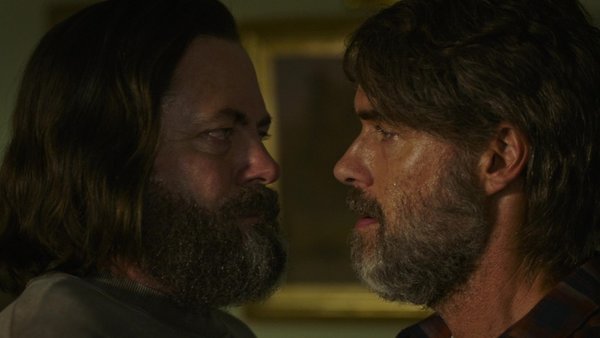
It of course helps that Offerman has a brilliant scene partner in The White Lotus’ Murray Bartlett.
The exact antithesis of Bill, Frank is instantly approachable and warm, coaxing Offerman’s character out of his rut and changing his worldview to something ultimately more hopeful over the course of 20 years. The two have great chemistry, and you believe that this guy could melt the exterior of this closed-off survivor, and help him see the world and himself in a more positive, human way. He not only allows Bill the ability to finally feel comfortable in his own sexuality for the first time in his whole life, but feel comfortable opening up to and caring for others generally - something Joel has absolutely closed himself off to at this point.
The relationship itself is pitch perfect, like Before Sunrise: Apocalypse Edition. Or, as one great tweet by Kate Leth put it: “Finally… a san junipero for men”.
Bill and Frank’s first scene in bed, the pair eating the strawberries, hosting Joel and Tess, Bill apologising for for getting old quicker than his partner - it's all rich writing bolstered by brilliant performances, delivering characters that feel fully formed, compelling and human.
6. Incredible Visual Storytelling & Attention To Detail
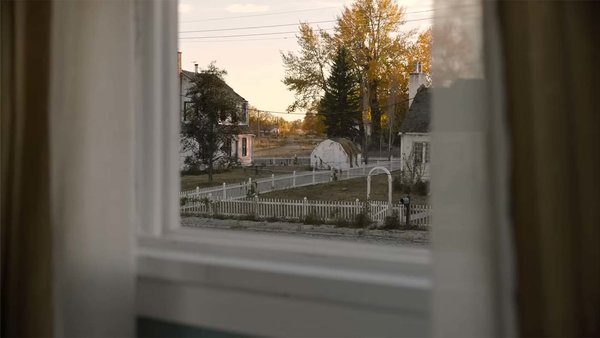
What's particularly great about the episode's storytelling is that, rather than being told about how the characters have changed over 20 years, we're instead shown. Yeah we get dialogue-heavy scenes, with the pair arguing about whether or not to make friends with strangers, how they’re going to make this fortified street a home, etc. But their relationship is primarily portrayed visually.
My supremely talented colleague Psy pointed out on Twitter the way actors are framed and how much that says about the way character relationships evolve. In their first dinner, for instance, Bill and Frank are seated as far apart as possible. In their final dinner, Bill is right there in the seat next to him, having bridged the gap physically as much as he has emotionally.
The episode is full of little touches like this, from the symbolism of Frank swapping one of Bill’s guns for strawberry seed - literally swapping a symbol of violence out for a symbol of love in this case, to Bill watering flowers that he previously would have found as frivolous and unimportant to his day to day chores. The set design does a lot of heavy lifting in this regard too, as Bill and Frank’s home transforms from a drab, functional house, to one full of colour and art.
5. Love Through Actions, Not Words
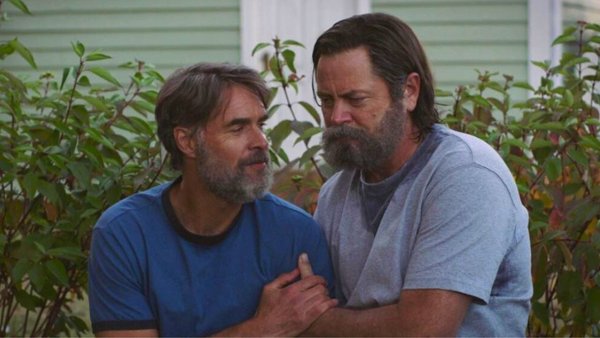
My favourite detail of the bunch -- one that deserved its own entry, even -- is how Bill alters the way he angles Frank's plate while serving dinner.
In their first scene as strangers, Frank actually corrects Bill’s angle to one he prefers. In their final dinner, Bill gets it right. All of these touches remind me of a quote from Michelle Zauner’s Crying in H Mart and, if you’ll let me, I’m gonna get a bit soppy. The quote goes like this:
“That was how my mother loved you, not through white lies and constant verbal affirmation, but in subtle observations of what brought you joy, pocketed away to make you feel comforted and cared for without even realizing it.”
That quote sums up the importance and significance of all these details. They ultimately make the relationship feel real, and convey love more potently than a grand TV speech ever could. Big ups for this kind of storytelling
4. The Heartbreaking Final Dinner Scene

Speaking of this meal, Bill and Frank’s final day together generally is some of the finest TV we’ll see all year, too.
After falling sick, Frank wants to end his life on his own terms, addressing that their relationship hasn’t been perfect, but he wants Bill to give him one last good day to remember and “love me like I want you to.” Bill decides this life isn’t worth living without his partner and more, that he’s content to go to, having grown old and frail himself.
This table scene is superb in every sense, expertly acted while avoiding getting too melodramatic. More importantly, it’s not framed as a tragedy either, but rather the pair getting as happy an ending as someone possible could in this situation.
As Bill says, he’s old, but he’s satisfied. Though their deaths are heartbreaking, it’s not in the same way as Sarah or Tess’, showing us that love and connection is still possible in a world gone to hell.
So far we’ve seen plenty of reasons why someone like Joel would become a hardened shell of a person. This world can and will kill the people you love and as Bill says, the government are made up of literal nazis. Episode 3 was an essential reminder that there’s still reason to fight — and that survival for the sake of survival is a death in itself
Speaking of...
3. Bill's Letter To Joel
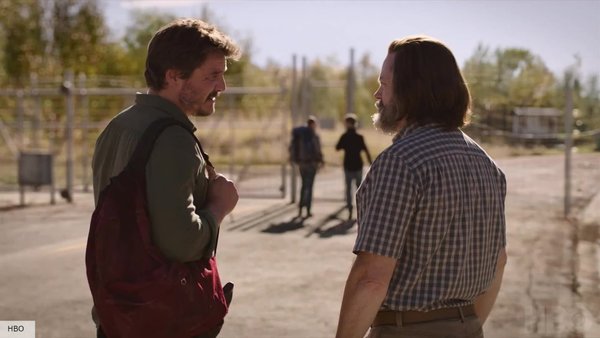
Believe it or not, but Ellie and Joel are in this episode as well.
In a great subversion of Frank’s bitter letter to Bill in the game, here it’s Bill who leaves Joel a letter after his death. And it’s this letter that drives home why we just spent the last hour watching the relationship of these dead side characters play out.
Bill, like Joel, is a man who was at one point entirely closed off, single-mindedly focused on getting through the day. Unlike Joel though, Bill’s 20 years changed him for the better. That's because unlike Tess, Frank asked Bill to feel the way he felt, and was better for it.
He tells Joel he was wrong to live the way he lived for so much of his life, and that the purpose of men like them is to protect and love the people closest to them, rather than remain isolated. Following on from Tess’ instruction to save who you can save, this advice is no doubt going to be instrumental for Joel’s character development going forward.
It’s as subtle as a sledgehammer, but Bill’s words wouldn’t be as compelling as an argument if we hadn’t just seen how this ideology had changed his life for the better. For anyone who might decry this episode as filler, this letter and its impending impact (alongside getting the battery, car and tooling up) is precisely why it is not.
2. Ellie & Joel Bonding

With this in mind, it's also important to note that we got some advancement in Ellie and Joel's relationship in this episode. The pair are still frosty, but Joel's explanation (or, I suppose, theory as it's not officially confirmed) of how the infection hit so hard thanks to tainted food not only allowed for some world-building exposition, but for Joel himself to slip unconsciously back into a fatherly role.
This fatherly role re-appears at the end as well, as Ellie explains how alien it is to be sitting in a real car. The awkwardness of Joel having to put her seatbelt on for her again evokes a paternal instinct he usually tries to repress. Though they still have a long way to go, it's clear in these situations that the man Joel was isn't as buried as he wants to believe.
Joel hitting Ellie with the "only you" comment when she asks if there are any monsters in a room was also great. You know they're gonna hit you with that again during an otherwise traumatic scene further on down the line.
1. Filling In The Time Skip
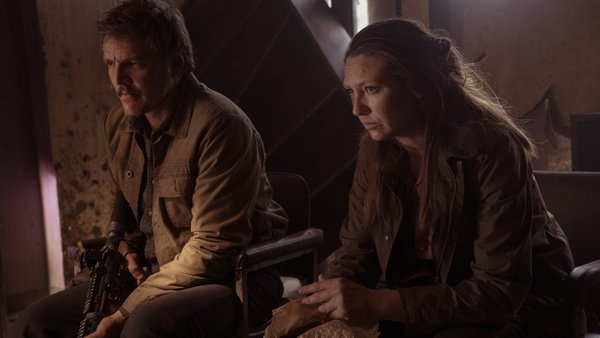
Though we didn't get a cold open this episode, we of course did get an extensive and welcome look into the early years of the outbreak. This initially is spurred by Joel's explanation that FEDRA soldiers gunned down survivors who would otherwise overcrowd a full quarantine zone rather than let them become infected in the wild.
Bill's early apocalypse routine was a joyful montage to watch, but perhaps the most pivotal scene came with Bill and Frank's first meeting with Joel and Tess. Not only did this sequence give viewers all they need to know to understand Bill and Joel's mutual respect (the latter's "get that gun out of my face" line being a particular highlight), but it also subtly deepened Tess and Joel's relationship.
In the game, it's never stated just how long the pair had been partners. This flashback made it clear they've been together for at least 10 years, making her loss last episode even more potent.