The One Video Game Feature Everyone Is Sick Of
Roguelikes and permadeath mechanics are so common in games today. Have they outstayed their welcome?

They say that imitation is the sincerest form of flattery. If this is the case, social media users around the world are surely humbled when their joke is copy-and-pasted by thousands of others. Rogue, too, must be feeling like an absolute rockstar just now.
There are certain genres and tropes that the gaming industry just can’t seem to let go of. Metroidvanias. Battle royales. Open-world exploration titles with survival elements. That retro pixel art aesthetic so many games are lumbered with these days. Then, of course, there’s the roguelike.
Fans of these genres have an absolute bounty of riches to choose from, which is all well and good, but even some of the most committed fans have to admit that market saturation breeds contempt.
Roguelikes tend to have a lot of the common traits that dedicated gamers prize the most: freedom to customize builds, a steep challenge, that just-one-more-run factor. They also, however, usually boast one of the most divisive features in video games: permadeath.
Here are some of the best examples of the genre, how they employ permadeath, other titles that have adopted the system and the challenges this tricky mechanic brings to the table.
What Makes A Roguelike Tick?

For the uninitiated, the roguelike sub-genre consists of titles that are… well, like Rogue.
This game, first released in 1980, popularized the concept of procedurally generated dungeon crawlers. Forty years later, the central mechanics of similar titles have been refined and improved in countless ways, but the core experience remains largely the same.
In a roguelike, the player generally embarks on a foolhardy quest through a series of randomly generated areas, with vast numbers of enemies to slay and a lot of treasure to procure from their rapidly cooling carcasses. Along the way, there are often many different power-ups to acquire, with a degree of RNG allowing the player to modify their build on the fly but not really choose it outright.
Many gamers are confused by the difference between roguelikes and rogue-lites, but it’s essentially this: rogue-lites offer a more accessible take on the core experience, with an end goal being the focus rather than specific runs with very little (if anything) being carried forward to the next run. In true roguelikes, permadeath is all but an inevitability.
As Dark Souls Would Say, “You Died.”

Of course, there’s no cut and dried definition of roguelike, rogue-lite, roguelike-like or any other such terms. That’s a major can of worms among players, developers and the industry as a whole.
One thing that can be said with certainty is that, in The Binding of Isaac, Diablo, Spelunky, Slay the Spire, Dead Cells, Supergiant Games’ new full-release smash Hades and other similar series/games, mistakes are easily made and permadeath lurks during every encounter.
The spectre of permadeath is one that constantly stalks the player. Fans of these sorts of titles will know just how deflating it can be to get an excellent run going, with a combination of power-ups that just feels fantastic, only to meet a grim demise with the knowledge that RNG likely means you won’t find that unique loadout again.
On death, the whole experience begins anew, with the player character reduced to their starting powers and not really having gained anything beyond experience (more so of the game, its enemies and so on, rather than EXP) and perhaps a new record in terms of distance reached.
These are exactly the qualities that make such games so darn addictive for fans, but it’s still, quite the blow for a run to come to a swift end. Especially when the player felt that they had the potential to get much further this time around.
Problematic Permadeath

Permadeath, by definition, is a very punishing mechanic.
Those with limited time to play their favourite games in the first place, or those who don’t have the patience to replay early sections of a title over and over to get back to where they were, often find it very off-putting.
At the same time, though, there’s no denying that permadeath absolutely has its place. Part of the joy of the Roguelike/rogue-lite experience lies in learning enemy patterns and behaviours, developing a playstyle, surviving longer and longer and enjoying the satisfaction of steadily improving at the game.
Each ‘successful’ run essentially becomes a new high score, which is super satisfying. It’s just that, when a particularly neat combination of obscure power-ups is achieved (The Binding of Isaac is famous for this) and then lost on death, it’s a real blow.
On the one hand, the quickfire nature of runs lends itself very well to the whole ‘it’s 5am and I have work in three hours, but I’ll just do one more quick run’ thing, but players’ mileage with that will vary.
If gamers are defeated by a boss with a scarcely perceptible slither of its HP remaining, only to be unceremoniously dumped right back at the start with nothing to show for it, they might well be inclined to put the game down for the day/forever instead.
It’s Permadeath, Jim, But Not As We Know It

It’s easy to see how a mechanic as oppressive as permadeath could be an issue, which is why a lot of titles that implement it will try to limit its effects in some way.
Permadeath isn’t only found in Roguelikes. Nintendo’s iconic Fire Emblem franchise, for instance, is notorious for breaking players’ hearts by getting them invested in the storyline and character progression, only for a favourite cast member to bite the dust on the battlefield and be lost forever. These are far from the expendable mass-produced units seen in a lot of turn-based strategy titles.
As such, Fire Emblem: Three Houses added the Divine Pulse mechanic. With this, gamers had the limited capacity to rewind turns in battle to save units (positioning them out of range of the attack that previously killed them). The game also offered a more forgiving difficulty setting that meant lost units would simply reappear at the end of a given battle.
On the flipside, several titles only offer permadeath as a higher difficulty mode and/or optional challenge. In Blue Manchu’s spacefaring rogue-lite Void Bastards, the player takes the role of an unlimited series of prisoners, tasked with exploring nearby craft for supplies and equipment.
Should the player die, they’re simply assigned another prisoner (with their own randomly assigned abilities) and the cycle continues. For an extra challenge, though, gamers can enable iron man mode, which gives them only one character/life. Death both ends the game and instantly deletes the save file. Many games take similar routes.
When Is A Roguelike Not A Roguelike?
With examples such as Void Bastards in mind, it’s clear that the permadeath feature is one that can be tough to implement in a satisfying way. It’s often either optional or at least toned down somewhat.
Even in roguelikes, titles that are all but defined by the feature, developers take steps to make things at least somewhat less punishing. Indie smash Slay The Spire is an intriguing twist on the concept, a roguelike deck-building title in which the player character battles a series of monsters as they traverse the floors of a foreboding tower. They’re able to upgrade and expand their deck of cards as they go, but more are unlocked for future runs in the process.
The mechanics works in a similar fashion to The Binding of Isaac and its various updates and expansions. More powers are unlocked for later attempts based on achievements and successes in the current one. This tends to be the way with roguelikes: just enough progress is being made between runs that failures and permadeath aren’t supposed to be too much of a turn-off. Is this enough, though?
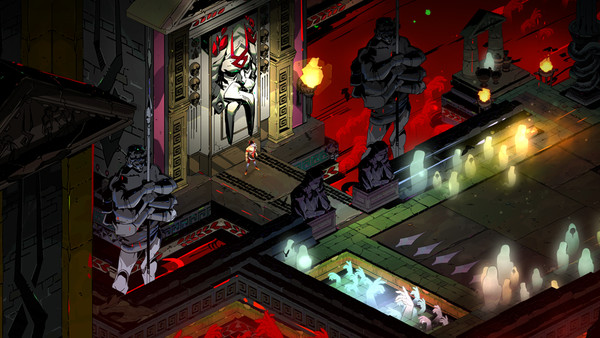
Hades has proven a success with some players who perhaps tend to find the genre too punishing. In this title, gamers take the role of Hades’ son, Zagreas, who is trying to escape the underworld to reach the surface. While he receives many Boons (elemental power-ups) from the gods of Olympus along the way, Hades’ hordes will inevitably defeat Zagreas many time over (depending on player ability, naturally).
On death, he’s returned to the House of Hades, where his snarky father usually berates him for his supposedly futile attempts. The difference with this game, though, is that each death advances the story and relationship between the main characters.
It’s truly engrossing stuff, even though Zagreas doesn’t really get to carry much over between his attempts (though he does power up in various ways). The gameplay loop is very enjoyable, but Hades doesn’t rely on that alone as roguelikes often do. Permadeath, then, is at its least annoying when it isn’t a barrier as literal as it may sound.
Sick To (Perma)Death Of This Feature?

Long-time gamers are more than familiar with the concept of cheap deaths. From bottomless pits and insta-death spikes in the Mega Man titles to Dark Souls’ brutally difficult areas and bosses, there are a thousand different rage-inducing ways to lose a life or be defeated in a given game.
The difference, however, is that even challenging games like those offer outs to the player. They’ll have multiple lives, say, or allow The Ashen One to respawn at the nearest bonfire completely unscathed (save for a need to retrieve any Souls that were lost). The concept of permadeath offers for few such concessions.
With this feature being so central to the roguelike experience, it’s something that genre fans have long since learned that they’ll have to deal with. Runs will go terribly and be cut short thanks to all manner of misfortune and RNG at times. That’s just the way these games function.
Does this make the frustration any more palatable? Perhaps not. There are a lot of tropes in gaming today that have certainly started to wear thin with some gamers (the aforementioned Metroidvania, pixel art and so forth being among them), but permadeath is something that can be altogether more difficult to deal with.
Whether gamers are emotionally invested in a character’s backstory in Fire Emblem, they’re losing a beloved party member to an unfortunate string of events in Darkest Dungeon or they didn’t draw a hand that could’ve saved them in Slay the Spire, so many have felt the sting of permadeath in its many forms.
The issue is, like stylus minigames in the early days of the Nintendo DS, permadeath is sometimes added to a title where it doesn’t really add much, simply for the sake of it. When implemented well, it can up the stakes and the sense of accomplishment severalfold. It’s just striking that balance that proves incredibly difficult.
Still, if there’s one thing Hades’ success has proven, it’s that there are still creative and effective ways to tie this tired mechanic in with a gameplay loop and entirely revitalize it. Here’s hoping that developers take note of this going forward.