The Problem Nobody Wants To Admit About Nintendo
Nintendo hold all the card - if only they'd play them.
Gamers of all ages have a lot to thank Nintendo for.
The NES almost single-handedly brought the dying video games industry back from the brink in the '80s, Mario 64 set incredible new standards in 3D gaming in the '90s, and the Japanese powerhouse have continued to push boundaries and think outside of the yellow question box ever since, innovating and inventing new and bizarre technologies along the way.
However, the very thing which Nintendo themselves may view as their biggest strength is seen by others as their greatest weakness.
The big N's emphasis on dreaming up new and interesting ways to play the next entry in their classic franchises, whether in rudimentary 3D via the Virtual Boy, with motion controls on the Wii, or giving gamers the ability to take full-sized console games on the go with the Switch, is arguably holding them back in the eyes of the wider gaming audience.
Furthermore, with Microsoft and Sony choosing to focus on their back-catalogues more than ever before with advent of Series X/S and PS5, respectively, Nintendo continue to quite literally play hard to get with their classic titles.
So, what does this mean for Nintendo going forward? Is there a way they can leverage their library of legendary titles to truly compete with PSN and Game Pass? How can they win back those "hardcore" gamers who abandoned Nintendo following the Gamecube era?
Well, let's find out, as we look in greater detail at the problem nobody wants to admit about Nintendo.
A Link To The Past

It was not so very long ago that Nintendo occupied the position in which Sony currently sit: the undisputed heavyweight champions of gaming, destroying all and sundry with seeming ease. The NES had made video gaming itself a viable proposition once more, and - quite apart from that - was an amazing system with some legendary titles to its name.
The Super Nintendo continued that trend, with innovative games like Donkey Kong Country and Star Fox pushing the graphical capabilities of the system, and titles like The Legend of Zelda: A Link To The Past and Super Metroid still considered must-plays to this very day. The system was an absolute powerhouse.
The only real challenger to Nintendo's dominance at this point was Sega and, while Sonic and co. did indeed put a modest chink in the big 'N's armour and eat up some valuable market share, Nintendo's position as market leaders and the go-to gaming company never really looked to be in peril.
The significance of this point cannot be overstated, as there exists an entire generation or two of gamers today who would balk at the very idea of Nintendo being the absolute number one gaming company in the world, as the modern perception of old Ninty is very different, but we'll get to that later.
It was, however, with the relative failure of the Gamecube that Nintendo's direction of travel and general ethos began to change. The Gamecube was an odd little machine for the time, with an unusual form-factor and tiny disks, not to mention the inability to play DVDs. For all its idiosyncrasies, however, it marked Nintendo's last attempt to directly compete with its peers in terms of raw power and graphical capabilities. With exclusives like Eternal Darkness: Sanity's Requiem, two Star Wars Rogue Squadron titles, Mario Sunshine, and Metroid Prime to name but a few, there's no arguing that the system certainly had some epic games to its name.
When, thanks to the PlayStation 2 and Xbox, Gamecube ultimately struggled to capture the gaming zeitgeist, Nintendo's response was to go back to the drawing board and revert to first-principles when developing the Gamecube's successor. They would ultimately prioritise creating fun and unique gaming experiences over continuing to measure mushrooms with Sony and Microsoft.
Downhill Jam

Things started to get weird for Nintendo with the release of the Wii in 2006.
The system, as we know all too well at this point, released with standard definition visuals which were only marginally better than those found on its predecessor. At the point of Wii's release, Microsoft's Xbox 360 console had already been available in stores for a while, and gamers everywhere were able to enjoy games like The Elder Scrolls IV: Oblivion and Forza Motorsport 3 in glorious HD. Releasing around the same time as Wii, Sony's PlayStation 3 would also output stunning HD graphics, rendering Nintendo's decision to stick with last-gen technology curious, to say the least.
But it wasn't the visuals which marked Wii out from the crowd, oh no... That'll be the motion controls.
More than enough column inches have been dedicated to the description and denouncement of Wii's motion control tech over the years, so there will be no deep-dive here. Suffice it to say, however, that this offering from Nintendo both shocked and fascinated gamers and critics alike, and definitively marked the beginning of a new era for the Japanese giant.
The Wii was a massive, massive success, and stands to this day as one of the best selling consoles of all time. Motion controls and SD graphics notwithstanding, the Wii was home to two of the best Mario games of all time in Galaxy and Galaxy 2, the best version of Resident Evil 4 to this day, and two very good Zelda titles in Twilight Princess and Skyward Sword, not to mention new entries in the Metroid and Animal Crossing franchises. The system was a true smash (get it?), but in the minds of millions of gamers it was nothing more than a gimmick, a toy that Grandma and little Timmy can play with on Christmas Day, and was not a real, proper, serious gaming machine.
Nintendo's course was set, however, and they would not deviate from their chosen path.
What Are U?

One of the disasters in modern gaming - yes, including Ouya and Stadia - was the reveal of the successor to Wii, the oddly-named Wii U. Once again, Nintendo decided to take a different path to that of Sony and Microsoft, and focused once more on a new, innovative, never before seen control method (at least it was in HD this time, eh?).
Choosing to release the system in 2012, out of sync with the PS4 and Xbox One, the Wii U's marketing was an absolute train-wreck, with trailers and advertisements showing Wii remotes, Wii games, and Wii branding, leading to the general assumption that the Wii U's famed tablet controller was just another in a long line of Wii accessories.
With the advent of PlayStation 4 and Xbox One in 2013, graphics, processing power and - perhaps most importantly of all - the quality and ubiquity of online multiplayer gaming shone a cold, harsh light on Nintendo's latest offering, and it was left for dead in Sony and Microsoft's wake.
Nintendo had officially been dismissed in the minds of the so-called gaming "hardcore", with millions of gamers all over the world who would not be seen dead anywhere near a Nintendo product.
The damage was huge, and Nintendo only had themselves to blame.
Time For A Switch?

Given the colossal failure of the Wii U, many analysts and gamers were genuinely anticipating an announcement from Nintendo to say that they would be pulling out of the console business altogether, and would instead concentrate solely on game development.
These people were very, very wrong, and perhaps incredibly naïve in the first place for counting out the gaming giant. Rather than allowing the failing systems to limp on like a wounded animal, Nintendo took the Wii U out back and shot it in the face years before of the end of the usual console life cycle, and announced the imminent arrival of a new, game-changing system: the Switch.
The Switch's unique blend of both home and portable play, coupled with a library of games which includes everything from Donkey Kong to Doom, and Portal Knights to Postal have seen it smash various sales records month-on-month since its 2017 launch.
The Switch is the place to play the latest and greatest Zelda, the biggest and best Mario, the next Fire Emblem, and the shiniest Pokémon. It has arguably utilised its legendary IPs more aggressively than any of its predecessors, and promises to continue pushing new and exciting titles our way until it has breathed its last breath.
The Switch is a huge success story and a much-needed return to form for Nintendo, but still the old problems persist.
Compared to the PS4 and Xbox One, Nintendo's system is once again grossly underpowered, and it's only thanks to the wizards over at Panic Button and others that many current-gen games are able to run on the plucky hybrid at all. With the arrival of the PS5 and Xbox Series X, however, Nintendo once again find themselves very firmly in last position in terms of graphics, processing power, and - to a certain extent - momentum. So while it is true that Switch sales have continued to impress these last three years, the dawn of the new PlayStation and Xbox generation is a potential threat to the Switch.
Especially when you factor in PSN and Game Pass.
Looking Back, Over My Shoulder...

Although we buy new consoles for new games, there is currently a very deliberate and concerted focus on legacy titles, and both Sony and Microsoft are seeking to shine a bright light on their back-catalogues to augment their efforts to push gaming inexorably forward into the next generation.
Xbox Series X/S' backwards-compatibility credentials are impressive, most impressive, and PS5 is no slouch in this department, either. The ability of these new systems to both upscale and double the frame rates of these decades-old titles cannot be overstated, and gamers have been given a tangible incentive to dust off their old games and experience them all over again.
Aside from revitalising physical titles, however, services like PSN and Xbox Game Pass are potential system-sellers in and of themselves. The ability to play practically any game from Sony and Microsoft's back catalogues for a nominal monthly fee, not to mention being gifted free games every month, is not only ground-breaking but indicative of the direction of travel for gaming in the years to come.
Nintendo's equivalent service on Switch, however, is paltry to say the least.
Whilst it is true that the monthly cost of the Switch Online service is but a fraction of Sony and Microsoft's models, you very definitely get what you pay for here.
The current status of the Nintendo online service on Switch sees players given access to the NES and SNES apps, in which they are able to play a selection - and that's the key word here - of classic titles.
The games themselves are hand-picked and spoon-fed to us by Nintendo, and the infrequent nature of the releases is matched only by the questionable quality of the titles themselves. When gamers are starving and are thrown nought but scraps from their masters' table, it leaves a sour taste indeed.
And the huge, bafflingly-obvious irony in all of this? If any one of the big three should have a monopoly on classic, legacy titles, it's Nintendo.
And that's the thing; Nintendo - more than anybody else - should have the best of both worlds. A Nintendo system in 2020/2021 and beyond should not only be the place play the new Zelda and Mario, but should also allow gamers to swim in the deep waters of Nintendo's colossal back-catalogue at their leisure, and gamers would undoubtedly be happy to pay a few extra Rupees per month for the privilege.
A Game Pass-type service on a Nintendo console should be a no-brainer, but Nintendo just don't seem to think this way.
Error: This Title Is No Longer Available

Even in the current cycle of Switch success, Nintendo still seems to be going to great pains to shoot themselves in the foot rather than capitalising on their momentum.
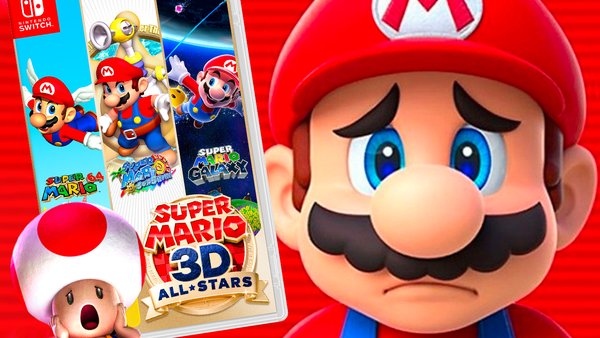
Take Super Mario 3D All-Stars, for example. Fans have been clamouring for decades at this point for remakes or remasters of the classic Mario 3D titles such as Mario 64, Sunshine, Galaxy, and Galaxy 2, so when 3D All-Stars was first teased, fans were justifiably thrilled. Until they learned the finer details, that is.
The collection features only the most barebones remastering work, has next to no additional content beyond the core games, skips Galaxy 2 entirely, and - wait for it - is a limited time release which will be taken round the back and shot in March 2021.
Similarly, the online subscription-only title Super Mario Bros. 35 - a battle royale title in the vein of the wildly popular Tetris 99 - pits 35 players against one another in a last-man-standing version of the 8-Bit classic; what's not to like?
Well, the fact that this game, too, will be forcibly retired in early 2021.
Surely such titles as these should be made as widely available as possible for the longest time imaginable, correct? Of course not; this is Nintendo we're talking about.
Madness, Nintendo... Utter madness. Maybe they're just allergic to money, or something.
Everything's Gonna Be 4K

Looking to the future, then, the general consensus seems to be that if Nintendo are to keep up with Sony and Microsoft, at least for the next couple of years until a true successor to the Switch is released (maybe even day and date with the PS6 and Xbox-Whatever), then they need to prove the rumours true and release an updated version of the Switch.
Should this so-called Switch Pro hit the market at some point in early-ish 2021, it could sport updated Joy-Cons, a bigger, brighter, 4K screen, a larger memory, and a longer battery life. Newer titles would output in native 4K, and older titles could be upscaled as close to this new resolution as possible. This is mere speculation at this point, but mid-generation hardware revisions are now an industry-standard practice, and the New 3DS is evidence of Nintendo's willingness to improve on current hardware.
Whilst an updated Switch may indeed help Nintendo to claw back ground they could well lose to their shiny new rivals, it is on the Switch's true successor that much depends. Were Nintendo to step back into sync with their two main competitors, and look to match - or even better - the technology of the day rather than leaning once more into radical control methods, they could shake off the negative image they seem to have acquired in recent years.
Back In The Game?

Nintendo's biggest problem is the danger of irrelevance. The Switch has helped immeasurably, but they still run the very real risk of simply being dismissed by the majority of gamers - especially younger players who lack any old-school Nintendo nostalgia and just want to play the latest Call of Duty - as the company who have Mario and nothing else. Kids play Nintendo, but "real" gamers play Xbox and PlayStation.
This may sound ridiculous to some, but it is increasingly becoming the prevailing consensus.
Only Nintendo themselves have the power to wrestle the argument and the weight of public opinion back towards themselves and their systems, but they must put their money where their mouth is and actually wow gamers with their future systems the way the PS5 and Xbox Series X have. If Nintendo, too, can induce mass-salivating all over the world with the announcement of a new system like Sony and Microsoft did, they could be onto something.
Everybody knows that Nintendo can dream up all manner of weird and wonderful creations, that they can throw Wii remotes and Labo kits at us until the cows come home to Moo Moo Meadows. However, it may well be that with the exception of only the most die-hard Nintendo fans, people are getting tired of all that.
Perhaps the time has come for such left-field, out of the box thinking to be retired, and for Nintendo to go back to doing what they have done best for the last 40 years: making great games on fantastic consoles.
And no more mobile games... Please, for the love of Ganon, no more mobile games.
Can You Name The Nintendo Exclusive Game From ONE Image?
