The Rise And Fall (And Rise Again) Of Sega
Sega Did What Nintendidn't... For A While.
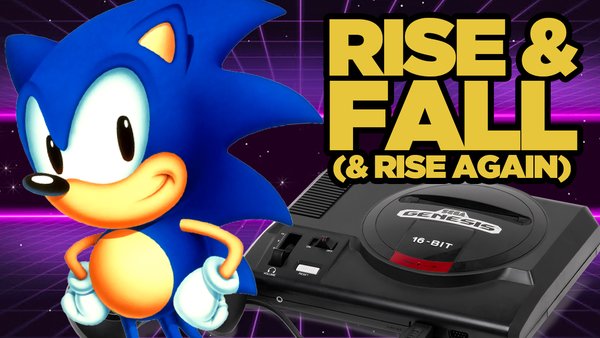
Anyone over the age of thirty will perhaps find it difficult to comprehend that there now exists a whole generation of kids and young adults who have no idea that Sega - you know, the Sonic guys - were once a massive player in the home console market, giving the big 'N' a run for their money and paving the way for Xbox and PlayStation in the process.
Ultimately, however, Sega's home console business became a victim of its own innovation, and their desire to push the envelope and break the mould saw the once mighty gaming powerhouse bow out of the console market altogether.
However, the rumours of Sega's demise were greatly exaggerated, and far from fading away into obscurity, Sega decided to double-down on software development. Slowly but surely, they managed to not only consolidate their position but to thrive, and the company are now entering something of a renaissance, with a future potentially as bright as its past.
"But how did this happen?" you ask. Well, let's find out...
Insert Coin To Start

The best place to start - shock, horror - is at the beginning of Sega's first meaningful foray into the home console market with the 8-Bit Master System, and 16-Bit Mega Drive (or Genesis in the USA). Until this point, Sega was best known for their arcade titles which, to this very day, continued to suck the change out of our collective pockets for decades. For this very reason, Sega's whole mission statement when entering the home console market was - insofar as was possible with the hardware available - to bring this arcade experience into the living room.
Released as a foil to Nintendo's NES console which was absolutely smashing it the world over at the time, the Master System burst onto US and European shelves in 1986 and 1987, respectively, to very different fortunes.
The Master System itself was a perfectly playable, fun system, which delivered on the promise of bringing home Sega's flagship arcade titles with as much authenticity as could be churned out of the 8-Bit architecture.
It could not, perhaps unsurprisingly, topple Nintendo from their lofty position, and struggled badly in both Japan and the USA, with only around 3 million units sold in total between these two territories, despite a much more encouraging 7 million units sold in Europe.
It was with the release of the 16-Bit Mega Drive, however, that Sega really came to the fore.
Released between 1988 and 1990 in various parts of the world, the Mega Drive was a huge success for Sega, selling almost 31 million units during its lifetime, and fared particularly well in North America and the UK.
Aside from the 'Blast Processing' power, the system had under the hood, not to mention the tongue-in-cheek "Genesis Does What Nintendon't" advertising campaign, the main thing the Mega Drive had over the Master System, and allowed it to ultimately take a sizeable chunk of the market away from Nintendo, was a certain blue hedgehog.
It would not be overstating things to say that Sega and Sonic the Hedgehog are one and the same entity in the public consciousness; arguably as synonymous as Nintendo and Mario. This was massively important for Sega, as side-scrolling, 'mascot games' were as in vogue in the late '80s and early '90s as battle royale titles are today, and Mario's reign was virtually unchallenged until Sonic came along.
Begun, The Console War Has...
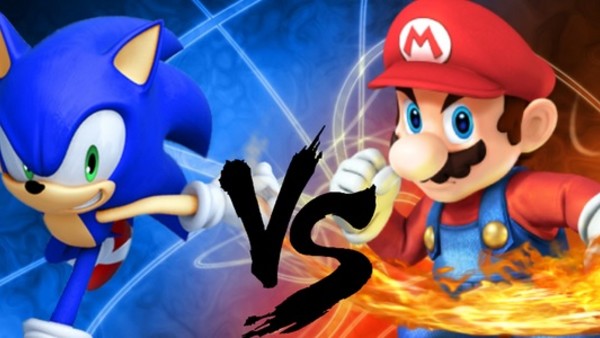
Sega Vs Nintendo and Sonic Vs Mario were battle lines drawn in the sand (or just with chalk) across playgrounds and classrooms for a generation of kids; you were either one or the other, blue or red, mammalian lover or plumbing enthusiast, and your reputation would live or die by your choice - sound familiar, PlayStation & Xbox players?
The console wars of the nineties are now the stuff of legend, so it would not do to dwell on this period for longer than is necessary here. The next major battle Sega had on its hands was not to be fought in 16-bits, but in 32.
Sega released multiple add-on peripherals in a bid to extend the life of the Mega Drive, including the Sega CD and 32X; both designed to offer superior gaming experiences than the standard Mega Drive, in lieu of a true 32-Bit system. Both fared poorly, and the 32X is now a pretty rare collector's piece, such is its inherent strangeness.
It did not take too long, however, for Sega to release a dedicated 32-Bit system, with 1995 seeing the release of the Saturn. By this point, the home console market had opened up significantly, with the likes of the Panasonic 3DO, the Atari Jaguar, and - of course - a little thing called the PlayStation, all vying for gamers' attention in the mid-to-late-nineties.
Of the Saturn, it actually went on to become Sega's best selling system in Japan, but endured poor sales in the UK and US, due in no small part to its comparatively high price when placed alongside Sony's debut machine.
The Saturn did, however, showcase some excellent games, and definitely has its place in the hearts of the fans. Titles like Panzer Dragoon Saga, Sega Rally Championship, Virtua Fighter 2, and Nights Into Dreams certainly stood to demonstrate what the system was truly capable of.
Fast-forward to 1999, and the world bore witness to what would ultimately be Sega's farewell to the home console market, and what a way to go: The Dreamcast.
Having sold just over 9 million units in a criminally short lifespan of around two years, the Dreamcast is widely viewed as a colossal failure. With hindsight, however, the general consensus seems to be that the system was years ahead of its time, and was perhaps far too innovative for its own good.
Take, for example, Dreamcast's online functionality.
The whole idea of online play using home consoles was practically unheard of in Dreamcast's day, let alone the no-nonsense, absolutely functional experience offered by Sega's misunderstood system. Titles such as Phantasy Star Online, ChuChu Rocket!, and Quake 3: Arena all made excellent use of the console's online capabilities without ever kicking up a fuss and shouting about it.
It just worked.
A Dream Come True

In the end, though, money talks, and Sega took the decision to bow out of the home console market altogether, putting an end to almost twenty years' worth of fantastic systems, and creating a gap which Microsoft's Xbox was more than willing to fill.
With the focus turned irrevocably away from hardware, Sega's mission was now to concentrate on the development of software in a second and third-party capacity. This strategy, to their credit, worked out very well, with Sega going on to develop and publish games for virtually all platforms in the years which followed the demise of their own systems. Indeed, titles and franchises like Bayonetta, Panzer Dragoon, Yakuza, and - of course - Aliens: Colonial marines all bear the Sega stamp and are very much alive and well today.
(Maybe not Colonial Marines...).
In a move which would have blown the minds of gamers in the nineties, Sega even went as far as to allow their erstwhile mortal enemy - Nintendo - access to their blue, spikey figurehead, with Sonic and friends appearing in the likes of the Super Smash Bros. and Mario & Sonic at the Olympics franchises - a seemingly shocking decision, but one which makes absolute sense.
But what of the future? Good question, random internet person...
Sega is in a good place right now, and are widely expected to go from strength to strength as we roll inexorably forward through the '20s.
Recent years have seen Sega dust off and re-introduce much of their amazing back catalogue to a new generation of gamers, whilst simultaneously tugging at the nostalgia strings of older players. From the Sega Mega Drive Classics collections hitting current-gen systems (or selling individually via the Switch e-shop), to the Mega Drive Mini so successfully riding the 'mini console' wave kicked up by Nintendo, Sega have realised the value of the treasure they sit so comfortably atop.
Sonic Mania?

Such is the current momentum of Sega that industry insiders and gamers alike seemed to genuinely expect the company to announce a shock return to the home console market, after it had promised a big announcement as part of its 60th anniversary celebrations.
Ultimately, this huge announcement proved to be the release of the Game Gear Micro, much to the chagrin and confusion of fans around the globe. Micro indeed, as the system fits into the palm of an average-sized hand and sports a 1.15" screen - only Hobbits need apply, it seems (they are pretty cool though, let's be honest).
Still, that the announcement of a tiny handheld system as opposed to a full new console was seen as a disappointment surely speaks volumes about Sega's current trajectory.
Arguably the single-most significant catalyst behind the current Sega revival, however, was something created not by the gaming giants themselves, but by the fans: 2017's Sonic Mania.
When lead developer Christian Whitehead approached Sonic Team producer Takashi Iizuka with a playable work-in-progress build of the game, the green light was given to officially develop what hitherto had been something of a secret, passion-project, into a full-blown game which Sega would publish.
Level design, sound, art, and additional programming were outsourced to the likes of PagodaWest Games and Headcannon, and the game hit shelves in 2017 to rave reviews, with fans and critics alike praising the game as a return to the classic, beloved Sonic formula, which steered clear of the problems which so had badly plagued 3D Sonic titles like Sonic Boom and Sonic Unleashed.
With Sonic well and truly back on the table (quite literally, if you own the amiibo...) plans to bring the blue-blur to the silver screen started looking less bizarre, and 2020 saw the release of the much-anticipated and oft-discussed Sonic the Hedgehog live action movie. Starring Jim Carey and James Marsden, the film was - surprisingly or unsurprisingly, depending on your own point of view - a huge hit, and a sequel is already in the works.
The Future

So what does the future hold for Sega? Well, that's the real question, isn't it? If 2020 has taught us anything, it's the nature of unpredictability. However, having witnessed the rise of the gaming giant, watched it challenge Mario and co. for the crown (not Peach's, obviously), having looked on intrigued as the hardware creators made bold and innovative decisions upon which their systems lived and eventually died, it is truly difficult to predict what this once great company will do next.
One statistic which may be difficult to wrap our collective heads around is the fact that Sega are actually more profitable today than they were even in the console war heyday, and are particularly - to borrow a famous phrase - big in Japan.
Entire arcades and gaming centres are given over to the homegrown company, with many such attractions pulling in thousands upon thousands of visitors every week; whilst the western experience is undoubtedly different, Sega never really went away in Japan.
So whilst nobody knows for certain what's up next for the Japanese giant, one thing we can say for sure is that we have definitely not seen the last of Sega, and if the rumours prove to be true and they really are working on a new console, then fans around the world will be hoping that Sega can get it out onto the market as soon as humanly possible.
Gotta go fast, right?
Watch Next
Dreamcast Quiz: How Well Do You Remember Sega's Beloved Console?
