10 Places Humans Shouldn’t Be Able To Live (But Do)
Home, sweet rubbish dump.
We all love to complain about our lives, usually from the comfort of a warm, bustling pub before returning to our nice, safe houses.
However, regardless of how your life is going, there are some places out there that make it look like the lap of luxury. Places where you can't see 10 metres ahead of you due to the choking cloud of smog, places in the far off wastes of Siberia where your glasses will freeze to your face, or even lawless hubs that make Children of Men look like a children's fairytale.
These places are a testament to the durability of humans and our ability to survive in the most extreme of circumstances, but also to our stupidity, seeing as most of the time we've got no one to blame but ourselves.
So, the next time you feel like whinging about how boring your job is, how lump your bed is or how far it is to walk to the corner shop, spare a little thought for the poor souls living right at the extremes of human endurance.
10. San Pedro De Atacama - The Tourist Trap With No Water
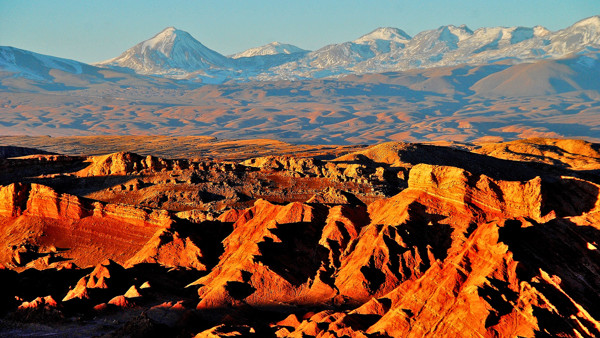
The Atacama Desert is the driest place on Earth. It is a physical impossibility for any rain to fall there and it never, ever has. It is so inhospitable that NASA uses it to simulate conditions on Mars and it also happens to be home to a little tourist town of the hardiest mofos known to man.
Not even microbes survive in the Atacama desert, but those tough little mammals called humans have decided that it's just the perfect place to make their home and have build a town called San Pedro De Atacama. Obviously, the locals have to drink something, and they do - they drink the water. Unfortunately, the only water that can be found in the Atacama is chock full of delicious arsenic, around 60 times the safe amount.
Not to worry though, because those tough locals are immune to arsenic.
Despite the fact that it is located in the most hostile environment on Earth, the town of San Pedro De Atacama does an absolutely roaring trade in tourists and they've even set up water filtration systems so that the less hardy tourists can rehydrate without suffering a swift and painful death.
9. Jiapingtang River - The River Of Dead Pigs
40 odd years ago, the Jiapingtang River was a clear, crisp refreshing stream from which locals would draw their water and let their children play in.
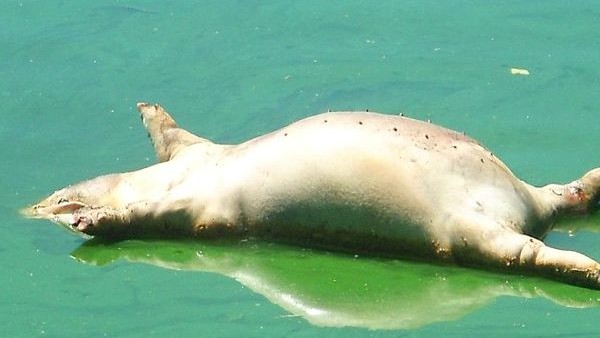
Nowadays it is most famous for the thousands of dead pigs that bob around in its slimy, green waters. In the April of 2013, over 16,000 pig carcasses infected with porcine circovirus were dragged out of the river, and many more continue to float by.
It's not just pigs either. The outrageous levels of pollution caused by porcine dumping and general filth has caused ducks and fish to likewise perish, adding to the soup of algae, litter and rotting carcasses.
The best guess is that an outbreak of porcine circovirus in a pig farm upstream caused the farmer to decide to cut his losses and dump the infected livestock in the river to be carried far away where he didn't have to deal with it.
The response to the pollution has been slow and inadequate, which is surprising when you consider that the Jiapingtang is one of the tributaries that supplies drinking water to the 24 million people living in the city of Shanghai.
8. Kowloon Walled City - The Outlaw Fortress
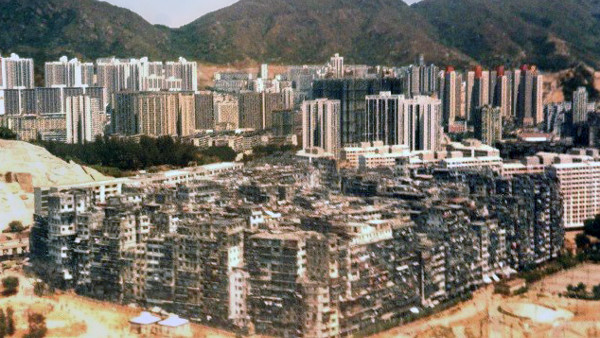
After the end of World War II, this former Chinese military fort became completely overrun by squatters. It eventually became so lawless and unruly that all attempts to control the city were abandoned and all government run services were cut from it (bearing in mind that, in 20th century Hong Kong, this made life pretty grim).
To everyone's surprise, however, the city flourished. In a manner of speaking.
The population rocketed to up to 30,00 residents in the minuscule 6.5-acre region, giving it a population density of 3,250,000 people per square mile, and illegal buildings up to 12 storeys high were erected within the fort's walls. Living conditions were so cramped that barely any sunlight could penetrate below the top couple of floors and the muddy streets below were plunged into a perpetual twilight.
It was largely run by the Chinese mafia, known as the Triads, and quickly took on the lawlessness of the Wild West and prostitution, drug use, crime and murder were endemic. Anarchy ruled, crime paid and opium dens were the equivalent of your local pub. Sounds lovely.
But after 30 years of lawlessness, the Chinese government finally got sick of having an impenetrable crime fortress right next to the bustling city of Hong Kong. So they pulled up their big boy pants and flattened the thing in the early 90s.
In complete contrast to what went before the land is now occupied by a beautifully gentrified park, complete with sculptures and fountains.
7. Manshiyat Naser - The Garbage City
https://www.youtube.com/watch?v=dk92VmY_xy4At first glance, Manshiyat Naser in Cairo looks like the most miserable slum on Earth, but actually most of its residents would describe themselves as completely happy with their standard of living.
The entire economy of the settlement, known as Garbage City, os based around that which others throw away. Rather than waste time commuting to the local landfill, the residents have the landfill brought to them, with the waste of the city of Cairo going straight into the sitting rooms of the people of Manshiyat Naser.
Stroll through the streets of Garbage City and you will see whole families sat in rooms piled to the ceiling with waste and rubbish, which they will carefully sort through, looking for valuable or recyclable items. Metals and electronics go to the people, whilst the edible refuse is fed to the pigs.
There are very few amenities in this dumpster district, with no running water, sewerage or electricity, but in spite of this, permanent shops and housing have sprung up all over the place.
Everybody in the city sorts garbage. The effect of this is that Cairo, which has no proper garbage collection, recycles up to 90% of its waste, far more than any recycling efforts in the West.
6. Baotou - The Toxic Wasteland
https://www.youtube.com/watch?v=t_UdqZdFr-wMost people wouldn't even give a moment's thought to the materials that make up their smartphone, but there is a place on Earth where there's just no getting away from it.
Baotou, in inner Mongolia, is home to a vast artificial lake filled with black, toxic sludge due to the region's status as one of the world's biggest suppliers of "rare earth minerals". These minerals are used in pretty much all of our modern technologies, but can only be found in high enough densities in certain parts of the planet.
Baotou is like a frontier town in the demand for these materials, and the environment certainly pays the price. Huge outflow pipes spew sulphurous sludge into the coal-blackened wasteland and a city-sized factory hulks down on the horizon. When it rains in the Baotou region (which it does, frequently) the groundwater runs black with coal dust.
People live here too, mostly factory workers and their families, all crammed together in hastily built tower blocks that linger on the edges of the putrid land. This kind of industrial landscape gives us an idea of what much of England and Western Europe would have looked like during the industrial revolution
But this industrial gold rush is an entirely modern phenomenon and shows the true price of our all-consuming need for the latest iPhone.
5. Linfen - The Smog Choked Farmland
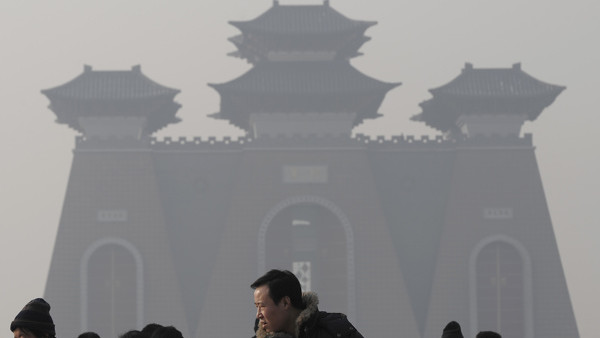
Linfen, as is so often the way in China, used to be renowned for it's clean spring water and rich arable land. It used to be known for its excellent fruit and flower production, but now it has all turned to ashes. Just 30 years on, it is commonly referred to as the most polluted city on the planet.
The problems came when people discovered that coal and industry were much more lucrative than boring old farming and factory after factory started to fly up and belch toxic fumes into the atmosphere.
It is said that, in Linfen, if you hang your washing outside, it will have turned black before it has had a chance to dry, such is the thickness of the smog.
Efforts to combat the terrible conditions have been predictably slow, but the Chinese government have made a little progress by closing down some of the most inefficient factories and cracking down on the illegal coal mines that sprung up all those years ago.
Who knows, perhaps one day the city will get back to its former floral glory, but something tells us that the coal will have to run out first.
4. Yamuna River - The Holy Cess Pit
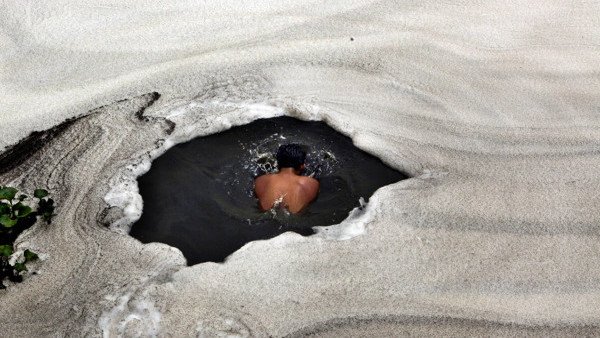
The Yamuna River is the largest tributary of the Ganges and it is estimated that around 60% of the waste produced by the city of Delhi is dumped into it.
More than 400 million gallons of sewage are dumped into the river without passing through any of the city's processing plants, as well as streams of toxic chemicals from tanneries and factories.
This is despite the fact that most of the city's residents still depend on the river for all of their water needs, including drinking and bathing. As well as its practical purpose, the river is also worshipped alongside the Ganges, as according to Hindu teachings, the river is actually a living goddess who once even parted her waters to allow the revered Lord Krishna to pass through, but this doesn't seem to stop people dumping huge amounts of rubbish and industrial waste into it.
In fact, many religious ceremonies are now adding to the cocktail of toxic waste a raw sewage, including statues of religious idols and even cremated human bodies.
There has been an environmental movement in recent years, campaigning for the cleaning up of the river, but progress is hindered by the huge network of corruption and bribery that leads to the continued illegal dumping of waste into the river's holy waters.
3. Mogadishu - The City Under Seige
If you need anything tob convince you taht a place is dangerous as hell, the warning atop the wikitravel page for Mogadishu should propably do the trick.
It warns potential travellers of the "constant threat of terrorist attacks", telling us that "walking the streets of Mogadishu remains very dangerous, even with armed guards" and finally warning us that it "tourists are emphatically discouraged from visiting" and it "should be avoided at all costs".
Pretty strong stuff.
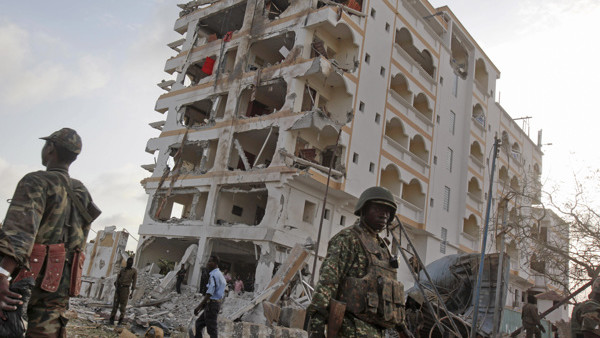
A terrible civil war has ravaged the once beautiful Somalian capital of Mogadishu, leaving it a lawless, dangerous shell of its former self. During the war, the extremist group Al-Shabab took over most of the city, reducing the government controlled areas to nothing more than a couple of blocks.
The city was eventually taken back and war has officially ceased, but it remains a hub of lawlessness where amenities are scarce and unreliable and food shortages put strain on what government presence is there. Even though the war has officially ended, terrorist activity is still a present danger.
It is slowly recovering, they even held a music festival back in 2011, but the ever-present threat of terrorism that things could return to how they were in the bad old days means that we don't recommend booking your holiday there any time soon.
2. Yakutsk - The Coldest City On Earth
https://www.youtube.com/watch?v=pReyPGHw4sQIf you're one of those people that just loves the winter, then why not take a trip to the coldest city on Earth?
Yakutsk is a city of around 200,000 people deep in Eastern Siberia that regularly experiences temperatures of around -45°C. The fur-wrapped locals will advise you against even wearing spectacles outside as the extreme temperatures will freeze them to your face, causing them to pull off chunks of flesh if you attempt to remove them.
In Yakutsk, a temperature of 40°C or so is considered to be "not too cold", the equivalent of a mildly rainy autumn day in the UK, and in 2007 the residents experienced something of a heatwave with temperatures never dropping below -25°C.
In 2008, a couple of burst pipes meant that the heating broke for a few days, leaving the locals to fend for themselves in the midst of a -50°C cold snap. It was a common joke During the Cold War that if the west ever wanted to subjugate Yakutsk, they wouldn't have to bother with a nuclear bomb, but just turn the heating off for a bit.
Yakutsk is the largest city in the world that is built on permafrost, and this is for a very good reason. Most people avoid building on this kind of terrain due to the fact that it is as hard as concrete when frozen and crumblier than a biscuit based cheesecake if it ever thaws.
Day to day life is pretty grim, with the local delicacies including boiled horse head, which is served at weddings, and bread made from the bark of fir trees. At least there's plenty of vodka to keep you warm - although temperatures are so low that they would actually freeze vodka solid if you left it outside.
1. North Korea - The Totalitarian State
North Korea is possibly the most isolated and secretive nation on Earth, with a horrific human rights record to boot.
The population has essentially been turned into a carefully micromanaged workforce, with the slightest sign of rebellion swiftly crushed with disproportionate force. Citizens are brainwashed into thinking that their leaders are in fact living Gods, omnipotent and omniscient. One defector even described her previously held belief that Kim Jong-il could read her mind, which meant that she would never even dare think anything bad about the regime.
Life and learning centres around the regime. Life in the city is heavily policed and regulated, life in the countryside is essentially peasantry. Everybody is expected to do manual labour, even in addition to their regular job and even the children. The minds of the citizens are so heavily controlled, and thought becomes so centralised, that some who have attempted to escape the country actually want to go back because they are unable to adjust to the outside world.
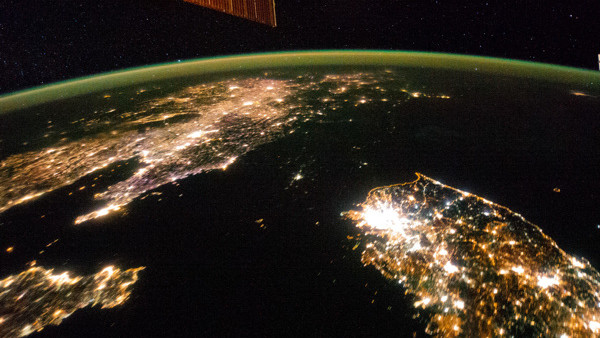
There is little infrastructure, few resources and most of the government's money is poured into its military or civic building, leaving the people to fend for themselves in a centralised state. The picture above shows the sheer lack of modern civilisation - the black space actually being the large unlit mass of N. Korea between the shining S. Korea and China.
And those are the lucky ones. Dissenters and defectors are treated viciously, public executions are regular occurrences and most are sent to be worked and tortured to death in prison camps.
From the scant insights we in the outside world have managed to gather, it seems like life in the most mysterious country on the planet, truly is a grey-washed hell on Earth.