Star Trek: 10 First Contacts We Need To See
In Star Trek, first contact doesn't always mean a movie. Sometimes, you get six seasons too
Some of us will be edging on the wrong side of septuagenarian, but we're all planning on being around for First Contact Day on the day of the year itself. To celebrate, we can only hope that actual intelligent extra-terrestrial life exists, watches Star Trek, and has a flair for the dramatic. Either way, 2063 will go to the Vulcans.
After Zefram Cochrane's extended palm marked 'First Contact' for Earth and the Vulcans, there followed litany for humanity, Starfleet, and the Federation, a great number of which have been seen on screen. Hands have been literally or metaphorically shaken with, or rejected by, the Klingons, Kazon, Xindi, Excalbians, Horta, Andorians, Hirogen, Talaxians, Q, Vidiians, 10-C, and the Dominion, to name but a few.
Star Trek has also always featured a variety of pre-established relationships between humans and alien species. For some of those, we've been given hints or descriptions in dialogue as to how first contact played out without actually seeing it on screen; for others, we know almost nothing at all. And although it often feels like it, the universe does not revolve around Starfleet and the Federation either. We've broadened the scope to include the first encounters we'd like to see between alien species that would have occurred outside of (or before the existence of) both organisations.
Remember, you can always skip the fish course! Yew-cheen chef-faw. Emphasis on the 'cheen' and the 'faw.'
10. Federation-Medusan
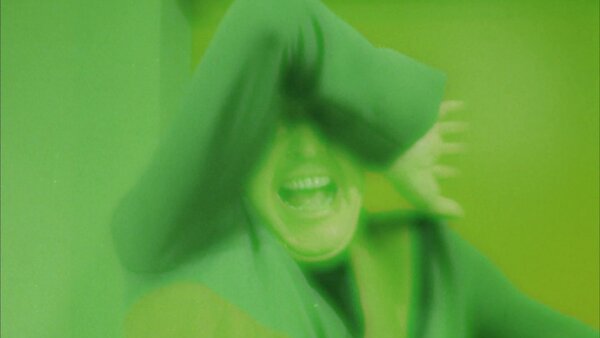
The Medusans are one of the most distinctive alien species in all of Star Trek, introduced in The Original Series episode Is There in Truth No Beauty? Rather than literal petrification, any human who looked upon the full form of this non-corporeal energy being suffered complete insanity and often died soon thereafter. Certain species had less severe reactions to exposure: if you were a Vulcan, and didn't forget your visor, you'd normally be fine to take a peek.
Hitching a ride back to their homeworld, the Medusan ambassador to the Federation came aboard the Enterprise in 2268. Captain Kirk, crew, Doctor Jones (… Jones, calling Doctor Jones), and Larry 'Murder' Marvick were already eminently familiar with the species, down to the Medusans' exemplary navigational abilities, suggesting that first contact had happened quite some time prior.
Given the extreme danger posed by even the reflection of the true form of a Medusan, it's commendable that the species had managed to make first contact with anyone at all. We know the Medusans had ships of their own by the mid-23rd century, so it is perhaps more likely, and no doubt more practical, that they made the first moves with humanity and/or the Federation. Or, perhaps the Vulcans met them first and included them in their database as fair warning for Starfleet back in the day of the NX-01. Still, we can't help but wonder if humans in particular had to find out the madness in the Medusans the hard way.
9. El-Aurian-Human

A certain form of first contact between the El-Aurians and humanity goes at least as far back as the 19th century on Earth, where and when a certain "Madam Guinan" crossed paths with a motley band of time-travellers from her future. Since the Temporal Prime Directive didn't include provisions for memory wipes on famous writers, the chronologically first human (that we know of) to meet an El-Aurian, i.e. the 'real' Guinan, was moustache-dressed-as-a-man, and best way to settle an argument about bonsai, Samuel Clemens, aka Mark Twain, aka Thomas Jefferson Snodgrass.
A similar process would repeat itself for the galaxy's best, and most overqualified, bartender in the 21st century. At that point, without knowing the full truth about her, (former-) FBI agent Martin Wells suspected Guinan was not of this Earth. Presumably, Teresa Ramirez got to know a bit more about El-Aurians too.
It is not known when a more official form of first contact was made between El-Aurians and humans/Starfleet and the Federation, but it had to be before 2293. In that year, when the Enterprise-B received a distress call from the SS Lakul, the bridge science officer noted that this was "one of two ships transporting El-Aurian refugees to Earth," meaning Starfleet was already familiar with the species. At that time, the El-Aurians were also fleeing the destruction of their planet at the hands of the Borg. It's dark, but we'd like to see that 'first contact' too!
8. El-Aurian-The Q Continuum

Not without a certain delight on the part of the audience, Guinan was able to rattle one member of the mostly omnipotent, but typically omni-self-assured, Q Continuum by her mere presence. Our favourite El-Aurian got in a few cutting, though fair, remarks, and Q made some less-than-flattering ripostes. From Ten Forward in Q-Who? we could see the two sides had a history more fiery, more unique than most.
In this case, the 'first' in 'first contact' is rendered almost meaningless. In the way we would perceive it, there probably can be no singular point of encounter between one near-immortal species with extra-temporal perceptions, and the ability to choose when to age, and another that exists outside of normal space-time entirely. In fact, Q would be dismayed if we were to think any less than non-linearly. Nevertheless, our teeny Earth brains, thrown inevitably forward by the sense of their own entropy, can do little more than want to pick a moment. It turns out that 'a moment' has particular resonance for the El-Aurians too.
"A long time ago," the El-Aurians and the Q fought a "long cold war," after which a truce was made over a bottle that Guinan then had in her possession in the 21st century. The "half-life" of the very moment of the settlement between the two species was captured (somehow) within, like a liquid photograph or a potable harmonic. As points of successful (peaceful) first contact between the Q Continuum and the El-Aurians go, it's also as good as any we're likely to see. Get some more glasses out, Guinan, so we can all have a drink!
7. Lanthanite-Human

So far, we've only been teased with snippets of information about the Lanthanites, but we do know that the species had been living incognito on Earth for centuries. Certainly, before more formal human-Lanthanite relations were established, it might also be more proper to talk about multiple first contacts or 'comings-out,' as one member of the perennial species phrased it to Spock in The Broken Circle.
In that episode of Star Trek: Strange New Worlds, Spock, a little the worse for bloodwine, says to Pelia:
I have always been fascinated by your people. That you managed to live on Earth among other humans undetected until the 22nd century is remarkable.
First, that seems to suggest the Lanthanites didn't reveal themselves, or were forced to, until decades after humanity had invented warp drive and made first contact with the Vulcans. Second, Spock's "other" in "other humans" raises a few questions.
Was Spock intimating that Lanthanites were, in fact, human, but perhaps a separate (sub)species — like homo heidelbergensis or homo neanderthalensis — and not aliens come to live on Earth at all? That would certainly have made for one hell of a first contact! We're almost certainly overthinking what is probably just a turn of phrase, but if this writer is correct, Seán has promised to eat his hat!! Shall we go find the Voth?
In the same scene, Pelia also states that one of the first people she 'came out' to (i.e. disclosed her identity as a Lanthanite) was Spock's mother, Amanda Grayson. Grayson wasn't born until the early 23rd century, so that might suggest a staggered period of first contacts with the Lanthanites (on Earth) on an individual basis.
6. Tribble-Klingon

Under "Parasites," the Star Fleet Medical Reference Manual places "the destruction caused by tribbles on Sherman's planet" alongside "the rabbit population explosion in Old Australia." You can only imagine the kind of similes we'd like to suggest, therefore! If left unchecked, tribbles are a menace to everyone, everywhere they go, but it's the Klingons who seem to have had the most trouble with them. Given the rampant furry duplicators' reaction to members of the warrior race, it is safe to say the feeling was mutual!
There's one more problem: we've already seen the first time Klingons and Tribbles met, technically speaking. In The Trouble with Tribbles, undercover Klingon Arne Darvin clearly states, "I never saw one before in my life, and I hope I never see one of those fuzzy miserable things again." Aboard K-7 was supposedly the first time Starfleet and the Federation had come across the fuzzballs too.
Over the years, however, the timeline for first contact has mutated more than the tribbles themselves. Doctor Phlox had a tribble in his menagerie, and so did (mirror) Captain Lorca in his big-boy collection. It now appears that the tribbles gained their propensity for proliferation via genetic manipulation, carried out by "idiot" Starfleet biologist Edward Larkin at some point in the 2250s. Having infested and overwhelmed the USS Cabot, the tribbles then made it to Klingon space. Let the great tribble hunt commence!
5. Bajoran-Cardassian

It is always a little clumsy to engage in a discussion of comparative interspecies technological development without knowing the evolutionary history of both planets — one could have millions of years on the other, for example. Nonetheless, the Bajorans do deserve credit for having travelled through space at a time when humans were still hundreds of years away from getting an object into orbit, to alter Jake Sisko's unhistorical comparison a little.
Around Earth's 16th century, the Bajorans were already using 'lightships' equipped with solar sails, propelled through the void by photons (and tachyon eddies). Bajoran scholars had speculated that some of these 'lightships' had made it all the way to Cardassia Prime, but, of course, the Cardassians themselves contested the 'theory' of 'ancient contact,' calling it a 'Bajoran fairy tale.' That was until Benjamin and Jake Sisko proved 'ancient contact' was possible after all, and in a remarkable coincidence, Bajoran lightships were 'discovered' at crash sites on Cardassia Prime the same day.
Having seen the historical re-enactment (plus grav plating), it would certainly be fascinating to go back and grab a glimpse at the real thing — to see the ancient Bajorans arrive at Cardassia Prime. Did any of their ships make it safely to the surface? If so, what happened next between the two peoples? Someone grab the Orb of Time, and let's get going!
4. Vau N'Akat-Starfleet; Starfleet-Vau N'Akat

From Starfleet's point of view in 2383, first contact hadn't yet been made with the Vau N'Akat. From the perspective of Vau N'Akat time travellers the Diviner, the Vindicator, and fellow robots, first contact with Starfleet had already happened some 50 years ago. Framed primarily from the vantage point of the Vau N'Akat, the story of the meeting between the two sides is told beautifully but all too briefly in season one of Star Trek: Prodigy — once on the holodeck and later in a series of flashbacks (or flash-forwards if you prefer).
In the decades that followed the arrival of what appeared to be a Prometheus-class starship in the skies of Solum (the Vau N'Akat homeworld), civil war erupted on the planet, leading to the near-total destruction of the Vau N'Akat civilisation. Naturally, the species blamed Starfleet for 'not picking a side' in their conflict and sought to prevent first contact from occurring in the first place through radical means. Captain Chakotay and crew of the Protostar, thrown into the future by an unstable wormhole, then also made/will make what would qualify for them as first contact with the Vau N'Akat.
Thanks to a group of brave, would-be Starfleet cadets and holo-Janeway, the timeline of first contact between Starfleet and the Vau N'Akat (and vice-versa) has now been altered to begin again. In that way, Gwyn(dala) planned to go to Solum to set her people on a different path, which we hope to see in Prodigy's second season. However, Chakotay and the remaining crew are still stuck on the other end of an interspatial flecture in the now alternate future of first first contact with the Vau N'Akat, so we also might get to see more of that!
3. Starfleet-Nacene

Wait a minute! We've already seen first contact between a Starfleet crew and the Nacene, haven't we? Well... no, we haven't. So desperate for attendees at his banjo concert, the Caretaker pulled ships from all over the galaxy, usually sending them back afterwards. Amongst those, there was logically at least one other Starfleet vessel that must have arrived before Voyager blew everything up (although not before the Caretaker turned into a rock) — the USS Equinox.
When Captains Janeway and Ransom met, they both said "Caretaker" with such simultaneity that we can be pretty sure that's how the Equinox got to the Delta Quadrant. Why, presumably after making (first) contact with the sporocystian entity, the Equinox crew then decided, or were forced, to take the long way home remains uncertain. It's only a theory, but I bet Lieutenant Maxwell Burke — not the brightest star in the fleet — just thoroughly p**sed the Caretaker off!
Nonetheless, it is hard to resist the thought of seeing first contact between one of the galaxy's most powerful species and the crew voted Starfleet's most murderous at the recently renamed Rudy Awards. It would be equally interesting to see who the Equinox met next during its first week in the Delta Quadrant — the Krowtonan Guard. According to Ransom (take it or leave it), he lost half his crew to attacks from the never-spoken-of-again species when he gave the order to continue on through their territory.
2. Vulcan-Klingon

The First Contact in Montana was the turning point on Earth that we'd all better hope the real thing will be. The Vulcans inspired Starfleet and the Federation to write the rules for its own first contacts with new alien species. If the Vulcans were, then, literally a model of 'non-interference' and 'wait 'till they've at least got warp drive' before getting in touch, they sure developed some strange policies for second contact. They also liked to scare young children who were just out looking for their dog!
Traditionally, the Vulcans start most things with the hand gesture and a good dose of condescension. When it came to the Klingons, however, it seems they had decided on a different form of greeting — shoot first, patronise later, or in Michael Burnham's words, the "Vulcan Hello." As ever, there was a logic behind it.
The first, we assume, Vulcan ship to encounter a Klingon vessel (near H'atoria) was fired upon and destroyed. After that, the Vulcans always fired first. Because Klingons like that kind of nonsense, the strategy led to respect, peace, and formal relations. It's certainly a different kind of first contact — less 'live long and prosper,' more 'does today suit you for that good death you were talking about?' — but it's one we'd definitely like to see!
1. Betazoid-Caitian

This entry won't do anything to solve the great cat-dog debate that has divided humanity for centuries, although the answer is cats! (Editor's Note: speak for yourself, Jack!) Whatever the taxonomic nomenclature of the Caitians, who purred their way into the franchise in Star Trek: The Animated Series via Lieutenant M'Ress, the species, much larger than felis catus, is endothermic (we assume), bi- and quadrupedal, and most definitely carnivorous by nature. Spot wouldn't know where to look! As for the Betazoids, they don't tend to purr unless asked.
Two live-action Caitians were on the Federation council at the court martial in Star Trek IV: The Voyage Home, and we know the Federation was at least familiar with the Betazoids at the time of Pike's captaincy of the Enterprise (after Discovery). In fact, Betazed was most likely already a Federation member world at that time, according to the ready room colour-coded star maps in Star Trek: Strange New Worlds. By Star Trek: Lower Decks, therefore, Caitians and Betazoids had probably been living and serving together for well over a century.
Hundreds of years ago, however, Caitians were serving up not serving with the Betazoids — hunting and eating the species before switching to the synthetic stuff (replicated Betazoid?!?). As grim as it might well be, that is one first contact — or buffet — we simply have to see! Hilariously sweary Caitian chief medical officer of the Cerritos, Doctor T'Ana, quickly slipped back to the old ways too when under the Vulcan influence. "Time to shred those party girls into brisket." Someone fetch the warm milk!