10 Great Horror TV Shows That Will Crush Your Soul
We will never recover after watching these awesome horror shows.

Great horror series regularly explore petrifying concepts like serial killers, alien invasions, or supernatural forces.
However, the creepiest tales tend to put a lot more focus on the human experience. In situations like this, the ensemble aren't just dealing with monsters, but existential dread or survivor's guilt. Even when there are zombies or vampires running amok it's only a matter of time before humanity themselves are at each others' throats.
Worst of all, the story can conclude with little to no catharsis whatsoever (especially if it gets cancelled before tying up all the loose ends). The evil in question may never be truly vanquished, so there's a noticeable absence of closure, for the characters or the audience. Even if there's violence and gore aplenty, watching an ensemble that we've grown attached to give up or betray one another tends to be more impactful
Even if these TV shows wrap things up with a happy ending, the lead characters are often left irreparably wounded, either physically or psychologically.
The ten entries on this list are absolutely worth checking out, but they're not for the faint of heart.
10. Penny Dreadful
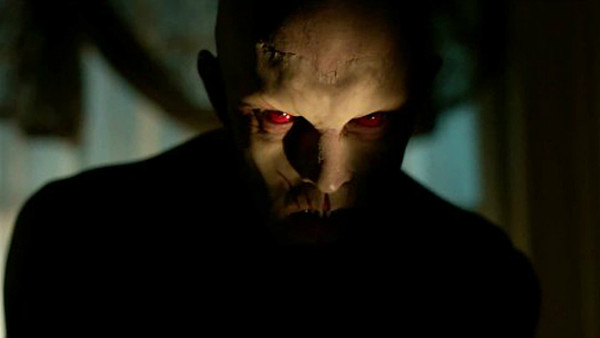
Inspired by spooky short stories from the Victorian era, John Logan's dark fantasy has Frankenstein joining forces with a medium and gunslinger to battle paranormal threats in 19th century London.
Rather than focusing on the sensationalism of the source material, this show indulges in the pessimistic and macabre aspects. Our heroes fight against witches, vampires, and other creatures of the night, but they're also dealing with poverty, disease, and prejudice, which adds to the realism.
On top of that, Penny Dreadful does a great job at humanising the most inhumane characters. Even though there are times where Frankenstein's Creature and Ethan the werewolf behave like villains, they didn't ask for the life they have, so it's heartbreaking to see what they must endure.
Although uplifting moments are expected in even the most depressing tales, Penny Dreadful harbours little relief. Any time there's a moment of romance, humour, or hope, it's quickly dashed, reminding viewers this isn't that kind of story.
Not only does redemption barely feature, the characters regularly question whether they can be redeemed. No matter how hard the group tries to atone, they find themselves pulled back into the darkness over and over.
9. The Outsider

Based on the work of Stephen King, The Outsider opens with child being murdered horrifically. Even though this is a dark way to kick off any story, the intense drama continuously finds a way to become more disturbing.
The emotional fallout of the crime and the impact it has on the community is explored in unbearable detail, especially with the grieving family. Discovering the perpetrator is an ancient force called El Cuco makes things worse, since it offers no closure for the parents. The detectives find themselves unable to comprehend the situation or close the case, causing it to linger indefinitely.
Even though the threat is supernatural, The Outsider realistically portrays how people can fall apart when their belief system is shattered. The police force have been conditioned to work with facts and rationality, which is why they feel helpless against the paranormal being.
Most importantly, El Cuco is freaking terrifying. Rather than being a conventional monster, the overarching antagonist is a parasitic evil that gorges on human suffering. It doesn't just kill, but infects communities and tears them apart from within.
It may only be ten episodes, but The Outsider offers some of the most soul-crushing scares in recent television.
8. Servant

Produced by M. Night Shyamalan, Servant revolves around a nanny called Leanne, who's hired by a grief-stricken couple to care for a doll, which represents their deceased son, Jericho Turner.
Despite the outlandish premise, Servant is astoundingly relatable. The Turners' coping mechanism is messed up, but it's hard not to empathise, since they don't know how else to move on.
Instead of acknowledging Jericho's death, the Turners compel Leanne to enable their delusion, which is arguable more harrowing. The entire situation is magnified by the doll's hyper-realistic appearance, which gives off an uncanny valley vibe.
It's worth mentioning the majority of the story takes place in the Turners' home. Although tragedy keeps befalling the Turners' residence, the action rarely move away from it, accentuating the claustrophobia.
Another key motif in the show is food. Throughout Servant, food is presented in a grotesque manner, usually with maggot-infested dishes and rotting ingredients. Not only are these images gross, they reflect the internal decay of the family.
Even though each character tries to help one another, they're unable to do so, since they're incapable of dealing with their own problems. As a result, many interactions that are intended to be reassuring come across as emotionally hollow and doomed.
7. Hannibal

2013's adaptation of Thomas Harris' work follows Dr. Hannibal Lecter before he was outed as a cannibalistic psychopath.
Based on the premise and source material, explicit violence should be expected. However, the gore is so artistically grotesque, it's sure to catch almost anybody off-guard. After watching a person being fed their own leg or transformed into a cello, you don't know whether to be impressed or gag in disgust.
Despite the barrage of nightmare-inducing imagery, it's the psychological aspects that hit deepest. The way Hannibal lulls his victims into a false of security while he manipulates them is beyond deplorable.
Mads Mikkelsen is so charming as the titular doctor, it's difficult to decipher whether his affection is an act, especially towards the lead FBI agent, Will Graham. As horrifying as it is to see the victims being butchered, watching Hannibal sink his hooks in Will's psyche is arguably more hard-hitting, since it realistically depicts toxic love and codependency.
At a certain point, the series feels more sad than scary, since everyone associated with the chianti-swilling doctor is doomed in one way or another. Even people who've dedicated themselves to right the wrongs of the world find themselves being corrupted or destroyed after being caught in Hannibal's embrace.
6. The Walking Dead

"The Walking Dead" sounds like a fitting name for a series centred around a zombie apocalypse. But as the story progresses, it becomes apparent the title isn't referring to the ghouls, but the survivors.
After all, the lead characters aren't so much living as they are existing, plodding from one place to another, with no ultimate goal in sight. They deal with so many thieves, rapists, warmongers, and cannibals, there are times where the walkers are the least of their problems. The Governor, Negan, and Alpha aren't just villains but the worst representations of mankind.
Another reason why The Walking Dead hits the way it does is the lack of plot armour. Even though we'd like to believe the good guys will triumph and ride into the sunset, we're reminded time and time again that even the purest souls aren't going to make it out alive. In a way, the show is more depressing when Rick and the gang have a tender moment, since it's obvious it won't last.
Although The Walking Dead is remarkable, it's best not to get too attached to the cast.
5. The Terror
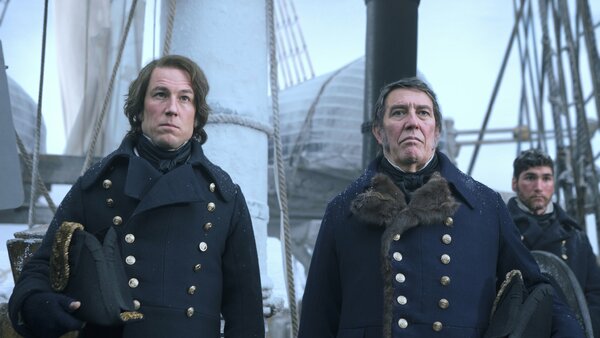
In The Terror, 120 sailors are deserted in the Arctic after their expedition goes south (or north, in this scenario). Battling extreme cold and dwindling supplies, it isn't long before the survivors turn on one another.
Although The Terror has otherworldly elements, the realistic problems pose a bigger threat. Despite the fact there's a paranormal monster nearby, it's simply one more problem added to the pile, since the men are already dealing with infections, scurvy, and lead poisoning.
What makes The Terror work effectively is its inescapable sense of dread. The white wasteland of ice isn't just a backdrop but a prison, trapping the ensemble physically and mentally. Even when there's nothing directly threatening nearby, the environment never stops being actively hostile. The group's plans to avoid starvation or freezing to death manifests new problems, including mutiny and cannibalism.
Anyone expecting a dramatic turnaround or a heroic survival will be horrified to see what direction The Terror goes in. Instead, we witness loyal sailors driven mad or slaughtering one another in the hopes to save themselves. Though the big bad monster is scary, it doesn't hold a candle to human beings.
4. The Last Of Us
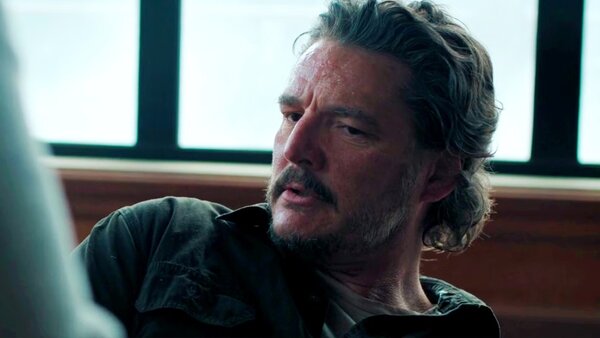
In the pilot episode of The Last Of Us, a mind-controlling fungi infects the world, turning most of the human population into zombies. During the initial outbreak, the protagonist, Joel Miller, loses his teenage daughter, Sarah.
But Sarah isn't killed by an Infected, but by a regular human, which perfectly exemplifies the horrors the characters in this world will face. Though humanity has to deal with clickers, stalkers and bloaters, their greatest enemy is themselves.
Every uplifting cliche you've come to expect from a post-apocalyptic story is thrown out the window. Joel seems to destroy any chance of a cure in the first season. Even though the audience initially assumes our heroes will be together through thick and thin, Ellie is forced to watch Joel be beaten to death in brutal fashion at the beginning of Season 2.
Unlike The Walking Dead, there's little hint that civilisation will return to what it once was. This world has become so horrid and ugly, the best case scenario is that mankind can continue to exist. It's not an ideal scenario, but it's the only thing on offer at the moment.
3. Marianne

In this French Netflix drama, a horror writer called Emma returns to her hometown, only to encounter the witch from her books. In doing so, she must confront her past, which involves estranged parents, lost friendships, and childhood traumas.
Though Emma is depicted sympathetically, the series never shies away from her self-destructive nature. She tries to fill the void within her with alcohol and chaotic relationships, leaving her detached and resentful.
Unlike many horror stories that offer a glimmer of hope, Marianne leans into a sense of inescapable evil. The characters often feel powerless against the demonic presence, giving us little reassurance that good will prevail.
Not only that, the stormy weather and decaying settings gives off a constant sense of foreboding and helplessness, even when nothing seems to be happening.
Most importantly, there's no tidy resolution. The horrors unleashed upon Emma and those around her feel cyclical, indicating the witch's influence will never go away.
Despite only being one season, Marianne contains enough nightmare fuel to scare off the most seasoned veterans of the genre. As such, you should only check out this underrated series if you have a tolerance for really dark material.
2. The Haunting Of Hill House

Though Mike Flanagan has helmed numerous horror shows, few have been as crushing as his first mini-series, The Haunting of Hill House. Based on Shirley Jackson's novel of the same name, the chilling saga centres around the Crain family, who've been left estranged and traumatised by their experience growing up in a haunted mansion.
As unsettling as the spirits are, watching the Crains coping with their unresolved issues is worse. Although they escaped the house in their youth, the psychological torment continued to hound them for decades.
The supernatural elements serve as a metaphor for their pain, making the characters' struggles appear more raw. Luke finds himself being stalked by a hovering spectre when his drug addiction acts up. Watching Nell being tormented by the Bent-Neck Lady is visceral, especially after the ghost's identity is revealed.
Although the malevolent force within the titular building is fantastical, it realistically conveys how trauma can consume people's lives. The Crains are in so much turmoil, they return to Hill House to find closure, oblivious their presence is feeding the demonic entity. Instead of putting a stop to the cycle, they allow themselves to be drawn by the very thing that's killing them.
1. Black Mirror

What makes Black Mirror more terrifying than most sci-fi shows is how current and relevant it feels. It doesn't just deal with a nightmarish future but a nightmarish present.
Instead of looking at implausible tech, many storylines feel possible, even probable. Narratives surrounding social media obsession, AI companions, and brain implants don't sound as far-fetched as when they originally aired. As tablets, computers, and AI advances, so does the dangers surrounding them.
Rather than doling out the overdone "technology is bad" plot-lines, Black Mirror explores aspects of society that serve as a mirror and magnifier for human flaws.
Although not every narrative focuses on technology, most episodes end on a dark note, usually with the characters suffering irreversible consequences for their actions. When justice is served, it often feels hollow or twisted, as can be seen in episodes like White Bear or Shut Up and Dance.
The stories are usually set up in a way so supposedly good people are forced to perform immoral actions to survive, but being damned nonetheless.
Even though Black Mirror is classified as sci-fi, it's a realistic portrayal of current society, which is a truly terrifying thought.