10 Reasons To Greenlight Star Trek: United NOW
7. Salvation For Characters From A Cancelled Network
Why greenlight a spinoff of the first Trek series to be cancelled since The Original Series was pulled off the air, twice? This is both a very fair question and one that also deserves a deeper examination. Context, as they say, is king. True, Enterprise suffered ratings erosion over its four-year run, as did Voyager and Deep Space Nine, though both of them were granted seven seasons.
Ah, seven seasons. Remember them?
Enterprise went through several prescribed changes during its run, including a push to become more action-oriented (hello, Xindi arc), and the inclusion of Star Trek in its name. That did not, however, prevent UPN from pushing it into the Friday night 'death slot', i.e. 10 pm. During the production of In A Mirror, Darkly, the cast and crew were informed that Star Trek: Enterprise was being cancelled.
Enterprise debuted on UPN, much like Voyager had been. However, the UPN that Enterprise arrived on was quite different seven years later. While Deep Space Nine was sold into first-run syndication on its debut, as The Next Generation had also been, and Voyager was instrumental in launching UPN as its flagship show, the landscape had changed.
Not long after pulling the plug on Enterprise, UPN merged with The WB network to form The CW. The network may be gone, but Enterprise lives on, finding new audiences every year on streaming.
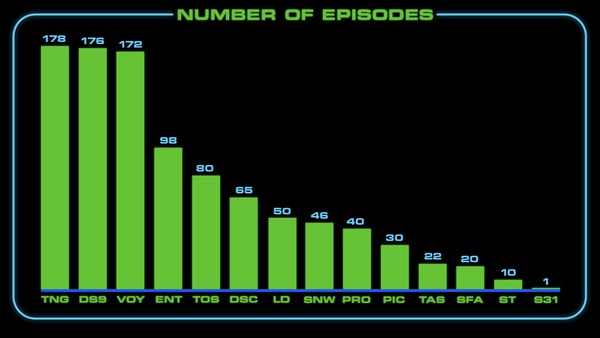
Enterprise produced 98 hours of television, spread over its four seasons. When compared to the Trek series that have come and gone since 2017, it has delivered more individual episodes than any of the shows that followed, including Discovery, Lower Decks, and Strange New Worlds, all of which have had, or will have had, five seasons to tell their stories.
While the fourth live-action Star Trek spin-off may have been cut short, it was far from a failure.