10 Things Nobody Wants To Admit About Doctor Who
Doctor Who has had many faces and many flaws, but we don't admit to all of them...

In the 1990s, when Doctor Who was a slightly embarassing bit of archive television, commentators would often talk about its "wobbly sets". But those commentators trotting out this criticism would never admit that the sets on John Cleese's acclaimed sitcom Fawlty Towers wobbled far more frequently than any spaceship set on Doctor Who.
Which isn't to say that Doctor Who fans are blind to the flaws of the show. Far from it! We all love Doctor Who, and that means we come to accept certain uncomfortable truths about the show and its limitations. As the new Disney+ era has proved, Doctor Who doesn't have the money to compete with Star Wars or the MCU, but that's fine. It's always been the scrappy little show that could, and we love it for that.
However, there are other elements of Doctor Who that, for whatever reason, fans are more uncomfortable about admitting.
Sometimes that refusal can come from a place of embarrassment. Case in point, the frequent arguments over whether or not Doctor Who is a kid's show. That's far too knotty a discussion to dive into here, but what other uncomfortable truths about Doctor Who do fans still refuse to admit?
10. The Time Lords Are Really Really Boring

Famously, The Deadly Assassin was devised by Philip Hinchcliffe and Robert Holmes to prove that Tom Baker couldn't hold the show by himself. While that part of the plan backfired spectacularly, The Deadly Assassin did explain a fundamental truth about the Time Lords – they're highly ineffectual and really quite dull.
Despite this, countless novels, audio dramas, comic-books and TV episodes have been written about the Time Lords and their long, complicated history.
This obsession with the Doctor's people seems rooted in a desire to give Doctor Who its own convoluted, Star Wars-like mythology. But Doctor Who isn't really an epic myth of gods and monsters, it's a show about someone with a magic police box, passing through, helping out where they can. Hell, the Doctor left his home planet in the first place because he was fed up of the Time Lords and their boring machinations, and that's why the most exciting and interesting Time Lords are the ones that fled for the stars.
The Doctor, the Master, the Rani, and the Meddling Monk are all great because they use their gifts for good, evil, or personal profit, and they've also had their horizons opened by extensive intergalactic travel. The Time Lords that remain on the dullest planet in the universe are all petty politicians or fusty old academics that don't live long in the memory.
Quite frankly, the Master did us all a favour when he blew the place up.
9. The Numbering Doesn't Matter

The moral of 2020's Timeless Child storyline was that it didn't matter how many Doctor or Fugitive or War incarnations there had been – the only thing that was important was who the Doctor was now.
But rather than detonate the numbering, The Timeless Children had the opposite effect and led to increasingly headache-inducing conversations about where Jo Martin sits in established canon, and how many incarnations we need to fit in our lists of every actor to play the Doctor.
The numbering of the Doctors only matters when it comes to rating your favourite ones, or marketing Blu-Ray box-sets. In terms of the show itself, whoever our lead actor is should always be playing The Doctor, the definite article. The mad person with the box and the screwdriver and the penchant for kidnapping humans.
Otherwise, audiences could reasonably assume that they'd be utterly insane to jump onboard with the adventures of the Fifteenth Doctor, when they've never seen the other 14. But that's not insane at all! Ncuti Gatwa was a brand-new Doctor, who kept talking about his granddaughter Susan, bumped into his old companion Mel Bush, and then did battle with a villain we hadn't seen in almost 40 years!
Okay, bad example.
8. Love & Monsters Isn't THAT Bad

Love & Monsters isn't the worst Doctor Who episode of all time, and it's not even the worst episode in its series. So why is it loathed by such a large portion of the fandom? Why can't they accept that it's an ambitious and genuinely moving bit of television drama? Could it be that fans saw Love & Monsters as a criticism, rather than a celebration, of intense fandom?
Well, the truth is that most people judge the episode on its truly awful final ten minutes consisting of a rubbish alien in a disturbingly small loincloth running round some manky back alleys in broad daylight. Yes indeed, these final minutes are truly, truly awful – but the rest isn't so bad at all.
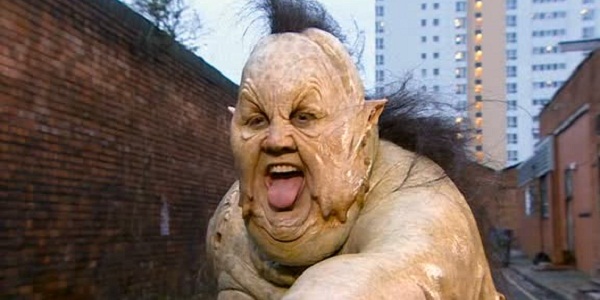
Love & Monsters is ultimately a story about loneliness, whether it's Jackie being left alone by Rose, or the various members of LINDA finding each other. The fact that LINDA reflects many of the local Doctor Who groups that flourished during the show's wilderness years is deliberate – RTD is telling the story of how groups with a shared interest can ultimately be torn apart by someone who takes it all too seriously.
We've all been in a group chat with someone who takes every joke literally, or had to endure replies on social media about why our opinions on Doctor Who are wrong, wrong, wrong!
Far from being the worst that Doctor Who has to offer, Love & Monsters is actually more relevant than ever in 2025.
7. The Missing Episodes May Be Lost Forever

There are almost 100 episodes missing from the Doctor Who archives, and as the years grind on, it seems increasingly likely that they will never be found.
Even if it is true that a private collector has them all but won't negotiate with the Beeb, it's a situation that pretty much guarantees we'll never see the likes of The Evil of the Daleks or Marco Polo as originally intended.
Add to this the spectre of vinegar syndrome (the name given to the deterioration of poorly-stored film), along with the fact that the majority of the global archives have already been plundered, and it seems highly unlikely that anyone will chance upon a copy of The Web of Fear Episode 3. It's a harsh truth to accept, but it's statistically improbable that we'll ever have all of those missing episodes returned.
Not that there isn't any hope whatsoever, mind you. Nine episodes were found in a Nigerian TV station in 2013, so it's always possible that more will pop up somewhere. And hey, if you or a relative have any mysterious film cans in your loft or garage, it may be worth giving them a look. You might be sitting on a copy of The Macra Terror Episode 2, who knows!
6. It's INCREDIBLY Daunting For Newcomers

As mentioned, Season 1 leant heavily on things from Doctor Who's past, a strange decision considering that it was meant to be a big new relaunch. With a new streaming partner, a new Doctor, and a reset of the series numbering, the whole point of Season 1 was to be an ideal jumping-on point for Doctor Who newcomers.
It's a problem Doctor Who has been wrestling with for many years, and a problem that's only got bigger as the 2005 revival has ticked on. How do you attract new fans to keep the franchise healthy, while still appealing to those who made the show what it is? Matt Smith's first series in 2010 seemed to have the most success in this regard, and though efforts were made with Peter Capaldi's final series, Jodie Whittaker's first, and now the Disney+ era, it has never worked quite as well since.
Part of the problem might be that the show is simply a bit too long in the tooth to attract a sizeable new audience. As fans we often tell newcomers to start with Eccleston or Smith, without actually realising how daunting that could be. Imagine being new to something like Star Wars? People get sticker shock when you recommend a show with six seasons – now times that by ten and add in the expanded universe, spinoffs, and the episodes yet to come.
Still, it is quite funny to realise that there were over 14 Doctors and 39 seasons before a run of episodes that was literally called "Season 1". Only in Doctor Who, eh?
5. Anniversaries Don't NEED To Be Multi-Doctor Stories

The response towards Wild Blue Yonder from some corners of the fandom bordered on the unhinged. Yes, the production did itself no favours by making a big deal of the REDACTED cast members and trailers, and yes, with it being an anniversary special there was a certain degree of expectation.
But saying that Wild Blue Yonder isn't "special" because the Not-Things didn't take the form of Peter Capaldi or Matt Smith is utterly insane.
In fact, the idea that every big Doctor Who anniversary should be celebrated with a multi-Doctor story is also kinda weird. You have to keep innovating to keep the show, and its anniversary celebrations, fresh and exciting. The Five Doctors is a blast, but do we want that every ten years?
The Day of the Doctor wasn't special just because we got to see Matt Smith interact with David Tennant – it was special because we got Hollywood legend John Hurt as a secret incarnation of the Doctor! Similarly, the 60th anniversary episodes were special because they reunited one of the best-loved TARDIS teams for one final victory lap. For now.
Tennant and Tate practically doubled the show's ratings across the 60th, proving that these less obvious anniversary celebrations can be just as big a draw as sticking a bunch of past Doctors in a room together.
4. Martha Jones Is RTD1's Best Companion
Of course Billie Piper deserves all the plaudits for her integral role in making Doctor Who an overnight smash. And sure, the chemistry between David Tennant and Catherine Tate is off the scale, making them the most watchable of partnerships in 2008 and 2023, respectively.
But if we're honest with ourselves, when it comes to the best Doctor Who companion of that era, it's Freema Agyeman as Martha Jones.
Look at everything the Tenth Doctor puts Martha through. He literally compares her to Rose while in bed together, forces her to live as a servant in a boy's school during a period that was less than progressive (to put it mildly), and eventually asks that she travels the world telling everyone how great he is!
Could Rose have handled her two series if she'd been constantly compared to Sarah Jane? She could barely last two minutes in School Reunion without throwing a strop! Could Donna Noble have wandered the Earth for a year, laying low under a period of fascist rule? Unlikely. Although that is hilarious to imagine.
Martha Jones is simply the most capable, dependable, and loyal companion of the RTD era. Both of them, in fact. There's been more clamouring for Martha to return in recent years than there has been for Rose or Donna, which tells you all you need to know.
3. The Ratings Aren't As Important As We Think

We might all be obsessed with Doctor Who's viewing figures, but in reality they really don't matter that much.
20 years after it returned to our screens, Doctor Who comfortably sits in the 5 million viewers range, putting it in line with other stalwart BBC shows like EastEnders and Strictly Come Dancing. However, what marks Doctor Who out from its soap opera and reality show counterparts is the sheer amount of cash it generates for the BBC's commercial arm.
As Steven Moffat told an audience at the University of Glasgow just last year:
"Everyone talks about ratings as if they matter. I was in a position to know how much money that show generated. That's the number you wanna look at. And that's why Doctor Who still gets made. It's a massive show and it's never not culturally important."
In the days where IP is king, a strong brand with decades of history like Doctor Who is gold dust. It's why Disney was so interested in the first place. Whether or not Doctor Who has driven subscriber numbers up in the way they would've liked is a different conversation about the streaming age. But here in the UK, the BBC appears to have long since given up caring about the ratings, with Doctor Who recently being named one of the UK's top TV exports, and the BBC themselves naming it one of their key brands for the future.
Regardless, every small fluctuation in the viewing figures will no doubt have people yelling that Doctor Who is on death's door, as has been the case for over ten years now.
2. Doctor Who NEEDS The Daleks

The month is December and the year is 1963. After an atmospheric and intriguing first episode, the BBC's new flagship family sci-fi show had literally devolved, as jobbing actors shuffled around the studio in furs, grunting and groaning at William Hartnell and the cast.
A week later and a menacing sink plunger changed everything, as Terry Nation's Daleks captured the hearts and minds of a generation of children.
Doctor Who and the Daleks are intrinsically linked, and they always should be. As much as us fans complain about their overexposure, it's hard to deny their immense popularity. The general public may not know who the new companion is, but they can identify a Dalek with ease. There's a reason why their return was saved for a mid-series bump back in 2005, and again in 2007. There's a reason they've been in so many series finales and series openers, and there's a reason why they've had cameos in so many movies and TV shows outside of Doctor Who.
Chris Chibnall also understood the popularity and importance of the Daleks, and gave a hungover New Year's Day audience three mini Dalek movies in a row, ensuring a moderate bump in interest from the casual viewers at home.
Nobody wants the Daleks to be the villains every single week, but when deployed properly, they can have a powerful effect on Doctor Who's public profile. It's been years since we last saw them, so it's about time they were brought back once again.
1. Russell T Davies Is Not A God

When it was announced that Russell T Davies was coming back to run Doctor Who, it was like the second coming of Christ. Which is ironic given that he'd previously written a drama about how badly that would've gone down.
Fans who despised the tricksy plotting of Steven Moffat or the understated tone of Chris Chibnall found their saviour in Saint Russell of Davies, the King of Television.
This hype was rooted in nostalgia for the golden years of 2005 to 2009, which isn't necessarily a bad thing. After all, that was an amazing time for Doctor Who – a time when Toys 'R' Us had an entire wall of Doctor Who toys, and the show was bringing in 13 million viewers on Christmas Day.
However, this hype also overlooked the fact that Russell T Davies was never the greatest writer of Doctor Who during his original tenure.
The first RTD era was never some unimpeachable home run of banger after banger after banger. For every Midnight, there was a Long Game and an Aliens of London. And though it's not as bad as people make out, nobody can deny that Love & Monsters is one of the most hated episodes of the show. And guess who wrote it?! RTD is an incredible writer on his day, but he's also a human man with flaws and limitations, something that was overlooked in the run-up to his second era.
And how has that era shaped up thus far? Well, we got what we always get with Russell – a couple of corkers, and some utter tosh.