10 Traumatic Doctor Who Facts You'll Wish You Hadn't Heard
Who says Doctor Who is a family show?
People talk about hiding behind the sofa from Doctor Who with good reason. It’s a scary show, especially by the standards of family television, and there's a lot of stuff it probably wouldn’t get away with if it wasn’t already grandfathered in with the excuse of "but we’ve been doing it like this for decades."
Seriously, how many early evening TV series regularly have dozens of people being brutally massacred by evil fascist alien robo-tanks? Not many, I’d wager.
But even with its reputation as a terrifying show, there have been moments in Doctor Who that step over the threshold from scary, to actively traumatic. And while some of these moments are pretty obvious and right there in the text, there are more than a few that can easily slip under the radar – until a handy list like this, that is.
From the horrors of Cyber-conversion to UNIT violating the Geneva Convention, here are 10 Traumatic Doctor Who Facts You'll Wish You Hadn't Heard...
10. Mancini's Restaurant Has A Children's Menu

The beginning of Peter Capaldi’s tenure as the Doctor marked a sudden and distinct change of tone.
Gone was the whimsical, fairytale atmosphere of the Matt Smith era – in its place, Deep Breath introduced us to a Twelfth Doctor who was dark, brooding, unsure of himself, and potentially even willing to kill in cold blood, depending on how you interpret the episode’s ending.
Alongside the darker Doctor was a suitably dark premise, with Deep Breath seeing a return of the clockwork droids from The Girl in the Fireplace. This new group of robots (this time from the SS Marie Antoinette) quickly get back to their old tricks, setting up the fake Mancini’s Family Restaurant and harvesting customers’ body parts to rebuild their ship.
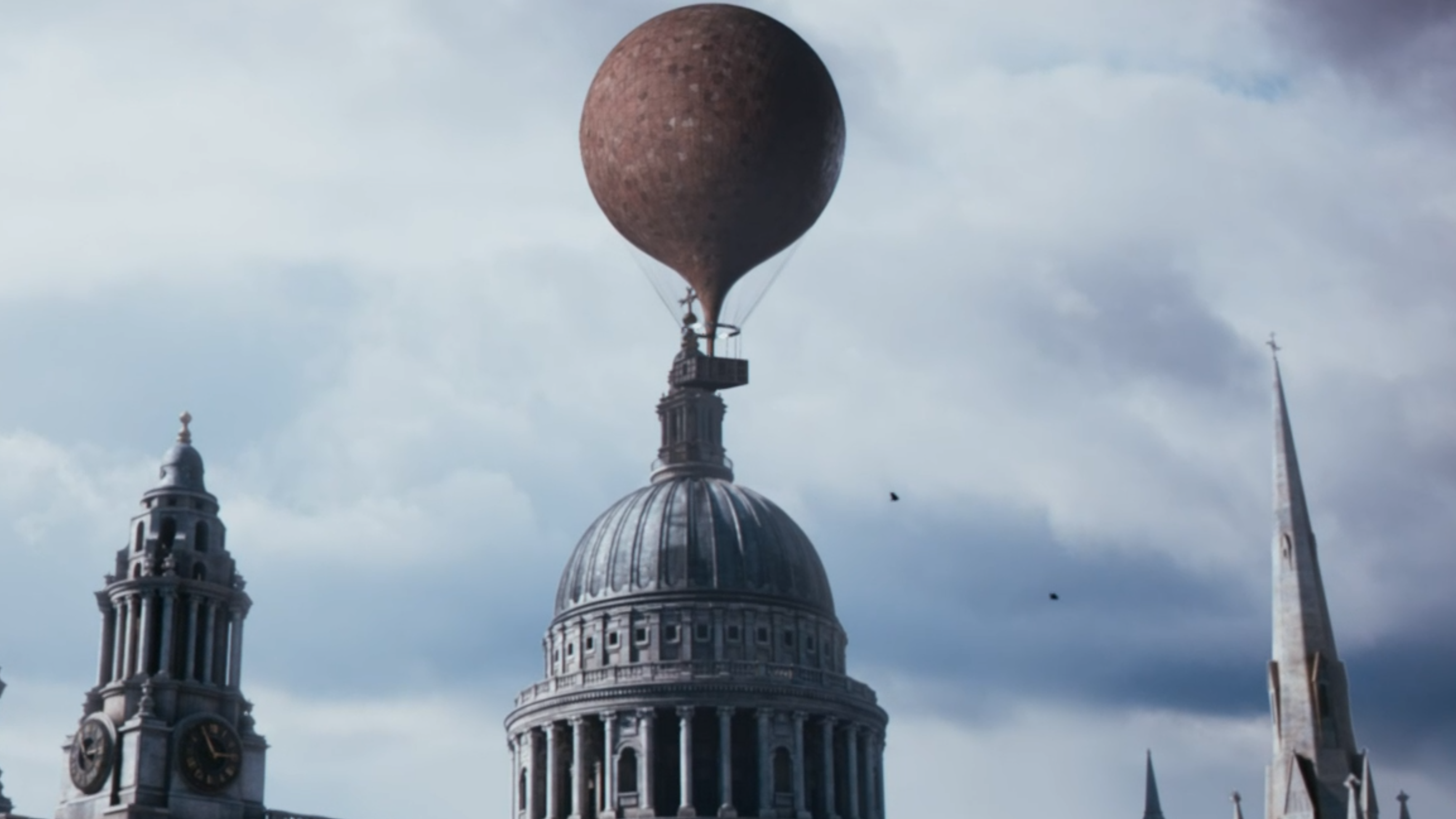
In some particularly gruesome imagery, they even repurpose their victims’ skin to make a hot air balloon.
But the most distressing aspect of this is also the easiest to miss: Mancini’s is a family restaurant, and they have a "children's menu". As the Doctor confirms to a horrified Clara, "We ARE the menu", which indicates that the children's menu in question actually consists of kids' body parts, as opposed to turkey dinosaurs and potato waffles.
The robotic staff of the SS Madame de Pompadour massacring its human crew to use their bodies for scrap is already harrowing enough, but imagining the same happening to innocent children is on a completely different level. No wonder Moffat decided to leave that one as a background detail instead of bringing attention to it!
9. The Ood Abattoir

It’s not just the way a monster looks that makes them scary, it’s the reason they look the way they do. This was the case for the suited Silents, the cloth-faced Mondasian Cybermen, and the bandaged Foretold.
It was also the case for the Ood – not because of their mottled skin and pink fronds, but because of their translation orbs, which are stitched onto them by the merciless Ood Operations.
It’s an ironic name for a company that literally performs surgery on its workforce, removing their secondary hind brains to make the necessary alterations. It’s a grim thought, but the Ood as we know them have been mutilated.
Planet of the Ood writer Keith Temple originally planned to make this more explicit, with a sequence set inside the abattoir-like conversion centre. Though deemed “too horrific” for the finished episode, this material was reinstated in the Planet of the Ood novelisation which was released in 2023, and it reads as follows:
"The hydraulic system of surgical devices, hanging above the conveyor belt a short distance away, had one purpose: to amputate natural Oods' hindbrains."
So if you thought that Donna went through the ringer seeing the Ood locked in a cage like cattle, her trip to the Oodsphere was nearly much more harrowing.
8. The Extremis Simulation Wasn't A One-Time Thing
Simulation theory has been a topic of discussion on various corners of the internet for years now, so it’s surprising it took Doctor Who so long to get around to using it for an episode.
But when it eventually showed up in Series 10’s Extremis, it did not disappoint.
Steven Moffat’s script really leans into the psychological horror of discovering you live in a simulation, incorporating more references to (and depictions of) suicide than most people would think possible in a prime-time BBC drama.
What’s more, he really sells that these simulations aren’t just two-dimensional copies of the “real” characters – they’re in many ways sentient in their own right, feeling both the physical pain and the existential dread of the situation they find themselves in.
Which makes it all the more grim when you realise that this isn’t the only time the Monks have run a version of this simulation.
In fact, they've been creating full, realised copies of our world again and again and again, repeatedly putting billions upon billions of simulated humans through the same terrifying experience of realising they're in a game, before being “switched off.”
Even the Doctor has died multiple times over, as the Monks coldly inform him towards the end of the episode. Killing the Doctor once is a huge feat, so to do it on repeat takes a frightening level of power.
7. Gallifreyan Children Are Forced To Leave Their Families

The Time Lords don’t exactly have a great reputation as a species, generally being seen as pompous, arrogant elitists who consider themselves to be above the other races of the galaxy. But even by their low standards, their parenting tactics could use a bit of work.
While in most human cultures a coming-of-age usually involves some sort of party, or maybe a handing-down of a family heirloom to the next generation, or even a knackered old car, the Time Lords have a different take on things.
As the Doctor explains in The Sound of Drums, children of Gallifrey are taken from their families at the age of eight to enter the Time Lord Academy, where they stare into the Untempered Schism, a literal hole in the fabric of space and time up in the Gallifreyan mountains.
His use of the word "taken" implies that the kids don't actually get a say in the matter, and this had results that were about as successful as you’d expect. In the words of the Doctor, "some would be inspired, some would run away, and some would go mad."
We at WhoCulture are not claiming to be parenting experts, but perhaps the Time Lords would have less trouble with renegade megalomaniacs like the Master and the Rani if they didn’t snatch every eight-year-old child from their families to stare into the infinite abyss of all existence. Just a thought.
6. UNIT Massacred Silurian Civilians

In modern Doctor Who, UNIT is generally presented as a force for good. They share the Doctor’s science-based approach, they employ many of the Doctor’s ex-companions and keep a watchful eye on the rest, and meetings between Kate Stewart and the TARDIS team are often filled with hugs and happy reunions.
But back in the 1970s it was a very different story. UNIT as it first appeared was much more militaristic, secretive, and not above completely ignoring the Doctor’s advice whenever they decided they had a better idea, as seen in Doctor Who and the Silurians.
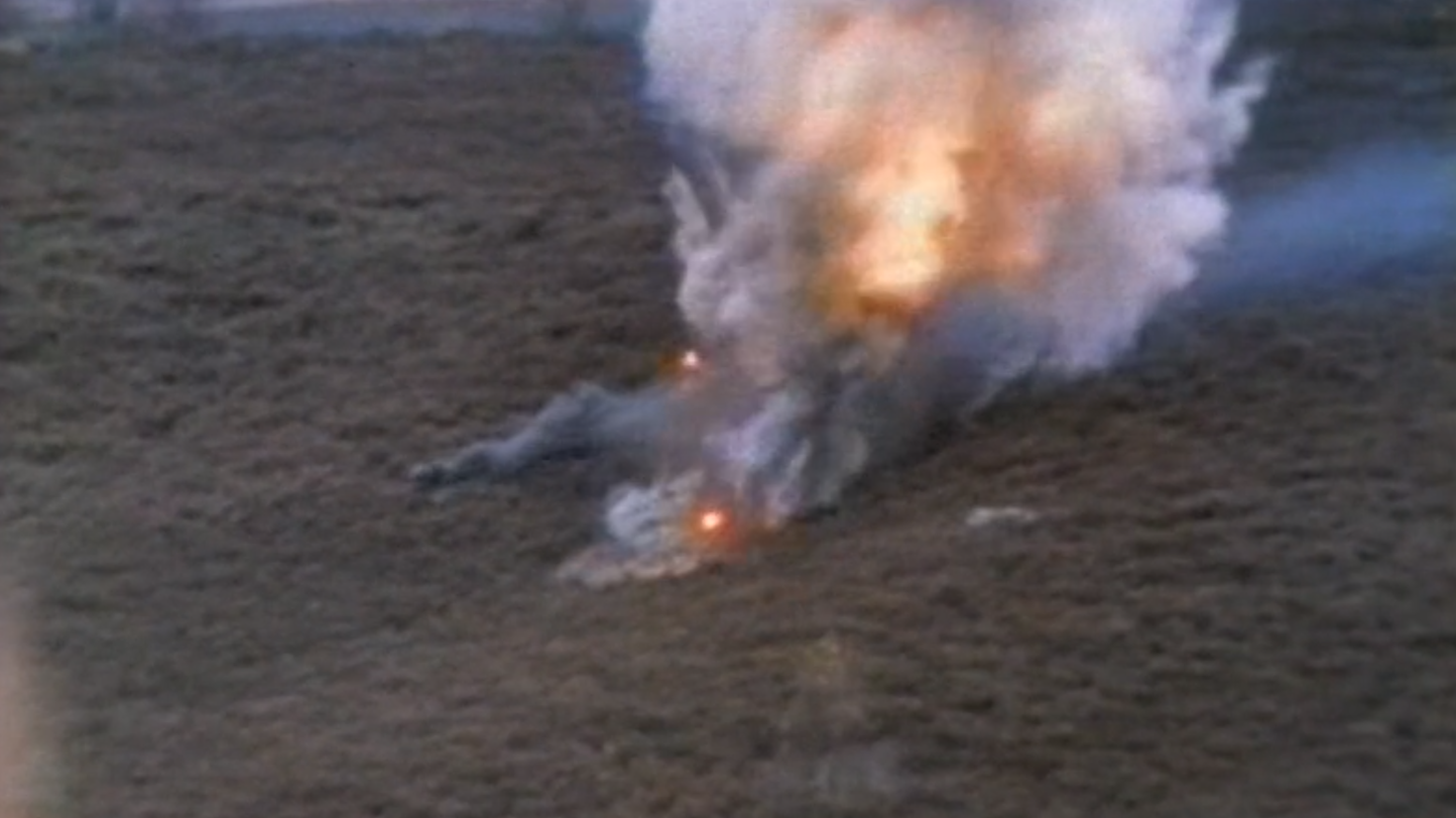
After all the usual misunderstandings between humanity and our reptilian predecessors, the Doctor seems to have established an uneasy truce between the two Earth species. However, as the Doctor makes his way back to London he witnesses an explosion in the distance, and realises with horror that the Brigadier has ordered UNIT to destroy the caves above the Silurian bunkers, permanently sealing them in, and condemning the base’s entire population to an eventual death in cryostasis.
This wasn’t just a military installation either. Considering the Silurians’ plans to repopulate the Earth, there will have been civilians in cryosleep, and maybe even children. Even worse, at this point, nobody was even sure whether this was the only Silurian base still functional. UNIT wasn't just committing mass murder – they were attempting a genocide.
For all the Doctor’s reminiscing about him now, the Brigadier could be a ruthless pragmatist, and the two rarely agreed on anything. It'll be fascinating to see if events like this get brought up in the upcoming spinoff The War Between the Land and the Sea, which deals with a conflict between UNIT and the Silurians' aquatic cousins, the Sea Devils!
5. Rigsy Had To Deal With Clara's Corpse

As far as companion deaths go, Clara’s concludes on a comparatively positive note.
Though she’ll always have to return to the Trap Street at the moment of her death to prevent any paradoxical timeline shenanigans, she has her own TARDIS to travel the universe with in the meantime, and Maisie Williams’ immortal Ashildr to keep her company. Compared to Moffat’s other companion deaths, that seems like a pretty good way to go.
But at the end of the day, she is still dead on Trap Street, and that's going to be particularly traumatic for one person in particular: Rigsy, Clara’s friend, who she first met in the excellent Series 8 episode Flatline.
Though this wasn't featured in the episode itself, the shooting script for Face the Raven contains the rather grim note that the Doctor tasked Rigsy with taking Clara's body back to her family, and informing Coal Hill School of her death.
It's tough to imagine him lugging his friend's corpse out of Trap Street, and he won’t have had much help, either. The Doctor can't have returned as his memories of Clara were wiped, and presumably Ashildr won’t be able to help either, as her return would mean crossing time streams with her younger self.
Which means that Rigsy is left alone in the Trap Street with Clara’s dead body, and with absolutely no knowledge that Clara actually got to live a full life travelling around the universe before her death. Poor bloke.
4. There Were REAL Bones In The Cave Of Skulls

Doctor Who’s second serial, The Daleks, saw the Doctor face his most enduring enemy for the first time. However, debut instalment An Unearthly Child had sent the first TARDIS travellers to an environment that was arguably just as hostile.
The Daleks might be proper monsters, complete with grating voices and metal tanks, but cavemen aren’t much better – nor is prehistoric Earth much better than the petrified jungle of Skaro.
And if that wasn’t bad enough, things were pretty grim behind the scenes too.
Aside from the pressure of this being the first Doctor Who story to go before cameras, there was all manner of unsavoury set dressing to contend with: shrubbery ridden with insects, fur skins ridden with fleas, and, for the Cave of Skulls set, countless replica skulls – with some real bones thrown in for good measure.
Yep, that’s right: Doctor Who’s first ever story featured actual bones, sourced from an abattoir by designer Barry Newberry. As you can imagine, under those hot studio lights they didn’t exactly smell like roses!
It’s pretty shocking, and a stark reminder of how different production standards were in the '60s compared to today, where you would fully expect something like that to be a constructed prop.
3. Not All Cyber-Conversions Are Painless
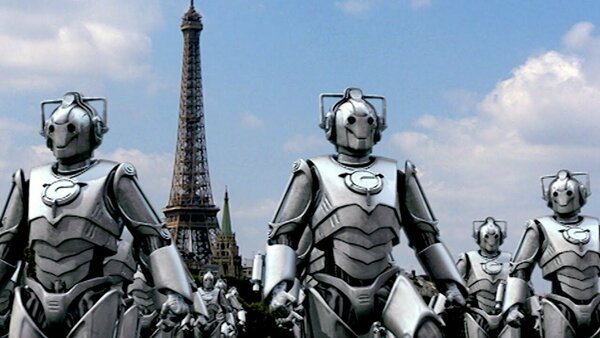
Cyber-conversion is already a pretty horrific process. It’s hard not to be slightly traumatised by the idea of having your body forcibly modified, you brain stuffed into a metal shell, and all of your emotions and free will artificially suppressed, leaving you an unthinking, unfeeling machine.
But if that’s all that happens to you when you’re caught by the Cybermen, you can count yourself lucky, because for some people it’s even worse – sometimes, people are awake and conscious during the conversion process.
The most notable (and spine-chilling) example of this is probably in Rise of the Cybermen, when the homeless “test subjects” kidnapped by Cybus Industries can be heard screaming in agony as the cyber-conversion process begins.
Possibly even more horrific is in 1985’s Attack of the Cybermen, when the Doctor encounters Lytton – a recurring character audiences were already familiar with – midway through the conversion process. Not only is Lytton fully aware of what is happening to him, he is able to communicate, begging the Doctor for to kill him and end his suffering before he finally becomes a Cyberman.
Lisa from the Torchwood episode Cyberwoman is another example of this, with the Cybermen needing soldiers quickly towards the end of the Battle of Canary Wharf, and therefore not having the time to "put people under" before the conversion process began.
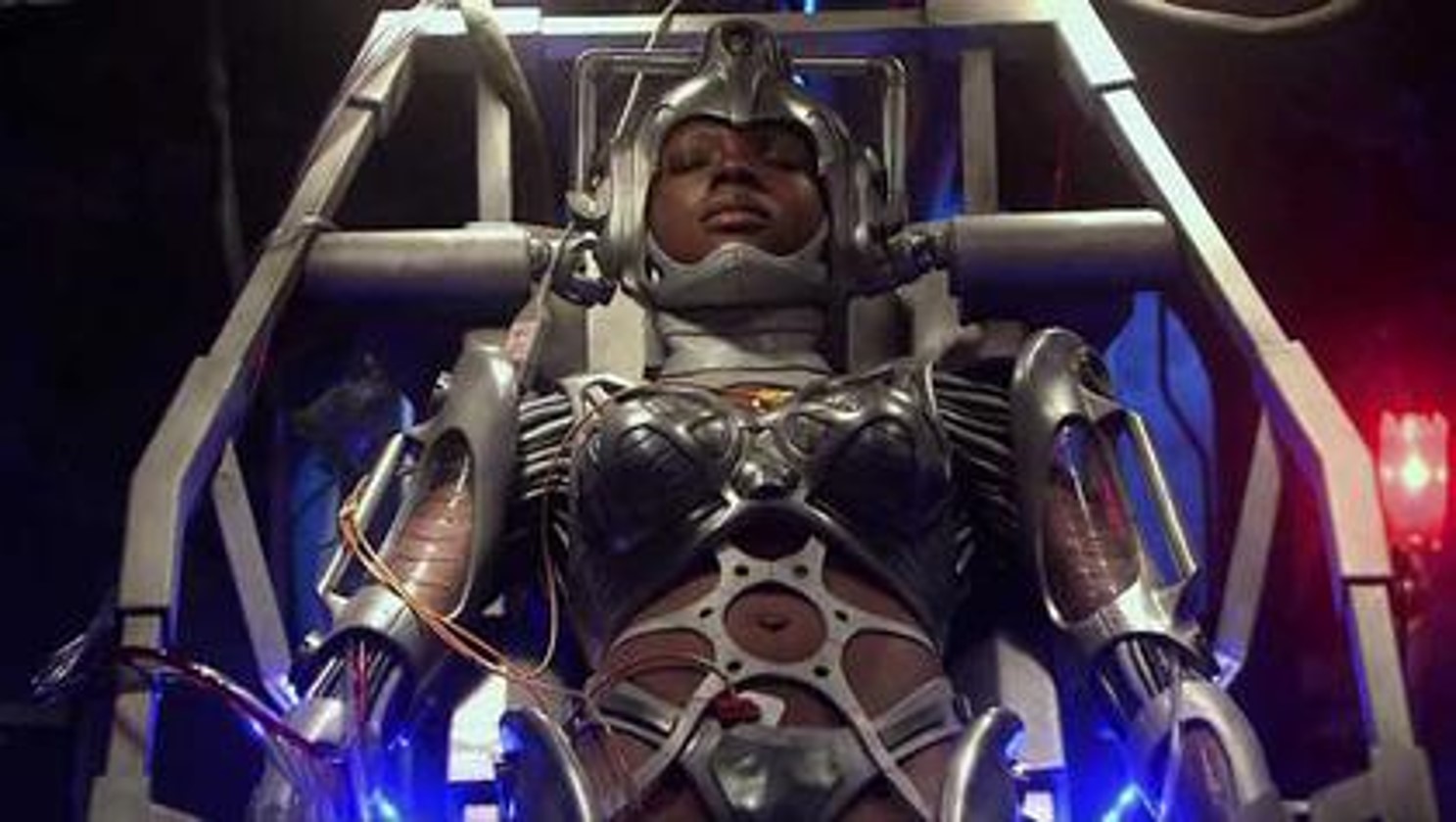
We're largely led to believe that Cyber-conversion is fast and painless, but this isn't always the case.
2. Sky Was Planning To Take Her Life

I doubt that there was anybody watching Doctor Who in 2008 who isn’t still a little traumatised by the events of Midnight, which sits alongside Blink and Turn Left as one of the scariest, most disturbing episodes of the Tenth Doctor’s era.
It’s impressive then that there are still additional layers in the behind-the-scenes that can make the episode even more traumatising.
In the episode’s DVD commentary, writer Russell T Davies reveals that Sky Silvestry – the unfortunate woman who is possessed by the mysterious entity and later killed – was planning to take her own life once the tour shuttle reached the planet’s waterfall destination. This undoubtedly was related to her recent breakup, which is mentioned in the episode itself. But the exact reason she's on that shuttle is never disclosed.
As Russell explains:
"She’s on her way to a waterfall palace, but she says ‘I’m on a schedule’, which is like, what for? What on earth are you going to a waterfall on a schedule for?"
From this we can infer that the Midnight Entity didn’t just choose Sky at random. It was specifically taking advantage of somebody at their absolute emotional lowest, and using them to hurt others.
To make matters even worse, she was lucky enough to be on the shuttle with the Doctor. In any other scenario, he would have attempted to stop Sky from going through with it, but instead all he could do was watch her die.
1. The Doctor Painted Clara's Portrait
Heaven Sent is widely considered one of the high points of modern Doctor Who, and arguably one of the best episodes in the series’ entire run.
Part of the reason this episode is held in such high regard is that, due to its endlessly looping narrative, there are so many little details and intricacies that only become apparent on the second, third, or even fourth rewatch. So it’s no wonder that we’re still realising little details that passed us by all these years later.
One of the most heartbreaking elements of the time loop – yes, even sadder than the moat of Twelfth Doctor skulls – is the portrait of Clara. Why is it there, and how did it get there?
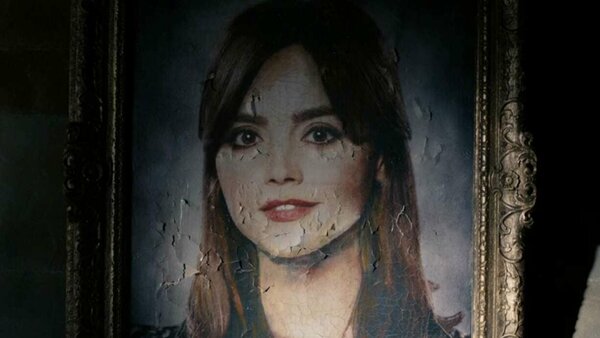
Well, that first part is easy enough to answer. The Confession Dial is designed to beat the Doctor into submission, so taunting him with the ghostly image of his dead friend is a pretty cruel way to wear him down. But wasn't isn't so apparent is that, according to writer Steven Moffat, this painting of Clara was actually created by the Doctor himself.
This means that in one of the earlier loops, the grieving Doctor took the time to somehow find paint, brushes, and a canvas, and painstakingly draw a portrait of his lost friend – all the while dodging the mysterious wraith that perpetually stalks the castle.
As if Series 9’s finale wasn’t sad enough already...