10 Most Insanely Powerful Doctor Who Villains
Doctor Who has fought literal gods, but how do the Daleks measure up to the Pantheon?

It was during Patrick Troughton's second season that Doctor Who established itself as a monster show. Cybermen, Yetis, and Ice Warriors all menaced the Second Doctor, Jamie, and Victoria in various bases under siege. However it was that season's Great Intelligence who hinted at the great cosmic and elemental forces the Doctor would also occasionally cross paths with.
The Great Intelligence was an intangible force that carried out its plans through placing its influence within physical beings, be it the Yeti or the Snowmen. Before the Great Intelligence was the Toymaker, whose confrontation with the First Doctor also paved the way for other powerful villains from realms beyond the Whoniverse.
When he returned to the show in 2021, Russell T Davies turned his attention to these other realms, pitting Ncuti Gatwa against gods of games, music, death, and light. Indeed, Doctor Who's RTD2 era has less in common with the kitchen sink realism of his original run and more in common with ancient myths and legends.
But while the Doctor may now be facing off against the Pantheon of the Gods instead of Cybermen and Ice Warriors, there are still some traditional Doctor Who monsters that are more than capable of giving the Toymaker, Maestro, and Sutekh a run for their money!
10. The Silence
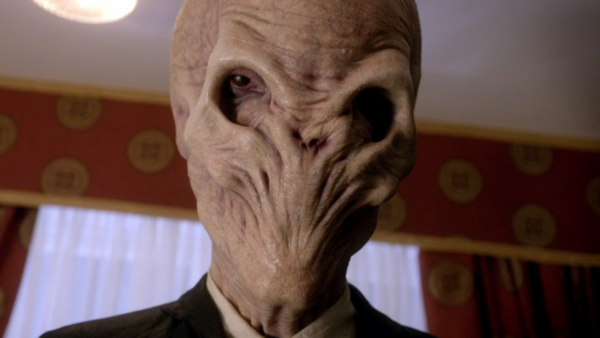
The Silence, and the wider religious sect led by Madame Kovarian, were incredibly powerful foes of the Eleventh Doctor. Hell bent on preventing the Doctor from reaching Trenzalore and restarting the Time War, they travelled back through time, manipulating human development along the way. This basically means that everything humanity achieved technologically until 1969 was due to the influence of the Silence.
It's also highly likely that a Silent saboteur was responsible for blowing up the TARDIS in The Pandorica Opens. Not even Genghis Khan's horde could make it through the doors of the TARDIS, so the Silence must be pretty damned powerful to get inside. We don't know how the TARDIS blew up, mind you, but maybe the sheer power of the Silence's sabotage is too much for our tiny human brains to comprehend.
On top of all this, they have the ability to make you forget that you ever met them, which would conceivably allow them to out-manouvre every other being in the Doctor Who universe. And with a flick of their spindly fingers they can make human beings burst like party balloons.
All in all, they make for a pretty formidable foe!
9. The Daleks

While their iconic design and quotable catchphrase have made them more famous than Doctor Who itself, that's not the true secret to the power of the Daleks.
It's not for nothing that when RTD brought back the Daleks in 2005, he started with just one. Rob Shearman's Dalek showcased just how deadly one of Skaro's finest can be – devious, manipulative, and utterly relentless. It's these qualities that have allowed the Daleks to lay waste to planets across the Whoniverse since their debut in 1963.
The Daleks have had time-travel capabilities since 1965's The Chase, and they always see themselves as the supreme species in the universe. It was inevitable that they would eventually set their sights on becoming the true masters of time. The Time War was devastating to the entire fabric of the universe, and it set the Daleks up almost on the same level as the gods, just as Davros had always wanted. With Davros' aid, they nearly destroyed the universe again with the Reality Bomb – if not for a Doctor-ex-machina.
There are very few Doctor Who villains that could stand toe-to-toe with the Doctor and the Time Lords, but the Daleks gave wiping out the entire species a pretty good stab with a sink plunger.
8. The Weeping Angels

For a race of creepy garden ornaments, the Weeping Angels are incredibly powerful. They're insanely fast – look at how the Statue of Liberty was able to cross from Liberty Island to Manhattan in the blink of an eye. And then there's their ability to transport their victims in time (and often space) with just a simple tap on the shoulder.
Hang on, the Silence, the Weeping Angels, what is it with Steven Moffat and scarily powerful fingers?
The Angels also have the ability to quantum lock themselves, which is why they appear as stone statues. It's a near-perfect defence mechanism, not least because they cannot be killed while in this state. Although as far as we can tell, nobody's tried smashing one of them with a sledgehammer quite yet.
And if that weren't enough, they also had the power to make anything that holds their image – be it a sketch, video footage, or a literal eyeball – into an incubator for a living breathing Weeping Angel.
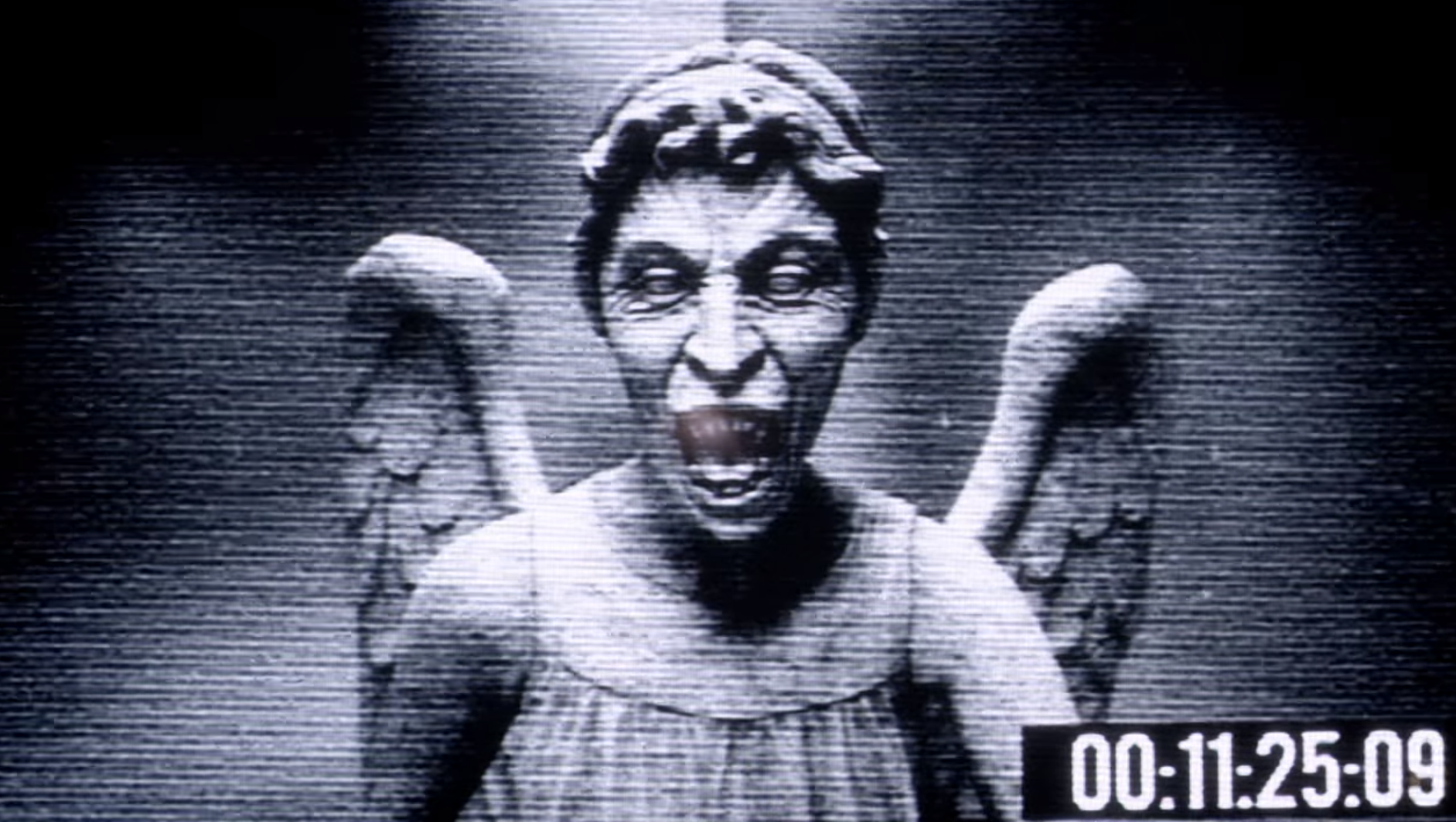
They're relentless and nigh-unstoppable, and their time displacement ability more than makes up for their lack of firepower. But if there's one thing that the Weeping Angels have over the Daleks and the Cybermen, it's the fact that they literally turned the Doctor into one of them.
Talk about a mic drop.
7. Zellin & Rakaya

Zellin and Rakaya were members of the Eternals, the godlike species first encountered by the Fifth Doctor, Tegan, and Turlough. The Eternals had immense power and immortality but were also supremely bored, so tended to use "ephemerals" like human beings as playthings.
For example, Zellin delighted in torturing people by making their nightmares a reality. These nightmares were delivered by, er, sticking one of his detachable fingers into his victim's ear. Again with the creepy fingers!
These nightmares fed Rakaya, a fellow Eternal and Zellin's lover, who had been imprisoned by the vengeful inhabitants of two planets that had been pitted against each other by the godly couple. Rakaya's power was to manipulate matter itself, a very handy gift when attempting to destroy a planet.
Both Rakaya and Zellin were able to teleport across time and space, and could even breach the walls of the TARDIS. Not that they really need a time machine with their abilities, but it's a display of their immense power nonetheless!
After Rakaya was freed, the Thirteenth Doctor quickly turned the tables on the two gods by trapping them inside a prison where they would be tortured for eternity by the very nightmares Zellin had previously brought to life – though not without considerable difficulty.
6. The Monks
We first met the Monks in Extremis, in which it was revealed that they had the ability to run hugely elaborate simulations to discover the best way to conquer a planet. The Pyramid at the End of the World revealed that the Monks had foreseen a catastrophic man-made biological disaster that would wipe out all life on Earth.
The power required to run the Monks' painstakingly realistic simulations must be incredibly vast. Firstly, there's the mental power to calculate every possible scenario. And let's not forget that knowledge is power, too – and there's surely nothing more powerful than knowing when the world is going to end and offering a solution.
The only drawback is that the solution comes with a hefty price-tag – world domination, a total rewrite of established history via fake news, and the subjugation of the entire population.
Although if you think that's a hefty price to pay, just think about how expensive the Monks' electric bill is! The price of running those elaborate holographic simulation booths must be astronomical.
The Monks' ability to brainwash an entire planet is mind-boggling (quite literally), and puts them on a similar level of godly power as the members of the Pantheon.
5. The Beast

The Beast is so powerul that he casts a long shadow across multiple cultures in the Doctor Who universe. When the Tenth Doctor confronts him in The Satan Pit, he claims to be "the truth behind the myth", the demon that gives rise to portrayals of the devil in multiple cultures on Earth and beyond.
As well as our own devil, the Beast is believed to have influenced the Dæmons from Dæmos, the Kaled God of War, and even the Draconians' own "horned beast".
Even if, like the Tenth Doctor, you take the Beast's claim of being the OG Satan with a pinch of salt, his actual power is undeniable. Held prisoner in the centre of a dead planet orbiting a black hole, the Beast was still able to throw his seductive voice across vast distances, affecting the Sanctuary Base's computers and communication systems.
The Beast was also able to fully detach his consciousness and transfer it into the collective minds of the Sanctuary Base's Ood staff, and that of the doomed Toby Zedd. It possesses otherworldly intelligence and supernatural abilities, and is able to play on the deepest, darkest fears of the people it meets.
And let's not forget, despite being chained up for centuries, he has refused to let himself go – the Beast is jacked. Is there a gym down at the bottom of that pit?
4. Maestro

Memorably played by Jinkx Monsoon, Maestro was the physical embodiment of music and therefore designated as its god. Maestro had the ability to control music, and use it as a weapon. They could manifest musical notes and use them to hold Ruby prisoner, or use them to kill former Doctor Who costume designer June Hudson!
At the climax of The Devil's Chord they even trapped the Doctor and Ruby inside a drum and double bass. Maestro also fed upon music, voraciously feeding on it from their summoning in 1925 all the way to 1963.
So great was Maestro's appetite that they destroyed music and created a dystopian timeline in which Paul McCartney might well have been better off if he'd taken that job as an electrician.
If Maestro hadn't been defeated by Lennon and McCartney then they would've extinguished all music and joy from the world, leading to a bitter war that would've left the Earth devastated in a nuclear winter by 2024.
Indeed, Maestro mused that the sound of the nuclear apocalypse was the sweetest music of all. Maybe that's true, but it's notably absent from Spotify's recommended playlists.
3. The Black Guardian

Introduced in the 1979 story The Armageddon Factor, the Black Guardian is the literal embodiment of all the darkness and chaos in the universe. In fact, the Black Guardian is so chaotic that he doesn't seem to realise that a bird is nesting in his hair.
When he was prevented from obtaining the Key to Time, the Black Guardian vowed revenge, forcing the Fourth Doctor, Romana, and K9 into using the TARDIS randomiser – a sort of time and space version of a witness protection programme.
The Doctor was right to be fearful of the Guardian because later encounters revealed that he could breach the safety of the TARDIS (something of a recurring theme when it comes to powerful villains) and transfer his powers to his disciples. The Black Guardian could also oversee all of time and space, keeping tabs on Turlough's travels in the TARDIS, so that he could dip in and encourage him to kill the Fifth Doctor.
He was the exact opposite of the White Guardian, representing the forces of darkness and everything that is evil and chaotic in the universe.
However, the Black Guardian is only as powerful as his designated element – chaos. He must be having a field day in 2025!
2. The Toymaker

The Toymaker is so powerful that he's twice had a drastic effect on the Doctor's physical appearance. During their first encounter, the Toymaker rendered the Doctor invisible save for one hand. When they met again almost 60 years later, the Toymaker's use of the galvanic beam literally split the Doctor in two and triggered a bi-generation.
Triggering a makeover for the Doctor isn't the Toymaker's only power, however. The God of Games had the power to create a reality of his own, the Celestial Toyroom. The Toymaker selected his playthings by reaching out across the cosmos and forcing unsuspecting victims into playing complex games which they would usually lose.
One of these losing players was the Master, who was then trapped inside the Toymaker's gold tooth as punishment.
When the Toymaker was finally able to physically manifest in "our" universe, he brought his powers with him, turning UNIT soldiers into bouncing balls and collapsing a brick and mortar building in 1920s Soho like a house of cards. As a force beyond our universe, he had control over reality in a way that even the Doctor was helpless to stop.
Not only that, but he could play the Spice Girls in UNIT HQ without even spending twenty minutes trying to get the bluetooth speaker to recognise his phone. Unlimited power!
1. Sutekh

Sutekh is the god that other gods like Maestro fear, and it's easy to see why. It doesn't get more powerful than the ability to wipe out all life – past, present, and future – in the universe, does it? Of course, Sutekh's terrifying power is what landed him in prison on Mars in the first place.
First introduced in the classic Tom Baker serial Pyramids of Mars, Sutekh was one of the ancient Osirans who were mistaken for gods by the ancient Egyptians. In Egyptian mythology, Sutekh was Set – the god of deserts, storms, disorder, and violence. Thanks to the efforts of the Fourth Doctor and Sarah Jane Smith, we never saw these powers unleashed.
However, in Empire of Death, Sutekh turns the entire cosmos into a desert via some disorder and a violent sand storm.
There were other powers introduced in the Season 1 finale too. Where previously Sutekh was able to animate corpses like that of Marcus Scarman, The Legend of Ruby Sunday revealed that he could literally manifest disciples across time and space, like Susan Triad and Harriet Arbinger.
Truly an impossibly powerful villain with the power of both life and death. An impossibly powerful villain that was defeated by a dog leash and a whistle, but listen, he still more than earns the top spot here!