7 Times The Flash Improved DC Mythology (& 4 Times It Failed)
Looking at how Grant Gustin's Sultan of Speed has impacted the lore of DC Comics.

Soon set to embark on its ninth and final season, The CW’s The Flash has proven to be quite the hit amongst genre fans. With Grant Gustin headlining as the show’s titular Barry Allen, the series has helped to highlight one of the greatest superheroes in all of comics.
The Flash hasn’t been completely perfect throughout its eight seasons so far, of course, but there have been far more hits than misses for the Sultan of Speed and his supporting players.
Ever since The Flash premiered in 2014, audiences were promised that the Scarlet Speedster would vanish during the monumental Crisis on Infinite Earths. While that was averted during that particular Arrowverse crossover event, there's still been plentiful post-Crisis problems for Barry, with Speedforce issues, future-set shenanigans, and a slew of nefarious bad guys trying to take out Flash.
Whatever happens in the upcoming final season of the show, The Flash has certainly managed to have quite the impact on the greater lore of DC Comics. With that in mind, then, here are the ways that the series has improved on (and failed to improve on) the existing mythology of this hero and the larger world of DC.
Improvements To DC Mythology...
7. Brings The Horrors To Live-Action Life

Throughout the various different versions of the Flash seen within the pages of DC Comics, these speedsters have all had to see some extremely twisted and horrific scenes. Whether that’s their own body literally wasting away in front of them, a haunting speedster chasing them through time, or even coming face to face with a murderous future version of themselves, these heroes have had it rough.
Seeing superspeed brought to live-action life in The Flash has been great, and it’s for sure a cool sight to have seen so many of Barry Allen’s powers spotlighted on our TV screens each and every week. But what The Flash has really added to the lore of DC Comics, is that the series has brilliantly depicted just how terrifying the horrors of being a speedster can be.
From the chilling presence of Zoom in Season 2 – a character voiced by horror royalty Tony Todd, aka the Candyman – to the wince-inducing screams of the Black Flash, to the introduction of Bloodwork and all of his twisted ways, to the sinister Eobard Thawne resurrected through the body of a good Eobard Thawne, to even seeing the very real tragedy of Barry Allen watching his mother being murdered before his very eyes, The Flash has hit home just how brutal and sinister the world of the Scarlet Speedster can be.
6. How Iris Found Out

One major improvement that The Flash has made to the mythology of DC Comics and the Scarlet Speedster is just how exactly Iris West found out that Barry Allen was the Flash.
Despite how Iris was pretty much the last of those close to Barry to find out that he was indeed Central City’s Sultan of Speed, at least she found out in a rather brilliant way.
If you remember, the TV series had Iris putting two-and-two together once a touch from Barry gave her an electric shock as he’s about to go and help out Eddie Thawne. This coming on the back of Iris previously finding out this secret after Barry Allen stopped Central City from being flooded… only for that to be wiped out of existence after Barry accidentally went back in time.
How The Flash handled Iris finding this secret out is a major upgrade on the established lore of DC Comics, of course. You see, in the funny books, Iris – who is dating Barry Allen at the time – finds out that her beau is the Flash after he talked about it in his sleep.
5. Spotlighting Team Flash
As a hero, few DC Comics characters are as well-known as the Flash. Whichever version of Flash you’re talking about, the Scarlet Speedster is a big deal. So much so, he’s constantly one of the key members of the famed Justice League.
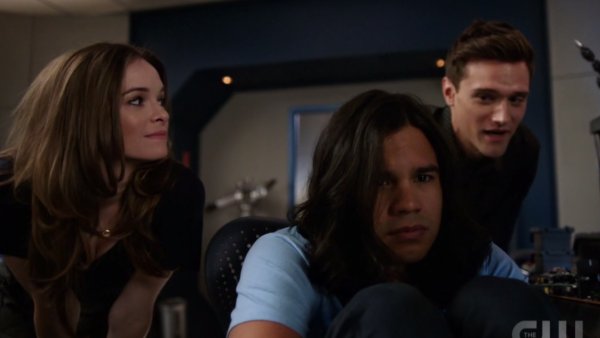
Now while the Flash is a top tier hero of the DC world, the same can’t be said of the supporting players who fight alongside Grant Gustin’s Sultan of Speed in the Arrowverse. Luckily for those characters, The Flash as a show has helped to shine the spotlight on heroes like Vibe (Cisco Ramon), Elongated Man (Ralph Dibny), Firestorm (Ronnie Raymond, Martin Stein, Jax Jackson), Chunk (Chester P. Runk) and even comic book villains like Killer Frost (Caitlin Snow) and Allegra Garcia.
In terms of the greater mythology of DC Comics, this can only be a good thing for those being shown assisting Barry Allen as part of Team Flash – particularly in how the majority of those watching The Flash may not have ever even heard of some of these characters were it not the The CW’s show.
Comic book-wise, Barry doesn’t particularly have a Team Flash, per se, to work with. But still, the fact that the aforementioned characters are highlighted as such a pivotal part of The Flash does wonders for them on a broader sense.
4. Harrison Wells

The more recent spate of DC TV shows – particularly where the Arrowverse is concerned – have had a habit of making minor comic book characters feel like a major deal, or outright creating new characters straight from scratch.
For instance, Arrow took a Felicity Smoak who had appeared in merely a handful of old Firestorm comics in the ‘80s and turned her into one of the most important characters in that show. Then there’s Supergirl, which created an Alex Danvers character who was likewise a pivotal cog in the grand scheme of that series.
In The Flash’s case, the main new character created by the Scarlet Speedster-centric offering is that of Harrison Wells. And not just that, for The Flash has introduced an ever-increasing amount of different versions of Wells from across a host of different Earths.
Having the charismatic and entertaining Tom Cavanagh playing each of these Wells doesn’t hurt of course, and every version of Harrison Wells seen to date has added something to the greater picture of the Sultan of Speed’s mythology.
And all of this brings us nicely onto our next point…
3. Making Eobard Thawne An Even More Personal Villain

Eobard Thawne, aka Reverse-Flash, has had several different origins and backstories across the various continuities and do-overs of the comic book world.
These days, the accepted canon has Thawne as a 25th century rogue who becomes so bitter at Barry Allen that he goes back in time to kill Barry’s mother, Nora. That in itself is a monumental moment in comics, for it effectively led to the whole Flashpoint arc which changed the landscape of DC Comics and ushered in the rebooted continuity that was the New 52.
In terms of heinous, sinister acts against a superhero, it doesn’t get much more personal and spiteful than travelling back in time to kill that hero’s mother. But still, The CW’s The Flash went one better than this.
Not content on having Thawne off Nora Allen, the first season of The Flash saw it revealed that Harrison Wells – who was Barry’s father figure and mentor – had actually been Eobard Thawne, aka Reverse-Flash, all along.
Thawne had killed the real Wells years prior and decided to take on his likeness, forming a bond with Barry Allen that was helping the troubled speedster to deal with the death of his mother and the incarceration of his father.
With this decision, The Flash as a TV show instantly made Eobard Thawne an even more chilling villain with a somehow even more personal connection to Barry Allen.
2. Introduced Casual Audiences To The Multiverse

At several different points, the Arrowverse has dabbled in the concept of alternative Earths and alternative timelines. And the show that first properly introduced alternative Earths was The Flash.
In the second season episode ‘Welcome to Earth-2’, The Flash saw its titular hero heading to the skewed world of Earth-2. The reason for that trip was to rescue Jesse Quick, the daughter of Earth-2’s Harry Wells – and as Barry, Cisco, and Harry travel to Earth-2, the series delivered a scene where there were glimpses at Supergirl, Connor Hawke as Green Arrow, Gorilla Grodd, Jonah Hex, and several other Easter eggs.
Of course, Supergirl, Connor, Grodd, and Hex were all at this point either on an alternative Earth or from an alternative future.
By this point in time, casual audiences or non-comic book fans were likely not aware of the concept of the multiverse and of alternative Earths. And if they had heard of this notion, chances were they didn’t really know what it exactly all meant.
What The Flash did, was it introduced the multiverse, explained what it was, and these alternative Earths were later incorporated across all of the Arrowverse shows – often due to a timely annual crossover between these series - before Crisis on Infinite Earths saw these worlds merge.
1. Barry & Iris' Kids
In the comics, Barry and Iris do indeed eventually have their own children, with these being speedsters Don and Dawn Allen, better known as the Tornado Twins.
While these siblings are often portrayed as villains, Don does become the father of the heroic Bart Allen, aka Kid Flash, aka the Flash, whilst Dawn is the mother of Jenni Ognats, aka the comic book version of another heroic speedster, XS. In The CW's The Flash, things are clearly very different.
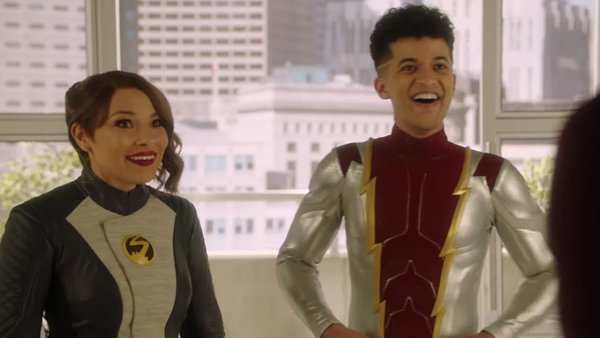
In the Arrowverse, Barry and Iris' kiddos are Bart and Nora West-Allen, better known as future-based speedsters Impulse and XS, respectively. The Flash has made this change work brilliantly well, with the chemistry of Jordan Fisher and Jessica Parker Kennedy meshing particularly well with Grant Gustin. Rather than being their grandson, Bart Allen is now Barry and Iris' son, and a iteration of XS is now their daughter rather than granddaughter.
Interestingly, there was a moment where Reverse-Flash saw Nora once and called her Dawn, with it revealed that in an alternative timeline - seemingly the original timeline before timey-wimey shenanigans happened in the show - the daughter of Barry and Iris is indeed Dawn, with her presumably having a sibling called Don... aka the Tornado Twins.
Failed To Improve...
4. It Makes Wally West Feel Second-Rate

To a whole generation, Wally West is the Flash.
Following Barry Allen sacrificing himself to save the existence of the multiverse during 1985’s Crisis on Infinite Earths, Wally ended up taking on the mantle of the Flash. And not just did he take on that moniker for a few months before Barry miraculously rose from the dead. No, Wally continued on as the Flash for over two decades!
Death in comics is usually merely a plot point these days, yet Barry Allen remained dead for 23 years – only returning in 2009 thanks to Geoff Johns’ The Flash: Rebirth tale.
The point being, Wally West is a major deal and has been a long-time staple of the DC Universe for so long.
In The Flash, Wally has just felt, well, lacking. Sure, the show’s Wally West followed his comic book counterpart in beginning life as Kid Flash, but West just ended up feeling lacklustre – at least for those whose only knowledge of this character is through The CW’s The Flash.
Where the mythology of DC Comics is concerned, it could be argued that Wally West is the best and most important Flash in history. From watching The Flash, you’d simply think of Wally as the moody Kid Flash who ran off to become Zen.
3. Barry Is Vulnerable To Psychic Attacks

Gorilla Grodd is one of the most beloved and infamous of the Flash’s rogues gallery. The thing is, this psionic, genius gorilla may be a threat to Barry Allen for a whole array of reasons – but the one way in which he does not pose a threat to the Flash is psychically. Well, at least in the comics, that is.
In The CW’s The Flash, Grodd has been seen to use his psionic powers to psychically control a slew of characters, including Grant Gustin’s Scarlet Speedster. By deciding to have Gorilla Grodd do that, however, it takes a lot away from the established lore of comic book battles between Grodd and Flash.
Down in the world of DC Comics, the Flash doesn’t get affected in the slightest by Grodd’s psychic abilities – and there’s a perfectly logical reason for that.
As part of Barry Allen’s superspeed, he’s able to think faster than anyone alive and his mind works at light speed. Thus, Barry’s connection to the Speed Force means that he is rendered immune to any psychic attack.
Unfortunately for The Flash, this is one element of DC lore that the show has decided to overlook. That’s a true shame, for Flash being impervious to those attacks means that Grodd instead has to use his smarts to get one over on the Sultan of Speed.
2. Bungling Savitar

Much like the TV series, the comic book world of the Flash features a bunch of nefarious, villainous speedsters. And one such rogue speedster is Savitar.
In the comics, Savitar is a big-time player who is viewed as a god by his cult-like followers. Initially a Cold War pilot who was struck down by lightning, Savitar is a motion-obsessed villain who is so powerful that his legend precedes him for the decades to come.
After initially butting heads with Johnny Quick and Max Mercury in the past, the modern-day Flash family was then warned all about Savitar years down the line. Make no mistake, this speedster is a massive threat – and he would resurface to fight (and often best) a who’s who of heroic speedsters.
What did The CW’s The Flash do with Savitar, then? Why, they instead had Savitar be a future time remnant of Barry Allen. That future Barry went back in time to essentially start his own mythical legend of Savitar, which pretty much makes zero sense and sh*ts all over the established comic book lore of this most heinous of bad guys.
1. Time Travel Is Flawed
Time travel within the pages of DC Comics is what it is. Thanks to the benefit of being taken on each tale’s own merit in those comic book pages, inconsistencies aren’t particularly noticed or put under the magnifying glass. For The CW’s The Flash, it’s a different story.
Whichever way you look at it, The Flash has completely muddied the waters of time travel for the larger lore of DC Comics.
One minute, The Flash is proclaiming that not even the most minute of details can change in the past without causing a catastrophic Butterfly Effect. The next minute, The Flash is fine to see past events changed with no follow-on change to the present as somebody was seemingly always meant to go back in time to make these changes in the first place.
Confused? You should be.
Using time travel in any story across any medium is always going to be a case of walking a tightrope, yet The Flash’s use of time travel just makes this whole concept even more bewildering and puzzling than it needs to be.