8 Little Known Tics In Bryan Cranston's Performance That Made Walter White Awesome

Walter White wouldn't have been Walter White without Bryan Cranston.
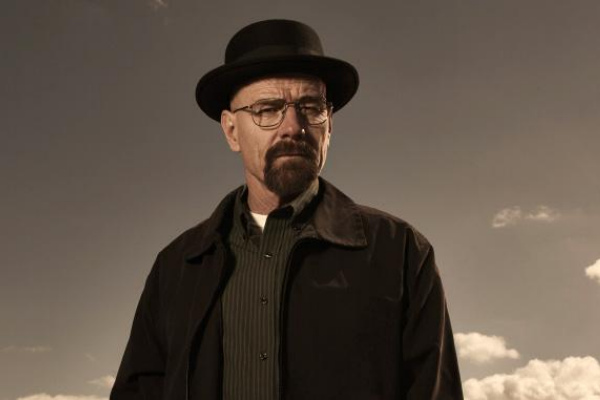
Before the critical and (belated) commercial success of Breaking Bad, its star, Bryan Cranston, was mostly known for his comedic roles on American sitcoms, playing the dad in Malcolm in the Middle and making a few appearances as Hammond Druthers on How I Met Your Mother. Now, two years since Breaking Bad ended (*sob*), it's not in question what role Cranston is known for. He is the one who knocks; the meth-cooking chemistry teacher; Walter White and Heisenberg. There's no denying all that the show has done for him, as he has received four Emmy awards for his performance, becoming the first man since Bill Cosby in the 1960s to win three in a row. He's also landed a string of roles that likely wouldn't have went his way without the show, such as Argo, Godzilla, and the Broadway play All the Way, which is now becoming a TV movie in which he'll reprise the role of President Lyndon B. Johnson. However, it works both ways, and without Cranston's captivating, convincing performance it is difficult to imagine Breaking Bad working at all. He is the centre of the show, its volatile core, and you now can't picture any other actor possibly pulling it off the way he does. While part of that is undoubtedly down to the magnificent writing of Vince Gilligan and crew, there is a lot of Walter White (and Heisenberg) that comes straight from the man playing him. These are the tics, the nuances, the decisions that Cranston made, which in turn made the character one of the greatest in TV history.

8. He Wrote Walter's Back Story (And Never Revealed It)
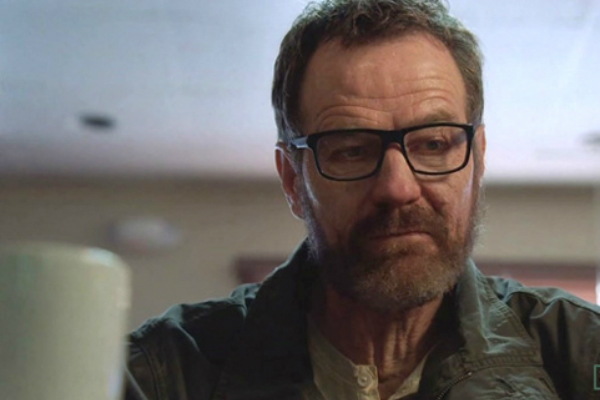
The story of Walter White and Heisenberg unfolds before our very eyes, across five seasons, in a mesmerising and terrifying manner. It's a credit to the writers and the actor that the character is so well-developed, and continues to develop as the show goes on. But what about Walter before he breaks bad? Some of his past was fleshed out in later seasons, such as his involvement with Gray Matter. However, a lot of his history is left unknown to the audience. This isn't a problem, as you don't need it to understand and enjoy watching the character, and for a lot of actors it wouldn't have been necessary to have the information about Walt's past. Not so for Cranston, however. When Gilligan declined to fill in the holes in his character's back story, Cranston decided that the best thing to do would be to write his own. While it may have never made it to screen in a literal sense, there's no doubt that this helped his own understanding of the character, and altered how he played him in a variety of situations.

7. He Insisted On The Tighty-Whities

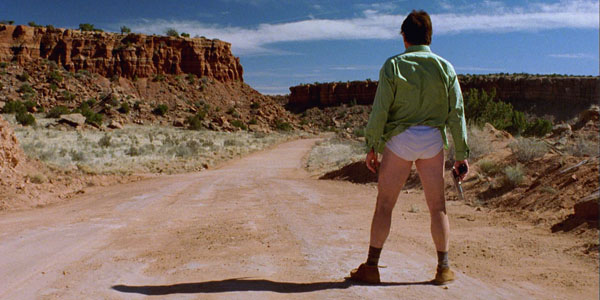
One of the most enduring and iconic images from the entirety of Breaking Bad actually comes from the very first episode. It's of Walter White, standing in the desert with a gun in his hand, moments after climbing out of the RV he had been so recklessly driving. This is our first introduction to the character and to the show, and it couldn't be more fitting. The bit that really stands out, though, isn't the gun, or the RV-cum-meth-lab, or the presence of Malcolm's dad; it's the underwear. Those tighy-whities are a part of the show's iconography, and as much a part of the character as hazmat suits. They may have been Vince Gilligan's idea, but the reason they appear in the finished product is thanks to Cranston. Working out in the freezing cold New Mexico desert, Gilligan was concerned about the comfort of his star, and asked if he wouldn't prefer to wear something like a pair of sweatpants. Cranston admitted that he'd be more comfortable, but because tighty-whities were the most pathetic thing he could possibly be wearing, changing wasn't even up for discussion. Had the actor been different, that image above may instead be a pair of sweats, which would surely leave less of a lasting impression.

6. He Can Instantly Get Into Character

You would imagine that a character as dark and layered as Walter White would require some serious effort in order to prepare for the role; a commitment, a method of sorts, if not quite going the full Daniel Day Lewis. Cranston, however, has the ability of being to snap into character when the camera starts rolling. Behind-the-scenes he is supposedly a very jovial figure, often making jokes and playing a lot of pranks on the rest of the cast and crew. Then he hears the word action, and he becomes this troubled, menacing person that you really don't want to cross. This contrast naturally makes him a more imposing figure, bringing a real sense of unease in the other actors. He doesn't need to lock himself away for a month, or walk around in character even when filming was over. As Drive director Nicolas Winding Refn said: €œBryan Cranston can play anything, anytime, anywhere, any way.€

5. He Pictured His Daughter During The Jane Death Scene

The moment that is generally marked as the turning point for the show and the character of Walter White, the crossing of the threshold from which there was no turning back, was when he stands by and watches as Jane, Jesse's girlfriend, chokes on her own vomit and dies. It's a brutal scene, one that really highlights just how far Walter is willing to go to protect his empire, but for Cranston it had an even more powerful and emotional resonance. The actor has said that while filming he started thinking about how he could just let her die, given it's someone's daughter, and then he started to project his own daughter's face into the scene. As it plays out, the conflict within Walt over what to do comes from this. Cranston said: "...I look at her again and I said, 'She's just a girl €” she could be my daughter,' so you have an impulse again to do something. But then I think, 'But she got Jesse on heroin and she's going to kill that boy who I have an affinity for.' So he's going back and forth trying to make sense of this whole experience."

4. He Grew Possessive And Protective Of Anna Gunn
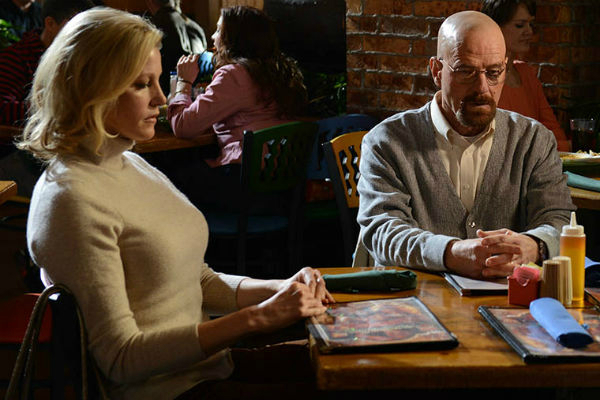
It's well known that Cranston and Aaron Paul developed a strong friendship over the course of the show, but another person Cranston grew close to during the filming of the show was Anna Gunn, who played his wife Skyler. While they may have had an incredibly twisted, toxic relationship on the series, when the cameras stopped rolling the two were actually very good friends. There were even times when he found himself having to apologise to Gunn, because of things he said while in-character that ended up feeling a little too personal. As a result of this, and the growing bond between the pair, he would act as though he were genuinely protective and possessive of her on and off set. For example, when Chris Cousins - the man who played Ted Beneke - arrived on set, he'd be horrible to him, making remarks such as "Oh, boy - here€™s the asshole," because he had cultivated the feelings of jealously and resentment through building a close relationship with Gunn, something which transferred across to his performance.

3. The Delivery Of "Tread Lightly"

Gilligan and Cranston would often have disputes about the way a certain scene was supposed to go, lines that should or shouldn't be said and the way they should or shouldn't be spoken. One of the final head-clashes is now known as one of White's iconic speeches, the "Tread lightly" scene between him and Hank at the midpoint of season 5. Gilligan wanted this to be pure showmanship, the coming out of Heisenberg in a show of bravado, a power play to demonstrate Hank cannot do him any harm. Cranston, who directed the episode, saw things a little differently. He believed that Walter should instead simply pity Hank, given how far his character's fallen because of his brother-in-law. Instead of having it be a grandiose scene, he instead let his "eyes go dead" and had the speech feel like a plea rather than a threat.

2. He Based White's Appearance On His Dad
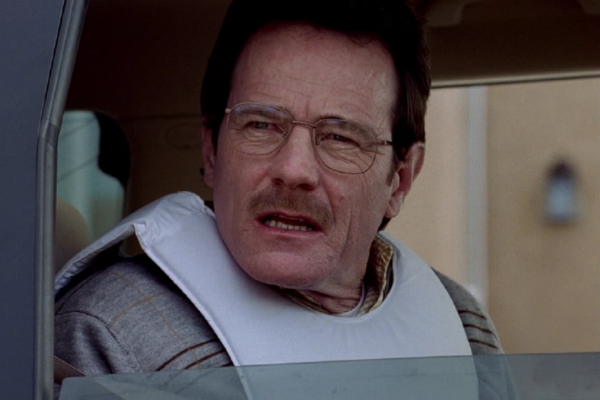
The early appearance of Walter White is part of what makes the character really work. You look at him and easily believe he could be a down-on-his-luck teacher, a family man, and also a person that would never convincingly be a drug lord. The look of White was down to Cranston, and not just in the obvious sense that he's the one playing him. It was the actor who decided that his character should have a moustache, one that looks like a dead caterpillar; that he should be a little flabby (Cranston put on around 10 pounds for the start of the show); that the wardrobe should be full of greens and browns. Most of all, though, he looked to his own elderly father for inspiration, wanting Walt to come across as a man older than his years. He studied his dad's posture and incorporated that into Walter's, a man who carries a burden and is often a little bit hunched over, and a few of his mannerisms and facial expressions as well.

1. The Transition From Walter To Heisenberg
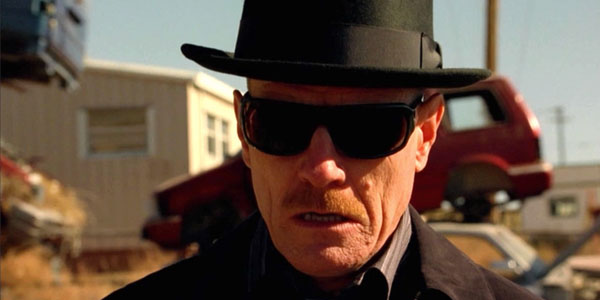
Over five seasons, we see Walter White go from the timid teacher struggling to do whatever he can for his family, to the ruthless monster who'll do anything it takes to protect his empire, and, like with everything we've seen so far, while some of the credit for this remarkable on-screen transition is down to the writers, a heck of a lot must go to Cranston as well. As mentioned in the previous entry, you can see the way Walter carries himself, hunched over. Gradually he grows into a far more confident figure, and that's evidenced in the way he walks, and the way he talks. Gone is any sense of worry or nervousness, instead he's a commanding, authoritarian figure. One key element of this is the popular theory that Walt takes on traits of the victims he kills. For example, he murders Krazy-8, and starts cutting the crusts off his sandwiches, or starts taking ice in his drinks like Mike. While that isn't confirmed, one person Cranston did take something from was Gus. No, not the car he drives, or putting a towel down before throwing up, but in his body language - that coldness and stillness that makes Gus seem so threatening. And that came from Cranston, who said that he "wanted to plant a subliminal thing with the audience." It obviously worked, and is part of the way he created two incredibly compelling characters at the same time. What else did Bryan Cranston bring to the role of Walter White to make Breaking Bad awesome? Share any more down in the comments.

Contributor
Contributor

NCTJ-qualified journalist. Most definitely not a racing driver. Drink too much tea; eat too much peanut butter; watch too much TV. Sadly only the latter paying off so far. A mix of wise-old man in a young man's body with a child-like wonder about him and a great otherworldly sensibility.