Doctor Who: 10 Essential Changes To Make With Peter Capaldi's Doctor
 Geronimo!... Allons-y!... Fan-tastic!... Bow ties are cool... Fez's are cool... wibbly-wobbly / timey-wimey... you know how it goes. Last weekend, nearly 13 million viewers in the UK and millions of others watching at exactly the same time in more than 90 countries around the world witnessed John Hurt - aka the War Doctor - make a scathing assessment of the Tenth and Eleventh Doctors in The Day Of The Doctor: "do you have to talk like children?". It was a much needed and long overdue observation. Assuming you've avoided a sense of humour by-pass and not had your inner laugh track excised completely, you can probably cope with the kiddy-speak. It's mildly amusing, maybe even funny... once or twice. Here and there. Every now and again. But as repeated memes throughout the entire tenure of one or more Doctors? It's all a bit silly, really. One way and another, it's been quite the jolly romp since New Year's Day 2010 when the Eleventh Doctor first appeared, all squeaky voiced and "still not ginger". In lots of ways Matt Smith's portrayal has been hugely enjoyable, even more so recently. But the last seven series have also been littered with innumerable story and characterisation elements that could be immediately consigned to the past without any detrimental impact whatsoever. The introduction of an older actor to the role presents Moffat and Co. with the perfect opportunity to reassess some of the recurring themes and general silliness evident since 2005 and which has been especially conspicuous over recent years. It's four months since Peter Capaldi's appointment as the Twelfth Doctor and, with all the hoopla of the 50th Anniversary still ringing in our ears and Christmas Day less than a month away, the possibilities are ever more appealing. Here, then, are ten changes that should come into effect as from the next Doctor's first episode.
10. The Doctor's Speech
 The Doctor is a non-human life form with a millennium's worth of Earth years under his belt. He's spent a significant chunk of his life wandering the universe and seems to know virtually everything there is to know about countless planets, species and cultures from all across time and space. Admittedly he's had a lot of interaction with Earth and is much experienced in the ways of its people but, in the end, he's still a thousand-year-old alien. Since 2005, some of the Doctor's more colloquial language has been enormously at odds with the age and history of the character. Eccleston had the whole 'fantastic' and Northern thing and was overly conversant with ubiquitous nuances of early 21st century British life such as chips, baked beans and telly. Tennant had 'Allons-y', lots of fast talking and a whole bunch of oddball gobbledygook. Smith's words have a generally younger flavour and, at times, make it difficult to see him as anything but just another young bloke from Northampton. "Oi! Don't diss the sonic!", he yells defensively in The Hungry Earth. Hartnell would be turning in his grave. Why it's written that way is obvious. I get it. It just wouldn't do for the leading man not to seem über cool. But there's something about the way it's executed, particularly with the eleventh Doctor, that doesn't always gel. At times it's grating, even cringeworthy. It's as if like they're trying just a little bit too hard to make the Doctor sound more appealing to a Gen Y audience that's already drowning in a sea of memes and colloquialisms. The likelihood of someone with such a vast experience of space and time ever speaking in the vernacular of a Gen Y English lad is certainly debatable. What isn't debatable is whether the age of the actor playing the role should make any difference. Short answer: no. The actor's age is immaterial. The bottom line is that the Doctor isn't a 29-year-old bloke from Northampton and shouldn't speak with the ever-changing contemporary nuances of one. With an older actor in the role, reverting to more traditional, less contemporary and far less generation-specific language would be one of the smartest changes Moffat could make. Capaldi's Doctor please don't be one of those embarrassing Dad-like figures who uses the words and phrases of the young folk just to sound cool. That strategy is rarely successful.
9. Companions (Part One)
 Since 1963 the Doctor's had 44 companions of varying tenures. 36 of them were from Earth and, of those, 25 met the Doctor in a contemporary setting. There were only four from 'the past' and a handful from 'the future', the up-shot being that neither past nor future get much of a look-in where the Doctor's companions are concerned. Also unsurprising is that most have been white, British and female. Last time I was in the UK I could've sworn it had a fairly diverse cultural makeup, so if the focus must stay on companions of the 21st century Gen Y British variety, perhaps Doctor 12 might consider evening out the cultural imbalance a little. Better still, maybe Doctor 12 could meet the next Leela at long last! I've been waiting for another Leela for 35 years now could well be the time for change. Or are we to believe that among all the species the Doctor's met, on all the planets he's visited, throughout all the universes he's travelled across all of time and space, there are only four non-humans who'll ever shown the slightest inclination towards life beyond their own planetary backyard? That old chestnut about the companion representing the viewer's perspective gets trotted out with tedious regularity, but it just isn't relevant. Any companion could provide that perspective, regardless of whether they're from present day Earth, the year 100BC, the 41st century or some far-flung planet in the outer reaches of the solar system, as long as it's clear that the notion of time travel is completely foreign to them. Merely being from 'the future' or 'another planet' is no guarantee that time travel is considered commonplace or even possible; nor should being from 'the past' signal an automatic inability to cope with technological advances and social change. While someone from the 15th century may have a little more to take on board by travelling into the future, there's no reason to believe someone from the 41st century would be any less awestruck by doing the same thing. In any case, the companion's response to any given situation is of far greater bearing than the year they were born. Capaldi's Doctor, it's time to broaden your horizons. The Gen Y human thing's gotten very old.
8. Love

Since 2005, the TARDIS has become this bizarre, dimensionally transendental love nest. But Doctor Who's neither a soap nor a traditional drama, so I'm not entirely sure why.
The Doctor and his companions aren't exactly dating and they're certainly not 'shacked up' in the traditional sense, so there's no obvious reason why any female sidekick should fall for the Doctor. Nor a male sidekick, for that matter. Whatever their gender, it just doesn't need to happen.
Seventeen years on and some 'classic' fans are still in the foetal position, gently rocking themselves back and forth in the same corner they've been in since 1996 following the Doctor's first on-screen kiss. It would be easy to attribute that kiss to the 'American-ness' of the TV movie; it would be just as easy to maintain to this day, as many of those gently rocking 'classic fans' have, that it was utterly redundant. But then Rose fell for Doctor 10, Martha suffered a severe bout of the unrequiteds and Cap'n Jack and Lady Christina de Souza probably would've given him one too, had the opportunity presented itself. By the time Amy started a lifetime of waiting for Doctor 11, some fans were on egg shells in anticipation of that awful moment when it would all start again. And just when I thought it was about to, it didn't and hurrah for that! The development of a strong friendship, an inseparable bond, ties that can never be broken thanks to all the amazing stuff they've done together, that's how the Doctor and his companions work best. There's already so much going on in each episode that there's barely enough time to explore the main plot to greatest effect, without throwing in pointless sub-plots that don't serve any real purpose. In the context of the types of situations they become embroiled in with the Doctor, I'm hard pressed to believe that going all weak at the knees would be anyone's most likely emotional response. Awe or fascination perhaps? Maybe some admiration or respect? All absolutely plausible reactions. But love, lust or any combination of the two? Somehow, it just doesn't ring true. Capaldi's Doctor: no more love matches, please! For best results, use the equation 'Doctor + Companion = Platonic'.7. Navigation
 The Doctor needs to start losing control of the TARDIS again. Knowing where he's going and that he's almost always going to end up where he intended takes away everything that made classic Who so much fun! When did he learn how to control the TARDIS properly anyway? Yes it happened a few times in the classic series, but aside from an uncanny ability to keep putting her down in the exact same spot at UNIT HQ, it was almost always the exception rather the rule. Back in Logopolis, the fourth Doctor boasted that the TARDIS and he were getting "rather better at these short hops", but it was never a given. In Paradise Towers, the seventh Doctor intended to take Mel for a swim in the Towers' much-vaunted pool and while he managed to get the right place, he certainly didn't get the right time. These days, he virtually always gets to exactly where he wanted to be and at more-or-less when he wanted to be there. Although, saying that, for a man who knows so much about the universe and its history - and, presumably, about the places he wants to get to - he does have an odd habit of miscalculating the nastiness that the TARDIS will materialise in the middle of. Perhaps it's more a case of him getting where he wants to go, rather than when he wants to be there, but even that's gotten boring. I want the next Doctor to start popping up in totally unexpected places. I want him to not know what he's about to get himself embroiled in. I want him to have no idea whatsoever about the language, the culture or the history of the places he goes to. And I want him to have to make repeated excuses for his poor navigational skills the rigours of the regenerative process could be the perfect explanation for it! Every so often he could reference some passing knowledge of a place, or do a bit of random - if ineffectual - name-dropping, or recall a previous visit in the far distant past, whether related to a broadcast story or not. It'd certainly restore a bit of the mystery and a sense of unpredictability, both of which have been absent for a while now. Capaldi's Doctor please make getting where you want to go the exception, rather than the rule. It'll be more fun for all of us!
6. Earth

OK I get it: the show's produced in Wales and it's obviously cheaper to set earth-based stories in the UK. From a production perspective, I totally get that. But the Doctor's never taken a consistent stance on either the Earth or its inhabitants one minute he can't understand why he's so fond of them, the next he's calling them stupid apes or hissing "human" at them as if it were the foulest insult imaginable; one minute he's crowing about the incredible evolution and resilience of the human race, the next he can't wait to get away. So if he can't even make up his mind why or even if he likes them so much, why does he voluntarily spend so much time there?
It was clear right from the off that there was no love lost between the first Doctor and the Earth. He didn't want Susan to draw attention to them by attending "that ridiculous school" and he made sure Ian and Barbara knew exactly how little he thought of England in 1963 when he said, "I tolerate this century but I don't enjoy it." Let's also not forget the second Doctor's reaction to the prospect of being condemned to exile "on one primitive planet in one century in time" at the end of The War Games. There's enough subsequent evidence to suggest that that one period of exile relatively speaking, a very brief period in the latter part of the 20th century (relatively speaking, a very long time ago) wasn't enough to change his general opinion, neither of Earth nor humans. Remember the Third Doctor's reaction to getting "the secret of the TARDIS" back? He couldn't get away fast enough! He didn't seem bothered about who went with him or who was left behind, he was ready to up sticks and hot-foot it out of there faster than his long spindly legs could shuffle him across the laboratory floor. The Fourth Doctor took a generally kinder view of the planet and its inhabitants as a general rule and his classic series successors didn't seem to have too much against us either, though it's fair to say that none of them spent vast amounts of time marooned on Earth or making a disproportionate number of return visits. At any rate, just as the original exile did, the whole 21st century earth thing has gotten terribly dull. Doctor Who is (re)established enough by now. Audiences don't need familiar settings and contemporary norms to help them establish an appropriate vantage point, or to allow them to identify with characters and situations. The next Doctor's era needs to get more varied and more sophisticated than that and, in doing so, give the viewing public (not to mention fans) a bit of credit. Capaldi's Doctor get out a bit. You know full well that there's plenty of life beyond Earth's stratosphere, so stop coming back!5. Eccentricity
 There's been a general sense of silliness that's pervaded over the past few years and sometimes it's left adult viewers feeling like they'd just watched a kid's show. Consequently they didn't watch again. Much of the silliness has revolved around the Doctor's eccentricity. The Doctor is eccentric and eccentric is good, but eccentric and silly aren't the same thing. Let's not give the 12th Doctor silly obsessions with revoltingly mismatched food, with the coolness or otherwise of bow-ties and various styles of hat, or with using inane made-up words and phrases which, inevitably, will only become the fodder of geeky fans, merchandisers and internet memes. Eccentric is as eccentric does. If done well, an eccentric character should never need to constantly remind the audience how very eccentric they are by specifically pointing out all the eccentric things they do. The fourth Doctor didn't have to ceaselessly remind us how cool ridiculously oversized scarves were for us to know, innately, that he was eccentricity personified. The Third Doctor didn't make a big deal about wearing velvet and frills to prove how terribly eccentric he was either. And, personality foibles aside, the fact that the sixth Doctor so sincerely believed that he looked good in the technicolour dreamcoat and the rest of that wonderfully disgusting outfit said more about his eccentricity than anything else he ever did or said. Capaldi's Doctor lighter moments are one thing. Child-like, or childish, silliness is entirely another.
4. Technology
 They're dated simply by virtue of their age the hair, the clothes, the wobbly sets, the whole black & white thing but part of the reason the classic series remains less dated today than I suspect the new series will seem fifty years from now is through its relative lack of reference to the technology of the day. While there was a certain reliance on alien tech to fuel 'classic' storylines the TARDIS itself being the obvious example the most effective elements of the old show were clearly fictional. Indeed they were quite literally like nothing on Earth which, to my mind, was kinda the point. The scariest aspects of classic Who were completely unexpected. Extraordinary things in ordinary situations. In the words of Jon Pertwee, "there's nothing more alarming than coming home to find a Yeti sitting on your loo in Tooting Bec". In 1970, as now, such a discovery would no doubt have been completely unexpected and, therefore, quite alarming. An extraordinary thing in a very ordinary situation. But where the technology of the time was concerned, the classic series didn't labour the point. Playing on viewers' fears wasn't reliant on wicked things happening whenever someone picked up a telephone handset, or put a record on a turntable, or plugged a Space Invaders cartridge into the Atari console. They could've spun stories about alien evil transmitted by TVs and radios. The latter Tom Baker years could've been littered with references to computers the size of an average house, sucking the intellect out of everyone in the vicinity. The last years of the classic series could've featured hoards of characters poncing about with over-sized handheld communications devices strapped to their wrists, just to show how in touch with the times the show was. In fact, none of those was the case. Today, everyone and everything is online, offline, uploaded, downloaded, mobile and wireless. Technology has essentially become the baseline of our existence. Granted, the concept of being utterly consumed by a virtual cloud via Wi-Fi isn't exactly commonplace but, oddly enough, neither does it seem overly extraordinary. It's just a little too similar to stuff that happens all around us every day. As ordinary 21st century situations go and with technology advancing in leaps and bounds by the hour, surely it's only a matter of time until the notion of servers uploading people to the cloud doesn't actually seem all that alarming? A reliance on contemporary technology or the modern-day ordinary situation to fuel storylines can only work if what happens next the extraordinary thing is utterly unexpected, something nobody would ever have dreamed of. Nobody's going to be too put off by something they actually believe could be on the technological horizon. And while we're on the topic, how come the Doctor's so intimately familiar with early-21st century Earth technology anyway? For someone who's seen everything and been everywhere, including playing a very significant part in ending one of the most deadly wars in the history of the entire universe, it's always struck me as a bit odd that he obviously allowed himself, at some point, to become utterly absorbed in the minutiae of Wi-Fi. His 21st century earth-tech obsession doesn't end there either. Throughout the new series, instead of taking wondrous new technology to his friends, he instead takes bog-standard pieces of contemporary tech and just waves his sonic screwdriver over the top to make it a bit more special that it otherwise would be. He had a landline handset in the TARDIS console at various points. And he always used to have a contemporary cellular device in his pocket, ready and able to call or text anyone - anywhere, any time. So here we have a thousand year old alien, a Time Lord, a man who's somehow learned how to control a time machine that he could never previously control, a man who's been to every conceivable corner of the universe of time and space, a man who seemingly understands virtually everything about everything, and he rigs up a mobile phone to keep in touch with his companions? You know what I think? They might've looked a bit low rent with hindsight, but in forty years I think the idea of communicating via a video-capable wrist-mounted gadget (looking, for all the world, like a 1979 Casio digital watch) will still look more Sci-Fi, less cheesy and far less dated than flitting about the universe making inter-stellar phone calls on a Nokia 8310. Capaldi's Doctor nothing will ever be as scary as coming home to find that Yeti sitting on your loo in Tooting Bec. Please bear that in mind.
3. Returns
In the olden days, other than supporting characters and villains with a well-established recurrence, characters hardly ever made return appearances. Whenever a baddy or some one-off character from a previous story popped up again, it was generally one of two kinds of surprise: a nice one, or a nasty one. I'm thinking Alpha Centauri, The Rani and the Mara; I'm thinking Sabalom Glitz, Omega and the Guardian duo. But whenever an old companion or regular turned up again, it was almost always exciting, because they'd almost always been gone for such a long time that it was wonderful to see them again. I'm thinking Jamie McCrimmon, the Brigadier, the entire casts of The Three/Five/Two Doctors and everyone who appeared in Dimensions In Time. But it's not like that with the new series. Aside from the wonderfully stirring moment when Sarah Jane Smith first clapped eyes on Doctor 10, there've been so many return visits with old companions, plus repeated interactions with both new and established villains but chiefly with Daleks and Cybermen that, frankly, it's all gotten just a bit dull. At one point a few years back, ex-companions were checking in and out of the TARDIS as if it were a hotel. The Tenth Doctor always managed to find them, in greater numbers all at the one time than had ever been seen before. Even after they'd left as in, really and truly gone for good it didn't seem to matter how dramatic the circumstances of their parting, how deadly it could be to ever have further contact with them, or how supposedly impossible it was for them to ever meet again, Doctor 10 seemed able to conjure up a family reunion every other week. So they're in a parallel universe across an impenetrable divide? Pfft! A single recollection could kill them? Whatever! It was as if no previous dramatic finale or teary farewell was ever quite dramatic enough to prevent one of the Tenth Doctor's family gatherings! And what about those pesky Daleks and Cybermen? During their 1960s heyday, every time you looked one or the other was there. By the 70s, their returns became a once-every-few-years treat. Indeed between May 1975 and March 1982, seven entire seasons passed with only one four episode Dalek story and one four episode Cyberman story. Over that same period, The Master made two returns, the Sontarans only reared their ugly potato heads once more and a handful of Time Lord characters featured a handful of times. Otherwise, there were no returns to previously visited planets and no other recurring characters or villains. And this was over the course of 184 half hour episodes. By contrast, just 60 circa-45 minute episodes of new Who, from Series One until The End Of Time Part 2, included at least nine episodes featuring Daleks and six featuring Cybermen. The Master featured in five episodes. There were multiple return visits by multiple former companions. The Ninth and Tenth Doctors made numerous return trips to the homes of the said companions and repeatedly interacted with members of their respective families as well - at least ten episodes featured Jackie Tyler and several others featured the Jones and Noble families. Four episodes featured Harriet Jones, four featured Slitheen and six episodes featured the Ood. It all harks back to point six if so much of the new series hadn't been set in contemporary Britain, there wouldn't have been so much call for happy families and all this reunion palaver. Capaldi's Doctor it's time to move on.2. Divisions

There's been a perceptibly Doctor-centric repetition of characters, villains and places throughout new Who. It also highlights a clear divide between the Eccleston/Tennant era and the Smith era. I don't like it.
This era-defined division seems to apply to virtually all characters who appeared during that era, most obviously to companions, and seems to prevent them from appearing with any other Doctor. But for a very few exceptions, it's as if never the twain shall meet. But why? The companions of any previous Doctor were still the current Doctor's companions, regardless of how many times he might've regenerated since. He infrequently recalls some of them by name, so why shouldn't he want to see them, need to find them, or even just randomly bump into them? A convenient plot device is all it takes. Doctor 10 proved beyond doubt that it was entirely possible, but then it all just kinda stopped. At least ten companions have witnessed the regenerative process or its immediate after-effects first hand, so they'd be more than capable of accepting a Doctor with a different face. Even if they never saw him regenerate, plenty of them ended up meeting a different incarnation of the Doctor at some point too, so it's not as if there's no precedent. And even though there've been loads of companions who neither witnessed a regeneration nor met another version of the Doctor, their minds must have been immeasurably broadened simply from having travelled with him, so it couldn't be that great a leap of faith for them to accept that a man with entirely different physical attributes could be the same person as their Doctor. I'm all for former companions coming back. But if it's going to happen, broaden the scope and reduce the repetition. Viewers and fans create associations around eras and, specifically, between Doctors and companions, largely because that's how they're packaged for us. But it's not reasonable to assume that the Doctor wouldn't retain any emotional connection with companions he travelled with in previous incarnations. It's even less reasonable to suggest he'd only ever want to revisit the companions he'd travelled with in his current incarnation. Capaldi's Doctor, step back in time - no, really! Stop in on one of your really old companions once in a while. It'll be good for both of you.1. Companions (Part Two)
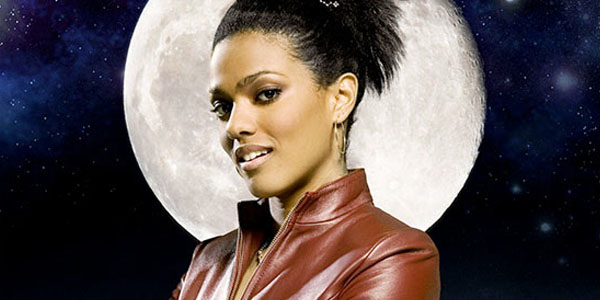
One of these days, just for a change, it would be wonderful beyond description if a companion left the Doctor a 'Dear John' letter and just slipped away quietly in the night.
Once upon a time, the role of the companion was clear: they'd run through lots of corridors behind the Doctor, they'd scream a bit, they'd conveniently sprain their ankles tripping over tiny little tufts of grass, they'd scream hysterically as they fell down embankments with a lesser gradient than the average speed hump, they'd ask the Doctor lots of scene-setting questions, there'd be a bit more screaming, running and falling and that was basically it. Typically, they'd only known him all of five minutes before somehow convincing themselves (or being convinced) that they wanted to go travelling with him and, once safely tucked away inside the blue box, there was rarely any reference to their pre-TARDIS life, nor to when or even if they were likely to get home, nor to how they'd explain away their absence if they ever did. Then before you knew what was happening, they were gone again. If they'd been around for a while and you'd become especially fond of them you might've shed a tear or two, but that was about it. Like the Doctor, you'd just maintain a stiff upper lip and carry on as normal. By the time the next episode rolled around, it was as if the dearly departed companion had never been there at all. New Who's not quite like that. It's big and bold and climactic. Companions still scream a bit. Some of them scream a lot. Some of them fall in love with the Doctor. Some of them have their own boyfriends, fiancés or husbands. Some of them aren't even girls. But these days they all have one thing in common instead of just being good old-fashioned reliable supporting characters and co-stars, they get some bigger-than-Ben-Hur sub-plot about who they are or where they're from or why they're there and viewers and fans alike spend entire series trying to work out what the hell's going on. With each new companion, you just know there's going to be some elaborate back-story that will either come out from the off, or leak out over the course of a series or two. These days it's almost inevitable that there'll be some mysterious force behind them coming into contact with the Doctor in the first place. Even if there isn't, a suitably vague clue will ensure the seed is well and truly planted in viewers' minds, so everyone believes this new one isn't going be just any old lodger in the TARDIS. But I don't need all of that! I don't need companions to be saviours of the universe, I really don't. I don't need them to have a complex story arc behind how and why they've come to be with the Doctor. I don't need a mystery about who they really are. I don't need them to be the only person in the universe who can possibly save the Doctor and I don't want them to have to sacrifice themselves in the process of doing so. I don't need the companion to become a Time Lord. I don't need them to save the Earth. I don't need people all across the universe singing songs of praise to their memory or their God-like status. I don't need them to have every memory of the time they spent with the Doctor erased just to prevent them from dying. I don't need them to fall head over heels in love with the Doctor, then be sent to parallel universe and never be able to come back. And I don't need them to be sent back in time to live the life they just saw themselves at the end of during some unparadoxical timey-wimey paradox thing. Most importantly, I don't need to be emotionally broken and psychologically scarred by the departure of each and every companion! Why must it always be so dramatic and so desperately sad? Why can't they just decide that it's stopped being fun and give it up, or fall in love with some random and decide in the last three seconds of the episode to stay put and marry them? Why can't they go for a post-hypnotic rest in a country house, then ask someone off-screen to let the Doctor know that they're never coming back and just never come back? Seriously, there are so many beautifully simple ways it could happen "no regrets, no tears, no anxieties". Had Martha not gone back into the TARDIS to deliver her touching "this is me, getting out" soliloquy to Doctor 10, it would've been perfect. When she got the chance to say goodbye the second time, she nailed it! She hadn't been yearning for an escape when she'd first met him, she didn't become anything that was wholly beyond the realms of believability while she was with him (except maybe that whole walking across the entire world for a year thing) and then she left. While her first farewell made unrequited love seem the most obvious reason, her second departure thankfully offered Martha a far more substantial out. And then she was gone. Capaldi's Doctor keep it simple. Randomly find them, take them travelling, let them leave... and at even the slightest hint of complexity, get rid of them!