10 Things You Didn't Know About WCW In 1996

Did WCW really nearly sign Edge in '96?
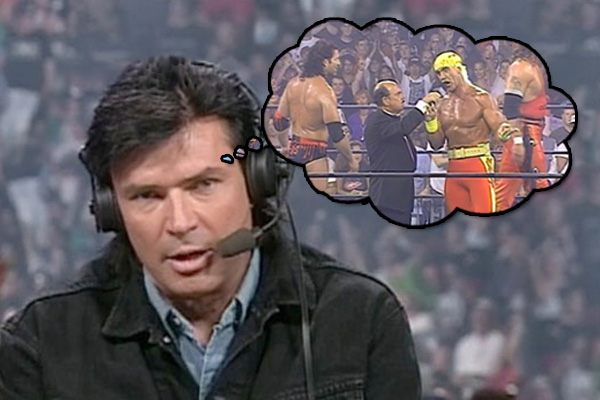
1996 was the year it all turned around for World Championship Wrestling. By the end of '96, WCW was no longer playing second fiddle to Vince McMahon or the World Wrestling Federation. One brilliant idea would be credited as the turning point, the New World Order. Signing both Kevin Nash and Scott Hall away from their major competition, WCW made a statement at the Bash At The Beach 1996 Pay-Per-View. One of the biggest babyfaces in pro wrestling history unthinkably turned heel, joining these 'Outsiders'. There can be no denying that the move was a master stroke, even if the creative team didn't really seem to know what to do once the nWo idea ran dry years later. Incredibly, the nWo revolution wasn't the only big thing happening for WCW in 1996. This article focuses on things even hardcore wrestling fans might not know about the company during that year. Of course, there will always be those fans who are aware, but it's interesting to look back to the time when WCW started to kick into high gear. From future WWE Hall Of Famers almost signing with the promotion, to massive feuds that were pitched but never came to pass. This list is bursting with intrigue and interesting tidbits about WCW in 1996.

10. Hulk Hogan Nearly Rejected Turning Heel

In the Summer of 1996, Hulk Hogan had a huge decision to make. Eric Bischoff had approached the 'Hulkster' about the possibility of him turning heel. In Hogan's mind, this represented a tremendous risk. Ever since he had swept through the World Wrestling Federation in the early-to-mid-80's, Hulk hadn't been rogue. As the biggest babyface in the entire industry, Hogan was lithe to give up the substantial merchandise revenue and acclaim from fans. In reality however, the man's standing had fallen by '96, and there were some boos audible long before he did form the nWo with Kevin Nash and Scott Hall. Bischoff helped sell Hulk on the idea of freshening his stale character. According to Bischoff, there were several periods during their discussions where Hulk Hogan nearly got cold feet on the idea. It would have been easy for the guy to simply run his red and yellow 'Hulkamania' schtick into the ground, but he was willing to take the chance in the end. Wrestling may be very different had he elected against it.

9. Odd Circumstances Surround Cruiserweight Title Revival

The WCW Cruiserweight Title became a hot commodity in 1996. The belt had actually been created years earlier in 1991, with Brian Pillman being the first recognised champion. In September, '92, the strap was vacated, and it wouldn't make a comeback for close to 4 years. Even though the title would go on become a crucial part of broadcasts, it had a very unique reintroduction. Stunningly, the first WCW Cruiserweight Champion of 1996 didn't even win the title on a WCW show. Shinjiro Otani defeated 'Wild Pegasus' (Chris Benoit) on a New Japan Pro Wrestling card on March 20th to bag the gold. The match was a tournament final, but it's nonetheless remarkable that it took place outside of North America. Even stranger was that Benoit was renamed for the bout, going under the 'Pegasus' gimmick he had used in Japan previously. In May, on an episode of WCW Worldwide, Dean Malenko won the title from Otani. This is where most fans begin to trace the excellence that the Cruiserweight Title became renowned for. Later challengers to Malenko in the division, such as Rey Mysterio and Ultimo Dragon, helped establish the title once more.

8. Starrcade '96 Almost Tripled '95 Buyrate

The main event of Starrcade 1995 wasn't exactly inspiring for pro wrestling fans. Ed 'Brutus Beefcake/The Barber' Leslie was installed as Hulk Hogan's opponent on the show. As a consequence, the event performed poorly on Pay-Per-View, pulling in a dismal 0.36 buyrate number. The following year, things would be much brighter for WCW. Analysing WCW's Pay-Per-View numbers throughout 1996 makes for interesting reading. Generally speaking, things started to pick up as soon as Scott Hall and Kevin Nash waltzed into the promotion. Bash At The Beach pulled a healthy 0.7 rating, and Halloween Havoc did the same. For Starrcade, WCW's top brass placed Roddy Piper in the babyface role opposite a heel Hulk Hogan. It worked, the buyrate number virtually tripled from the previous year. Obviously, Piper vs. Hogan was always going to be a much easier sell than any match involving Ed Leslie. Fans were interested to see if Roddy could vanquish the evil 'Hollywood' Hogan. Starrcade 1996 drew a terrific 0.95, one of the promotion's biggest ever buyrates up to that point.

7. WCW Worried Over WWF Announcement About 'Razor Ramon' And 'Diesel'

When Scott Hall and Kevin Nash made their first appearances on WCW television, Vince McMahon and the WWF were furious. McMahon decided to take his opposition to court, crying foul at the fact both Hall and Nash were effectively playing the same characters they had in his company. Quite clearly, this was ludicrous, but the lawsuit was taken somewhat seriously by the wrestling fraternity at the time. In order to counter-act the success Hall and Nash were having in WCW, McMahon announced that both 'Razor Ramon' and 'Diesel' were coming back to WWF screens. This confused a lot of people, because the men who had played both characters were under huge contracts with Ted Turner and WCW. As it turned out, the gimmicks were filled by other wrestlers, but WCW didn't know that at the time. There's a chance both Hall and Nash played this to their advantage, but WCW management was genuinely worried about the prospect of the pair jumping ship again. Thus, they decided to pay 'The Outsiders' more money to tie them up. Unbelievably, even though they were part of the biggest angle in WCW history, the company had neglected to have them sign proper contracts. Instead, they had put pen-to-paper on loose agreements, hence why the organisation were worried when McMahon started bigging up the return of Razor and Diesel.

6. May 20th Nitro Was First Major Ratings Win

Contrary to popular belief, 1996 was not the first time in history that WCW had beaten the WWF with a superior television rating. Previous wins had been marginal at best, so it's generally accepted that the Summer of '96 was the first time that WCW properly whipped their competition on TV. The May 20th episode of Nitro pulled a 3.1 rating, compared to Monday Night Raw's 2.3. To date, this was the biggest difference between both shows, certainly in WCW's favour. This was not the beginning of the much-vaunted 84-week unbeaten stretch however, as Raw actually won out by small margin on June 10th, posting a 2.7 to Nitro's 2.6. There was a sea-change of sorts in the industry however, and WCW started to go on a roll. Looking back on the May 20th Nitro, there wasn't exactly anything extra-special about it. The Giant defended the WCW World Title in the main event against Arn Anderson, and Ric Flair defeated Eddie Guerrero. It wasn't until the following week that Scott Hall showed up, starting the whole nWo angle.

5. Konnan Was Tentatively Scheduled For Hogan Feud

A huge star in Mexico, Charles Ashenoff was signed by WCW in 1996. Going under his ring-name, Konnan, the man felt he had achieved everything he could in Mexican promotions. A previous run in the WWF as 'Max Moon' had been short lived in 1992/1993, so Konnan hoped that he could go higher in Atlanta. Eventually, he did, but initial plans called for him to be a main event star. One story that was pitched to WCW management was to have Konnan directly oppose Hulk Hogan. The red and yellow of Hogan was still very much babyface at this point, so Konnan would have filled the heel role. It's unclear whether or not he would have used the tired, 'foreign menace' disposition against the holier-than-thou 'Hulkster'. Somewhere along the line, the prospective rivalry was canned. Konnan remained a part of the mid-card pack, whilst Hulk went on to help form the New World Order. There would have been worse opponents for Hogan in '96, because matches on Nitro against the likes of the One Man Gang weren't exactly thrilling fans.

4. Brian Pillman Legitimately Duped Eric Bischoff
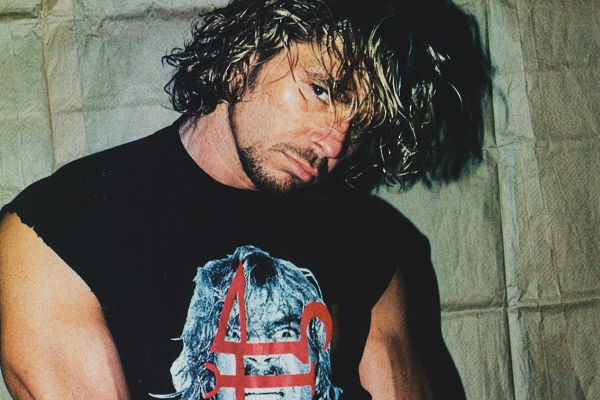
Brian Pillman remains a curious case in the world of professional wrestling. A very talented in-ring performer, Pillman was rarely regarded as a genuine top star by either WCW or the WWF. The man did play a role in several huge storylines, most notably the 'Hart Foundation' saga of 1997, but he was never really a main event player when on his own. In 1996, Eric Bischoff and Pillman devised a cunning plan. Feeling the wrestler needed to depart WCW and come back fresh with a new character, Bischoff legitimately agreed to release Pillman from his WCW contract. This wasn't a storyline, Brian was actually terminated from the promotion's payroll. Heading off to ECW, the original plan was that Pillman would become the 'Loose Cannon', then return to WCW. As history would dictate, he didn't. Instead, Brian Pillman signed with the WWF in June, just months after he had left WCW. He did spend some time in ECW, but seemed disinterested in working for Bischoff again. It seems that Pillman duped Eric Bischoff into releasing him, so he avoided legal hassle from breaking his own contract.

3. The Outsiders Pitched Eric Bischoff Joining The nWo
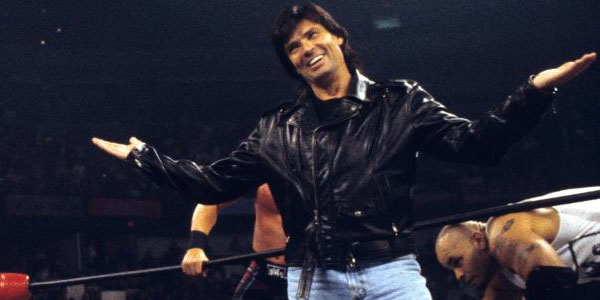
From the outset, Eric Bischoff was a WCW announcer who was dead set against the New World Order. Scott Hall and Kevin Nash targeted Bischoff upon joining the promotion, looking to make a statement that they were in the company to take over. At The Great American Bash Pay-Per-View in June, Nash even nailed Bischoff with a Powerbomb off the stage. Therefore, when Bischoff later joined the nWo in November, a lot of fans were confused. Why would 'Easy E' decide to hook up with men who had assaulted him and threatened to tear down his company? The answer came from Bischoff himself, who reasoned that it was better to join the renegade group than oppose them. Behind the scenes however, it wasn't even Bischoff's idea. It was Hall and Nash who wanted Bischoff in the nWo. Perhaps the pair were looking to give the faction even more authority, or maybe they thought it'd just be a shocking turn of events. Eric Bischoff himself wasn't sure at first, which is certainly news to many. Eventually, he did embrace the role, and never looked back.

2. Giant Haystacks Briefly Feuded With Hulk Hogan
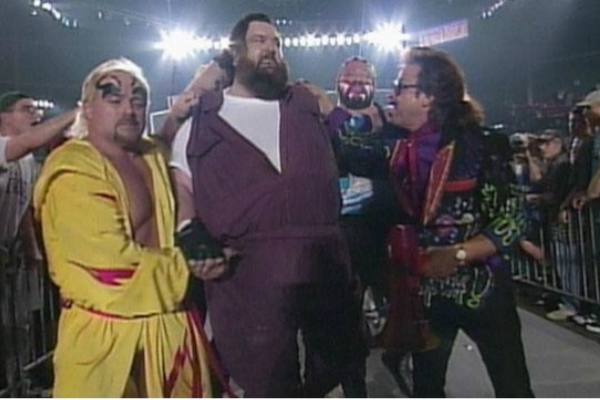
Kevin Sullivan had a big idea for WCW in 1996. It was really quite simple, bring British wrestling legend 'Giant Haystacks' to World Championship Wrestling. Renamed 'Loch Ness' for his short stint in the promotion, the gargantuan native of London was brought in specifically to join the freak show 'Dungeon Of Doom' stable. He was also there to feud with Hulk Hogan. By '96, Haystacks could barely move around the ring. During his heyday, the man was hardly sprightly, but he was clearly having immense difficulty wrestling. Bumps were largely out of the question, which didn't really lend itself to having good matches opposite Hogan. Throughout his brief stay in WCW, the Loch Ness character only made a handful of appearances. Diagnosed with cancer in real life, the man had to depart and move back to England. It's fascinating that Sullivan felt he'd be a crucial signing for the company. It just goes to show how thin on the ground WCW were for great ideas before the New World Order came along.

1. Kevin Sullivan Wanted To Sign Edge
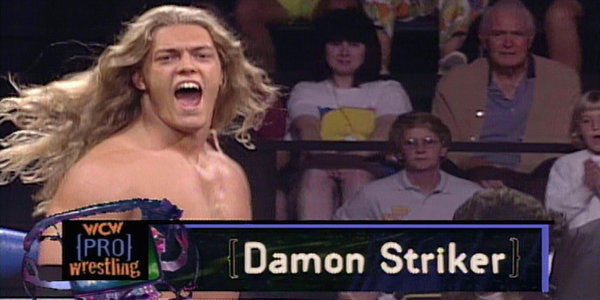
Long before he was the 'Rated-R Superstar', and even before he was known as Edge, Adam Copeland was just a fresh-faced youngster looking to make a splash. Known as both 'Sexton Hardcastle' and 'Damon Striker' on the independent scene, Copeland found his way to WCW in 1996 for a handful of enhancement matches. One of those bouts was against Kevin Sullivan. As Sullivan reveals during a shoot interview with Kayfabe Commentaries, he was impressed by Copeland. WCW were always on the look out for fresh talent, and Sullivan actually recommended that the company sign the young man to a contract. It seems nobody else in the promotion felt the same about Damon Striker however, and he was never considered. Later, Copeland would go on to train with the WWF. From there, the rest is history, and he became a huge star in the industry. WCW missed out on that, but Sullivan reasons that nobody knew the guy was going to become anything more than a low-level worker.

Contributor

Lifelong wrestling, video game, music and sports obsessive who has been writing about his passions since childhood. Jamie started writing for WhatCulture in 2013, and has contributed thousands of articles and YouTube videos since then. He cut his teeth penning published pieces for top UK and European wrestling read Fighting Spirit Magazine (FSM), and also has extensive experience working within the wrestling biz as a manager and commentator for promotions like ICW on WWE Network and WCPW/Defiant since 2010. Further, Jamie also hosted the old Ministry Of Slam podcast, and has interviewed everyone from Steve Austin and Shawn Michaels to Bret Hart and Trish Stratus.