One Moment WWE Wants You To Forget From Every Year (1985 to 2026)
WWE! The Recognised Symbol of Excellence in Sports Entertainment. Just don't ask about...

Wrestling's a grotty business with a lot to hide, before even getting onto the concept of kayfabe and the industry's history with secrets, lies and miserable combinations of the two. For decades it's housed all sorts of whispered tales, stories that can't possibly be true, and others that have been pushed back in closets with all the other skeletons.
1985 wasn't Year One for professional wrestling nor even Sports Entertainment, but it was the year WrestleMania launched, the period where a year+ of Hulkamania had proven Vince McMahon's concepts and philosophies to be successful, and the year where his world domination ambitions could be doubled and doubled again as the excesses of the 1980s moved further to match his lofty and ultimately devastating ambitions. Celebrities - ostensible outsiders - were welcomed in to get in on the action, in on the work, and in on the ground floor of another vehicle that could serve them as much as it served itself. The game was changing, but many of the old habits remained the same.
For better, and for much worse.
Expect a mix of heavy duty scandal and silliness throughout - there's as much rotten stuff down the back of WWE's sofa to fill ten of these, but sometimes it's nice to luxuriate in the absurdities of the industry while also accepting and acknowledging the low and high level atrocities. Bad things have happened, but it is supposed to all be a work after all.
Supposed to be...
42. 1985 - Hulk Hogan Chokes Out Richard Belzer

The build to the almighty gamble that was WrestleMania 1 was as much to do with exposure as promotion. Vince McMahon had mortgaged his lot on celebrity crossovers and the buzz generated by the "Rock 'N Wrestling Connection", aiming to entice the general public with a relatively straightforward philosophy - the larger-than-life top stars in the ring were on the same level as the megastar ones from music, film and television. Hulk Hogan and Mr T getting on Saturday Night Live as late replacements right before the 'Showcase Of The Immortals' was a gift from the heavens, but was evidence that the thinking was sound.
It also couldn't have gone much worse than 'The Hulkster's last schmooze session.
During an appearance on the March 27th edition of Richard Belzer's Hot Properties talk show, Hulk Hogan was, in a gentle challenge of wrestling's legitimacy, asked to apply a hold to the host just four days out from his big match alongside T against Roddy Piper and Mr. Wonderful. He trapped Belzer in a front face lock, and upon release, Belzer collapsed as a shoot. He cracked his head hard on the studio floor, briefly losing consciousness before ensuring that the show and his body went on with a rapid but uncertain recovery. Blood could be seen trickling from his head, and naturally it was the talk of local media - McMahon's most valued entity at the time - in the immediate aftermath.
Belzer eventually sued, and while the lawsuit was brought then settled long after the phenomenally successful 'Show Of Shows', it added unprecedented drama to an unprecedented build.
41. 1986 - Hulk Hogan Rats Out Jesse Ventura's Unionisation Plan

Jesse Ventura was excellent at his job in the 1980s, but never was his heel shtick more convincing than when he was directing his vitriol at Hulk Hogan. As it turned out, some very real - and very significant - beef lay at the heart of the hate. During WrestleMania 2 season in 1986, 'The Body' had attempted to at long last drum up some collectivism in the underpaid and over-worked wrestlers, suggesting unionisation once and for all.
Per his and other accounts, he almost got everybody together enough to make the stand...until Hogan himself got wind, and grassed to Vince McMahon. The truth about 'The Hulkster's betrayal cropped up in - of all things - another legal battle between Ventura and WWE years later. Discussing the whole as a guest on Stone Cold Steve Austin's podcast, Ventura commented;
"I gave a speech to the boys and...I said, ‘if we go together and simply tell the media we are not wrestling unless union negotiators by federal law come in and give us the opportunity to unionise.’ The next night, I got a phone call from Vince who basically threatened to fire me if I ever brought it up again and read me the riot act...When I sued Vince, we had to depose him. My attorney...said, ‘Mr. McMahon,’ he said, ‘has there ever been a union in wrestling?’ Vince [replies], ‘no.’ [The lawyer asks] ‘Anyone ever try to form one?’ Vince sat a minute, he says, ‘well, yeah, as a matter of fact, Jesse Ventura spouted his mouth off about it once years ago.’ And my attorney goes, ‘well, how do you know that? Did you hear him? No? Well, how did you know he spouted his mouth off?’ He didn’t even hesitate. ‘Hulk Hogan told me’."
Ventura stayed with WWE until 1990 but knew his value in the aftermath, going on to negotiate future rights fees for his work on video in the aforementioned landmark lawsuit. Despite his best effort to help others, he realised the only way to truly financially thrive in wrestling was to look after number one.
40. 1987 - The Consultant

Never not a figure of controversy deep in the online wrestling bubble in the contemporary age, Dave Meltzer effectively created an industry that made jobs, lives and livelihoods for folk that think his words shouldn't carry any weight. Thanks to the likes of Bruce Prichard on the once-excellent Something To Wrestle With podcast, he's considered an irritant - a poorly-informed bane of the community and conversation.
Was some of Prichard's biliousness rooted in jealousy?
He's occupied a right-hand man spot on and off in WWE going back decades, but Meltzer himself briefly found himself quietly consulting for the market leader during arguably the peak of its powers. 1987, the year Andre The Giant turned heel, the year of WrestleMania III, the year the Mega Powers formed, and the year Dave did some off-kilter market research for Vince McMahon.
Per Meltzer himself during a 2016 Wrestling Observer Radio broadcast (and per some Reddit sleuthing); "I did consulting work...so this is the funny thing: [Prichard]'s acting like it was this "he was on the payroll to say bad things" and it's like nobody would ever suggest that I would say anything, and it had nothing to do with the Observer to begin with. It was all about the Japanese market and it was in 1987 and it was for a very brief period of time...I wrote about it in 1991 and people have asked me about many times and that's the deal. I wouldn't do it now, and I probably shouldn't have done it then."
Meltzer's quite charmingly part of All Elite Wrestling's lore thanks to a tweet exchange with Cody Rhodes that resulted in a bet on the success of the original ALL IN. But he was woven into WWE's history first.
39. 1988 - Ted Turner Makes A Call

By 1988, Vince McMahon's concentrated assault on the territorial set-up of professional wrestling in North America had worked so well that he was in touching distance of the mainstream monopoly he'd long craved. WrestleMania IV had taken a bit of a beating at the hands of the inaugural Clash Of The Champions when, in response to Survivor Series 1987 counter-programming Starrcade on pay-per-view, JCP fought back with a television special, but the writing had been on the wall too long for Jim Crockett to wash it off.
Ted Turner was never going to cancel wrestling on his Network, but after the prior disaster of attempting to work alongside Vince McMahon with the events of "Black Saturday" years earlier, his answer to revive ailing fortunes wasn't going to be to sell out to the opposition. Quite the opposite - he bought all the way in, purchasing the promotion from Crockett ahead of an aggressive rebrand to "World Championship Wrestling". Per every talking head ever, he called Vince to say he was in "the rasslin' business" and the WWE gaffer wasn't bothered at all nope not worried not stressed in the slightest.
Hilariously, even at the televised height of the Monday Night Wars with both McMahon and Eric Bischoff cast as authoritarian television characters on a weekly basis, the Chairman never gave 'Easy E' the oxygen as a power player. This was "Ted Turner's wrestling organisation", and the billionaire's joviality all those years earlier stuck with McMahon until he finally got his way with the WCW purchase in 2001.
38. 1989 - Wrestling Is Fake, Pal
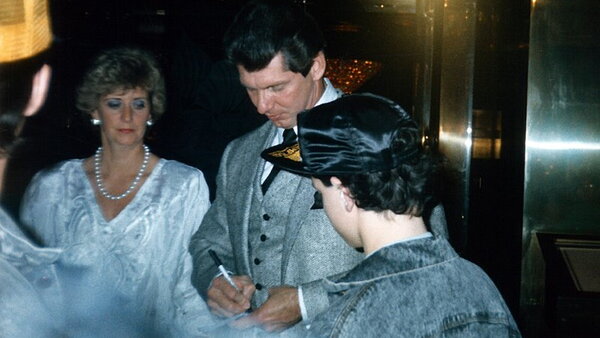
Long before he alienated everybody else attached to pro wrestling, Vince McMahon raised the ire of every territorial promoter when he bulldozed the entire localised industry at the first opportunity. Having taken audiences and wrestlers away from them throughout the decade, he then tried to take away kayfabe itself during a meeting with New Jersey Senate at the tail-end.
During the minuted and documented meeting, he admitted/confirmed/clarified that pro wrestling was pre-determined, pulling back the curtain in order to get it deregulated by the sports commission. Though not exactly brand new information to even the most casual of observers (nor even picked up on by them), the reveal was a hot topic amongst industry insiders and promoters, who considered it McMahon's latest act of sacrilege. The Mega Powers were about to draw an all-time WrestleMania number on pay-per-view, but he was thinking beyond one singular buyrate, looking to save small fortunes forever.
The move existed to dodge the task of acquiring medical clearance and various legal registration for wrestlers, as well as ensuring fees and taxes that other sports faced could now be waived. McMahon was happy to reclassify his product as "an activity in which participants struggle hand-in-hand primarily for the purpose of providing entertainment to spectators rather than conducting a bona fide athletic contest", formally rebranding it Sports Entertainment in the process.
37. 1990 - Going, Going...

In 1990, Vince McMahon was forced to take a gamble he'd been pondering for a while. Always obsessed with what could be the next thing long before he realised it was best to be slightly behind the curve than all the way in front of it, he was once so fooled by the brilliance of Bret Hart's work that he had Tom Magee pegged as the next Hulk Hogan even before the last one was in need of replacing.
That was 1986, but four years later and following a genuine financial peak at WrestleMania V, McMahon had every reason to think that the public were tiring of Hulkamania. Luckily, the replacement had been in the midst for a while, and it felt like once again the Chairman was right on the pulse in terms of audience desires. The Ultimate Warrior had been an enormously popular attraction since his 1987 debut, going on to hold the Intercontinental Title twice for the majority of 1988 and 1989, and heading into WrestleMania VI, an "Ultimate Challenge" win over Hogan looked like the perfect way to anoint him.
The public, rather surprisingly, disagreed. The Toronto show drew an enormous house, but at 550,000 buys, was over 200,000 down from the Mega Powers explosion one year earlier. The trend carried through to SummerSlam. 1989's Hogan/Savage rematch featuring respective partners Brutus Beefcake and Zeus pulled the August event to 625,000 buys, but Warrior and Rick Rude on top of the SummerSlam '90 the following year scraped just over 500,000.
The numbers didn't lie, and they spelled disaster for the Ultimate Warrior at the 1991 Royal Rumble. But the supposed solution just resulted in more problems for the market leader...
36. 1991 - GONE!
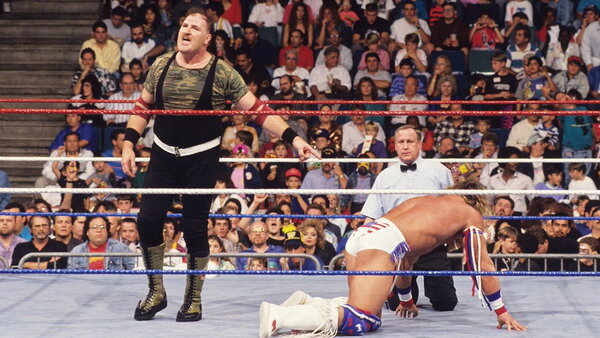
The Royal Rumble's Ultimate Warrior/Sgt Slaughter WWE Championship match looked in principle to be just another routine title defence for the Champion, not least because Slaughter was so cartoonishly over-the-top as an Iraqi sympathiser heel that he couldn't possibly win the industry's richest prize. Could he?
Be it panic button or planned insanity, Vince McMahon made the choice to lean into the testing political times, transitioning the belt back from Warrior to Hulk Hogan via Slaughter, but the plan didn't work. WrestleMania VII had to be moved to a much smaller venue (under the PR guise of "security threat" of Sarge in an outside setting), the 400,000 buys on pay-per-view reflected yet another hefty decrease from the prior year despite more homes than ever having access, and Warrior, Hogan & Slaughter failed to reverse the decline at SummerSlam 1991. Their "Match Made In Hell" co-main event alongside Randy Savage and Miss Elizabeth's wedding drew 405,000 buys, which was up from 'The Grandest Stage' itself but 100,000 down from Warrior and Rude's disappointing number the
There was only one thing for it. It wasn't just time for the "SummerSlam you thought you'd never see" but also the World Wrestling Federation Vince McMahon had never wanted to imagine. The United Kingdom was a lot smaller than the United States, and the same could increasingly be said for the roster of shrinking behemoths...
35. 1992 - The Real Reason EVERYTHING Changed

WWE have always liked the narrative that WrestleMania is the "season finale" of WWE, and with good reason. It generates a universally accepted falsehood that a 52-week-a-year show has an actual end point, adding the most solid (and motivational) of destinations for wrestlers that are ultimately on a road that never ends. It also implies - even if the company have failed to book it accordingly - that all the biggest and best programmes will culminate on the company's 'Grandest Stage', suggesting that the show will also be the most reliable watch of the wrestling year.
Obviously, this has been disproven multiple times during the four decades+ the show has existed, but that speaks to the power of the promotion of the show the wrestling's SuperBowl.
WrestleMania VIII for all the wrong reasons, really was the end.
Up and down the card, prominent figures from the most prominent mainstream period in the industry's history were set to either depart, scale back their presence significantly, or accept new spots lower down the card as the market leader and some of its most notable names sought to dodge deserved bullets that were being fired from every angle.
Hulk Hogan, out-of-nowhere with a month or so to go, announced he was stepping back indefinitely for the company. This resulted in his match with Sid Justice going on last as 'The Hulkster's "farewell match", but Justice was out the door almost as quickly. WWE was facing a raft of accusations of sleaze, with allegations of sexual assault and steroid abuse being the ones the public took particular interest in. Hogan got out, while Sid failed a drug test and was done afterwards. The Ultimate Warrior returned at the show looking so much smaller that schoolkids the world over thought the original had died and been replaced. Roddy Piper did a clean pinfall job for Bret Hart, in what served to be the end of his commitments as a full-timer for WWE. Jake Roberts left until 1996, Miss Elizabeth made her final on-camera WWE appearance in the United States, Tito Santana wrestled the last of his eight WrestleMania bouts and even the gorgeous stadium aesthetic of the Hoosier Dome wasn't to last. It'd take until 1997 before the company ran a building as impressive-looking domestically, relying on SummerSlam '92 and UK enthusiasm to generate one last stadium stand before the doldrum years took hold.
34. 1993 - Randy Savages Goes Nuclear On Hulk Hogan

Wrestling's a business and a work, Kevin Nash was right about the money and the miles only things being real about it, and just about every wrestler from every generation speaks about how true friends are hard to come by due to the transient nature of the game.
Randy Savage and Hulk Hogan were living proof of that during and after their various primes.
The pair made millions together (and in kayfabe, apart), but by 1993, Savage was substantially more locked in to WWE than his former Mega Powers partner. Never was this clearer than when, completely out-of-the-blue, Savage used his spot on the Raw announce desk to bury the five-time WWE Champion following his acrimonious exit from the organisation.
Savage went postal on 'The Hulkster', building on a rant he'd had on a Radio WWF show hosted by Jim Ross days earlier. Fleshing out an astounding-for-the-time rant, he spilled a bit of tea on why Hogan had left, why relationships were sour in general, and how he no longer had time for the man he'd eventually work with again in WCW just over a year later.
Tethering it to his on-screen feud with former friend Crush, Savage unloaded, saying "I think Hogan's a prima donna, a backstabber and he's a liar". Per Dave Meltzer's Wrestling Observer from the time, Savage had said Hogan's ego was so out of control that "Hulk Hogan" had consumed the real Terry Bollea, that he'd advised Hogan not to lie about taking steroids on "The Arsenio Hall Show" in 1991 (before he eventually did anyway), and even suggested that Hogan and then-wife Linda had contributed to the breakdown of his marriage with Miss Elizabeth.
Interestingly, Vince McMahon was sat right next to Savage on Raw as he vented, suggesting that he was more than happy to have his former golden goose eviscerated on air.
33. 1994 - The Steroid Trial
At WrestleMania X, Vince McMahon entered the ring as part of a celebration for Bret Hart's WWE Championship win. Not that he'd have wanted to even consider it at the time, but he was facing a reality of not getting to do that again for well over a decade.
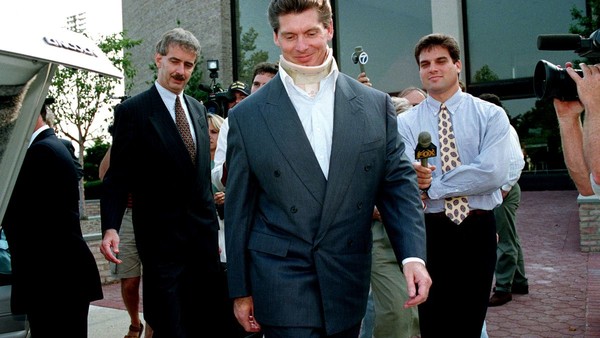
On July 22nd 1994, Vince McMahon was cleared of the remaining charges brought against him by the United States Government. Two counts of steroid distribution and one count of conspiracy to distribute steroids left him staring down the barrel of eleven years in prison at worst, along side approximately $1.5 million in court fines and fees. Multifariously ruinous at the time, even if - per every well-sourced scoopster and inside source - he'd lined Jerry Jarrett up to steer WWE in his absence. It's important to note that McMahon didn't get away with anything, despite being found and proven innocent. The court of public opinion had long made its mind up on the pro wrestling circus once the the story hit the headlines, but the government couldn't nail in the courthouse what society felt sure of outside of it. Wrestler testimonies were better for the defence than the prosecution. Those that admitted personal drug usage did so whilst categorically confirming that nothing was pushed or passed their way. Meanwhile, Nailz, under oath, said he "hated [McMahon's] guts", resulting in him being understandably considered biased and unreliable by the jury. Hulk Hogan was set to be a star witness, but Hulk Hogan was Hulk Hogan.
WWE wants you to forget about it now, but they were quite content for people to know about it in the immediate aftermath. The first live Raw following McMahon's acquittal found the Chairman and co-commentator Randy Savage making constant references to the legal win, including name-checking lawyers from the case. It was all a lot of tell-don't-show though - even if McMahon hadn't sold the damage the trial was doing to him personally, his business certainly was. WWE's stock with the general public had never been worse, and it was about to fall even further before Stone Cold Steve Austin finally reversed some trends.