10 Wrestlers Who Had To Deal With Major Pay Cuts
When promotions don’t think Styles, Jericho and others aren’t worth what they’re paying them.

Money is what makes the pro wrestling world go round. High-profile performers can have all the passion in the world for competing in the squared circle but few, if any, would ever dare to work for free.
It’s the wrestling ‘business’ after all. Their bodies and peak years have an expiry date, and all of them care to make as much money as they can in major promotions before calling it quits.
A lot of issues behind the scenes can be directly traced back to money, or lack of it. Many of CM Punk’s gripes with WWE came down to him believing the company should have been paying him much more for his PPV matches that would often steal the show. Mark ‘The Undertaker’ Calaway has claimed he only left WCW for the WWF in 1990 after being turned down a pay rise request, and being told by WCW officials “no one is ever going to pay money to see you wrestle.”
The Ultimate Warrior and Vince McMahon famously clashed around SummerSlam ’91 over cash, when Warrior threatened the no-show the PPV unless he was paid equal to Hulk Hogan.
Performers and promotions frequently don’t see eye-to-eye when it comes to money and negotiating. Here we’ll look at 10 workers major promotions tried to force pay cuts on, to mixed results.
10. Arn Anderson

Since leaving WWE ‘The Enforcer’ Arn Anderson in interviews and on his podcast ARN has offered many titbits of what really goes on behind the scenes in WWE, as well as stories from his famed career. During an appearance on Talk is Jericho where he reunited with Tully Blanchard, Arn went into detail of the time he defected over to WCW from the WWF in the late 80s.
At the time WCW had promised big contracts to Tully and Arn to come over, with the two handing their notices in to Vince McMahon and making plans to debut for WCW. Ric Flair would have to call the two not long afterwards though and inform them WCW had reneged on the deal.
Tully reportedly refused a new offer of $156,000 for 300 dates, after originally being promised $156,000 per year for 176 dates. Jim Ross, who was working behind the scenes back then, has spoken of how it was bad business on WCW Executive Vice President Jim Herd’s end.
Arn, thinking about earning a decent living for his family, reluctantly agreed to the new deal and toughed it out. Here’s what he had to say about that turbulent time in his career:
“The biggest reason was there was an a–hole named Jim Herd at the helm, and he figured out some way somehow when I came in for my meeting that I wasn’t worth as much to the company that had made a deal for he and I. And you’re not worth as much as you two guys were together, so we’re going to cut your contract by 150 grand over a three-year period. At that time, that was a lot of money at my house. And then he saw I was not happy as you could imagine.
9. Mark Henry

When the ‘World’s Strongest Man’ Mark Henry came to the WWF right from the 1996 Summer Olympics, he scored one of the most lucrative contracts the promotion had ever offered a rookie: a 10 year deal worth $250,000 per year. The WWF believed in Henry’s potential, with his massive frame and charisma.
The huge contract he signed garnered a lot of resentment and jealousy amongst other wrestlers on the roster, especially after seeing him only being used as a mid carder and comedy act for years. It would take years for Henry to finally click with pro wrestling. So much so Henry revealed in an interview in 2013 that the contract he signed after his 10 year deal was for considerably less:
“I took a 50 percent pay cut when I signed that last deal five years ago because I was looked at as being a middle-of-the-road performer. During that time, John Cena made millions, and that’s what I want.”
Henry eventually showed his value and worth to the company. First with his ‘Hall of Pain’ gimmick in 2011 which finally landed him the World Heavyweight Championship by defeating Randy Orton. Then around Money in the Bank 2013, when was doing arguably some of the best work of his career, cutting his renowned emotional promo on Raw with John Cena where he teased his retirement only to viscously turn heel and hit Cena with the World’s Strongest Slam.
8. Colt Cabana

They call WWE the major leagues in professional wrestling, where grapplers can earn a rewarding living for the craft they love to put on and perform. What rarely gets talked about though is when standout indie performers finally make the leap to WWE, a lot of the time they have to take a considerable pay cut.
Prior to coming to WWE they would have spent years making a decent living on the indie scene after all, having learnt to monetise their bookings and merchandise. It’s a huge reason why The Young Bucks never signed with WWE, making a killing just through t-shirt sales alone.
When Colt Cabana signed with WWE in 2007 he was a casualty of having his pay largely decreased because of it. Before he made the leap to WWE, Cabana had made a name for himself in ROH and on the indies, being a pioneer on how to make a good living without being signed to a major promotion.
On AEW’s Unrestricted podcast Cabana discussed his time in WWE and how it affected his finances:
“Because even before then, I was doing great. I was doing wonderful. I actually took a 50% pay decrease to wrestle for the WWE when I signed my contract, but I said to myself this is an investment in my future. There’s only so much you can make on the independent scene. Yes, I’m taking a 50% decrease, but the possibilities to be a millionaire are there. So that’s the gamble I’m willing to take.”
7. Brian Pillman
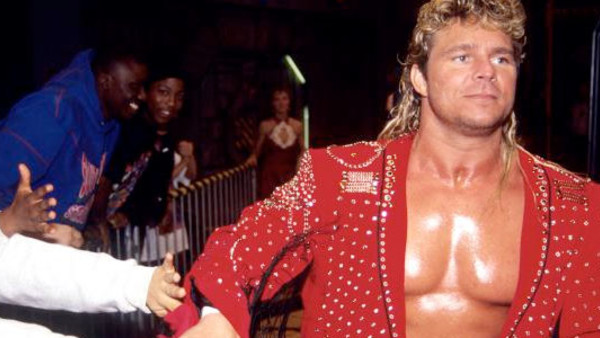
WCW tried to enforce a major pay cut on Brian Pillman in 1992. WCW were cutting considerable costs at the time, to the point where they were offering talents lunch boxes rather than catering.
Head booker Bill Watts and Brian Pillman weren’t on the friendliest of terms, with Watts around this time banning high flying top rope manoeuvres, even ruling if used in matches it would result in an automatic disqualification for the wrestler. Watts stripped away everything likeable about the promotion’s dynamic Light Heavyweight Division, which Pillman frequently competed in, even being crowned the first WCW Light Heavyweight Champion at Halloween Havoc ’91.
When Watts told Pillman he was looking to cut his pay otherwise he would be excessively jobbed out, Brian was having none of it, rejecting the pay cut and instead choosing to be “the highest-paid jobber in the business.”
Later circumstances worked in Pillman’s favour, going on to form the magnificent Hollywood Blondes tag team with Steve Austin, while Watts was demoted and later quit the promotion in 1993.
Dave Meltzer reported on the pay cut proposition:
"With Brian it was real simple. ‘Here's the deal Brian, we are going to re-negotiate your contract. $156k you get to be Light Heavyweight Champion and we'll make you a big star or you keep your $225k and we'll job you like crazy it's your choice’. And Brian just said no, this is my contract and you can pay me to be the highest paid jobber in wrestling history. And that's what Bill did."
6. Ric Flair

WCW had a long list of issues with trying to cut wrestlers pay. Ric Flair famously clashed with WCW President Jim Herd in the early ‘90s over money that would be the catalyst for Ric to defect over to the WWF in ’91, with the Big Gold Belt still in his possession.
First Flair and Herd clashed over creative, with Herd wanting to reduce Ric’s role, make him cut his hair and turn him into ‘The Zodiac Man’ – a gimmick where Flair would have thrown fast food tokens out to the audience at the end of every match.
Then they clashed over what Flair was being paid, with Herd demanding Ric take a large pay cut, which is likely why Ric regards Herd as the “Dumbest ass**** I’ve ever met in my life” to this day.
Herd, as recent as last year, has spoken of wanting to reduce Flair’s pay at the time after being pressured by WCW higher-ups on cutting costs: “I didn’t want to pay the same amount that I was paying at the time because I was getting pressured as far as money coming in.”
5. Chris Jericho

Chris Jericho in his autobiography A Lion's Tale: Around the World in Spandex revealed the WWF offered him a $450,000 3 year deal in 1999 to defect from WCW. The only point of concern though it was considerably less than what WCW were offering him to stay, which nearly reached seven figures.
Jericho was miserable in WCW towards the end, with the Goldberg angle he had been hyping and trying to make happen for months going nowhere. Realizing WCW were never going to consider him a headline attraction, Jericho took a chance on himself and signed with the WWF for less money.
Thankfully Jericho had the talent to get over so much in the WWF that he always earned more than double and sometimes triple his downside guarantee during his first run with the company, through attendance and PPV bonuses. He became one of the highlights of the Attitude Era (as well as every other era that followed) as soon as he debuted in that classic millennium countdown segment with The Rock on Raw Is War.
Jericho wrote of that time negotiating with the WWF:
“Even though the WWF was offering half the money I would’ve agreed to a bag of used hockey pucks to work for Vince. Or a bag of brownies. It wasn’t about the cash and it never had been. It was about finally achieving my elusive dream and enjoying my career again. All of the bull**** I’d experienced in WCW had drained my love of wrestling and I wanted it back.”
4. Alex Shelley
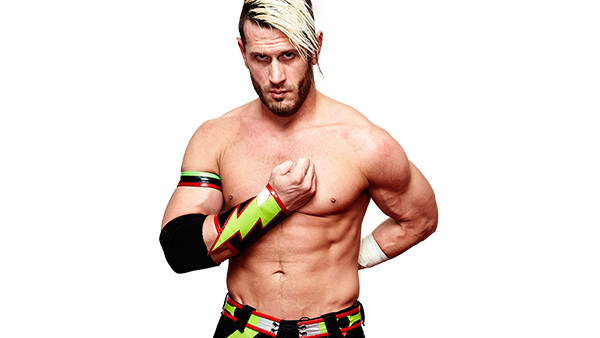
A few years ago one half of the Motor City Machine Guns Alex Shelley shared some dirt on his time spent working for TNA in a series of revealing tweets. He would divulge he was one of the numerous wrestlers working for the company that had to suffer a crushing pay cut when TNA were suffering more financial issues than usual in 2012.
Shelly posted a picture from around this time period with Kazuchika Okada, Brian Kendrick and The Young Bucks posing with the X Division title outside the Impact Zone in Universal Studios Florida, which he said they did ‘as a total p*** take’ after all of them weren’t booked for that day’s set of tapings. Giving more context on the photo, he noted how TNA routinely sent a runner out at the theme park to attract tourists to be audience members in the Impact Zone by offering a photo op with the X Division belt. It turns out the runner had no idea who any of the wrestlers were, which tells you everything you need to know about the disarray and disorder behind the scenes in TNA.
Shelley further claimed ‘No room for us on the show though, too busy with Nasty Boys and Orlando Jordan pantomiming ejaculation with lotion while watching Rob Terry wrestle. No offense to The Nasty Boys or Orlando Jordan. All the offense to whomever decided to not have us wrestle, cut our pay, and overlook us. Over and over and over again.’
Shelley disclosed the pay cuts and the way TNA treated him and his friends was enough for him to go back to school so he ‘didn’t have to put up with such moronic decisions controlling my future, financially or emotionally.’
3. Earl Hebner

It wasn’t just the wrestlers getting their pay cut in TNA, it extended to all its employees, including referees. Even its Senior Referee Earl Hebner, who spent a lengthy 11 years in the company and was one of their star inductees into their Hall of Fame class in 2015, couldn’t escape having his pay continuously reduced. You would have thought the promotion would have had more respect for the most recognisable and well-known referee in pro wrestling history, with his career spanning more than 6 decades.
In 2017 Anthem Sports & Entertainment bought the failing company and they went to work “heavily downsizing” employees to get out of the financial red. It was unclear why Earl and his son (fellow referee) Brian Hebner had left TNA, but it became very apparent when Earl verbally laid into TNA for the way it was treating its employees and cutting their pay to an excessive degree. Earl noted:
“We thought the new company had it all worked out when they bought it, but they’ve been having financial problems. I feel like I’ve been paying them. It’s been pay cut after pay cut, so I asked for my release. Some of the wrestlers were only getting paid $100 a day. That’s a slap in the face to the wrestlers. My son, Brian, also wanted his release, and then they asked Brian Stiffler to be the senior ref. But the money he’d have made there would have been spent on expenses on the road, so he quit, too.”
Thankfully Earl joined AEW in 2019, where he’s treated with the respect he deserves, to work big-time matches and events.
2. Jim Ross
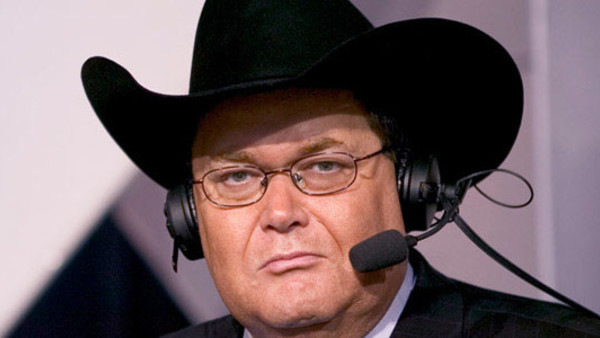
The WWF were having a lot of financial issues in 1997, with their competition WCW being at their peak in popularity and success. There were reported talks of water coolers being repossessed at Titan Towers. Financial woes worsened to the point where Vince McMahon famously couldn’t honour Bret Hart’s massive contract, which would ultimately be the catalyst for the Montreal Screwjob and Bret leaving for WCW. Even their biggest show of the year WrestleMania 13 drew a low 237,000 buy rate and didn’t sell out the Chicago arena the Rosemont Horizon.
As a result of the money difficulties, many of the talent around this period had to take major pay cuts, which is the reason why J.J. Dillon quit abruptly. The WWF’s long time announcer Jim Ross was subjected to the pay cuts too and went into detail regarding it on his Grilling JR podcast:
“The seepage of information on these layoffs was not a major secret internally. Many of us, I took a big cut in pay. I took a, I think it was a $30,000 a year cut in pay right around 1997, maybe right before that. But somewhere in that mid-’90s, I didn’t try to commit that date to memory because it wasn’t something I wanted to recall all the time. But Vince came in and said, ‘We’re having issues, cash-flow wise, and I’m asking the wrestling people to take massive cuts in pay.’ And I said, ‘Okay, what are you offering or what are you suggesting.’ And he told me, and so I think I got cut $30,000 I believe.”
Thankfully the WWF would get red-hot the following year with Steve Austin and Mike Tyson and the Attitude Era, where the company made millions in profit and was able to pay its talent what they deserved.
1. AJ Styles
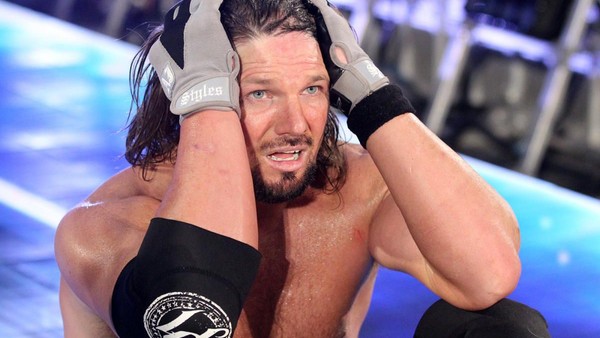
For a lengthy period of time you couldn’t associate AJ Styles without TNA, and vice versa. AJ spent over 10 years in the company, often being referred to as ‘Mr. TNA’. He spent so much time there he was able to become Triple Crown winner 5 times and Grand Slam winner twice!
But AJ and TNA came to a huge standstill in contract negotiations in 2013 that would ultimately lead to his departure. TNA were having huge financial struggles around this period, cutting numerous talent from its roster. TNA wanted to keep AJ but expected him to work the same amount but be paid substantially less. They wanted to cut his pay more than half!
AJ, believing in his abilities and knowing his worth, refused. He did the honours to Magnus on the way out and left for greener pastures with NJPW and WWE where he became one of the biggest Superstars the company ever had, with Vince McMahon eventually telling him “I wish I would have hired you ten years ago.”
In a shoot interview AJ went into detail on the whole TNA pay/contract debacle, after it was rumoured TNA tried cutting his pay by 60%:
“I think saying 60 percent is being generous. It’s kind of crazy when that’s the first offer, you’re like ‘Wait, what? That doesn’t make any sense. I’ve worked here for 11 years, hard for 11 years. I’ve gotten more popular over the last year, so I don’t know what’s going on. This doesn’t make much sense to me.'”