12 Times WWE Broke Its Own Golden Rules

Every rule is broken eventually...
Over the decades, WWE has gathered a reputation as doing business a certain way. There's a hierarchy both behind and in front of the camera, and the delicate structure is rarely upset - Vince McMahon calls all of the shots while his top star dominates television and live shows. Even as Stephanie McMahon has taken control of the writing team and there's been more fluctuation on top of the card, it's still a tried-and-true formula - Vince has final say, and booking revolves around a top babyface (John Cena, for the past ten years). There are more specific rules and regulations that govern WWE programming on a day to day basis - some explicitly stated, and some a result of tradition. Certain matches have important consequences and certain stipulations demand adherence. All in all, the result is an instantly recognizable product for which WWE has become famous. Still, every rule is broken eventually - there's a time and place to shatter even the most sacred of company mandates. Sometimes WWE has picked the right time and place, making millions of dollars. Other times, they've badly misjudged the situation and cost themselves the same fortune. Here are 12 instances where WWE broke its own golden rules:

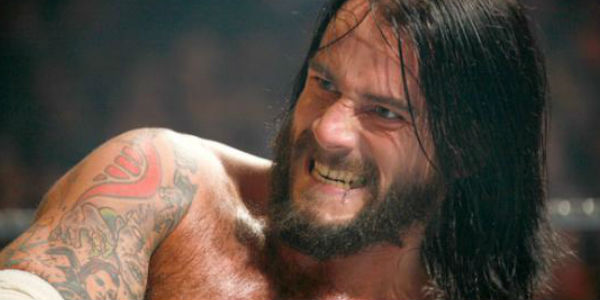
12. CM Punk Joins WWE As CM Punk

In 2002, WWE went through a brief kick of debuting wrestlers under their real names - a trend still felt in the presence of longtime superstars John Cena, Brock Lesnar, and Randy Orton. It wasn't long before the company changed protocol, though, and wrestlers were back to using WWE-created sobriquets so the organization could retain all legal rights to the names. The ensuing years saw the creative team come up with flip-flopped names like Daniel Bryan, questionable ones like Michael McGillicutty, and outright insane choices like Dolph Ziggler. One wrestler who managed to avoid the trend was CM Punk. Long considered one of the best wrestlers on the independent scene, Punk's real-life straight-edge lifestyle became part of his wrestling gimmick, creating a unique character that was associated with groups like Ring of Honor and IWA: Mid-South. In 2005, Punk signed with WWE and reported to Ohio Valley Wrestling. Not only was he still called "CM Punk," but he kept the straight-edge, alternative music-inspired character. When he debuted on WWE TV as part of the ECW brand, he was still the same CM Punk. Punk had a long and successful WWE career. His character evolved over time, but it never strayed far from the CM Punk fans saw on the independent scene - and, one suspects, the real-life personality of the performer. The name CM Punk became world famous, and the man behind it is free to use it wherever he wants.

11. Ric Flair Brings The NWA World Heavyweight Championship On WWE TV
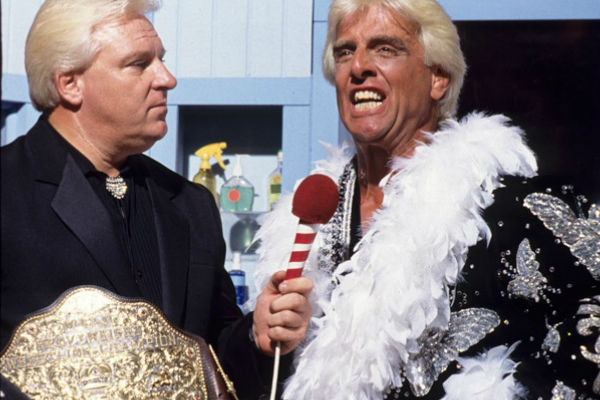
In 1991, WCW booker Jim Herd was so intent on getting rid of top star Ric Flair that he fired him outright - despite the fact that Flair was the reigning WCW World Heavyweight Champion. That belt was vacated, but Flair, who was also the NWA World Heavyweight Champion, continued to be recognized as that organization's titleholder. Furthermore, he had possession of the physical NWA Title... so when WWE came calling, Flair was able to use it as a prop in a very unique storyline. Though the reigning NWA and AWA World Heavyweight Champions had made appearances with WWE in the 1970s and 1980s, having someone brandish a title belt on TV and call himself the "real World's Champion" was unheard of - and yet Flair did just that. It was a surreal blending of fact and fiction, of the National Wrestling Alliance and World Wrestling Entertainment. Though Flair was already a legend, it made him unique in his new home. After WCW took legal action, WWE stopped using the NWA Title on TV, but they didn't stop the storyline. Instead, they cleverly had Flair carry around an old WWE World Tag Team Title, and the company's tech crew would blur the belt out on television.

10. Rey Mysterio Wins The World Heavyweight Championship
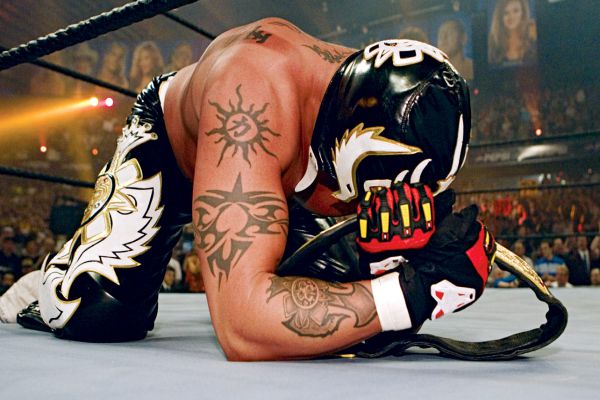
Under the leadership of Vincent Kennedy McMahon in the 1980s, WWE gained a reputation as "the land of the big men." It was a well-deserved title, and one that - despite recent strides in the opposite direction - still largely describes the company today. McMahon has been quoted as saying that he wants champions who turn heads at airports, and even though most of his greatest stars haven't been giants, that hasn't stopped him from barking up that tree. The 5'3", 175 pound Rey Mysterio won the Royal Rumble in 2006, dedicating his win to Eddie Guerrero, but he soon lost his WrestleMania title shot to Randy Orton. While Mysterio ended up back in the match and won the belt - a seemingly always-planned end to the tumultuous storyline - behind the scenes, things were anything but stable. According to former WWE writers speaking candidly on the Wrestling Observer Radio program, McMahon had to be all but coerced into agreeing to put the title on Rey, and even went so far as to bitterly state, "He'll never be my champion." Surprisingly, Mysterio racked up another World Heavyweight Title reign in 2010 and a WWE Title reign in 2011, but both were short-lived. Still, after hearing firsthand accounts of the weeks leading up to WrestleMania XXII, his first victory seems almost miraculous.

9. Seth Rollins Interrupts The Main Event Of WrestleMania
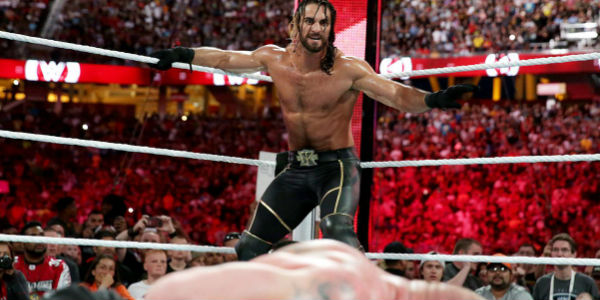
WrestleMania is the most important wrestling show of the year, so by that logic, its main event is the most important match of the year. Matches like that - once in a lifetime contests designed to draw huge money - demand decisive winners. Those conflicts pose the questions that grab the most fans, and at least one night a year, it's assumed that the questions will be answered. In early 2015, the path to WrestleMania was rocky. Brock Lesnar was a monstrous, unbeatable heel WWE Champion, but the number one contender - dominant babyface Roman Reigns - was absolutely despised by fans. What was supposed to be a clash between the two most powerful forces in the company would be completely rejected unless it turned into a mauling of the man who was supposed to be WWE's new hot babyface. Would Lesnar retain the title and please the fans, or would Reigns's push continue unabated? The answer was neither - both men fought for several minutes, but in the end, Money in the Bank briefcase holder Seth Rollins cashed in his contract, joined the match, and pinned Reigns to win the title. Fans in attendance were elated, and critics felt that WWE made the best of a bad situation, but the long-lasting effects remain to be seen. After all, the next time WWE promises that a huge WrestleMania bout will have a victor, fans may wonder if the company is telling the truth.

8. Steve Austin Wins The Royal Rumble, Doesn't Headline WrestleMania
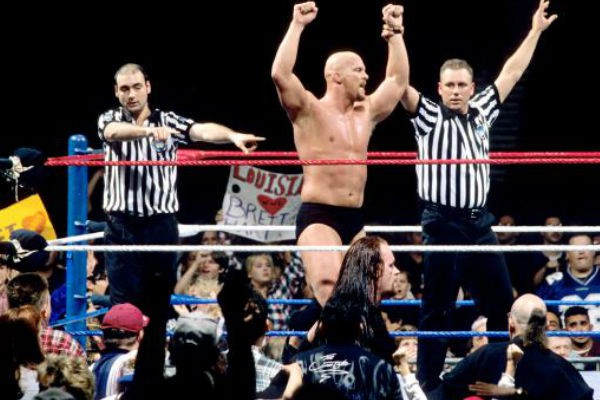
The staggered-elimination battle royal known as the Royal Rumble was introduced in 1988, but five years later, a stipulation was added that gave the event a new importance - from then on out, the winner of the January bout would face the WWE Champion at spring's WrestleMania event. WWE adhered to the stipulation religiously, even granting two title shots at WrestleMania X when Bret Hart and Lex Luger were declared co-winners of the 1994 Rumble. In 1997, though, a combination of creative booking and external circumstances led to some very unpredictable swerves on the road to WrestleMania. Heel Steve Austin won the Rumble in controversial fashion - he was thrown out of the ring by nemesis Bret Hart, but the referees missed the elimination. Austin re-entered the ring, eliminated Vader and The Undertaker, then tossed Bret to win. A four-way match was set for February's In Your House: Final Four with the winner getting the coveted shot, but when Shawn Michaels vacated the WWE Title after injuring his knee (or not wanting to lose to supposed winner Bret Hart at WrestleMania XIII), the bout became a championship match. Either way, Bret won, and Austin was not part of the main event of WrestleMania. Austin ended up wrestling Bret at the show of shows in a match that made his career, but WWE remained wisely conservative when it came to taking chances with the Royal Rumble in the future. In the ensuing 18 years, there's only been one other time when the Royal Rumble winner didn't get a title shot at WrestleMania.

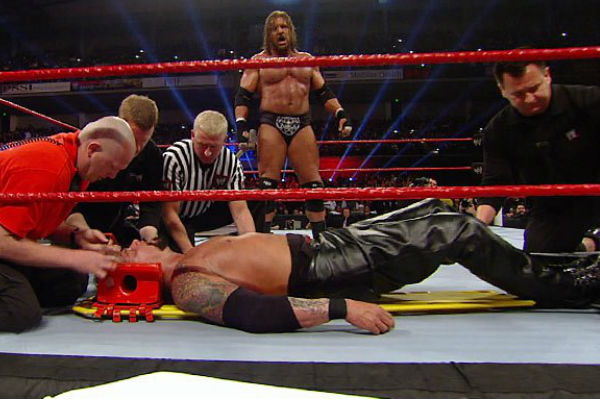
7. Triple H Retires Mick Foley Cleanly

For many years, WWE was known as a "babyface" promotion - the typical booking formula involved a long-term good guy world champion who would defend the title against a rotating horde of heels. Things didn't change too much when Vincent K. McMahon took over, and even into the Attitude Era, babyfaces typically dominated the competition while heels cheated their way into the wins they would get. For that reason, it was surprising when Triple H beat Cactus Jack at the 2000 Royal Rumble. Sure, it was a hardcore match with weapons involved, but as per the rules of the bout, it was a clean victory. When Cactus demanded a Hell in a Cell rematch at No Way Out - and put his career on the line - it was clear that "The Game" would only come out on top if he took liberties with the rules. In the end, that wasn't the case. The match was just as brutal as the Royal Rumble bout, with both men fighting to the top of the cage and Triple H backdropping Foley through the roof and back to the ring. Foley miraculously got to his feet, but Triple H was right there with a Pedigree and the pin. The win was significant because there was no possible "out" for Foley - as much as fans hated it, he had been retired and Triple H was solely responsible. The win helped make Triple H one of the most dominant - and best drawing - heels that WWE had ever seen.

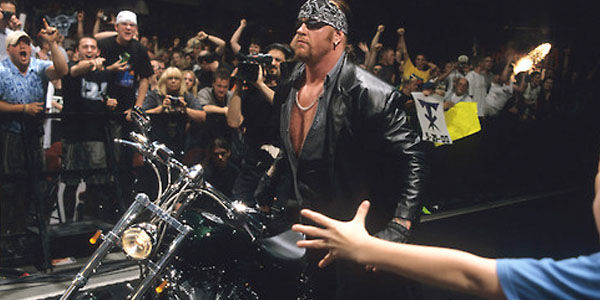
6. The Undertaker Becomes A Biker

By 2000, The Undertaker was already one of the most respected superstars in WWE history - and for a number of reasons. Not only had he spent a decade as a constant presence in WWE, but he famously took one of the more outlandish characters Vince McMahon had ever created and played it to the hilt, becoming a beloved superstar in the process. Both The Undertaker character and Mark Calaway were WWE royalty. Perhaps the respect McMahon had for Calaway convinced him to let The Undertaker change his character to one that more closely resembled his real personality. "The Undertaker" name stuck, but his music, ring gear, and attitude all changed. Most notably, he started riding a motorcycle down to the ring. Undertaker was still hugely popular, but many thought that the change shattered his mystique - after all, the "Deadman" character had reached legendary proportions. He kept the biker persona until 2004, then reverted to his classic gimmick at WrestleMania XX. Since then, The Undertaker character has become sacrosanct, and the biker makeover is rarely mentioned.

5. Vince McMahon Wrestles "Stone Cold" Steve Austin

When a young Vincent Kennedy McMahon began working with his formerly estranged father, he had one dream - to become a pro wrestler. Vince's hopes were crushed when he elder McMahon forbade him from setting foot in the ring. Though there were already many successful wrestler/promoters in the history of the sport, McMahon personally felt that the men making the decisions should remain behind the scenes. Vincent Kennedy eventually became a broadcaster, but he apparently never gave up his dream of becoming a WWE superstar. After 26 years behind the announcers' table, a real-life dispute between McMahon and Bret Hart made the WWE Chairman a hated figure in pro wrestling. Seizing the opportunity, McMahon became an on-camera heel and soon entered into a feud with "Stone Cold" Steve Austin - a feud which would make WWE the top wrestling promotion in the world. Any good wrestling feud has to find its way to the ring, and on the April 13, 1998 Raw, McMahon made his debut in a WWE Championship match with Austin. Though Dude Love attacked the champion before the match could begin in earnest, McMahon had finally become a performer - and as a result, Raw's 83-week-long ratings losing streak at the hands of Monday Nitro was broken. Needless to say, McMahon would be getting back in the ring.

4. CM Punk's "Pipe Bomb" Promo

In the mid-2000s, WWE began using writers to script promos for their talent. That, combined with the fact that certain words ("wresting" and "belt," for instance) were banned, meant that most of the wrestlers on the WWE roster began to sound very similar. As the company already insisted its workers use a specific in-ring style - one which focused on big moves with strikes used for transitions - WWE's product often felt like it offered little internal variety. As one of the company's best workers and promos, CM Punk was a ray of light in terms of originality. Even so, on the June 27, 2011 episode of Raw, Punk shocked the wrestling world with what came to be known as the "Pipe Bomb" promo and briefly made him the hottest star in the industry. After costing John Cena a match against R-Truth, Punk sat down on the stage and began tearing into Cena and the rest of WWE - especially management, referring to John Laurinaitis as a "douchebag," Stephanie McMahon as "idiotic," and Triple H as a "doofus." Punk mentioned other promotions, called himself a "wrestler," and even started insinuating that Vince McMahon's anti-bullying campaign was hypocritical before being cut off. In short, he broke all the rules, and the result was the most talked-about promo of the century.

3. Everyone Old Is New Again

WCW managed to leapfrog WWE as the number one wrestling promotion in the world in the 1990s due largely to the fact that they lured away much of Vince McMahon's established talent with lucrative contracts. McMahon was forced to create new stars and eventually, he found the winning formula and won the wrestling war. Still, during WWE's lean years (and even after they regained control), McMahon would take frequent potshots at the competition, criticizing WCW's top stars - who had headlined in WWE many years earlier - as over-the-hill and nonathletic. Once WWE put WCW out of business, they ruled the wrestling world, and anyone looking to make a comeback in the U.S. had to go through them. Eventually, bridges were mended in the quest for mutual wealth, and many old faces returned to the company. With only a few exceptions, every star who made a name for himself in WWE and then jumped to WCW came back to WWE. The same men Vince McMahon and his stars had called old in the 1990s returned to active competition for the company in the 2000s. The most egregious example of pushing old WCW wrestlers came in 2011, when CM Punk was sacrificed to Kevin Nash to provide heat for Nash's upcoming feud with Triple H. It proved that there had been a major shift in priorities since the late 90s, and it wasn't for the better.

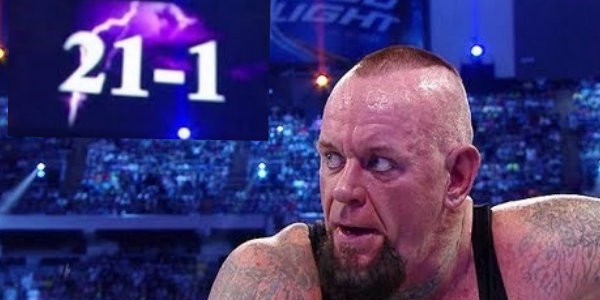
2. Brock Lesnar Ends The Undertaker's Streak

WWE's reticence to treat its product as anything resembling legitimate competition led to a severe devaluation of the company's championship belts in the 2000s. At the same time, though, a new sports-style standard of excellence arose - The Undertaker's undefeated streak at WrestleMania. First acknowledged in earnest prior to 'Taker's win over Ric Flair at WrestleMania XVIII, the streak became one of the main drawing points of WrestleMania - especially when Undertaker put it on the line against Shawn Michaels in 2009 and 2010, and then Triple H in 2011 and 2012. It was once assumed that Undertaker would eventually lose to an up-and-coming talent - maybe the company's next major star - but as the streak grew, many fans and insiders started to think that it would simply be his legacy. He would continue to rack up wins until he retired, and his WrestleMania record would always be perfect. Unfortunately, the lack of drama took some of the excitement away from his matches. While the bouts with Michaels and Triple H were excellent enough to grip fans, his clash with Brock Lesnar at WrestleMania XXX was a dull bout (due in no small part to 'Taker suffering a concussion in the early goings). The crowd was underwhelmed until, after a third F5, Lesnar cleanly pinned The Undertaker, ending the streak and bringing the Phenom's WrestleMania record to 21-1. The most untouchable accolade in WWE was destroyed, and the world was shocked.

1. Triple H Retains The WWE Championship At WrestleMania 2000
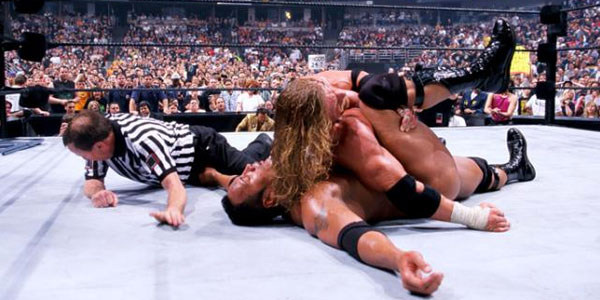
Even when WWE started to take more chances with heel champions in the 1990s, one tradition remained holy - at WrestleMania, the babyface would always reign supreme. No matter what had happened in the year since the last show of shows, it was guaranteed that fans would be sent home happy as the company's top hero celebrated a hard-fought victory. Triple H rolled into WrestleMania 2000 as WWE Champion, riding the wave of momentum that came from dominating (and retiring) Mick Foley, but of course, The Rock - who despite being the top babyface in the company had only held the WWE Championship as a heel - was expected to win the title and usher in his own era as the official top star in the wrestling world. Mick Foley (who came back for one night) and The Big Show were also part of the match, but they were eliminated from competition and it came down to The Rock and Triple H. As The Rock closed in on the WWE Title, Vince McMahon - who had accompanied him to ringside - took a steel chair and, shockingly, hit The People's Champion with it. After that, Rock fell victim to the Pedigree and was defeated by Triple H. It couldn't be happening - babyfaces always won at WrestleMania. While The Rock would gain a measure of revenge by attacking the McMahon family, the result was set in stone - Triple H had become the first heel to close out WrestleMania with a victory. Nothing could ever been taken for granted in WWE again.

Contributor
Contributor

Scott Fried is a Slammy Award-winning* writer living and working in New York City. He has been following/writing about professional wrestling for many years and is a graduate of Lance Storm's Storm Wrestling Academy. Follow him on Twitter at https://twitter.com/scottfried. *Best Crowd of the Year, 2013