1. WWE Can't Stop Being Racist Because Vince McMahon Has Never (Perhaps Unknowingly) Stopped Being Stereotypically Racist
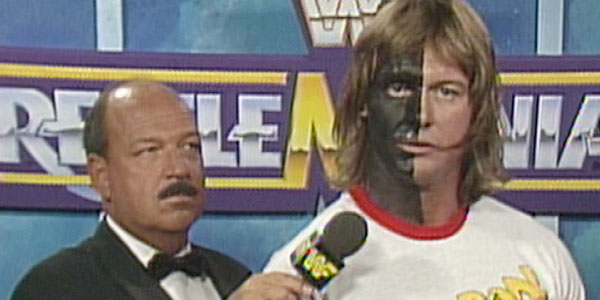
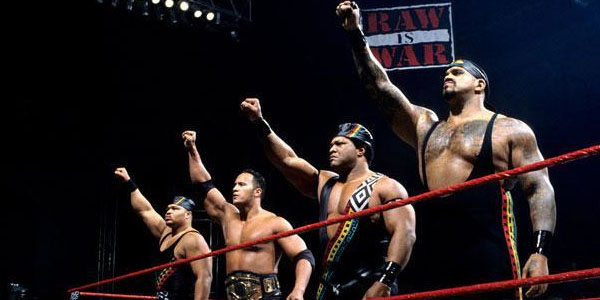
Vincent Kennedy McMahon, Jr. is a 68-year old corporate executive of a global brand conglomerate that consistently flirts with being valued at $1 billion. He's also a staunch conservative who was born in the American South during the heat of the Civil Rights era, turning 20 just 18 days after the passage of the Civil Rights Act of 1965 ensured minorities the ability to vote in American elections. As well, Vince's favorite pro wrestlers growing up where Johnny and Jimmy Valiant, two massively popular Caucasian wrestlers who spoke in black-styled jive tones and dressed in a flashy manner mimicking modern black traditions of the era, too. Though possibly not a racist at all, he certainly fits the highly-stereotypical profile of someone who could easily be easily misconstrued as being a racist. Vince McMahon's corporate aim as an entrepreneur has always been predicated on quickly conquering new and divergent markets and introducing streamlined content that easily fits across all portals. As well, he's controlled the market for wrestlers themselves by consistently being able to pay them more than any other promoter. Furthermore, in having them signed as at-will independent contractors, wrestlers - especially, in this case minority wrestlers - are at the whims of McMahon, whatever they may be. For instance, it can be said that as, say, a black wrestler in WWE, placating the potentially racist whims of Vince McMahon in order to succeed is an absolute necessity. Knowing how to shuck and jive like Jimmy Valiant, having a great physique and promo like the tanned to seem near-black McMahon-favorite "Superstar" Billy Graham and having the dignity of (favorite of most every classic era wrestling promoter) Ernie Ladd to silently suffer unknowing racial slights helps, too. WWE as a "racist" company doesn't change until Vince changes his stance first. While this may seem like a fate that is years away from ever occurring, this may quite possibly not be the case. Though not initially mentioned in Beary's article in The Atlantic, The Rock could easily be considered to be the first (partially) black man to hold the WWE Championship. Though sporting a Samoan tribal tattoo and of Samoan heritage, when The Rock was placed in the Nation of Domination in 1996 alongside Ron "Faarooq" Simmons, Kama Mustafa and D. Lo Brown, he (like the rest of this group) was for all intents and purposes, black. Not just black, he was militantly black, throwing up a Black Power salute and wearing kente cloth black, too. Of course, The Rock improved as a wrestler and whenever given the ever-so-slight opportunity to break free of racially-stereotyped roles, he did. Ultimately, the color green substituted for the color black. At the end of the day, Vince McMahon is a businessman. Of course, in America, the country is still in a situation where a grand percentage of the population is white, and because of this, many wrestling fans are white as well. This being the case, a heavily-nuanced character based off of someone or something based on something intrinsically familiar, works. Thus, until blacks, Latinos, Asians or other minorites become dominant American populations, the need to present them as anything other than bit players with simple (oftentimes racist) roles is arguably minimal. However, as popular culture welcomes change, so can WWE. For this to happen, patience will be required as this situation is delicate in nature. Ultimately, McMahon is a nearing septuagenarian-age CEO of a business that celebrates and bases its brand and model around many societal notions that are outmoded in the modern age. The desire to present entertainment for those angered with this outmoding is obvious. It's a lazy get, and no wholesale changes to the product need be made. However, WWE has also taken their entire past, present and future video library online, so the idea that a deserving minority who isn't asked to behave in a stereo-typically racist manner could exist. Will it happen? Time will tell.
Besides having been an independent professional wrestling manager for a decade, Marcus Dowling is a Washington, DC-based writer who has contributed to a plethora of online and print magazines and newspapers writing about music and popular culture over the past 15 years.