How Good Was Eddie Guerrero Actually?
Is the most copied wrestler of all-time actually one of the very best?
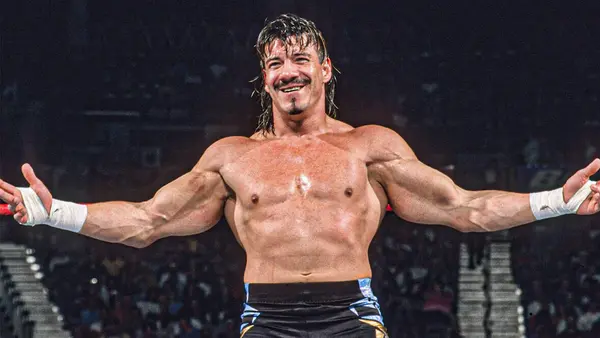
Eddie Guerrero, former WWE Champion and NJPW Best of the Super Juniors winner, boasts a 9.52/10 ‘Total Rating’ on the fan-voted Cagematch database. This ranks among the highest scores awarded to any wrestler past or present.
Eddie was utterly incredible at his very best. That is almost as objective a take as one can offer in the entirely subjective field of pro wrestling criticism. He’s not merely considered one of the greatest wrestlers ever by the wider fanbase; he’s considered a God of sorts, a polymath who was incredible at every single aspect of the game.
Eddie tragically died, aged just 38 years old, on November 13, 2005. He was inducted into the Wrestling Observer Newsletter Hall of Fame in 2006. His untimely death did not entirely inform his glittering reputation within wrestling - everybody knew how good Eddie was when he was alive - but has it led to an overly sentimental appraisal?
CM Punk has a rather high opinion of himself. This unshakeable trust in his ability was so unwavering that it informed his main event persona in WWE: he was the genius, they were the idiots for failing to see it. Punk has always felt this way - until he wrestled Eddie Guerrero in March 2002. As Punk revealed on his 2012 ‘Best In The World’ DVD, Punk was humbled when he encountered Guerrero on the indies during his enforced mainstream hiatus. “Boy, do I suck,” was Punk’s choice of words. He knew then that Eddie literally operated on another level of greatness unseen even by the trained eye.
But was he great consistently?
10. Presence/Look/Presentation
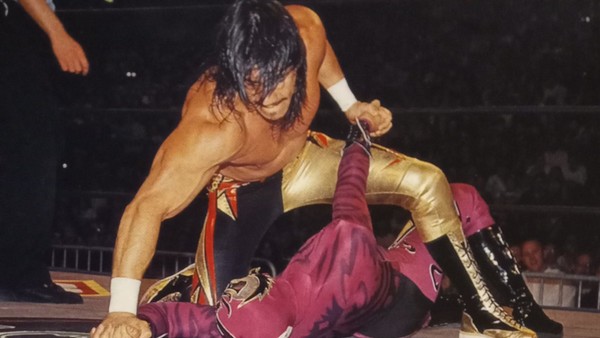
Eddy Guerrero rocked a mullet in the 1990s - i.e., the period of time in which the haircut wasn’t merely unfashionable, but a punchline. 1980s nostalgia may never go away at this point, but in the ‘90s, the era felt like a century ago, much less a decade.
Guerrero probably didn’t style his hair into a mullet in order to draw heat. It’s likely that he just thought it looked good. (Then again, he did reach the pinnacle as a babyface when he lopped it off).
But when he recovered from injury and started to make regular appearances in the WWF in 2000, the mullet felt less like a baffling choice, even if it was. Synonymous with an era of hair metal sleaze, Guerrero’s lecherous advances towards Chyna worked all the more for that haircut.
While he’d tweak it, like most wrestlers do, Eddie’s most memorable colour palette was the black, red, and gold variant of his tights. His attire, very fittingly, made him look lethal and elegant at the same time. While tights condemned many a wrestler to the midcard in the late ‘90s and early 2000s - Triple H ascended almost the second he made the switch - Eddie’s top-heavy, cobra-like physique suited them.
WWE, even at its creative worst, tends to get its presentation bang on. Eddie’s Fed themes were more broad and bombastic - and more over - than his WCW library. Viva La Raza was an instant popper written to make an arena erupt.
Eddie was considered a mere great hand in an era where size still mattered above all else. Nobody could deny his charisma, but the bleak fact of the matter is that it still wasn’t enough. Eddie was a special talent, so intense and passionate that he could maximise the effect of every incredible facial expression. Somehow, it never felt like he was overdoing it. He beamed at his own bullsh*t and conveyed a borderline terrifying contempt when handed more serious traditional heel material. The guy simply looked like a great in-ring talent before executing a single move, you could tell who he was through the silhouette alone, and his face was hypnotic.
A cartoon and a gritty, believable character actor alike (both complimentary).
8.5/10
9. Promos

Out of all the “WCW should push the cruiserweights!” guys, Guerrero was the most realistic. It was very obvious to everybody - with the unfortunate exception of WCW decision-makers - that Guerrero had the personality and verbal skills to rise up the card.
It didn’t take long for the WWF to grasp what they had with Guerrero. While his characterisation was stereotypical, fiery sex-wanter Guerrero was a riot throughout 2000. Even under the trappings of his one-dimensional character, Guerrero oozed charm with his attempts to seduce - and stay out of trouble with - Chyna. Not everybody is capable of playing WWE characters with gusto. Some look visibly embarrassed, or unable to project the silliness of it all. Guerrero was a joy.
There was a dark side to Eddie Guerrero, whose relative failings in WCW were not exclusively the result of its systemic incompetence. He was an angry perfectionist who demanded the absolute best from himself. He could be very moody when he felt that his immense talents went overlooked; this resulted in several missing months from the WCW chapter of his career. In 2005, playing heel in a twisted telenovela with Rey Mysterio, Guerrero harnessed this side of personality to genuinely chilling effect. The man was utterly incredible as the biological father of Dominik Mysterio, strutting from mode to mode with an effortless panache.
The cruel relish with which he bragged about it; the overfamiliarity of his “Dominik, what’s up, homes?” greeting; the latent menace of a sick man foaming at the mouth over imminently destroying somebody’s life: Eddie was as diabolical as possible for a modern wrestling heel to get.
8/10
8. In-Ring Ability

In terms of pure technique and execution, Eddie is one of the very best to ever do it. When you watch him almost hover in mid-air before appearing to dislocate his opponent’s shoulder with the sheer torque of his hooking armdrag - or quickly adjust his feet to allow him to hit a 1.75 speed backbreaker - you might argue that no other wrestler ever was such an expert mechanic. Brutal, crisp, beautiful, Eddie’s GIF’s are immaculate. They could loop for minutes on end, and you’d still be hypnotised.
As Eddy, his match against Rey Mysterio at WCW Halloween Havoc 1997 is considered one of the very best ever wrestled on U.S. soil. It should be impossible for something that was so futuristic then to feel so timeless now. It remains one of the most special matches in the history of the medium. This wasn’t even his best ever match; that will be covered elsewhere.
Spoiler: Eddie doesn’t get a ‘10’ rating in this section. This will scan as sacrilege to some people. The score he receives is excellent, but some might wonder why it isn’t a ‘10’. Why isn’t it the maximum?
If you were to compile a list of Eddie Guerrero’s best matches, though, you might find that it isn’t quite as deep nor as impressive as some of his contemporaries in the field of all-time greats.
The context of the era in which Eddie wrestled in the U.S. is important to consider. With the exception of his years as part of the legendary ‘SmackDown Six’, Eddie did not wrestle for a promotion interested in critical acclaim doping. He didn’t wrestle in a time and place where great wrestling all the time was the objective. What was he meant to do against Erik Watts on WCW Worldwide in October 1999? And who could forget the classic ‘Key For Torrie Wilson’s Steel Cage On A Pole’ match against Perry Saturn in November?
That said, when Eddie did make it to pay-per-view - where the quality of the match is inarguably the point - he did not always steal it.
Eddie’s 2005 series with Rey wasn’t amazing bell to bell. The WrestleMania 21 match was awkward. Rey kept adjusting his mask. The SummerSlam Ladder match is remembered only for Vickie Guerrero’s infamous botch. But even when things weren’t going wrong, the old chemistry barely fizzed; their Great American Bash match was good, but nothing close to phenomenal. Similarly, Eddie wrestled Kurt Angle frequently throughout 2004. You’d have expected their matches to be right up there with the very best WWE ever promoted, but they weren’t quite that, let down by a notable flatness in the final third. Eddie was working through injury constantly, which wouldn’t have helped at all.
The very best big match workers ever hold the key to unlocking an elusive level of drama. Shawn Michaels reached it with a broad, corny use of melodrama that would not have worked without world-class selling. Kenta Kobashi reached it with unparalleled incandescent babyface fire. Peak Kazuchika Okada used super-deliberate pacing early so that every one of his finishes felt like an unthinkable potential upset. Peak Kenny Omega used delayed selling to allow the head and neck trauma to sink in and fester into the atmosphere, creating a sense of deep and unbearable unease. That’s not to say Eddie could not unlock that level - he did it using just his gait and his face against John Bradshaw Layfield at Judgment Day 2004 - he just didn’t do it a great deal.
The escalation, the breach into pure hypnosis, the blissful crescendo of the absolute very best matches ever - in which you’re so into the action that you are borderline delirious - is something Eddie did not manipulate as much as his posthumous legacy might suggest. The fervent and frankly childish way in which wrestling is debated nowadays somehow makes it difficult to offer a very complimentary opinion. That opinion is: Eddie Guerrero was one of the best TV wrestlers ever.
We know that Eddie was plagued by self-doubt throughout his career. We know that he was very critical of his own performances, sharing that perfectionist trait with best friend Chris Benoit. We know that he was happy to lose the WWE title under the belief that he was letting the company down.
It makes sense, then, that his record on TV blows away his WWE pay-per-view catalogue. This would explain why his pulsating No Disqualification showdown against Edge (SmackDown, September 24, 2002) was far better than his PPV efforts against the same opponent, or even his WWE PPV showings against his New Japan soulmate Benoit.
Eddie’s personal issues affected his performances in WWE. By the time he made his return to the promotion, and was pushed as one of its top stars, he was breaking down physically. He was a true “demon”, as the kids say, in his physical prime. He stole Starrcade 1995 from ‘90s workrate gods Benoit and Jushin Liger with his match against Shinjiro Otani. In addition to wrestling what might be the best WCW match ever at Halloween Havoc 1997, his match against Dean Malenko at Hostile City Showdown ‘95 is a strong consensus contender for the best ECW match ever.
When Eddie was at his most confident, free of the top guy burden and WWE’s daft 2000s finishes, he was a tour de force.
8.5/10
7. Time’s Test
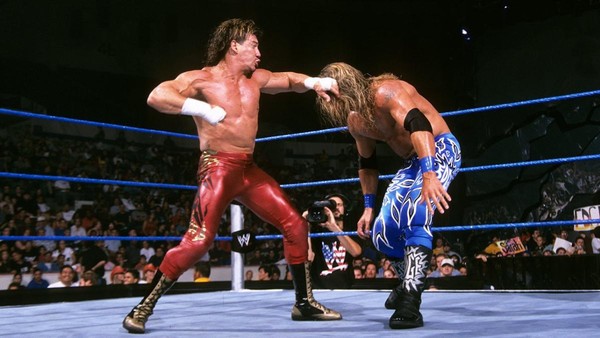
Fans and wrestlers alike share an intense nostalgia and longing for Eddie Guerrero. They love him.
This personal, deeply-felt emotion will make anybody’s work feel “timeless”, which is the most faulty category listed here. Hulk Hogan’s work is timeless and very much isn’t, at the same time. His selling is as corny and histrionic as the decade of his peak, but emotion lasts forever, and Hogan was able to elicit it whether you wanted to give in or not. It’s tricky.
Ironically, given the fervent demand for Hulk Hogan to go away at the time, many of Eddie’s contemporaries in the WCW Cruiserweight division don’t hold up to scrutiny all these years later. Many cruiser matches were so ambitious back then that the wrestlers could barely keep up with their own original ideas. The execution was sloppy more often than you’d like to remember. In many ways, that scene was a rough demo for the homogenised style that won’t go away today.
Eddie didn’t suffer from this problem, and his work was more crisp and snug and believable than a lot of what you see amid a relentless quest for critical acclaim in 2026.
Not that you’d necessarily want to, but watch Eddie take a Chris Benoit powerbomb. Very few people now, when wrestling is supposedly better, are able to do it with the same ferocious snap.
Eddie’s body of work holds up because what he helped revolutionise is now in its final form: a hybrid of lucha libre spectacle and puro physicality and pacing. It also holds up through the fundamentals: Eddie could tell a story and project emotion to incredible effect - more often than not, if not all the time.
9.5/10
6. Cultural Significance
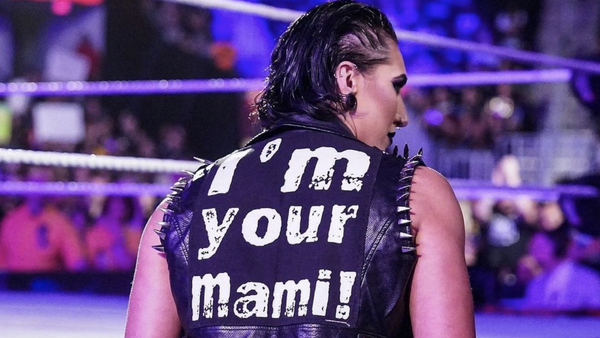
With no exaggeration, a wrestler will pay tribute to Eddie Guerrero on a U.S. television show once a fortnight.
Rey Mysterio has kept Eddie’s memory alive in virtually every match for 21 years. He is joined almost as frequently by AEW's Mercedes Mone, who idolised him growing up and uses his Three Amigos trifecta of suplexes and Frog splash* as signature moves, and uses a lucha-tinged repertoire more generally. Penta is one of countless wrestlers who will lovingly borrow Eddie’s signature shoulder shimmy. Penta even used a chair from No Way Out 2004, adorned with Eddie’s face, in a match for AAA decades later.
*While Guerrero’s former tag team partner Art Barr pioneered the frog splash, and Eddie himself adopted it in tribute, wrestlers think of Eddie when they launch themselves from the top turnbuckle.
Nobody can do anything except his shimmy or the signatures he could more easily hit when thrashed in WWE, because none of them are able to execute the more mind-blowing reaches of his arsenal.
It’s not just the moves. Eddie had a great trademark spot. With the referee dazed and or distracted, Eddie would grab a steel chair. He’d smash it against the canvas and throw it to a baffled opponent, who would instinctively catch it. The ref would then penalise the beleaguered, innocent opponent. Much like the WrestleMania 13 finish, or the tap-out introduced by Taz, Eddie’s spot has become an ever-present staple of in-ring storytelling. The Eddie spot is in fact so prevalent that some fans roll their eyes at the cliché. It’s not his fault that his successors lack his creativity.
Eddie wasn’t a household name. He wasn’t a crossover celebrity. He wasn’t even at the very top of WWE for long during a cold period for the business.
But if you’re a pro wrestler in 2026, nobody else is better, and nobody else - other than perhaps Shawn Michaels or AJ Styles - has done more to shift the stylistic landscape.
7.5/10
5. Rivalries

This is where Eddie’s case falters somewhat.
As unpleasant as it is to state in 2026, Guerrero’s wrestling soulmate was Chris Benoit. Initially put off by one another, their shared love of stiff, high-impact, mechanically perfect pro wrestling bonded them together. Their work in New Japan Pro Wrestling was incredible. Almost improving the frame rate of the form, every bump and collision was committed to the point of being disgusting. In WWE, it was never as good. Matches at Armageddon 2002 and WWE/ECW One Night Stand 2005 fell well below their best. The latter in particular was a major disappointment.
Both men were in rough shape, and were unable on the night to do more with the spaces between the moves. Benoit’s almost entire lack of personality might account for that, but a similar tale unfolded in the WWE continuation of Eddie’s feud with Rey Mysterio.
Great in WCW, you’d blow somebody’s mind in 1997, if you were to tell them that they’d make it to WWE and do much better work in the most popular soap opera on the show than in the actual ring. Then again, maybe not: Eddie’s feud with nephew Chavo was delightfully silly. Eddie Guerrero Vs. JBL was not a classic wrestling rivalry. Eddie deserves immense praise for making the idea of JBL: WWE Champion less inexplicable, but relative to storylines that are actually great, it was far from great.
Away from story-driven sagas, the feuds he worked more or less for the sake of match quality were uneven. Eddie’s 2004 series with Kurt Angle was unable to breach the almost dreaded “very good, not great” barrier. As good as it was, and as good as the WrestleMania 20 finish was, it was probably reasonable to expect more from the pairing. His series with Edge was fantastic, but his matches with Rob Van Dam were often a bit awkward.
7/10
4. Moments

The euphoric celebration of the WWE title win is the ultimate Eddie Guerrero moment. Eddie was too small and or too much of a liability for this to happen - and yet, he was too talented for it to not happen. This uneasy dichotomy enhanced the agony and enormity of the moment. People forget that Goldberg interfered because it doesn’t matter; Eddie deserved it, and it was actually handled and structured in a way that didn’t make Eddie look like a fluke champion.
Eddie was robbed of the actual ultimate moment. WWE is never going to broadcast his shared celebration with Chris Benoit at WrestleMania 20 again, and for many fans, the emotion behind the scene has evaporated. Benoit is too evil. The brutally physical manner in which Guerrero and Benoit ascended is too questionable. Was it really worth it? In 2004, though, he earned the moment several times over.
The “I’m your papi!” promo is so iconic that it has heavily influenced Monday Night Raw under Triple H.
There’s the usual 2000s WWE sh*t to wade through - quite literally, in the case of Guerrero spiking the Big Show’s burrito with laxatives - but the sheer force of Guerrero’s roguish personality, without making it good per se, allowed him to get away with it.
His frog splash variants don’t dominate the WWE big stunt highlight reel - Mick Foley and (somehow, still) Jimmy Snuka dominate that field - but Eddie’s splash onto John Cena in their parking lot brawl and his splash onto JBL from atop a steel cage ruled.
8/10
3. Range

Most WWE fans remember Eddie Guerrero as the heel whose cheating was so creative and funny that it became a babyface asset - even his defining babyface characteristic. Even when Eddie took on a more sinister role, in the summer of 2005, and really tried to draw earnest heat the old-fashioned way, WWE fans still cheered him.
Eddie is primarily remembered for his awesome range in the heel role. He is perhaps the ultimate love-to-hate figure in WWE history. When wrestlers lovingly draw from his work, they revel in his mischief and cocky swagger.
Eddie was also able to play an earnest and sympathetic babyface to rousing effect. His feud with Brock Lesnar is remembered chiefly for its euphoric conclusion, but Eddie was sensational in the build. He was candid and self-deprecating, endearing himself to the audience, creating a bond that remains forged to this day - but he was so fuelled by belief that, over the course of their face-to-face, he didn’t look as small as Brock Lesnar. This was an incredible piece of work, if you can call it working. The emphasis and intensity in this promo marks it as one of the finest ever cut in a WWE ring. Despite WWE’s reputation as the promotion in which a wrestler finds themselves and refines their persona, Eddie might have performed his best character work for AAA in the early-to-mid 1990s.
Eddy Guerrero’s performance at WCW/AAA When Worlds Collide is one of the very best ever. As part of Los Gringos Locos alongside Art Barr, Eddy, dressed in red, white, and blue, played up the American side of his ancestry to rile up the natives in Mexico. At When Worlds Collide, emanating from Los Angeles, California, Eddy and Barr performed maniacal swimming gestures to generate a kiln of heat. The entrance is charged at a level you’ll never see again. Guerrero is pelted with such animosity that he can only scream his head off as he almost rips somebody’s arm off when stealing their cardboard sign. It’s the only way he can release the feeling. After then proceeding to work one of the best tag matches ever, Guerrero sells the shame of losing his hair with the most fantastic woe-is-me facial expression. He deserves it. He gives the fans back every penny of the emotional refund.
He was the coolest guy in the coolest promotion in the world in 1994, and made one of the lamest feel cool a decade later.
Because people were desperate to project singles stardom onto Guerrero, his tag team work goes vastly underrated. Between Los Gringos Locos and Los Guerreros, Eddie was in one of the best short-lived tag teams ever, and one of the best in Ruthless Aggression WWE. His even more short-lived unit with Chris Jericho in WCW is a true hidden gem, too.
Guerrero could wrestle with the best of them. He could do comedy. He could brawl. He didn’t do plunder all that often, but it would have been a piece of piss for him.
9.5/10
2. Drawing Power

After winning the WWE title at No Way Out 2004, Eddie Guerrero was set to reign with the belt for a long time. After just four months, he dropped it to a character, JBL, who did not exist when Eddie defeated Brock Lesnar.
The change unfolded at the Great American Bash, which drew just 5,500 paying fans to the Norfolk Scope. Eddie was not a needle-moving main event star; quite the opposite. This was a very poor number in the context of WWE’s attendances at the time. The show drew 238,000 buys on pay-per-view: another dire number only marginally better than that pulled by the first Guerrero Vs. JBL match. Judgment Day 2004 drew 235,000 buys. This was WWE’s worst number since Over The Edge 1998, which was before the WWF erupted into the Attitude Era boom.
It’s difficult not to sympathise with Guerrero. He was given the belt in 2004. The business was on its ass. In terms of pure popularity with the general public, nobody matched Steve Austin and the Rock, who Eddie was positioned to replace. Not even John Cena. Eddie wasn’t just a poor draw in comparison to the outgoing Attitude Era stars; he was less popular than some of his peers.
Eddie’s eerily-named DVD ‘Cheating Death, Stealing Life’, released November 15, 2004, had sold just 17,000 copies by May 2005. While the main documentary feature aired on UPN for free months earlier, that number is still very poor. And, while there’s another very reasonable explanation for its failure, the TV special performed terribly, too. The doc went head-to-head against the finals of ‘American Idol’, drawing just 1.6 million viewers overall. By the standards of the time (May 2004), this was so bad that it fell below the average of the worst-performing primetime show of the previous television season (‘Game Over’ on UPN).
The DVD sales number gets even worse when you compare it to Rob Van Dam’s ‘One Of A Kind’ DVD, released on March 21, 2005, sales for which had exceeded 22,000 by May. Van Dam had arguably peaked in 2001, too. By 2005, no longer as cool, he had been firmly established in the midcard with no realistic chance of progressing to the main event.
Eddie does have one metric in his favour: he really was putting it together as a bonafide TV draw in 2005. A July 20 TV match against Chris Benoit gained in excess of one million viewers from start to finish. A week later, when Eddie claimed that he was Dominik Mysterio’s father in a highly publicised angle, the segment gained in excess of 1.5 million viewers - one of the biggest gains on a WWE TV show in years. That entire saga was a ratings sensation by 2005 standards.
Eddie Guerrero was not a particularly popular wrestler, at least in the context of a ‘GOAT’ debate. Just as soon as he started to build a case, he tragically died. It’s a fact that can’t possibly seem true, but it is.
5/10
1. Conclusion

Eddie Guerrero’s legacy collides somewhat with Eddie Guerrero’s actual career. He’s considered one of the very best artists in the history of the form, but his key match catalogue is slightly less impressive than his reputation suggests. He’s considered one of the most beloved characters in WWE history, but as a babyface, the numbers do not support that narrative. It was as a heel that he started to catch fire in ‘05.
Eddie would probably be the best wrestler in the world, if he was born two decades later. The industry would be far more welcoming of him. In fact, Eddie’s mastery of pure pro wrestling, combined with his magnetic charisma, would position him as the target of the ultimate AEW Vs. WWE bidding war. In composite, Eddie was the perfect wrestler.
The ultra hardcore fans - those who actually trawled the fringe markets and bought and traded tapes - adored Guerrero. The two hottest tapes of this era were WCW/AAA When Worlds Collide, and the inaugural Super J-Cup. The latter in particular was a phenomenon - considered, for a time, the very best and most futuristic pro wrestling event ever promoted. Guerrero stole When Worlds Collide and entered two stunning performances in Sumo Hall. WWE fans, meanwhile, idolise Guerrero for his arena-sized wit and underdog story.
As the result of personal issues, a hostile and creatively broken industry, and, perhaps, his own inability to consistently hit the big match pinnacle, he was never able to put that together. The Best of Eddie Guerrero, though, might be the ultimate Greatest Hits comp in history.
Overall: 8.5/10