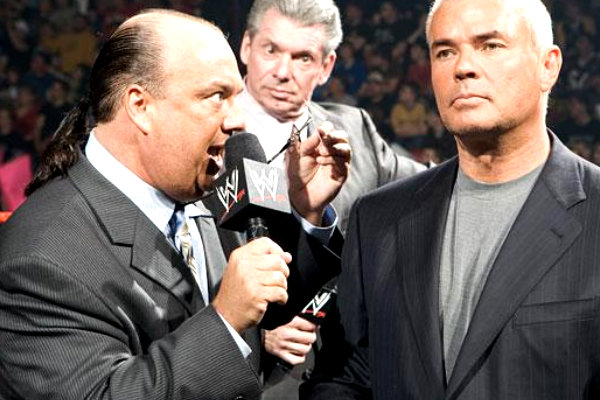
When discussing WWE business ventures, I should point out that, despite a rocky start, WWE Studios (as its known today) does make a profit, mostly due to a clever system of filmmaking and distribution in which the majority of their productions can make their small budgets back before release. Its also one of the only aspects of WWEs businesses that doesnt benefit from Vince McMahons notorious micromanaging, since he knows nothing about the cinema industry. In other words, he cant take credit for their success: its happening without him. However, Ive now gone through several of the badly conceived, appallingly executed business strategies and campaigns outside of professional wrestling that have cost the WWF/E and the McMahons umpteen million dollars over the years: decisions that give the lie to his reputation as a savvy businessman and entrepreneur. The art of the underhanded homage is a professional wrestling trope so entrenched in the industry that its practically a gimmick in and of itself. Ive been through how Hulkamania wasnt a McMahon concept, and that the first Wrestlemania only differed from Starrcade in how many mainstream non-wrestling celebrities the WWF brought in well, the Attitude Era wasnt exactly an original notion either, given that much of the vibe and the content was both directly and indirectly taken from Paul Heymans Extreme Championship Wrestling, with whom the WWF had business dealings at the time. Meanwhile, years earlier Eric Bischoff created the television format that WWE eventually co-opted, and still use for Monday Night RAW to this day. In the days before Nitro debuted, RAW was a one-hour taped show, and not a creatively impressive one. Bischoff introduced the idea of pacing a two-hour live television show like a supercard, showing main event calibre matches people wanted to see: it took McMahon a good year after Nitros expansion to two hours to agree to extend RAW likewise, but it would remain taped one week in every two for well over a year after that, before going live every week when Smackdown began in 1999. Oh, and Smackdown? Debuted on Thursday nights as a direct answer to WCWs Thunder B-show. Theres a case to be made that the only great ideas Vince McMahon ever had started in other peoples heads. When he has had an idea all his own, its almost invariably been a disaster, creatively and financially. His reputation as an innovator, an entrepreneur and a businessman are careful rewrites of history, stories told so often that theyve developed the ring of truth. But thats Vince McMahons single great strength: hes a masterful, ruthless self-promoter: and like most self-promoters, hes worked the world into believing his hype.
Professional writer, punk werewolf and nesting place for starfish. Obsessed with squid, spirals and story. I publish short weird fiction online at desincarne.com, and tweet nonsense under the name Jack The Bodiless. You can follow me all you like, just don't touch my stuff.