How Good Was Kevin Nash Actually?
6. Cultural Significance
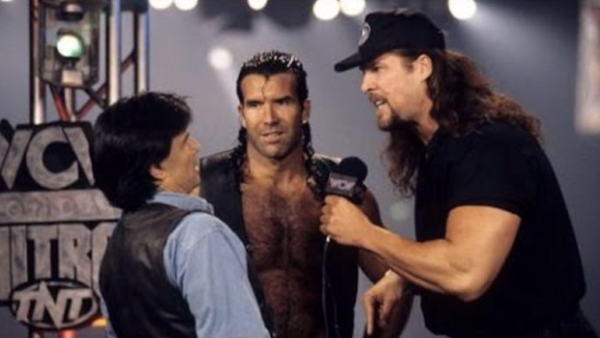
The impact of Hall and Nash appearing on Nitro in the summer of 1996 is one of the most significant moments in wrestling history. To give it its full historical context, it broke the fourth wall in a way that mainstream wrestling had never done before and hasn't managed since. This blurring of the lines took public perception from believing that wrestling was “fake entertainment for children” to treating this live broadcast as though guerrilla warfare was being played out in real time on TNT.
Before Scott Hall invaded Nitro, WCW was also seen as the minor leagues in a big way. Ric Flair, Sting, Randy Savage, and even Hulk Hogan couldn’t change that perception. With all due respect to The Total Package, Vince McMahon wasn’t losing much sleep over Lex Luger defecting to Atlanta. Hall and Nash gatecrashing Nitro would be like Dominik Mysterio and Roman Reigns turning up on Dynamite with no prior fanfare, spitting fire about TKO's board of directors and threatening Tony Khan on live television.
Even then, the manner in which Nash and Hall distorted perceived reality cannot be replicated, as fans now feel like they know the difference between a work and a shoot. The power of social media means that WWE could release a statement to clear up what was happening in seconds. Nash and Hall's invasion felt real and turned wrestling into the weekly episodic, never-ending soap opera it is today, like nothing else in wrestling history.
Throw in the enormous influence that the nWo, the ‘Turkish wolf’ gesture, and Nash’s catchphrases (both “for life” and “too sweet”) had on The Bullet Club and The Elite, and his influence is still felt on the wrestling landscape to this day.
8.5/10