The Secret History Of WWE’s Ruthless Aggression Era | Wrestling Timelines
September 12, 2004 - Reign Of Terror
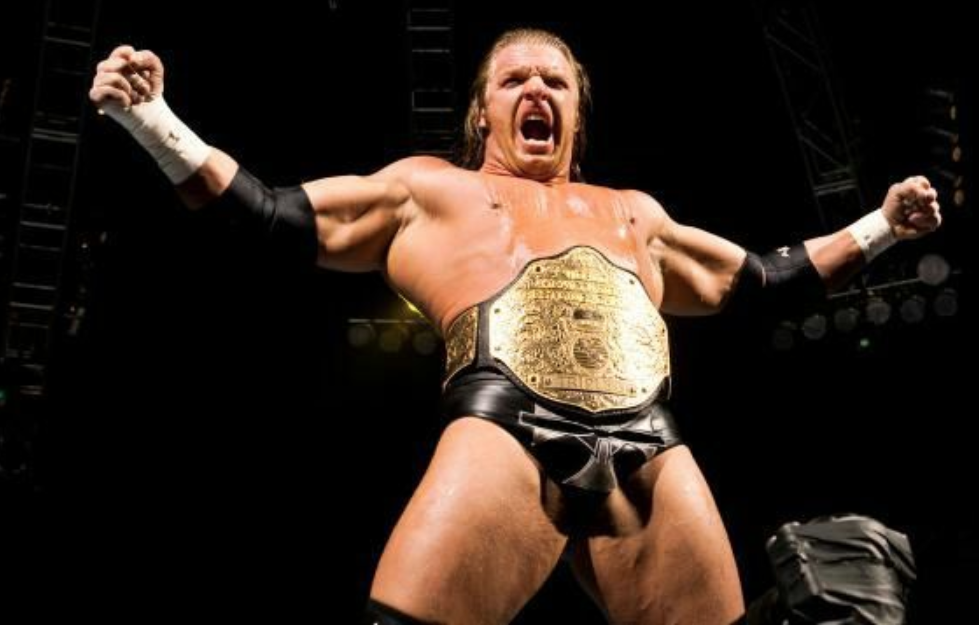
‘Ruthless Aggression’ is a fan-coined term that WWE later co-opted when producing a documentary series for its Network. In reality, WWE itself stopped using the term after about a month at the time.
There are two major reasons behind this retroactive marketing.
Primarily, despite this not being remotely true, it suits WWE to hand-wave the Attitude Era as a successful, repugnant, yet necessary change. The likes of Paul Levesque will sheepishly talk around it these days as something the promotion had to do. Really, it was the fault of the youthful crowd for enjoying breasts so much. Also, the WWF had to up the ante in the war against WCW. Attitude was simply a moment in time, guys. That stuff wouldn’t fly today, and we know it!
(Despite, years later, WWE continuing to indulge in grabby, shocking storylines premised on sexual assault, racism, and the like.)
Also, this initiative allows WWE to put itself over as a star-making factory. We don’t need to rely on Steve Austin and the Rock: we create new top guys all the time. That’s why we are the market-leading no. 1. But how true is that?
Ruthless Aggression, to those who like to catalogue WWE’s history into “eras”, lasted between 2002 and 2008, at which point WWE reclassified itself, leading to the so-called ‘PG Era’. The idea behind the 2002 initiative, as discussed, was to aggressively promote new stars.
At Unforgiven, on September 12, 2004, this narrative is thwarted by a tedious main event between Triple H and Randy Orton. Triple H takes 25 agonising, heat-bereft minutes to erase the work WWE put into Orton’s main event breakthrough. Orton had dethroned World Heavyweight champion Chris Benoit at SummerSlam after he survived Cactus Jack in a classic, career-making war at Backlash. All this, just to lose to Triple H. This is a match of two halves. The first is boring, dominated by possibly the longest application of a figure-four leglock in recorded history. The second is a relentless wave of interference, which feels as much like an excuse for Triple H going over as it does a dramatic device. The crowd is dead, where they were electric early in the night.
Let’s take a deeper look at the wrestlers who headlined the most pay-per-views throughout this period.
In 2002, honours are shared by Triple H and the Undertaker, which is understandable. They are the two most credible full-time star names, woeful performance levels aside, and these things take time. They are gatekeepers. In 2003, Triple H, deep into his excruciatingly dull ‘Reign of Terror’, tops the list with six; meanwhile, on TV, he has taken to destroying tag teams on his own for unfathomable reasons. The number alone doesn’t convey his relentless domination of key storylines; Triple H scores six during the early days of brand-exclusive pay-per-views. He defends or challenges for the World Heavyweight title in matches against young, hungry talents like Kevin Nash, Kane, and Goldberg. In 2004, you’d expect more movement. No: Triple H tops the list again, equal on six with Chris Benoit.
WWE does get there, after a few years. In 2005, Batista is the main man on PPV - but guess who he was programmed with most often. John Cena reigns supreme in 2006 (eight) and 2007 (nine), but Triple H eclipses him (and everybody else) in 2008 with seven. Vince McMahon does create new stars and elevate midcard acts into the main event bracket across the 2000s - but who headlines the total most pay-per-views that decade?
While he has a few more years on his apparent successors, the answer is Triple H, who debuted in 1995, with a staggering 51 PPV main events. In second place is the Undertaker, who debuted in 1990, with 35. John Cena takes third, with 32. In fourth is Shawn Michaels, who made his in-ring return when Ruthless Aggression was in play, with 23.
Bret Hart, Shawn Michaels and Diesel, obviously, did not headline the most Attitude Era main events. Hulk Hogan, Randy Savage, and the Ultimate Warrior did not main event throughout the New Generation.
This underscores the idea that Ruthless Aggression is a mere continuation of Attitude, as opposed to a distinctive period of WWE history in and of itself.