WWE: 18 Most Important Decisions In History Of WrestleMania

Wrestlemania Shawn Michaels has been described as Mr.WrestleMania, but the real embodiment of WWE's annual wrestling extravaganza has to be Vince McMahon. The event is McMahon all over €” big, brash, colourful and of course hugely successful. WrestleMania has became Vince McMahon's greatest ever achievement, there simply wouldn't be a WWE if he hadn't made Mania. It's the powerful brand his whole empire is fuelled upon, the one night of the year which transcends pro-wrestling into being a mainstream crossover pop culture phenomenon. The decisions Vince made along the way in constructing this brand were vital. The risks were huge. He had no road-map or concept to follow, this was his blind ambition, build a national event that's so powerful it's worth paying for. The basis of this idea is taken for granted now, all monthly wrestling pay per views ended up being based upon the WrestleMania model, few with matched success. WrestleMania is simply the elite of the pro-wrestling industry. Here's 18 important decisions which made it so...

18. The Decision To Build It Around Closed Circuit Television / Pay Per View, 1985

Vince Mcmahon Wrestlemania Without doubt the most important decision in Mania history was Vince's initial idea to create a supershow pay per view on closed circuit television. Although Jim Crockett Promotions had dabbled with distributing wrestling content this way, McMahon was really breaking new ground in the way he conceived Mania. It was more than a wrestling show, he was selling a full on 'entertainment event'. It was a risk people didn't believe in. The industry seen Vince as a maverick who had broke unwritten rules and was now pushing his luck too far. Mania was seen as an expensive production, a risk which could sink the WWF. Vince knew better. His distribution method meant he was essentially expanding the arena capacity beyond the arena seats and on to screens €” WrestleMania 1 ended up being attended by 19,121 fans with a further million people paying to watch on closed circuit television. The model for success was set. Through the years, along with technological advances, WrestleMania became a pay per view sensation. It serves as the inspiration for the business strategy which made the WWE a success. Selling content this way was a superb decision, failing only now in 2014 as WWE moves to the digital Network platform.

17. The Inclusion Of Celebrities - WrestleMania 1
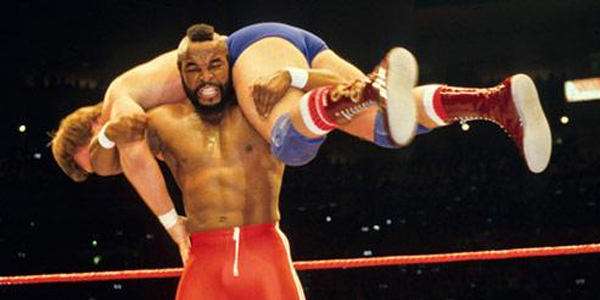
McMahon knew WrestleMania had to be something more than just a wrestling show, he had to take it further than the usual if he was to make extraordinary success. His innovation was to mix his world of wrestling with the world of entertainment, what became termed 'rock and wrestling'. He achieved huge exposure for WrestleMania by cross promoting his WWF machine with another 1980's pop culture phenomenon, MTV. The WWF had two specials on MTV before the first Mania, grabbing into popular consciousness and using the colourful Hulk Hogan to sell the WWF brand. Vince knew that he couldn't make traditional pro-wrestling popular, but human super heroes like Hogan and top profile celebrities would certainly sell his tickets. The result was WrestleMania 1 was booked as a celebrity heavy show. Muhammad Ali, Cyndi Lauper, Liberace and of course Mr T appeared at the event. The main event was utilising Mr T as a key aspect of the show, Dave Meltzer's Wrestling Observer recently referenced this as one of the key reasons WrestleMania succeeded. Celebrity usage was one of the best WWE decisions ever, even in the modern day we have seen Donald Trump and Floyd Mayweather adding significantly bigger buy-rates from their name being attached to WrestleMania.

16. The Decision To Make It A Stadium Show - WrestleMania 3
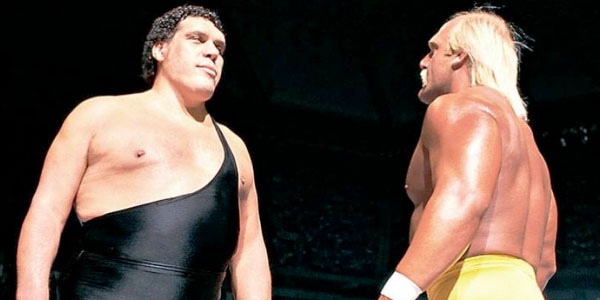
Hogan Vs Andreew Vince had defined WrestleMania as celebrity filled pay per view attraction, and at WrestleMania 2 he spread the event across New York, Chicago and Los Angeles. On paper, that idea sounded interesting, but in reality it wasn't really conducive to a great show. Vince's next great innovation to Mania had to be bigger, which led to his decision to host WrestleMania 3 in the Pontiac Silverdome, Michigan, in 1987. This was a bold move to say the least. Whether you believe the WWF attendance verdict of 93,000 or not, we are still talking about a stadium Vince needed to fill with at least 72,000 people. Many within in the WWF thought him crazy to attempt this, they believed he was overextending his ambition. Well, they were wrong. WrestleMania 3 filled the Silverdome with a reported attendance of 93,173 (disputed as in fact being 72,000). This set the standard for the WrestleMania tradition we have now, huge stadiums playing host to the extravaganza. McMahon's decision was a risky one, but it ended up making him way more money, he would have had around 50,000 less seats to sell if he had listened to the pessimists in 1987.

15. Hogan Vs Andre
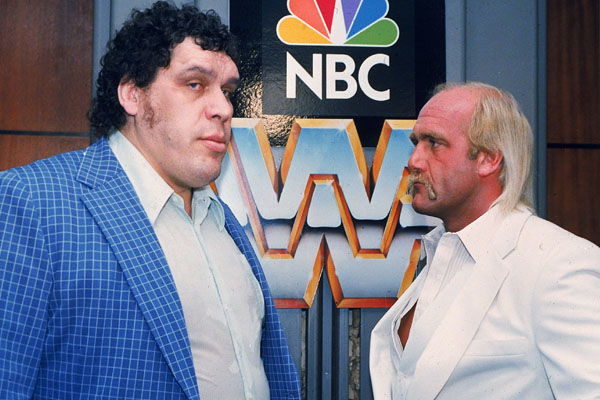
The way Vince managed to fill all those WrestleMania seats and distribute the show on a televised pop culture scale was by booking the ultimate main event he could €” Hulk Hogan vs Andre the Giant for the WWF Championship. It was one of the most high profile matches in wrestling history, the irresistible force meeting the immovable object. The feud was promoted upon mainstream television, which ended up becoming the standard for selling PPV rivalries. It was arguably Vince's greatest ever booking decision. Sure, many great feuds followed this, but Mania 3's main event provided the foundation for all further success to be based upon. Hogan and Andre put the WWF into popular mainstream consciousness, whether people watched it or not, general people now knew about Hulk Hogan and the WWF. It was a financial success and provided the historical "slam heard around the world."

14. Taking Mania International - WrestleMania 6
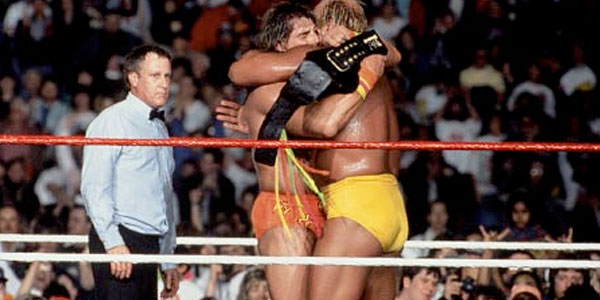
WWE hit a bit of a mis-step when they booked WrestleMania 4 as a tournament, although it was redeemed by Randy Savage's WWF title win. A year later we had 'the mega powers exploding', Hogan beating Savage. The next major WrestleMania decision came in the new 90s decade at Mania 6, when Vince McMahon decided to take his extravaganza international. It might not seem a huge leap for a New York company to do some business up the road in Toronto, Canada, but it truly was a monumental decision. One big reason was the fact that the show would be filling the 67,000 capacity Skydome, once again Vince had set himself a challenge. His answer was the same as WrestleMania 3, a huge main event, this time headlined by Ultimate Warrior being anointed the next big thing by getting to pin Hulk Hogan for the title. The bigger ramifications of the decision to go international was the fact that WrestleMania was now bigger than just the USA. The WWF was success on the global sale. It's somewhat of a shame that Vince has only taken Mania abroad on one other occasion, returning to the Skydome in 2002 for WrestleMania X8. Many fans remain adamant that Vince should take Mania to England but for now it remains unlikely.

13. Adding The Royal Rumble Story - WrestleMania 9
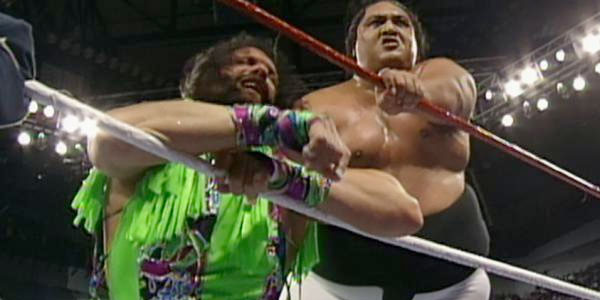
The WWF got lost in the years after the Canadian WrestleMania. Vince's decision making certainly proved questionable, including his choice to try and fill the Los Angeles Memorial Coliseum with 100,000 WWF fans at Mania 7. He couldn't do it. Instead the show got moved to the much smaller Los Angeles Memorial Sports Arena with 16,158 fans. Vince's decision making looked to be off again in 1993 when he booked Mania for an outdoor Las Vegas show. WrestleMania 9 is widely considered the worst Mania of all time ... however Vince did get one decision right. The 1993 Royal Rumble marked the first in a tradition of wrestlers winning the Rumble to go on to challenge for the WWE title at WrestleMania. It was a decision which made so much sense that the story has been used every year since, it has became the most compelling aspect of the Mania event. The story arc is the definition of compelling creative, the journey a wrestler takes from the Rumble to the Mania main event is stuff of legend. It all started with Vince's decision back in 1993.

12. Booking The Ladder Match - WrestleMania X
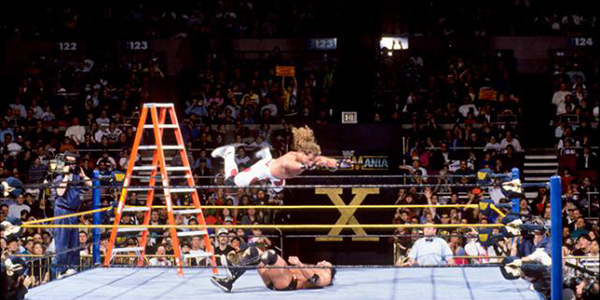
The previous few years had proved wobbly for Vince McMahon as the tenth anniversary of WrestleMania rolled back around to New York's Madison Square Garden. His initial decisions to sell wrestling as entertainment on a pay per view platform with big stadium shows had proven successful, but his product had became stale a decade on. He faced a crisis. The changes needed to be made, and at Mania 10 he decided to push much smaller athlete based talents. This was of course tied into the steroid scandal, but as a WrestleMania decision, it really ushered in a new era of pro-wrestling. Guys like Owen Hart excelled on the undercard at Mania 10, and Bret Hart went on to win the WWF title in the main event. The real story of the card was the decision to book the first ever ladder match. Shawn Michaels and Razor Ramon had the match of the year, a contest so good it is still talked about in high regard today. The decision to bring this element into the WWF was a critical success and ladders are now a staple of the pro wrestling product in general. Unfortunately, the decision to have smaller guys as main eventers wasn't so successful. The WWF crisis era would continue.

11. Changing The Guard From Hart To Michaels - WrestleMania 12

The big decision to come in 1996 was transitioning the number 1 guy role from Bret Hart to Shawn Michaels. The WWF had fluffed their choice to have Diesel as a year long Champion at Mania in 95, HBK was now seen as the new breed of star to re-ignite the company fortunes. It proved a bad decision. Bret Hart had hardly set the world on fire as Champion, but the decision to put the belt on Michaels at Mania 12, resulted in even more reduced WWF business. It should hardly have been surprising, just what exactly would the WWF young male demograph see in the pretty boy Michaels dancing to the ring? His babyface 'sexy boy' was a disaster. In this respect, Vince's decision to build Mania 12 around Michaels was poor and his judgement was probably clouded by his personal friendship with HBK. However, from a personal standpoint, you could say it was a good decision. Michaels is the best in-ring worker of all time, he deserved this moment in history.

10. Tyson Is Brought In And Austin Is Booked As The New Lead Character At Mania 14 - 1998
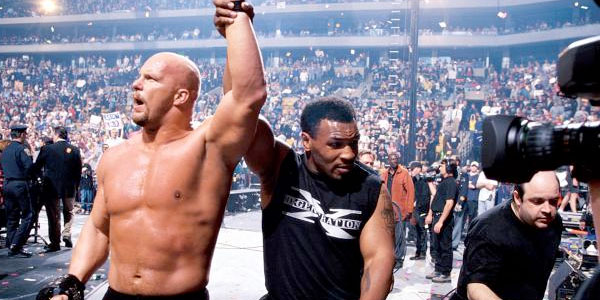
Right up there with Vince's very best decisions was the idea of bringing Mike Tyson in for Mania 12 and the crowning of Steve Austin as the new face of the company. In truth, the Austin decision was almost made for him by the audience, just like today with Daniel Bryan. Austin was an undeniable talent. He was the hottest star in the company and had been that way for much of 1997. Vince happily had Shawn Michaels put the Rattlesnake over clean at Mania 14, ushering in the formal start of the Attitude Era. An even more decisive decision was to pay Mike Tyson a reported $3 million dollars to appear on Austin's big night. This helped shine the mainstream media back upon the WWF, indirectly helping to re-establish wrestling as part of pop culture. It helped Austin get off to a great start as champion and Tyson's involvement should not be underestimated in the rebirth of the WrestleMania success story.

9. WrestleMania 2000

Vince's decision to re-cast the WWF with 'Attitude' at Mania 14 was followed the next night on Raw with Triple H forming a new version of D Generation X. You also had The Rock emerging as the most distinctive character in Federation history. McMahon himself was a successful character as the heel boss and all of a sudden it became the coolest thing in the world to like pro wrestling. A lot of this had again stemmed from a WrestleMania with a major celebrity and a massively over wrestler in Austin. The decision making at Mania 14 well and truly helped make a new wave of successes. The 1999 WrestleMania built on this, pitting the two biggest names in the business against each other, The Rock vs Steve Austin (with Mr McMahon involved for The Rock). It was the perfect Mania main event and business kept on booming. By the year 2000, Vince's decisions were made trickier. Steve Austin was out of action with a broken neck and a whole host of talent had a claim to be in the Mania main event. In this respect, the WWF was to a degree a victim of its own success, McMahon suddenly had a whole host of stars he wanted to accommodate. His decision ended up being a Fatal 4 way, Triple H defending against The Rock, Big Show and Mick Foley. It was the first sign of McMahon's decision making being on the wane, particularly in the case of over-booking it further with a McMahon family member in every corner. The key decision was having Triple H win in the main event. It seemed a given that the scenario should be The Rock beating Hunter in a one on one for the title. Vince decided differently. Critically it was a poor choice, commercially it led to a mammoth buy rate for the next month's Rock vs Hunter contest at Backlash. The other big decision was the obvious re-branding of WrestleMania from a numbered event into a year event. In some ways it fitted in with the feeling of the time, WrestleMania 2000 helped mark the millenium buzz. The decision was a one off, a year later we were back to numbers.

8. Austin Turns Heel - WrestleMania 17
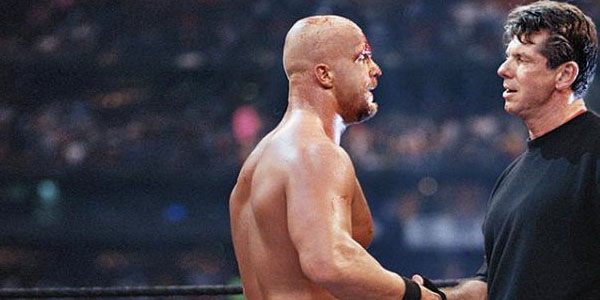
WWF business was still hot as 2001 rolled around, exemplified by the fact Vince managed to acquire his competition WCW. Still, the chairman felt it necessary to shake his product up, and had a huge decision in mind for WrestleMania 17 €” turn StoneCold Steve Austin heel. It's one of those decisions Vince must look back on and regret. It's included on this list because it's importance can't be denied, it effectively killed the Attitude Era. Austin has since stated he wish he had called an audible on the night and stunnered McMahon. What ended up going down was the worst conceived heel turn ever, Austin in his home state of Texas was cheered like a hero despite McMahon helping him beat Rock with a vicious chair assault. The ramifications of this decision meant the WWF was never the same again.

7. The Hall Of Fame And Axxess - 2004
With WrestleMania celebrating its 20th anniversary in 2004, the decision was made to bring back the WWE Hall Of Fame as a big scale production. Taking place the night before Mania, it has developed into one of the key aspects around the annual WrestleMania extravaganza. It has helped to further the special feel around the WrestleMania name, giving a degree of prestige to the brand as if it's all part of a bigger and greater legacy. The decision to have a major show on the eve of WrestleMania has also resulted in the term 'WrestleMania weekend.' No longer is Mania just a one off event, it's a full on experience, a multi-day vacation for fans to a wrestling paradise. The other decision which has developed the Mania brand was a pre-event 'Axxess'. These convention style fan festivals combined with the Saturday Hall of Fame show have made WrestleMania far more than your usual trip to see a wrestling show.

6. Money In The Bank Match - WrestleMania 21

The decision to add an annual Money In The Bank ladder match to WrestleMania in 2005 proved thrilling. The new adaptation of the ladder gimmick had 6 men fighting it out to pull down a contract which gave them a guaranteed WWE title shot whenever they fancied. Edge won the first match and it proved to be the catalyst for his career making feud with John Cena. The benefits were even more far reaching. It came back year after year, proving to be a key attraction for Mania buys. It helped to make careers, being Mr Money In The Bank meant you were someone above the standard mid card. Eventually the gimmick became so successful that WWE decided to give it its own pay-per-view, but older fans will always remember the contest as an exhilarating WrestleMania innovation.

5. The Streak - WrestleMania 21

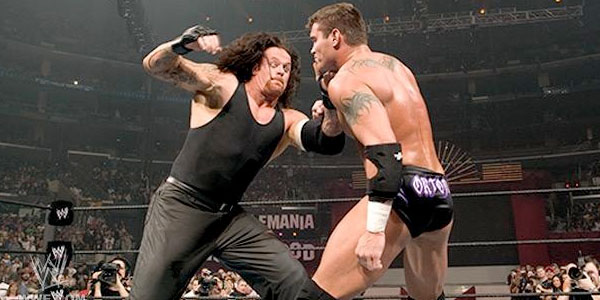
The Undertaker streak has became vitally important to the success of WrestleMania. It started out naturally, the WWF didn't want The Deadman doing jobs and Taker himself was notorious for never being willing to lose in general. As the most respected man in the locker room he got away with that attitude. By 2005 the WWE realised they had stumbled upon something special. Taker had now rallied up 12 wins unbeaten at Mania, so the WWE turned the natural streak into a story driven angle. The success from this decision has proved huge. The streak is now arguably the biggest part of WrestleMania, way bigger than the title €” the question of can the streak be ended was certainly the key selling point of both the 25th and 26th Mania in addition to going on last at Mania 24. It all started as a formal storyline in 2005, with the decision to book Randy Orton as the 'legend killer' who would try to end the streak.

4. Building It Around A City

As the 2000's decade went on, the WrestleMania brand had become so strong, that cities started lobbying the WWE to host Mania on their turf. This was further encouraged by Chief revenue and marketing officer of WWE Michelle Wilson, she is credited by the WWE board as the person to take Mania from a singular event into a citywide experience. The result has been not just more money for WWE but huge money for local economies where the event takes place. The Mania brand is so strong that people come all over the world to watch the event live, bringing their spending with them. New Jersey Governor Chris Christie estimates WrestleMania 29 generated $101.2 million for his state. That marked the second year in a row WrestleMania generated over a hundred million dollars for its host city, which shows you just how big and important this WWE brand is. The decision of the company to now build the event around an area has now made the WWE name a sought after commodity.

3. The Greatest Match Ever - WrestleMania 25
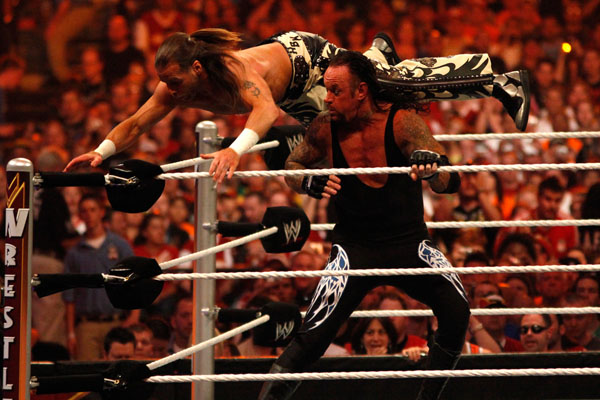
WWE is all about watching great wrestling matches for most of us fans, so the decision to book Shawn Michaels vs The Undertaker at WrestleMania 25 has to rank as a great decision. It gave us the best wrestling match of all time. It was hardly surprising Michaels and Taker would deliver such a classic, HBK is arguably the greatest wrestler ever and Undertaker isn't far behind. Putting together their years of skill and experience, their Mania 25 match was half an hour of wrestling magic. Everything was perfect. The action flowed in every area of technicality, high flying and big bumping. When the reversals and near falls started it was breath taking. Finishers were kicked out of and at times you genuinely thought HBK could win. It was so good that they did an almost as excellent sequel the next year, with Michaels this time retiring on the loss.

2. Booking The Rock Vs Cena A Year Out - WrestleMania 28
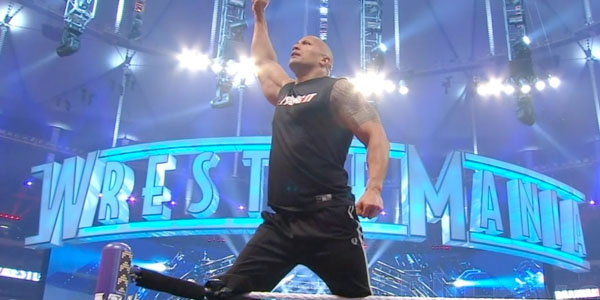
In 2011, the WWE made the decision to book its WrestleMania 28 main event a year in advance. It was announced the night after Mania 27 that we would get The Rock vs John Cena. Don't think it was a huge decision? Consider the fact that Mania 28 ended up becoming (and still stands) as the highest grossing PPV event in wrestling history. Fans bought in big time to the long term booking strategy, the mainstream anticipation for 'once in a lifetime' was off the charts. WWE's decision to put together two of the biggest wrestling names ever and give them a year long feud worked brilliantly. Ironically, 'once in a lifetime' ended up being done for a second time at Mania 29. This time the match was only official two months in advance. The buy rate dropped. WWE should take some lessons from their decision to book long term in 2011 to 2012, money followed, they should think further in advance more often.

1. WrestleMania 30 On The WWE Network

Wrestlemania 30 Deviant Poster Perhaps the biggest decision (and risk) WWE has taken since first launching WrestleMania 1 as a distributed pay event, is the 2014 decision to tie in WrestleMania 30's distribution with the WWE Network. The parameters of the industry are being changed with WrestleMania 30. Why pay $60 for it on pay per view when you can watch it via the new digital streaming platform for $10? Sure you still end up paying $60 because you are locked in for 6 months, but you then end up getting half a year of other PPV content in addition to a live channel and on demand content. Its a bold decision from the WWE. Can you imagine the outrage if the live stream fails on the night? You also have the fact that they have devalued Mania's worth significantly and alienated their traditional PPV format. In all likelihood they've killed the platform they found so much of WrestleMania's success upon, pay-per-view may not exist by the time we get around to Mania 31. The decision has been major, only time will tell if switching from pay-per view to digital distribution will equal success or failure.

WWE Writer

Grahame Herbert hasn't written a bio just yet, but if they had... it would appear here.