10 Best Comic Books That DON'T Have Superheroes
You might think it's all Marvel and DC, but sometimes the best comics don't have masks or spandex.
Superheroes are synonymous with comic books - there's just no escaping it. Through over 80 years of published material from Marvel, DC and their competitors both past and present, America's star-spangled do-gooders have made the medium their own. And with film, TV and gaming only expanding their influence even further, the impression of the medium as one synonymous with costume-clad characters isn't going to go away anytime soon.
But that doesn't that's all the industry has to offer. As many longtime readers are no doubt aware, the comics medium is home to a wide variety of genres and publishers. In fact, for a time, horror and western books actually outpaced superhero books in terms of sales and popularity, only being stymied when the Comics Code Authority introduced draconian rules on censorship in the 1950s. Even romance comics were massively popular for a long while.
Today, the reign of the superheroes is well and truly in effect, but their dominance doesn't mean that other genres aren't alive and well. Horror, sci-fi, true-crime, fantasy, noir and more all have a home in the medium, and at publishers who've largely departed the superhero spotlight.
Readers can read whatever they like (I'm certainly not here to police that), but once you broaden your horizons and start dabbling in bits and bobs from different kinds of storytellers, you'll find the comics medium is so much more interesting. The following stories - from outside the Big Two's sphere of control - are all a testament to that.
10. American Vampire
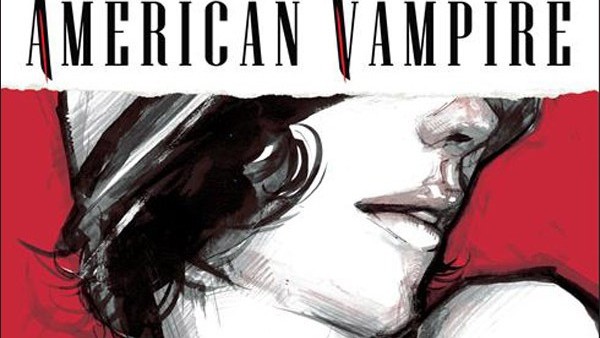
Comics readers let out a huge sigh of disappointment when DC announced that Vertigo, the superhero publisher's imprint of 25-plus years, would close come 2020. Vertigo characters who made the jump to the mainstream DC universe, like John Constantine (who I guess we can begrudgingly call a superhero nowadays), have managed to survive its closure, but the sad fact remains that DC will be without one of its most beloved elements before the year's end.
I'll get to some of the more famous and indeed beloved Vertigo comics soon enough, but one title I really want to hone in on right now is American Vampire. The series was a Scott Snyder-Stephen King collaboration that featured some truly mesmerising art from Rafael Albuquerque and Mateus Santolouco, and one that offered a fascinating new reimagining of old Vampiric mythology by charting the generational and genealogical differences between the different vampires of the world.
Moving through the eras, American Vampire was bold, ambitious and bone chilling when it had to be. It was also the comic that probably landed Snyder his gig on Detective Comics (where he would write The Black Mirror), and later Swamp Thing and Batman, so it's well worth reading if you loved his work on those particular titles.
9. Saga

There's not much to be said about Saga that hasn't already been said countless times before, but here we go anyway.
The comic is a sci-fi epic from Image Comics that deals with a pair of starcrossed lovers caught in an intergalactic war. In this case the pair are Alana and Marko, who are eventually accompanied by their daughter Hazel.
It's filled with drama and suspense, and blends sci-fi and fantasy together in a manner not all dissimilar to that of Star Wars, only with more violence and explicit content. So, in a way, not like Star Wars at all. But whatever - I digress, because Saga is a truly special comic and one that's popularity illustrates the strength of the medium outside of the superhero bubble.
Brian K. Vaughan is no stranger to superhero-less works, but arguably what makes the series so special is Fiona Staples' art. It is wonderful to see unfold on the page, and while fans have had to wait a... long time, for the next issue, it'll surely be worth it.
8. The Sandman

Although elements of Sandman have been translated to the contemporary DC universe - and thus, by proxy, could be considered superhero-esque - it's still very much a dark fantasy series. That should pretty much be apparent from the author alone, with Neil Gaiman having kickstarted one of the most adored and transformative comics back in the early nineties.
Together with Sam Keith, and then again with other artists, Gaiman masterminded one of the most absorbing settings for a comic book ever, and one that appealed to those outside of the medium's traditional sphere of influence. Sandman opened up a door to new readers and is fondly remembered for doing just that, while at the same time featuring some of the most emotionally driven and intelligent stories present at Vertigo back in its peak.
Focusing on Dream of the Endless, the ruler of the dreamworld, The Sandman took a horror focus and instantly stood out from the crowd, going on to influence subsequent efforts from Vertigo, and even DC's superhero books too.
7. Fables
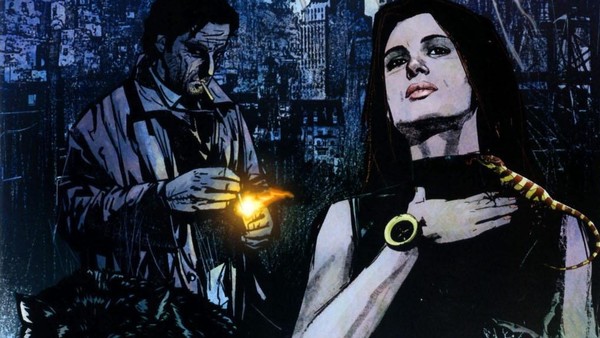
Those not familiar with Vertigo may recognise Fables from Tell Tale Games' The Wolf Among Us, a point-and-click adventure game situated with the world of Bill Willingham's comic. That game actually serves as a great entry point into the series, and it's no doubt where the comic's resurgent popularity stemmed from at the start of the decade.
Commencing in 2002 before concluding for good in 2015, Fables took all those familiar characters from myth, legend and the fairy-tales of yore and placed them all in one setting. It's a testament to the value of the public domain, as Willingham was able to spearhead a series replete with mystery, noir-ish undertones and mature themes whilst utilising characters who, today, are more synonymous with Disney than with the Brothers Grimm.
Taking place in Fabletown, a secretive New York borough populated by the fairytale diaspora, Fables reimagines dozens of classic literary figures and finds success with one character in particular in Bigby Wolf, the town's sheriff.
Bigby's a proper hardboiled archetype, but one with enough complexity to anchor the comic and keep things suitably ambiguous.
6. Seconds

Bryan Lee O'Malley is most famous for writing and drawing the Scott Pilgrim books, which have since been colourised and adapted in Edgar Wright's cult classic film, Scott Pilgrim vs the World. Still, O'Malley is more than just Scott Pilgrim, and there are two other comics of his that tend to get overlooked - Lost at Sea, and Seconds.
Scott Pilgrim is a wonderful series replete with nerdstalgia and enough coming-of-age romance to cement as a brilliant series, but O'Malley's other work has the benefit of being self-contained. Both Lost at Sea and Seconds are one-and-done graphic novels that delve into some really powerful themes and topics, including depression, anxiety, and - at least in the latter's case - learning how to live with one's own mistakes.
Everyone wishes they had perfection, or at least the ability to change what they no longer can, but it isn't possible. Seconds' protagonist Katie learns this the hard way, as a magical chance to change her past quickly spirals into a never-ending search for perfection. And perfection, as most will know, is rarely ever attainable.
It's an incredible story, and while Scott Pilgrim obviously boasts a greater legacy, there's no underestimating just how good Seconds is.
5. Sin City
Frank Miller is one of the most important creators in the comics medium. He was a major influence in drastically changing the superhero genre in the eighties and nineties, first on Daredevil and then with Batman on books like The Dark Knight Returns and Year One. Throw in a beloved run on Wolverine alongside X-Men legend Chris Claremont, and you're left with one of the most impressive bibliographies to ever grace the industry... well, ever.
(On a related note, isn't it weird how Frank Miller stopped writing after 1998? Dead weird really. Oh well.)
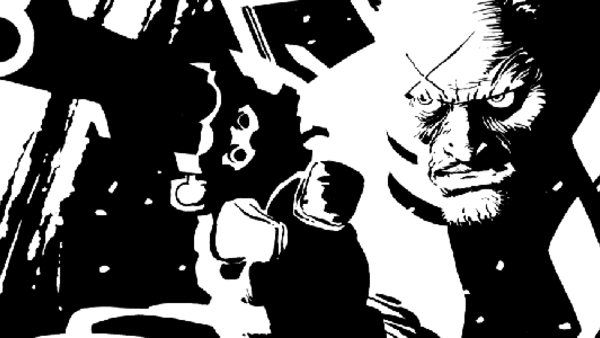
After helming those aforementioned comics, as well as a return to Daredevil in 1991 with The Man Without Fear, Miller took on a different task. Film noir was a key influence on the writer and he decided to delve right into the genre with Sin City, a now famous series that combined the genre's best tropes under a unique setting.
Utilising a monochromatic pallet interspersed with brief, violent bursts of colour, Miller found a gripping aesthetic for Sin City, and one that proved popular enough to inspire a feature film in 2005. (Again, isn't it kind of weird they never did a sequel given there were so many other stories to adapt? You would've thought there would've definitely been another.)
4. The Wicked + The Divine
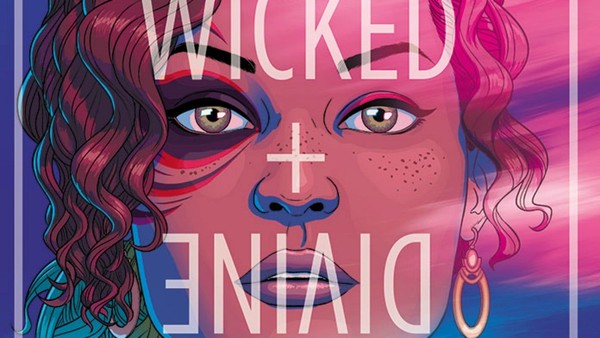
One of the best comics of the last decade, Kieron Gillen and Jamie McKelvie's The Wicked + The Divine surprised readers everywhere with its bright and inventive new take on the old pantheons of myth and legend. There was a hefty dose of violence and tragedy thrown in for good measure, but even as series mainstays departed and the stakes grew ever dearer (and emotionally fraught), readers couldn't wrest WicDiv from their vision.
Those familiar with Gillen and McKelvie will know that they make a formidable duo, and WicDiv arguably sees the pair at the peak of their powers. Throw in colourist Matt Wilson, whose work on WicDiv and an array of Marvel books has cemented him as one of the best in the industry, and you're left with one of the most enjoyable and distinct books to have been released over the last ten years.
The Wicked + The Divine came to a close last year, but the fact it had a definitive ending only works to its benefit. There's a tangible conclusion, and in a medium where that sort of thing has grown increasingly elusive, that's not something to take for granted.
3. Green River Killer: A True Detective Story
True crime as a genre is generally quite perilous. There are dozens of tacky accounts out there that can sometimes mythologise serial killers and ignore the victims, but there is good work out there. The late Michelle McNamara's I'll Be Gone in the Dark: One Woman's Obsessive Search for the Golden State Killer, is frankly incredible, and succeeds in part because it spotlights the human cost of that particular killer's rampage; on those he killed, the families he terrorised, the detectives whose lives he consumed, and the will it takes to never give up the search for truth, justice and closure even decades after a case goes cold.
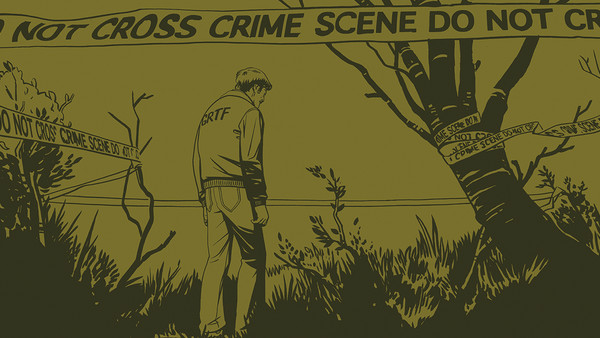
In a similar vein, Jeff Jensen and Jonathan Case's Green River Killer: A True Detective Story also stands out as a story about the human cost of confronting real, human evil. Centred around the investigation into the Green River Killer, a murderer who terrorised Washington for close to two decades, and from the perspective of one cop who studied the case for most of his adult life, Jensen and Case's comic is truly spectacular - not least because of the author's personal connection to the case.
That connection? Jensen's father Tom is the book's protagonist, and was one of only few detectives who cracked the case and discovered that Gary Ridgway was the man responsible for upwards of 49 murders and disappearances in the Washington area.
Semi-biographical and unwavering its approach, A True Detective Story offers a fascinating and gut-wrenching look into the Green River Killer's crimes, and the inspiring story of the detectives who refused to let the case die.
2. Richard Stark's Parker
The late Darwyn Cooke is synonymous with DC Comics and not without reason. Before his untimely passing in 2016, Cooke did so much with that respective publisher; he redesigned Catwoman to give her a signature look, presided over a series of great Batman stories in books like Ego and on Black and White, and then there was of course his magnum opus, DC: The New Frontier, on top of stuff like Solo and Jonah Hex.
Put simply, Cooke was one of the true greats of the industry. And someone who is dearly missed by all.
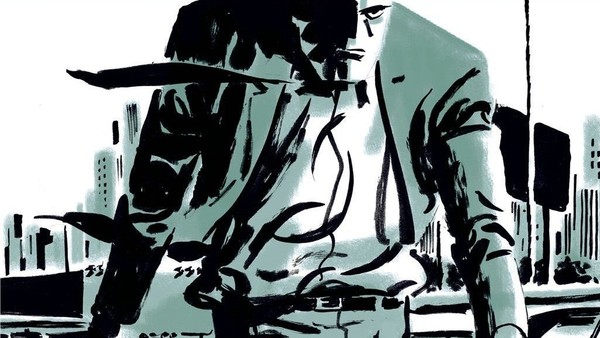
For all that Cooke's contributions to DC were special though, one gets the feeling that one of his passion projects, an adaptation of Donald Westlake's Parker novels, which he wrote under the pseudonym of Richard Stark, has gone slightly overlooked in recent years. They were critically well received, but Parker still deserves more attention, because it's frankly excellent.
Cooke wrote and drew four volumes of Parker, and they're all superb. His linework and inks capture the atmosphere of the novels perfectly, with the sixties setting not only enabling Cooke to flex his passion for the era's style, but also for film noir.
1. Maus
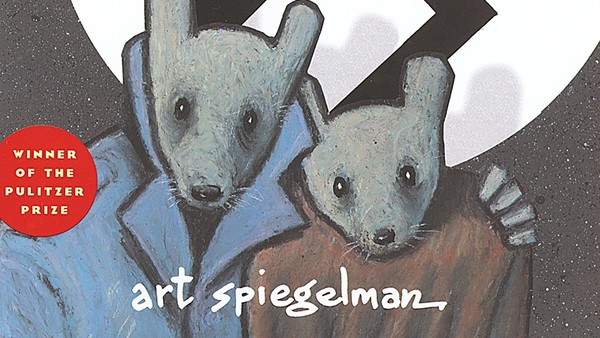
Maus is essential reading. Not just for seasoned or even burgeoning comics readers, but for readers in general. It possesses a salience no other comic can really equal, and that's largely down to its subject matter, with Art Spiegelman's book offering an anthropomorphised retelling of his father's experiences during the Holocaust.
Spiegelman's work is a classic, and a testament to the power of the comics medium to relay real-world subject matter in a way no other medium can. It's why it's so revered, as it was instrumental in terms of reiterating the importance and indeed uniqueness of comics as a storytelling tool, sparking great interest from academic circles and literary scholars across Europe and elsewhere.
There are hundreds of accounts about the Holocaust that should be considered essential reading. One would argue that now, in our current political climate, that these stories and accounts have taken on another, more urgent kind of salience. Spiegelman's account in particular stands out as one that should and must be seen, both because it's an impressive work of art, and because it tells a vital story in a way only a comic book could.