10 Best Comic Storylines Featuring The Amazing Spider-Man 2 Villains

Must read Spider-Man comics for those who want to know more...

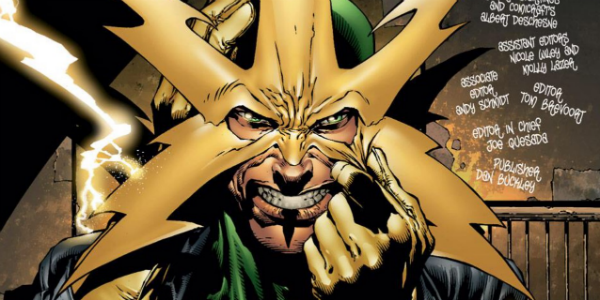
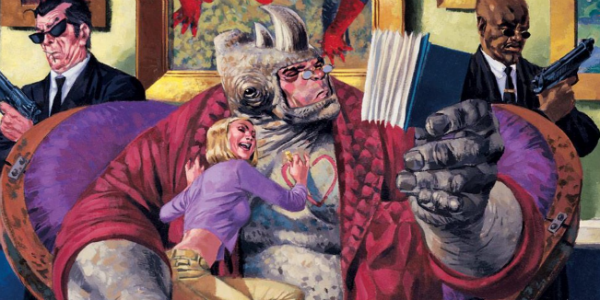
Sony€™s The Amazing Spider-Man 2 has been heavily marketed around its three villains: Electro, Rhino and Harry Osborn/Green Goblin. And while a case could be made that the film is bogged down with too many bad guys, all three characters have starred in some memorable storylines from the comics that are worth checking out. Electro, aka, Max Dillon, first appeared in Amazing Spider-Man #9 during the Stan Lee/Steve Ditko Silver Age era. His ability to harness electricity has led to a number of entertaining one-on-one confrontations with Spider-Man over the years. Electro is also a core member of the anti-Spidey supervillain stable, the Sinister Six. Rhino, aka Aleksei Sytsevich, was one of the very first villains created by iconic Spider-Man artist John Romita Sr., debuting in Amazing Spider-Man #41 in 1966. Often portrayed as brutish and dull, Rhino has also spent a portion of his career antagonizing the Hulk in his comic book series. Harry Osborn is the son of Spider-Man€™s arch nemesis, Norman Osborn, aka, the Green Goblin. As Peter Parker€™s best friend and college roommate, Harry€™s eventual turn as the Goblin in Amazing Spider-Man #136 is considered one of the most emotionally devastating and conflicting moments for Peter in the character€™s history. As such, the two have been involved in some of the greatest storylines in Spider-Man history. So, if you€™ve just seen The Amazing Spider-Man 2 and want to find out some more about these three characters from the comic book side of things, or you€™re looking for some key reading material before checking out the film, these 10 entries are an excellent place to start.

10. Electro€™s First Appearance (Amazing Spider-Man #9)
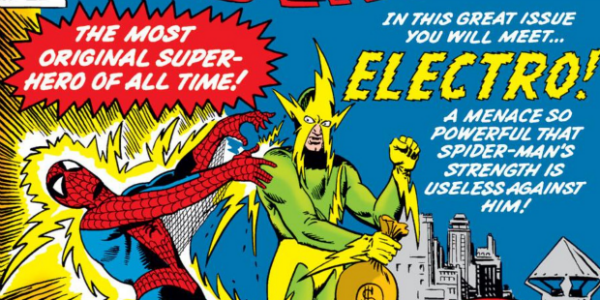
The €œMarvel of Age of Comics€ was notorious for its complex characters with provocative origin stories like the Hulk, the Thing, Doctor Doom and Doctor Octopus. But in the case of Max Dillon, aka, Electro, Stan Lee and Steve Ditko kept things incredibly simple. Dillon is described as a unlikeable lineman who acquires his electrical powers after getting hit by a bolt of lightening while working on a high-tension pole. Since Dillon is such a jerk to begin within, he decides to use his extraordinary power to rob banks and be a petty crook. By keeping Dillon€™s motivations so simple, Lee and Ditko were able to incorporate a number of other fun touches, making Amazing Spider-Man #9 such a memorable story. There is Electro€™s garish yellow and green costume, complete with a five-pronged lighting bolt headpiece. There is the silly subplot of Daily Bugle editor J. Jonah Jameson accusing Spidey of being Electro as part of his crusade against the Wall Crawler. Then there is the final fight sequence, which shows Spider-Man using his noggin (and science), and defeating Electro through the use of rubber gloves. Electro€™s first appearance is a great demonstration that iconic villains can be created without overwrought, melodramatic writing. Sometimes, an obnoxious guy in a ridiculous costume works just fine.

9. Rhino Plastered (Incredible Hulk #378)
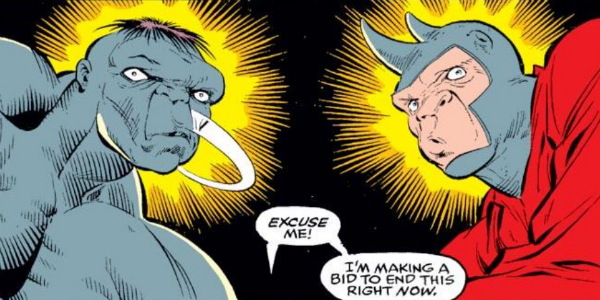
The first of a few Rhino stories on this list that demonstrate the character€™s desire to be more than just another dumb supervillain, €œRhino Plastered€ is an uproarious, Christmas-themed comic during Peter David€™s famed run on Incredible Hulk. As the direct follow-up to one of the most famous Hulk stories of all-time (€œHoney, I Shrunk the Hulk€), David dials the humor up to 11 and the levity down to zero when the Hulk and Rhino face off in a mall around Christmas-time. Even in a script that€™s stuffed with rapid-fire jokes, David manages to add some complexity to Rhino€™s character. Rhino unquestionably looks ridiculous dressed up as Santa, but when he reveals how good he feels when the kids react positively to him, the reader sympathizes with the character. The story gives credence to the idea that all great comedy is derived from tragedy.

8. Breakout (New Avengers #1-6)

There€™s something mildly amusing about the fact that career B-list villain Electro was the impetus for one of the most provocative superteam reboots in Marvel history. After the Avengers had been €œdisassembled€ in the mid-2000s, Brian Michael Bendis and David Finch launched the New Avengers, bringing new blood to €œEarth€™s Mightiest Heroes,€ including Spider-Man and Wolverine. In the book€™s inaugural arc, €œBreakout,€ Electro is hired by a Skrull to break Sauron out of the Raft super-prison. In the process, a huge riot breaks out at the Raft and a number of deadly supervillains escape. Electro€™s glory as an alpha villain is short-lived. As he tries to skip town, the Avengers catch up with him, looking for some answers about what happened at the Raft. When Luke Cage threatens to get physical, Electro passes out in fright. Not the greatest character moment for the villain, but an unexpected opportunity to be a part of comic book history.

7. Rebirth Of Electro (Amazing Spider-Man #422-425)
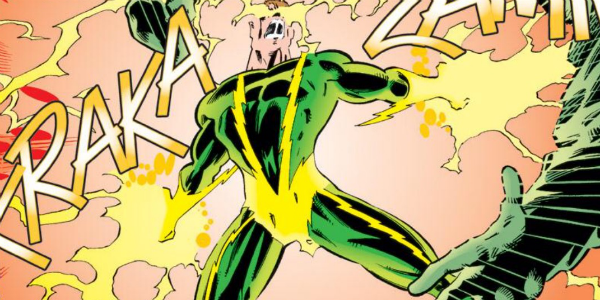
Despite having a potentially potent power-set, Electro had long been portrayed by various creative teams as being a bit of lightweight. His one-on-one battles with Spider-Man were often resolved within the span of a single issue, and the bulk of his heavy-lifting as a supervillain came as part of a team like the Sinister Six. That changes in the €œRebirth of Electro€ storyline. Writer Tom DeFalco gives Max Dillon a second chance at the criminal life when his powers are restored (and upgraded) by the underworld boss, The Rose. Dillon becomes so powerful in this arc, he easily defeats Spidey in Amazing Spider-Man #423, making the Wall Crawler uncharacteristically beg for mercy. In the aftermath of his defeat, Spider-Man goes back to the drawing board against Electro. While Spidey had frequently used his scientific knowledge to conquer the villain the past, this time around he develops an entire suit made of insulated material, allowing Spider-Man to take the fight directly to Electro. Fans who like seeing a lifelong loser win every once in a while, will probably get a kick out of €œRebirth of Electro.€

6. Power To The People (Amazing Spider-Man #612-614)
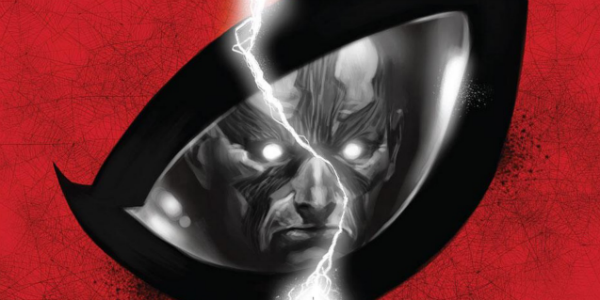
While fans of The Dark Knight Rises film would better associate Bane as the comic book world's voice of the anti "one percent" movement, Mark Waid and Paul Azaceta beat the Nolan-verse to the punch about two years earlier with the Occupy Wall Street-inspired €œPower to the People€ arc in Amazing Spider-Man. Going back to his very first appearance, Electro had been portrayed as a blue collar villain €“ a guy who wanted to use his exciting new powers not to take over the world, but to line his own pockets by robbing some banks. This time around, Electro clumsily leads a movement that is opposed to the unequal distribution of with the goal of stealing from the rich and giving to himself. This premise provides readers with a storyline that€™s dripping with sarcasm and satire (courtesy of Waid€™s self-aware script), while also managing to stay somewhat true to Electro€™s roots.

5. The Return Of The Green Goblin (Amazing Spider-Man #136-137)
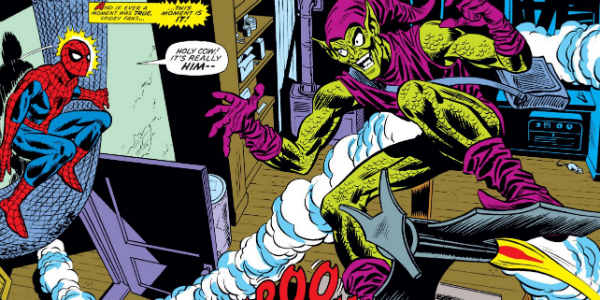
After the death of the original Green Goblin, Norman Osborn, writer Gerry Conway and artist Ross Andru waited about a year before unleashing a new level of emotional torture for Spider-Man. Harry Osborn, Norman€™s son and Peter€™s best friend, discovers his roommate's Spider-Man costume in a drawer. This sends Harry completely over the edge (who was already emotionally spiraling down the drain after the death of his father) and he dons the green and purple costume to become the second Green Goblin. Harry is physically no match for Spider-Man, but the action is immaterial to this story. Watching Peter struggle to accept the fate of his friend is truly heartbreaking. Demonstrating just how hurt he is by Osborn's transformation, Spidey refuses to address his adversary as the "Goblin," instead, only calling him "Harry." And when the arc ends with Harry being carted off by police for his irrational behavior, it€™s hard not to empathize with Peter, who naturally blames himself for his buddy's downfall.

4. The Sin Eater Returns (Spectacular Spider-Man #134-136)
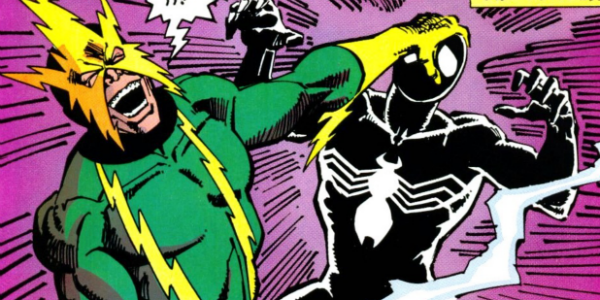
In this riveting follow-up to Peter David€™s all-time classic €œThe Death of Jean DeWolff€ storyline in Spectacular Spider-Man, Stan Carter, aka the Sin Eater (and DeWolff€™s murderer), is released from prison on parole. When Spider-Man confronts Carter, he finds a broken man who is badly injured from the beating Spidey gave him during the Jean DeWolff arc. As a result, Spidey is overwhelmed with guilt and is afraid to use his full strength on other villains. Enter Electro, who is as conniving and opportunistic as ever. Electro is able to €œdefeat€ the guilt-ridden Spider-Man, who can€™t even throw a proper punch without thinking of Carter. High on success, Electro takes over a major New York City generator, demanding $10 million in exchange for restoring the city€™s power. Meanwhile, Spider-Man continues to blame himself for Carter€™s condition, but is urged by Stan to exorcise his demons and confront Electro. During the riveting showdown, Spider-Man absorbs a ton of punishment from Electro. But Electro gets cocky and Spidey uses the opening to hit the villain with a right cross, knocking him out. Carter, on the other hand, has a tragic end. Knowing that his days are numbered, he holds a young boy hostage with what turns out to be a toy gun. He is killed in a hail of police fire while Spider-Man is fighting Electro.

3. Rage Of The Rhino (Amazing Spider-Man #617, 625)

In two separate but connected issues of Amazing Spider-Man, writer Joe Kelley manages to make Aleksei Sytsevich, aka, the Rhino, into a tragic figure of Shakespearean levels. Kelly€™s story depicts Sytsevich€™s life after he€™s been released from prison and goes €œstraight.€ He€™s married to a woman named Oksana, is blissfully happy, and has no desire to ever don the Rhino suit again. But when a second Rhino appears and challenges Sytsevich to a showdown, the former villain is conflicted. Spider-Man convinces Sytsevich to keep on the straight and narrow and to avoid the confrontation. Sytsevich agrees that he's done with being a criminal. Unfortunately, his hesistation leads to tragedy. Oksana is kidnapped and killed by the new Rhino and Sytsevich realizes that he was never a good enough person to live a €œnormal€ life. He returns to being the Rhino and vows to live a life of a supervillain once more. Sytsevich€™s downfall and return to evil is a totally gut-wrenching moment for Spider-Man. It€™s stunning to think that a villain that had been long portrayed as a punchline could suddenly be crafted with such depth and intelligence the way Kelly does in these two issues.

2. Flowers For Rhino (Spider-Man€™s Tangled Web #5-6)

Joe Kelly€™s character makeover for Rhino (see entry No. 3) is only outdone by this two part Peter Milligan/Duncan Fegredo storyline that appeared in the short-lived Spider-Man€™s Tangled Web series in 2001. €œFlowers for Rhino€ thematically echoes the classic science fiction story, Flowers for Algernon, depicting what happens when a brutish, dimwitted villain like Rhino suddenly becomes stunningly brilliant. What makes €œFlowers for Rhino€ so effective is how it simultaneously plays for laughs and drama. Rhino, as one of the world€™s smartest men, is a ridiculous premise, and Milligan crafts a number of uproarious scenarios, such as the villain rewriting Hamlet and creating a formulate that can deduce the secret identities of the entire Marvel Universe. But the character eventually finds himself bored by his brilliance, and even contemplates suicide before getting a surgery to return him to his oafish former self. The end result is a storyline that isn€™t as emotionally tumultuous as Kelly€™s two-parter in Amazing Spider-Man, but is ultimately more cerebral and tightly plotted.

1. The Child Within/Harry Osborn Saga (Spectacular Spider-Man ##178-184, 189-190, 200)
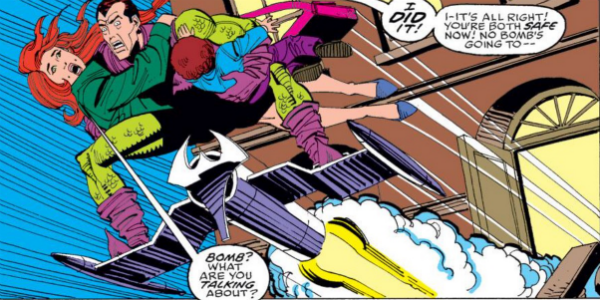
When Harry Osborn assumed the identity of Spider-Man€™s sworn enemy, the Green Goblin, in the 1970s, part of what made this plot development so tumultuous for Spidey was the fact that Peter Parker and Harry were €œbest friends.€ That phrase had been dropped so many times in the Stan Lee-era, it became canon, despite the fact that readers were never given a storyline that added any real weight to the alleged bond Peter and Harry shared. €œThe Child Within,€ which is joined at the hip with the subsequent €œDeath of Harry Osborn€ storyline in Spectacular Spider-Man, is a true masterpiece because it illuminates the actual stakes in the Peter/Spidey and Harry/Goblin dynamic. Writer J.M. DeMatteis and artist Sal Buscema pull out all the stops, and deliver an emotionally poignant and devastating arc, rich with provocative character moments. DeMatteis takes the €œPeter and Harry are best friends,€ trope and gives it actual substance. In €œThe Child Within,€ JMD looks at the broken families Peter and Harry came from (Peter was orphaned as a young child and Harry€™s mother died years ago and he was raised by his sociopathic father, Norman) and how these traumas went on to shape and link these two characters. Harry resigns himself to repeat the mistakes of his father and emotionally abuses his son Normie, while Peter is wrought with guilt when Harry becomes the Green Goblin again because it€™s another loved one who is lost because of the existence of Spider-Man. Things reach such a fever pitch in Spectacular Spider-Man #200 €“ Harry obsessively stalks Peter, threatening to kill him or reveal his identity to the public €“ it€™s inevitable that one of these two characters will die by issue€™s end. This being a Spider-Man comic, Harry bites the dust, but not before a moment of beautiful redemption for the character. Buscema, meanwhile, delivers one of the best illustrated Spider-Man stories of all time. Considering this was published concurrently when some of the industry€™s brightest superstars in Todd McFarlane and Erik Larsen were penciling Spider-Man, Buscema shows these neophytes how it€™s done, with richly plotted pages oozing with emotional resonance. Every smirk or grimace on these characters faces lands a heavy blow, which elevates JMD€™s writing.

Contributor
Contributor

Mark is a professional writer living in Brooklyn and is the founder of the Chasing Amazing Blog, which documents his quest to collect every issue of Amazing Spider-Man, and the Superior Spider-Talk podcast. He also pens the "Gimmick or Good?" column at Comics Should Be Good blog.