10 Legendary Comic Book Runs You Must Read Before You Die
The X-Men really are the best, aren't they?

A comic book run is a series of books created by a set team, usually centered around a writer and one or more artists. Instead of being a simple pairing of creative geniuses working on a short series or limited run, these usually consist of dozens of books consisting of multiple stories.
Getting the right team together is not an easy task, but if you look back through the more than 80 years of published comic book history, every now and again, a couple of creators got together to make something truly amazing.
Instead of focusing on single storylines, even those that are told across numerous books, the comic book runs found here deal with the creative works of people who cover significant periods of time.
Thanks to many of these creators, the world has been gifted with some of the best entertainment the medium has to offer. The works of these stunning creators has gone on to influence the worlds of television, gaming, and film, but it all started on the page of comic books. There are plenty of amazing comic book runs to cover, but these are arguably the best of them all.
10. Geoff Johns' Green Lantern

Back in the 1990s, Hal Jordan went a little funny in the head after his hometown was wiped off the face of the planet. He went on a rampage and destroyed the Green Lantern Corps, but eventually went on to become the new Spectre, thanks to DC writer Geoff Johns.
Fast-forward a few years and Johns was asked to return to the title and put things back to normal, which he did. Johns took the concept of Parallax and twisted it around to create an independent entity that had possessed Jordan and turned him evil.
With that modification, Jordan returned to his role and the Green Lantern series was reborn. His continued work on the series led to the development of an entire spectrum of emotion, each with their own Corps. This, in turn, led to several major events that involved the entire DC Universe for years.
Johns continued to work on the series for a few years and even introduced a new Arab-American member of the Corps named, Simon Baz.
Green Lantern: Rebirth #1-6, Green Lantern #1-67, Blackest Night #1-8, and Green Lantern (New 52) #1-20
9. Stan Lee & Jack Kirby's Fantastic Four

When you are talking about an amazing run, you need look no further than the work Stan Lee did with Jack Kirby on the Fantastic Four.
This was one of those runs that could only be described as "genre defining" thanks to the way it helped solidify Marvel as a superhero publisher in the sixties and changed the way comics were made.
This run not only introduced the core characters of the Fantastic Four, it also brought some of the most important characters ever created in the Marvel Universe.
Doctor Doom, the Silver, Surfer, Galactus, Black Panther, the Inhumans, and many more were conceived solely for this book, but continue across the Marvel Universe as major players. The work these two giants of the industry put into this run could be studied in university courses simply for the impact they had on comics, superheroes in general, and pop culture across the planet.
Fantastic Four #1-102 and Fantastic Four Annual #1-6
8. Grant Morrison's Batman

Since his introduction back in 1939, Batman has been written and illustrated by some of the industry's greatest creators. People like Frank Miller and Scott Snyder have certainly had an impact, but one of the best writers for the Dark Knight is easily Grant Morrison.
Morrison's run on Barman covered a number of the Caped Crusader's books with a single overarching theme that everything that came before actually happened to Batman. That means that anything seen previously out of continuity was suddenly thrown into it with all the repercussions and craziness it involved.
Morrison tested Batman's sanity in Batman R.I.P. and truly tested him some more with some of the most riveting storytelling to ever hit a Batman book with Batman Reborn.
The work Morrison did on Batman changed the way the Dark Knight was presented and they had a lasting impact on the DC Universe for it. While working on the book, Morrison had the help of several talented artists including Frank Quitely, Tony Daniel, Andy Kubert, Yanick Paquette, and Chris Burnham.
Batman #655-658, 663-683, 700-702, Batman and Robin #1-16, Batman: The Return of Bruce Wayne #1-6, Batman Inc. (Vol. 1) #1-8, Batman Incorporated #1-12, Leviathan, Batman: The Return, and, Batman Incorporated" #0
7. Stan Lee & Steve Ditko's Spider-Man

The comics put together by Stan Lee and Steve Ditko are another example of a work that is "genre describing." These two gentlemen gave the world Spider-Man with his introduction in Amazing Fantasy #15 and they continued to work together for another 40 issues.
Unfortunately, they began to butt heads and when their work on Spider-Man came to an end, so did their work together entirely. Ditko split from Marvel in 1966 and went to work for rival company DC Comics, but his work with Marvel was certainly significant.
Spider-Man has gone on to become one of the most recognizable fictional characters on the planet and it's all thanks to the work of Lee and Ditko.
In their run, they introduced a number of characters who would continue to play an important role in our Friendly Neighborhood Spider-Man's life for decades to come. Characters that made their debut include the Wrecking Crew, Green Goblin, Kraven, Doctor Octopus, and many more. Most Spider-Man stories written since Ditko and Lee worked on the book were built off of their accomplishments, which is why this is easily the best Spider-Man collaboration and run in the book's history.
Amazing Fantasy #15, Amazing Spider-Man #1-38, and two Annuals
6. Ed Brubaker's Captain America

When a new creator takes over an established title for the first time, it's important to start off with a bang. Ed Brubaker opted to kill off the Red Skull, one of Captain America's oldest and most well-known enemies.
Another important impact Brubaker had on the world was the resurrection of a character known as James "Bucky" Barnes, Cap's sidekick from World War II who perished years before. As the MCU has revealed, which is somewhat close to the books Brubaker wrote, Bucky was saved by the Soviets and turned into the Winter Soldier.
Much of Brubaker's work on the series involved dealing with the Winter Soldier and Cap's insistence on returning him to the side of good, which may sound familiar to anyone who is up to date on the MCU's films.
Notably, Brubaker's work on the title involved amazing artwork illustrated by Steve Epting, Mike Perkins, Bryan Hitch, and several others. Brubaker's more intense violence was picked up by these artists beautifully, which made for a far more realistic interpretation of Captain America than had been previously published by Marvel.
Captain America (Vol.5) #1-50, Captain America: Reborn, #1-6, Captain America #600-619, and Captain America (Vol.6) #1-19
5. Denny O'Neil & Neal Adams' Batman

Denny O'Neil and Neal Adams worked together on both Batman and Detective Comics throughout the 1970s, though their run isn't consecutive. What their run did, however, was to remake the Dark Knight from the ground up, returning him to the darker elements of the Golden Age and divesting from Silver Age silliness in the process.
While the TV series was a great approximation of the comics it was based off of, the creators wanted to bring him into a darker persona... someone criminals would truly fear and not simply joke about like they did opposite Adam West and Burt Ward.
What O'Neil and Adams created was an edgier, darker Batman who Grant Morrison referred to as the "Hairy chested love god" version of Batman he built off of when he took over the book decades later.
Their work on Batman helped to redefine one of the most important characters DC Comics has ever produced and their impact can be seen in just about every subsequent representation. They introduced Ra's al Ghul and created nuances to the characters that could be seen in films like the Dark Knight Trilogy, video games like the Arkham trilogy, and many other places.
Detective Comics #395, 397, 400, 402, 404, 407-408, 410 and Batman #232, 234, 237, 243-245, 251, 255
4. Frank Miller & Klaus Janson's Daredevil

Frank Miller has contributed some amazing work to the world of comics thanks to titles including Sin City, Batman: Year One, The Dark Knight Returns, and many more. One of his most important contributions was made in the form of a Daredevil Run alongside Klaus Janson.
For these books, Miller provided most of the words and art with Janson inking and working as a co-artist on various issues. While the art is certainly noteworthy and this run sports some of the best covers ever illustrated for the Man Without Fear, the stories were what made these books special.
As soon as Miller took over the book, he introduced a character anyone with a passing knowledge of Daredevil knows - Elektra. Matt Murdock's college sweetheart-turned assasin was an instant success and she would go on to have a major lasting impact on Daredevil's story to this day.
Their time on the book also brought the Kingpin in as one of his major enemies (he was previously mostly a Spider-Man villain) and even had Bullseye kill off Miller's creation, Elektra. Her death shook Matt to his very core and the final book in the run features a dark storyline where Murdock even considers suicide. It's dark, it's edgy, but uniquely brilliant all the same.
Daredevil #158-161, 163-191
3. Alan Moore's Swamp Thing
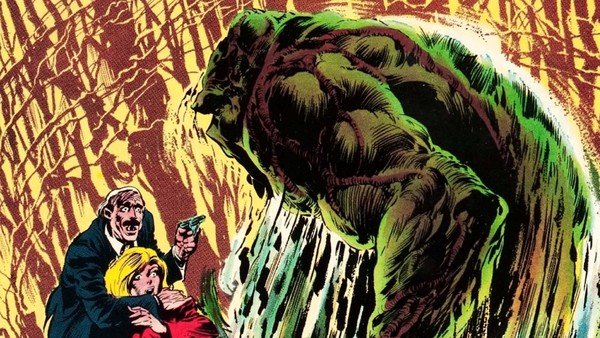
Alan Moore is well known around the world for his work on Watchmen, but he has been contributing his words to comics for decades with some of the most important stories told found in the pages of Swamp Thing.
For anyone who isn't familiar with his work on the books back in the 1980s, those are issues anyone who enjoys DC Comics has to read at some point in their lives. When he took over the book, he spent an issue tying up the plotlines from the previous creator and then let loose in his second issue, redefining the character in the process.
In his second issue, "Anatomy Lesson," Moore completely changed Swamp Thing's origin story such that he wasn't Alec Holland transformed by a chemical explosion, but rather, he was an amalgamation of animated sentient plantlife who thought he was Holland. It was incredibly meta and changed the way Swamp Thing was presented from that point forward.
While working on the book, Moore was aided with the incredibly artistic style of Stephen R. Bissette who illustrated the books and John Totleben who inked them. Moore's biggest impact was the development of DC's Vertigo imprint, which spun out of his work to help launch titles like Sandman and many more.
Saga of the Swamp Thing, Swamp Thing #20-58, 60-61, 63-64, and Annual 2
2. Neil Gaiman's Sandman
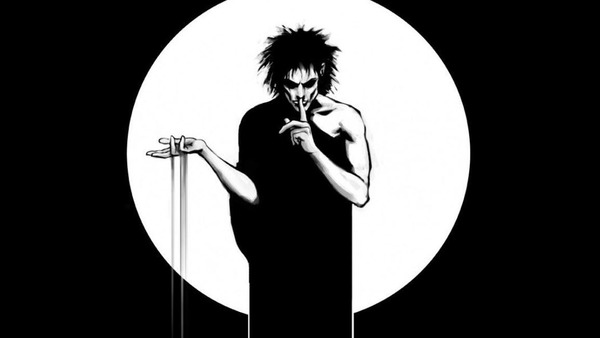
While many people know of Neil Gaiman as a novelist and children's book author, he is no stranger to the world of comics. Gaiman's work on Sandman through its entire run of 75 issues is easily one of the greatest literary works in the medium.
In many ways, Gaiman helped to solidify the Vertigo imprint as a meaningful brand. His work on Sandman introduced major players into the DC Universe via the imprint including Lucifer, The Endless, the Books of Magic, Fables, and many more.
The stories within Sandman revolved around the titular character who was Dream of the Endless: the personification of the aspect of dreaming. His world, the Dreaming, was populated with nightmares, dreams, and concepts that made the reader think about their very understanding of reality. Depictions of heaven, hell, and everything in-between stunned readers alongside elements of Shakespearean literature, Greek mythology, and many more literary elements previously missing from the medium of comic books. Neil Gaiman changed all that with his amazing words.
While working on Sandman, Gaiman was able to work with numerous artists, but was able to have each cover designed by Dave McKean whose work helped to define the visual elements of the series.
The Sandman #1-75
1. John Byrne & Chris Claremont's X-Men
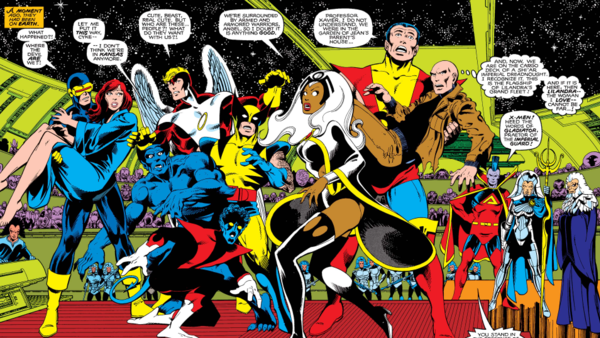
Like every character on this list, the X-Men have been written and penciled by some of the best creators in the business. There are dozens of popular runs to choose from, but the best X-Men run of them all came when John Byrne took over the books with issue #108.
These books took the X-Men through a lot of changes with new characters introduced including the lovely Kitty Pryde. They made it seem as if the X-Men were dead, which led Jean Grey to go off and eventually become the Phoenix.
The Dark Phoenix Saga was the ultimate X-Men storyline and one of the ones the team is best known for. It has been brought to film and animation a number of times, but it never would have come to pass were it not for the work of John Byrne and Chris Claremont.
Granted, that wasn't their only significant storyline to make it into the annals of pop culture history, they also came up with the Days of Future Past storyline. This was one of the most important of them all as it introduced characters and concepts that would remain a part of X-Men lore and Marvel Mutant canon forever after.
X-Men, Uncanny X-Men #108-109, 111-143