10 Stupid Attempts At Rebranding Famous Comic Characters

Because whoever thought turning Speedball into Penance frankly deserves the sack.
As with all commercial arts, superhero comic books have always been reflective of the zeitgeist. During the Great Depression of the 30's, Superman arose to protect and inspire the disadvantaged lower classes. During the 70's, the Punisher combatted the country's growing fear of urban crime. These men were heroes for their respective generations. This leads to a dilemma when dealing with older characters; how can Superman be relevant in the world of the Punisher? There's a risk that these cherished properties could lose the public's interest if they don't adapt to a changing culture. The common solution is to make old heroes "hip". In theory, if a creator simply looks to modern culture, he or she can easily find elements to make a hero relevant. In actuality, the new coats of paint given to old standbys are often more garish than gorgeous. While fans desire cultural relevancy, classic characters are so sacred that attempts at 'coolness' are often more offensive than just leaving them be. Unfortunately, the big two comic publishers €“ Marvel and DC €“ don't seem to get that idea, which leads them to attempt rebranding their trademark characters with new outfits, powers, and personalities with little success.

10. Electric Blue Superman

Poor Superman. He pretty much started the business of superheroes, yet he's often considered boring. Writers have tried shaking up the character for years, with efforts including becoming a news anchor and growing a 90's Seinfeld mullet. One of the oddest attempts to revamp the character occurred in 1997 when Superman temporarily lost his solar powers and had them replaced with electric powers. Accordingly, his laser vision was replaced with electric bursts and he could actually 'turn off' his abilities. To start, Superman's biology is solar-based, so he shouldn't be able to 'lose' his powers unless he went through lots of gene therapy. More importantly, turning Superman's electrical powers made him a different character. His powers are so iconic that almost every homage and parody of the character requires the exact same abilities. You can't just swap out his powers like a car engine. The damage to his iconic nature wasn't just in the new abilities either; his powers came with a blue containment suit that allowed him to control them. This led to many fans to call him 'Electric Blue Superman.' Fortunately, this version of Supes had little magnetism with readers.

9. De-Powered Martial Arts Wonder Woman
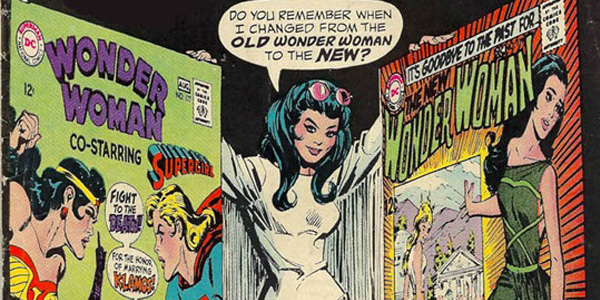
Wonder Woman has had a pretty dodgy fanbase. She was a character made primarily for guys but was adopted by feminists because she's a woman. This meant that the character has struggled to simultaneously appeal to horny nerds and hardcore feminists. This lead to the character being reinvented over and over, just one of which being the recent 'she's got pants!' fiasco. The most infamous example of this was Denny O'Neil's run on the series in the 70's. With super-spies and karate all the rage, O'Neil had Wonder Woman renounce her divinity in order to become closer to mortals. And by that I mean learn karate from a guy called I-Ching and go on covert missions in a Bruce Lee jumpsuit. Never mind the fact that as an Amazon warrior, Wonder Woman shouldn't need a self-defence class. These stories weren't bad €“ the series had beautiful art by Neal Adams and the plots were serviceable. The problem was that they weren't Wonder Woman stories. Most female fans objected due to her loss of superpowers, feeling that she was rendered impotent. It didn't help that had to be instructed by a man, despite being intended by her very creator as an instructor to men herself. Speaking of men, what were their objections to this change? Not enough cleavage. Classy.

8. Teenage Iron Man

A recurring form of executive meddling is insisting superheroes have 'kid appeal'. This goes back to Batman in 1940: Robin was introduced so children could have someone to relate to in the franchise. Stan Lee took this further by making Spider-Man a teenager, which then set the stage for several other teen heroes. So it's no surprise that when Marvel tried to revamp Iron Man, some genius decided to make him a teenager as well. To make things short: in the series The Crossing, Old Tony was mind-controlled to be evil so the Avengers went to the past to get Teen Tony to beat him. Old Tony eventually sacrifices himself, and then Teen Tony then became Teen Iron Man. Given that fans already hated The Crossing for making Iron Man look like a douche and then killing him, Teen Tony's introduction wasn't looked on fondly. One has to wonder why Captain America, who spent the 60's crying about leading a ten-year-old to his death, would basically force a teenager to be a superhero. Not to mention the fridge logic of how the Avengers didn't rewrite their own history by removing their founder from his current timeline. Marvel rectified this in the Onslaught arc when the Avengers get transported to another Earth and Tony is replaced with Franklin Richards' conception of who he is. Baiscally, comics are dumb.

7. Speedball Becomes Penance

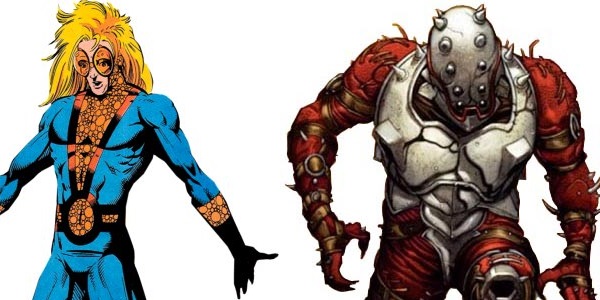
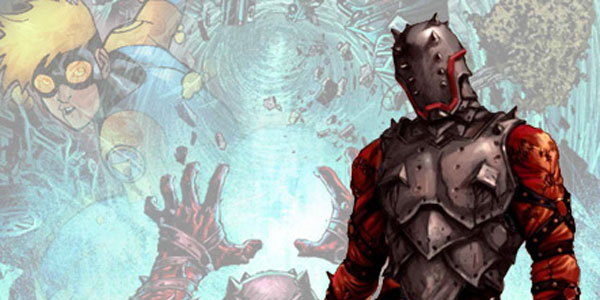
Robbie Baldwin aka Speedball's powers involve kinetic energy which take the form of bubbles. Baldwin is basically the SpongeBob of Marvel Comics €“ he went on to appear in The New Warriors and his own short-lived series. For some reason, writers grew to hate the kid and put him through humiliations such as being tortured and being called a "washed up second stringer" by a fellow hero. All of the New Warriors faded into obscurity until the crossover "Civil War", where Marvel editors did the team a solid by having them kick off the series by accidentally causing an explosion that destroyed an entire town. The lone survivor, Baldwin believed it was his fault, leading him to become Penance. Why the new name? His new outfit was lined with spikes that cut him as 'penance' for his actions. Conveniently, his powers became pain-fuelled. Needless to say, this was an extreme change. While Speedball should take death hard as a superhero, turning him into a 'cutter' is a bit much. Robbie was never portrayed as 'angsty.' Marvel being Marvel, I presume the goal was to give him the classic 'fatal flaw' common to the company. This might be too fatal in this case; the spiked outfit looks like he could kill someone with a mild hug. His macabre nature was exacerbated by self-destructive behavior: he habitually beat his head into walls after every failure. Which begs the question of how all this self-harm didn't actually kill him, but whatever.

6. Drug-Addicted, Arm-Missing Red Arrow

Since human superheroes thrive on tragedy, DC writers felt it necessary to pour on the trauma for America's least favourite sidekick: Speedy. During the Green Arrow/Green Lantern series, it turns out he was a heroin addict, which caused Green Arrow to beat him and then disown the poor kid. Later retcons made it so even the Titans thought he was a worthless druggie. Thankfully, he later distinguished himself by becoming a father and Green Arrow's replacement in the Justice League (as Red Arrow). But then DC editors said "Character development?! We'll see about that!" During the series Cry For Justice, the old Speedy luck came back as he lost his arm and his daughter on the same day. This was meant to kick off Red Arrow becoming a much darker hero, and boy did he! For plot convenience, his inability to get his arm healed forced him to get a cybernetic arm. His decreased archery abilities meant he had to resort to guns and throwing weapons to compensate. All of this took away what made the character unique. But the cherry on top of this poop sundae was him succumbing to a new addiction: the fictional drug 'China Cat.' This culminated in him taking on the moniker 'Arsenal' and becoming DC's go-to anti-hero. Sadly, I assume there's no connection to the Arsenal football team.

5. Guy Gardner's Bar-Opening 'Gritty' Reboot

Guy Gardner was a Green Lantern candidate due to having almost as much will as Hal Jordan himself. What he lacked was Jordan's charisma €“ he was a jerkass ex-athlete who most other superheroes couldn't stand. This is what made the character appealing to his fans €“ unlike his predecessors, Gardner wasn't particularly heroic. This created an interesting contrast between the lofty image of a Green Lantern and his crude reality. Both humour and character development ensued based on this dynamic. DC editorial mistakenly thought that his crudeness was in itself the selling point of the character and thus removed his status as a GL altogether. After having his ring broken by a possessed Hal Jordan Gardner gained mystical powers. This was later ret-conned into him being half-alien because, well, comics. His heritage allowed him to shapeshift into several forms. And since it was the 90's, these forms were guns and knives. Taking on the moniker of "Warrior", Gardner also opened up a bar to serve as his own Batcave. As if turning Guy's series into a Road House homage wasn't bad enough, he was given an arch-nemesis: 'Dementor.' A product of an alien raping a human, his 'costume' was his naked purple body covered in human faces. Oh, the 90's!

4. The Rawhide Kid Gets Outed, Offensively

LGBT characters are rare in comics. In order to rectify this, several older characters without established love lives have been 'revealed' or ret-conned to be gay or bisexual. This is a dubious practice, since it means possibly stepping on the toes of older creators who probably had no such intentions. Yet Marvel, geniuses that they are, ret-conned a western hero from 1957 to be gay. This could have been handled sincerely €“ obviously there had to have been gays in the American Frontier who acted like everyone else. Instead, they turned the Rawhide Kid into an effeminate dandy who has the banter of RuPaul and seemed oblivious to the unfortunate implications of a homosexual being nicknamed 'The Rawhide Kid.' The Marvel top-brass clearly thought the series would be controversial too, since it was written as part of it's 'MAX' imprint, which was devoted to 'mature' comics. Keep in mind that the most popular series of the imprint is Punisher: War Zone, where the hero maims, tortures and kills mafioso, sex traffickers, and slave traders. So just to clarify, homosexuality is as inappropriate as murder. Got it, Marvel.

3. Dr. Light Goes From Harmless To Violent Sexual Deviant

Dr. Light is a classic Silver Age supervillain who primarily fought the Teen Titans. He used his titular element for lighthearted schemes. Well, his schemes were lighthearted until the controversial Identity Crisis crossover ret-conned him. During a battle, Dr. Light's suppressed memories of his younger days were reignited. It turns out he was not only a diabolical mastermind that managed to break into Justice League headquarters, but when he got there he raped The Elongated Man's wife, Sue Dibny! He then threatened to kill and rape other hero friends and family too! He was so heinous that the League lobotomised him so he'd forget what he did and be incapable of being that smart again, which explains the Silver Age portrayal. First off, Dr. Light was never portrayed as 'dumb.' At worst he was a bit smug, but he is a supervillain after all. If the point of this story was to make him more of a threat, turning him into a serial rapist was unnecessary. A Dr. Light ripoff called Luminus was a threat to Superman himself, showing how dangerous the character could be. Instead, the character was turned into something he wasn't at the expense of a likeable supporting character. And the rebranding of the character went beyond Identity Crisis: every appearance of Light afterwards had him make a reference to sexual violence. It was so bad that when resurrected as a zombie in Blackest Night, his first act was to dig up and lick the corpse of Firestorm's girlfriend. It's horribly unnecessary, and they should just change his name to Dr. Rape.

2. Cassandra Cain 's Villainous Reboot
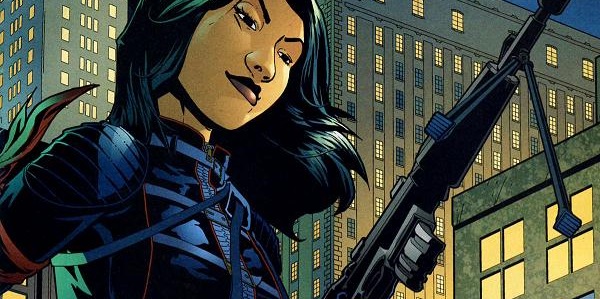
For a guy who hangs out with so many martial artists, one would assume Batman would have more East Asian friends. This was rectified by Cassandra Cain, a Chinese girl raised by an assassin. She's considered the best combatant in the Bat-Family, and rather than being anti-heroic, her past actually made her want to be a superhero to atone for her life of violence. The character was so compelling that she got her own series, the first Batgirl to do so. Then one day, she became head of the League of Assassins. If that lack of transition bothered you, now you know how most fans felt. DC Editor in Chief Dan Didio mandated that Cassandra should become a villain, with no reason or method given as to why. She gave up being Batgirl before the mandate, but there's a big gap between that and becoming an assassin. The character also began dressing up as a stereotypical Asian Dragon Lady, further ruining her status as a non-racist portrayal. She could have at least retained her stereotypical fighting talent, but even that was subverted. Robin beat her ass the minute he realized she was a villain €“ just to clarify how bad this was, Cassandra Cain has defeated goddamned BATMAN in combat. As if to confirm the cries of racial preference, Cain's replacement as Batgirl was super-Aryan Stephanie Brown. No unfortunate implications there.

1. Spider-Man Goes Single

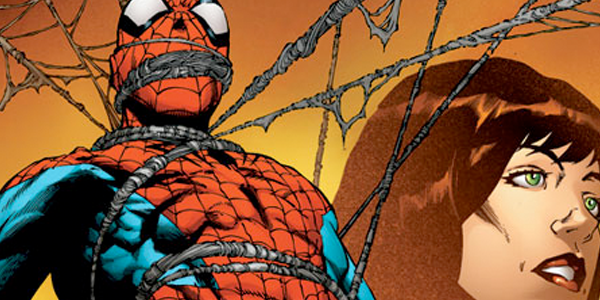
While superhero rebranding is often mishandled, sometimes reverting heroes to older portrayals is just as bad. For example, Spider-Man's One More Day. Marvel Editor-in-Chief Joe Quesada doesn't like married heroes. To paraphrase the man himself: they don't make for "fun" stories. Due to this, he mandated the One More Day plot, which would return Peter Parker back to his swinging single days where he lived with his Aunt May and played with himself in his room. Good times. As bad as it's concept, One More Days execution was worse. After revealing his identity to the world, Aunt May gets shot and the only option is to make a deal with Mephisto €“ basically the Devil €“ to save her. The only price is the period of his life he was married. Peter eventually agrees and takes a steaming dump on decades of comics. Keep in mind that this is all being done so Petey can hang out with his Aunt May again, and you can read into this as much incest as you'd like. But don't worry, Peter then gets to date some random woman named Carlie Cooper who's introduced not even a year later. The biggest issue with this re-re-branding is that it missed the point of why Spidey's 'swinging single years' worked. When Peter was started dating, readers were invested because it was fresh and new for the character at the time. We were tied into his growth as a character. As a 30-something, Peter is already grown and one element of this is him taking on the responsibility of a long-term relationship. Nobody wants to see Peter 'sow his oats' with some random chick who's just been introduced. Readers won't just 'forget' that Peter was married for several years, even if the writers tell us to.

Contributor
Contributor

I'm a nice dude, with some nice dreams See these ice cubes, see these Ice Creams? Go to http://blackcomicguy.wordpress.com/ to read some of my thoughts on comics, film and television.