20 Absolutely Masterful First Pages Of Comics
11. Incredible Science Fiction #33
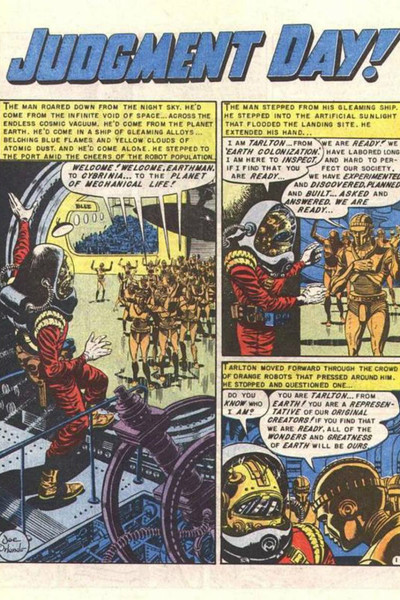
This story, "Judgment Day," is better known for its twist ending (which we won't spoil here), but it starts strong too.
We quickly identify with Tarltron-- after all, he's a human like ourselves-- but the outpouring of emotion from the robots, their desperate need to be accepted, infuses even this first page with a desperate energy.
10. Saga #1
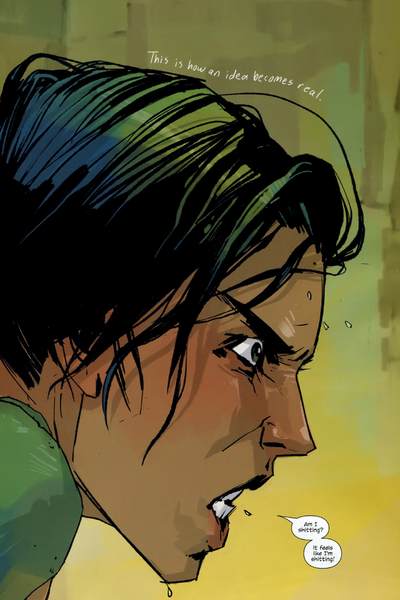
The biggest close-up of all our intros. Alana grimaces and swears while a mysterious-for-now caption flows over the shape of her face. We'll see soon enough that she's giving birth, and the narrative voice is that of her child from some years in the future.
This is the sort of narrative conceit it's best to introduce right away, but using it at all shows how confident Brian K. Vaughn and Fiona Staples were in their powers at this point.
9. Sin City: The Hard Goodbye
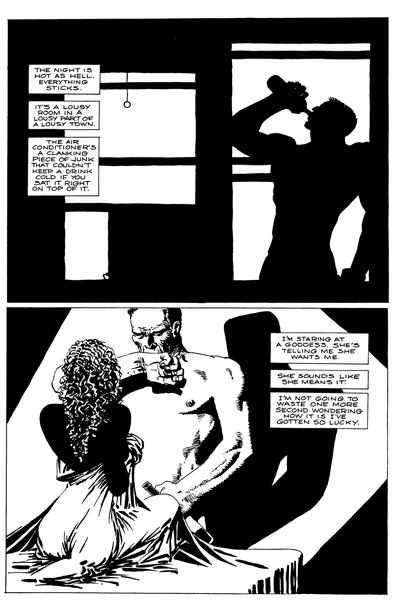
A third Frank Miller? Yes, indeed. The man knew his way around a first page the way Dale Earnhardt, Jr. knew his way around a steering wheel, and the first volume of Sin City sees the best of his career.
Just in case the name of the series (nicknamed from the fictional "Basin City," not Las Vegas) and the high-contrast black-and-white art was too subtle, Miller takes care to evoke the divine and the damned right up front: "hot as Hell," "a goddess." The setup is as seedy and salacious as can be as Marv prepares to take to bed a woman he has only just met, but that language gives it all a sense of purpose and importance.
For all that, Miller also provides enough realistic detail to make it tangible, like the air-conditioning unit, Marv's hard swig of whatever cheap beer he's drinking and the way the blankets, true to Marv's description, stick to Goldie like Saran wrap.
8. Watchmen
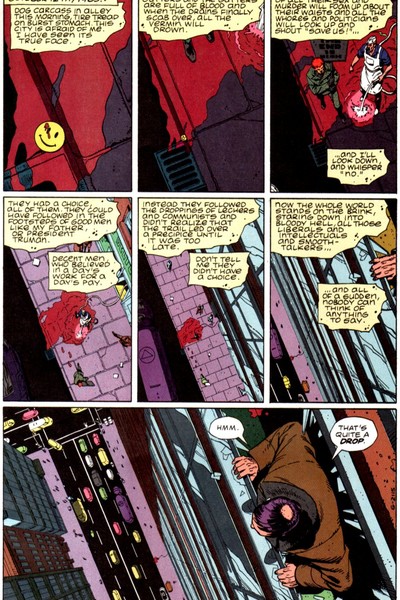
Moore's interest in the interplay between visuals and running verbal commentary reached its height with Watchmen, but for all its graphic punning, Rorschach's fevered, apocalyptic rambling is one of the most compelling first-person narratives to start a story.
7. Amazing Fantasy #15
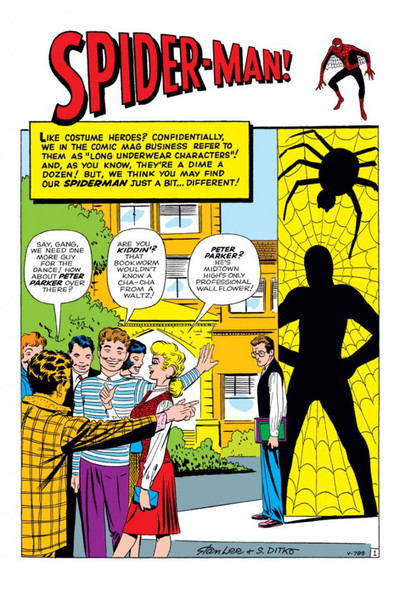
The first pages to feature each of Marvel's 1960s creations were often a bit pedestrian by modern standards. The first story to feature Spider-Man is a welcome exception, practically a declaration of purpose by Lee and Ditko.
Ditko uses the shadow effect to hint at the grand adventure to come, and Lee's caption, while awkward (there's a typo in the first few words!), is still bold and brassy, actually dissing the whole damn superhero genre just to build up what he's doing. The real brilliance, though, is the decision to start by showing Peter as a victim of casual teenage cruelty. In those days, even Archie Comics wasn't too honest about such teasing, and at DC Comics, all the heroes were idealized adults, secure and removed from such high school politics.
Lee might not have articulated what made Spider-Man "just a bit different," but he didn't have to. Marvel's audience could already see it.
6. Y: The Last Man #1
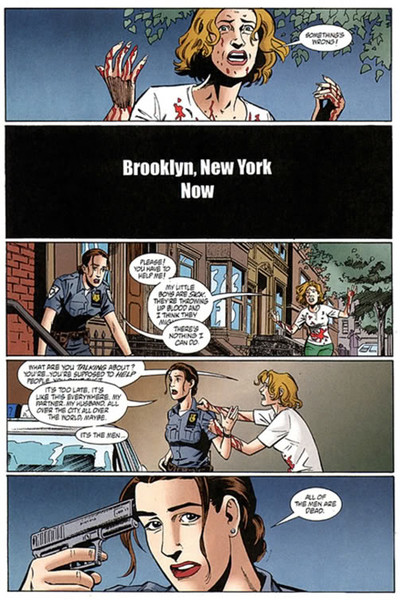
Brian K. Vaughn is another master of the first page. Here, he and Pia Guerra pull off an amazing trick: while setting up the premise of the series instantly ("All the men are dead"... except one, as we'll later learn), they pull the reader into the desperate disorientation that the remaining women feel, by not letting us get attached to anybody.
The hysterical mother at first seems like she might be our viewpoint character, but she's shunted aside as the policewoman actually talks over her. We're then drawn to the policewoman, who seems relatable and like she knows something of what's happening, but the last panel makes it pretty clear we won't be spending time with her, either. We're like the mother, abandoned by suicide.
5. The Mighty Thor #337
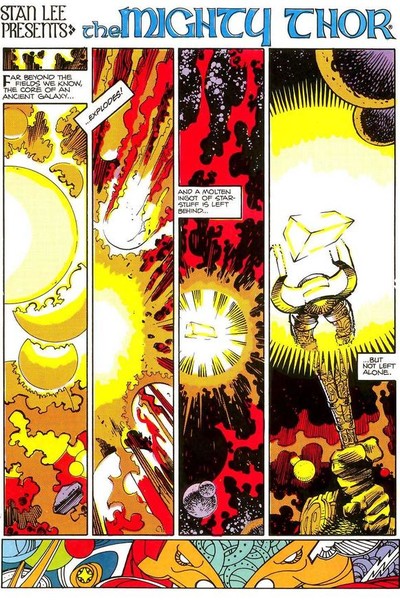
"Far beyond the fields we know, the core of an ancient galaxy... EXPLODES! And a molten ingot of star stuff is left behind... but not left alone."
Has there ever been a more appropriately operatic beginning for a Thor story? This was Walt Simonson's first issue, and he announced the scale he'd be working on with a really big bang. It would be some time before we found out what that ingot would be doing, but it only took two more pages to reveal that it wouldn't be anything good.
4. The Spirit: The Elevator
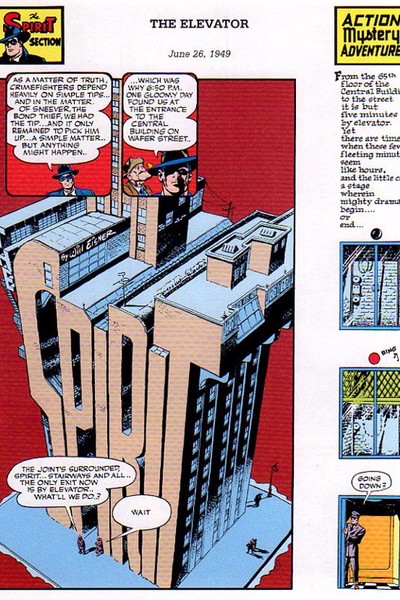
Eisner's Spirit intro pages are often celebrated as masterpieces, the closest thing early comics had to a Citizen Kane, and if this list evaluated first pages collectively rather than individually, The Spirit would probably come in first.
This representative splash page has all Eisner's trademarks, a dizzyingly creative use of the series title, further experimentation with the graphic form (the use of that elevator would continue through the remaining six pages) and a fantastic two-line exchange that gives us the premise and kicks off the tension.
3. All-Star Superman #1
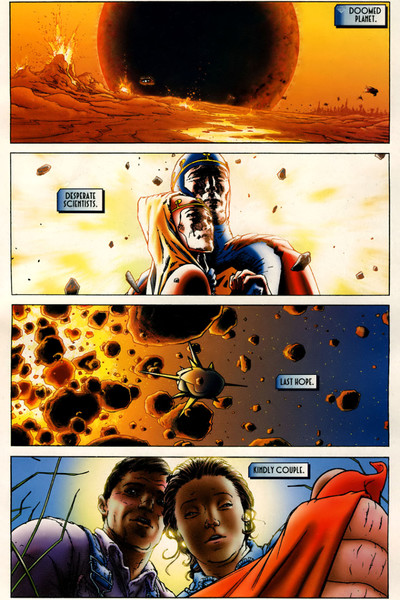
The history of Superman, boiled down to eight words or four phrases.
Frank Quitely's grounded, realistic artwork adds the needed gravity, solidity and detail to what could otherwise come across as a cute exercise in haiku-like poetry. Of course, it only really serves to evoke Superman's origin if you know it, but by 2005, everybody did.
2. Death Note Vol. 1
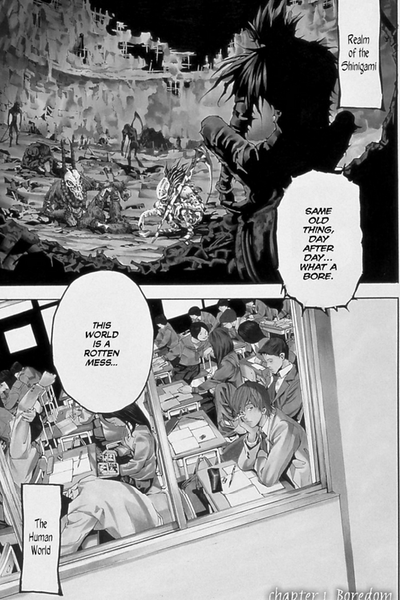
Death Note is not like other manga... or really like anything else at all. It's a story of elaborate mental chess games that sometimes go on for hours and a terrible power sure to corrupt almost any human who uses it.
But before we get into all that, we have a simple two frames showing Ryu the demon and Light the human. Light, the story's antihero, is already murmuring about the state of the world, and he will spend the series believing that all his actions stem from a desire to improve that state, from social conscience. But the title of the chapter, placed closer to Light ("Boredom"), suggests otherwise.
Light will spend more time comparing himself to his later opponents, but he is very like Ryu as well. Both are monsters whose idle, selfish desires will wreak great damage upon the world before the game of the Death Note comes to its explosive conclusion.