10 Film Remakes That Actually Worked
 Following on from my pessimistic article discussing 10 Upcoming Film Reboots And Remakes That Nobody Is Asking For, I thought I'd write an article a tad more positive and explore 10 of my favourite film remakes. The dreaded word 'remake' inclines audiences and film buffs to take to the internet and contribute to the collective moans and groans, claiming that Hollywood filmmakers and producers are out of fresh ideas. However, it is important to remember that not all remakes are bad ideas. If a new spin is put on a classic, or enough time has passed, justifying its translation to a new time-zone and cultural differences, then remakes can work. If there is room for improvement, or simply room for change, along with the possibility of attracting younger viewers who were previously unacquainted with the story, then a remake, or a reboot, or whatever producers and studios want to market said film as these days, then why not update a promising classic story to a contemporary setting, or a fantastical setting that can be improved upon with superior visual effects? So click 'NEXT' below and read on and agree or disagree with my choices, and criticise for the impressive remakes that I've possibly missed out. These are the remakes that buck the trend and stand on their own success as fantastic examples of film.
10. King Kong
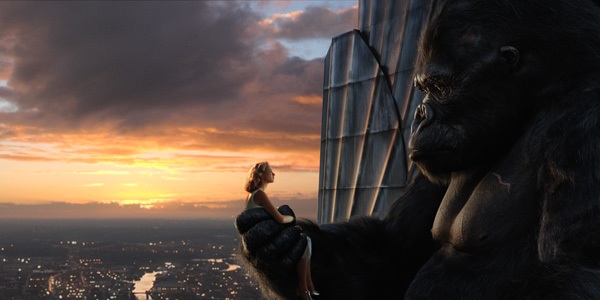 Nobody would have been blamed for their sharp intake of breath upon hearing the news that the 1933 classic King Kong was to be remade, even with the biggest director in the world at the helm, perhaps expecting a repeat of Emmerich's take on Godzilla. However, like Godzilla, it was a classic film that made sense to be remade. With 72 years between the original and the remake, times have changed and so have the movies - better visuals, a different style of acting and music, different editing and camera techniques, etc. It may be a clear-cut repeat of the original when it comes to the narrative, but as film has evolved, sometimes it is a sensible creative and marketing choice to evolve classic stories with it. Of course, that should never mean that the newer version is a replacement of the old, and you never get the feeling that Peter Jackson is trying to do that. It plays more like a homage, everything is very similar apart from the look of it, updating it for multiple newer generations. It still has a classic feel to it; a big, bold epic with beautifully epic music and slightly over the top acting that wouldn't have been out of place in movies 80 years ago. Accompanied by the wonderful set and costume design of New York, Jackson was correct not to make the film a contemporary one, instead keeping it fixed in a classic setting. It may have split audiences down the middle, but critics were generally favourable to Jackson's efforts, and rightly so. King Kong is huge, loud and fun, and the ape doesn't look too bad, either. Also, it doesn't slack when it comes to the quieter moments, and the surprising, but talented cast, all give in terrific performances, and even Jack Black proves that he's not a one-trick comedy pony. Peter Jackson's King Kong exists as the greatest film about a giant ape since 1933. Yes, even better than Mighty Joe Young.
9. Dawn Of The Dead

8. Man On Fire

7. The Mummy

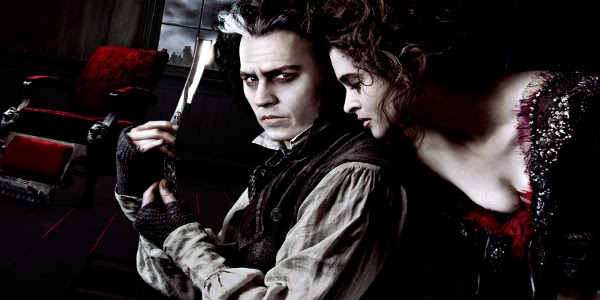
6. Sweeney Todd
5. Casino Royale

4. True Grit
 Watch an old western these days on daytime television and you'll probably switch it off half way through if you're not a racist old man who still yearns for the past. The majority of westerns have aged horribly - the acting, visual style, pace, and ideologies. It's a genre of film that isn't often seen in cinemas these days. Most westerns this century have been poor spectacles that have relied on merging with other genres, and have still failed: Cowboys and Aliens, Jonah Hex, The Lone Ranger, etc. (Although, I do enjoy Shanghai Noon!) When you think of a western, you often think of John Wayne. Even his name screams cowboy and he was the poster-boy for the genre, and whether you love him or hate him, he remains one of the most iconic Hollywood movie stars that has ever lived. 1969's True Grit is the only time he won an Academy Award for best actor, and has since gone onto become a celebrated film about Wayne's fictional hero "Rooster" Cogburn who is hired by a fourteen-year-old girl to hunt down her father's killer. It's often ill-advised to closely remake a successful film, what's the point if you can't improve on the first one? Well, it would have took a brave gambler to bet against (and ultimately lose) to the Coen brothers, for ultimately, they did make a better film. Some may argue that it's not necessarily a better film, that it simply highlights how cinema has evolved, making it easier for younger viewers that have probably never seen a conventional western before. They may be right... if they weren't wrong. The Coen's made a simply outstanding western with a world-class cast including Jeff Bridges (a more likeable, yet no less ruthless Cogburn), Hailee Steinfield (who was thirteen-years-old when cast, and went on to be nominated for an Academy Award for best supporting actress), the ever-reliable Matt Damon, and Josh Brolin, who's mug and voice is perfect for the genre. Everything about the film was fantastic - the cinematography, the editing, the score. It may not have inspired a new wave of groundbreaking westerns, but it did, however, prove that westerns can still be successful and attract a healthy audience.
3. The Departed
People will probably argue between which is better out of Martin Scorsese's The Departed or Andrew Lau's and Alan Mak's 2002 Hong Kong original Infernal Affairs until the end of days. More will probably veer towards Infernal Affairs for original's sake, claiming that people who only watch The Departed are too lazy to read subtitles. They may be right, but nobody can deny that both films are true spectacles of cinema. Following Leonardo DiCaprio's police officer going undercover to uncover Jack Nicholson's organised crime ring, The Departed translates brilliantly to US culture. And even though when the words 'organised crime' are used you tend to think of 1930s gangsters, it works perfectly in the modern day and even gives you an interesting insight into how the business has (or hasn't) changed. Both films feature glorious performances from equally glorious casts, twists and turns in an inescapably layered and magnificent plot combine with fantastic action and thrills that will keep you on the edge of your seat throughout its running time. It's a waste of time arguing which is better, they're both perfect and both received universal recognition from critics and audiences alike. Why not simply enjoy both?
2. Scarface
 Although the original 1932 Scarface has gone down in film history, the 1983 version directed by the enigmatic Brian De Palma works because of the reason so many of the other films in this list does - time. Al Pacino's take on the iconic gangster, Tony Montana, is loud, brash, bloody and over the top - all of the things that the original wouldn't have been allowed to be even if it wanted to. And although it received much attention for its controversial graphic violence and use of language at the time, we all love it. Scarface has gone onto inspire video games, spoofs, countless references in different films and television shows (perhaps most recently Breaking Bad) and is quoted every day. We never seem to get tired of hearing "Say hello to my little friend!" Tony Montana is one of the most celebrated film villains in the history of cinema and rightly so, for Al Pacino made the role his own. When the villain is the main character in the film instead of the hero, the makers have to make sure that the audience wants them to prevail, despite all of the atrocities they commit and their lack of morals. And when a film can make you root for a crack head with a bloodlust, you know it's doing something right.
1. The Thing
 It's like looking in a mirror, isn't it? John W. Campbell, Jr's 1938 novella Who Goes There? was first adapted in 1951 by Christian Nyby and Howard Hawks under the title The Thing from Another World. The film has gone down in movie history and its legacy lives on, but as you'd imagine from a horror film of the 1950s that doesn't come from Alfred Hitchcock or Hammer Studios, it's a pretty soft horror film that children of the time were allowed to see, skipping blood, gore and gruesome death. In 1982 one of the true masters of horror, John Carpenter, adapted the novella and called it simply, The Thing. It certainly didn't skip blood, gore and gruesome death, and has since remained as one of the most frightening films of all time, that plays on paranoia and the human fears of the unknown. As well as incorporating out-of-this-world, mainly practical special effects (that still look brilliant today), making seeing the alien in its true form an unforgettable experience, the film was also blessed with great performances and a perfect directorial style, pacing the film to be a suspense-filled nightmare that will make sure that you feel the cold. The iconic climax and its final shot in the film will live on in your memory, further highlighting the ambiguity that the film offers throughout its entire duration. It's one of the greatest horror films ever made and never fails to terrify, and in my opinion, the best remake ever made. Disagree with any films included? Or feeling that I'm missing some key ones? Add your thoughts to the comment box below.