10 Globe-Trotting Movies About The Illegal Drugs Trade

They not only illuminate the brutal nature of the trade but also the often devastating consequences it can have on society at large.
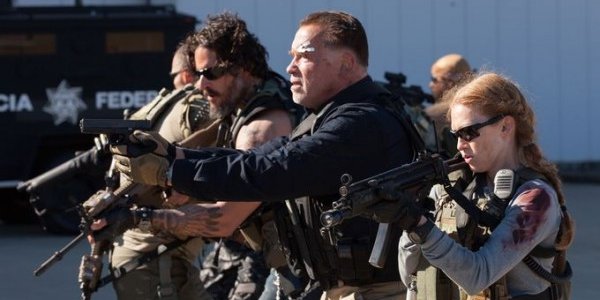
Poor old Arnie doesn't appear to be having much luck with his post-political acting career revival. After the mediocrity of The Last Stand, in which he took on a bunch of drug smugglers on the Mexican border, he's returning to the screens again this month in Sabotage, another mid-budget action movie in which he takes on Mexican drug cartels. To be fair to Schwarzenegger, the Mexican cartels have become something of a staple for movie villains, no doubt partly on account of the incredible popularity of Breaking Bad. Of course, the real life violence meted out by these drug barons is significantly more brutal and disturbing than anything depicted in movies, reflecting the consequences of illegal drugs - and also the prohibitionist policies which allow the black market to thrive - in a horrific way which films rarely capture. But there are movies out there which take a look at the ins and outs of the drug trade with a level of authenticity and accuracy, and while few of them quite match the same probing depths of TV's The Wire, the following ten films from around the world not only illuminate the brutal nature of the trade but also the often devastating consequences it can have on society at large.

10. Menace II Society

Drug-related gang culture was a common theme for gritty urban American movies in the 1980s and 1990s, not least in reaction to the wave of violence which spilled onto the streets in the wake of the crack epidemic. This ultra-potent, washed up variant of cocaine became the scourge of many American inner cities, with increasing levels of bloodshed as gangs vied to control their territories. Menace II Society is a portrait of such a community locked in a cycle of reciprocal violence from which there is seemingly no escape. It follows Caine Lawson and his friends as they lead a life increasingly dominated by crime and drugs in South Central Los Angeles, where life is cheap and guns are plentiful. The directorial debut of the Hughes Brothers, the film is a bleak and honest look at crime and poverty which avoids casting judgement on the characters it depicts. Which is perhaps just as well, since many of them carry out acts that are morally questionable, to put it mildly. An opening news footage montage of the Watts rebellion of 1965 provides some context for the setting; an African-American community in which the prospects for gainful employment and self-respect were largely denied, oppressed by a white-dominated police force. Three decades later, poverty and crime are the dominating forces and racial profiling is as commonplace as ever.

9. Maria Full Of Grace

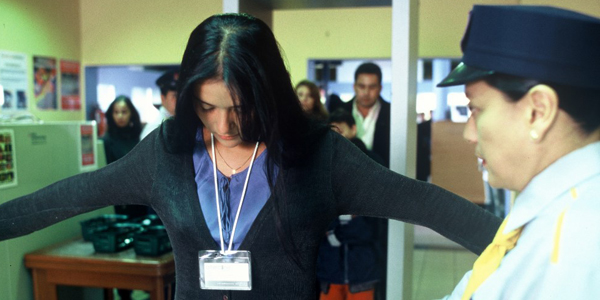
Just as the characters in Menace II Society find themselves at the whim of forces well beyond their control which lead them to a life dealing drugs, so too for Maria, the sweat shop worker living in Colombia, who finds herself becoming a drug mule for the cartels. Quitting her job then discovering she is pregnant, Maria (an award-winning performance from the radiant Catalina Sandino Moreno) takes the risk of trafficking drugs to New York after being propositioned by a drug dealer in the capital Bogota. After making it through customs, she soon realises that the danger is far from over, and that the cartel are more than happy to remove their product from inside their mules by any means necessary. Maria Full of Grace is a naturalistic portrayal of drug smuggling which doesn't seek to sensationalize nor exaggerate for dramatic effect. The slow burning moments of seeming mundanity merge with a quietly building tension which reflects the realities of the experiences encountered by drug mules - there are literally thousands more like Maria crossing borders every day of the year.

8. Midnight Express

From a young, single mother-to-be forced by circumstances into smuggling for Colombian cartels, to a young and brash American arrested for attempting to smuggle hashish out of Turkey - Midnight Express portrays the harrowing consequences of smuggling for those who don't get away with it. Brad Davis plays student Billy Hayes, the man who in real life went through the ordeal of being held in a Turkish prison after attempting to smuggle hashish out of the country, writing about his experiences in the book upon which the film is based. Originally sentenced to four years, the Turkish authorities decided to make an example of him and extend this to a life sentence just days before his impending release. Already worn down by the brutal life in prison characterised by torture and beatings, Hayes predictably broke down and was transferred to a lunatic asylum. While there were accusations about negative stereotyping of the Turkish people at the time of its release, to the point that Hayes himself criticised the filmmakers for their overly simplistic depiction, Midnight Express remains a solid drama which certainly beats any episode of Banged Up Abroad hands down.

7. Pusher

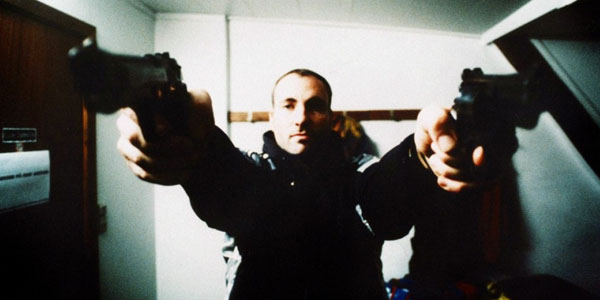
From the depths of prison we return to the drug trade at the street level, where it is under the control of the criminal underworld. Rather than the smog-filled skies of Los Angeles this time Copenhagen is the setting, with Pusher, the movie which launched Nicolas Winding Refn's career. Drug dealers Frank (Kim Bodnia) and Tonny (Mads Mikkelsen) are low-level thugs peddling in heroin in the seedy back streets and claustrophobic apartments of the city, eager to up their game and score a bigger deal. When a deal goes sour after the arrival of the police, Frank finds himself sinking into a quagmire of betrayals, torture and violence which continues to escalate as the feud deepens. Shot with intense and insistent hand-held camerawork, Pusher is stylistically very different from Refn's later movies, betraying its significantly smaller budget. But it is this immediacy which makes the film so brutally engaging, giving it the feel of a documentary in which the crew have been granted an impossible level of access to a side to the drugs trade few have experienced first hand, and most people rather wouldn't.

6. Sweet Sixteen

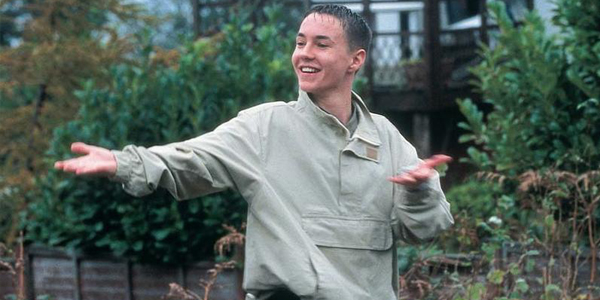
The profitability of the drugs trade at the street level is what motivates young people with few other prospects to take the risk and start dealing drugs. In turn, as was clear in Menace II Society, an entire subculture then emerges based around the sale and consumption of drugs, with stronger and more dangerous narcotics fetching higher profits. In the ghettos of L.A. crack became an epidemic - in the run-down towns of Scotland, the real problem came from heroin. Ken Loach is a director famed for his deeply felt observations of working class life, often filming with an eye for social-realist facsimile of the real world rather than fictional abstraction. Sweet Sixteen, the portrait of a young disillusioned teenager who starts selling heroin so he can save up enough to start a new life with his mother, can certainly be counted as one of his more gritty and depressing films, in which a sense of hopelessness pervades both character and setting, not just abandoned characters, but an entire community left to slowly rot. But there's a thread of compassion running through the film which prevents it from being morbidly wrist-slitting, thanks to a raft of fine performances, particularly Martin Compston in the lead role. Loach is adept at fully humanizing his characters, and Sweet Sixteen is a fine example of that skill being used to full effect.

5. Traffic

Traffic's four main perspectives on the illegal drugs trade - the user, enforcer, politician and trafficker - are handily given their own photographic tint. While this photographic effect might feel a little heavy-handed, director Steven Soderbergh's film is an engaging and comprehensive - if somewhat flawed - overview of the dynamics at play which covers an impressive amount of ground. Soderbergh's achievement with Traffic was to transform the large-scale subject matter, covering multiple story-lines in both the US and Mexico and spanning several cities, into an interweaving narrative which still had an intimacy with the characters. In this respect Traffic is hugely successful, and Soderbergh spoke in interviews of how he had studied the films of Sweet Sixteen director Ken Loach to get a feel for capturing that naturalistic documentary style. Few Hollywood films have presented a compelling and yet restrained portrayal of the drugs trade and considered how it operates on the international level - it would be interesting to see how Soderbergh would fare if he approached the subject matter as a documentary, rather than a movie mimicking one.

4. King Of New York

About as far from the nuance and subtlety of Traffic as you can get, Abel Ferrara's King of New York is a heavily stylised tale of New York drug lord Frank White, played with impeccably steely menace. This isn't so much as insightful filmmaking as it is deliberately provocative (something Ferrara was well known for with movies like Driller Killer). There's something strangely operatic about King of New York, as if it's a modern day variation on a Shakespearean play. Walken's portrayal of Frank White puts the character in the company of some of the greatest anti-heroes of all time - despite all his good will in trying to do something good in a community so rotten, his cunning and ruthlessness remain. New York itself is turned into an equally sinister and foreboding presence, the towering skyscrapers concealing looming over a land in which lawlessness seems to prevail. Ferrara's own wife walked out of a screening of King of New York and Walken's co-stars - including Laurence Fishburne - were booed off stage at another. Neither reactions are at all warranted, and while it doesn't match up to his following film, Bad Lieutenant, Ferrara's lean mean gangster thriller deserves more recognition than it generally gets.

3. The French Connection

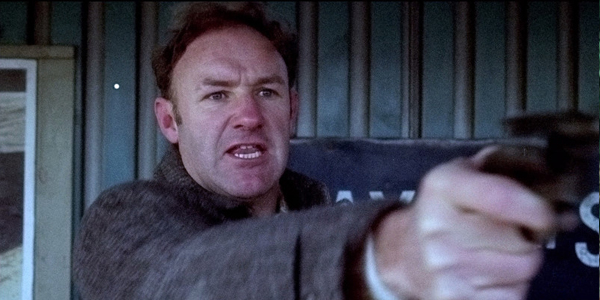
From the smuggling and dealing on one side of the illegal drugs trade to the side of law enforcement and police work, William Friedkin's The French Connection set the tone for 1970s crime thrillers as well as giving Gene Hackman one of his best roles as narcotics detective Jimmy "Popeye" Doyle.; Doyle, along with his partner Buddy "Cloudy" Russo (Roy Scheider) are New York narcotics officers who discover that a huge shipment is imminent, but as their investigation deepens and the scale of the smuggling operation becomes more apparent, the distinction between hunter and prey becomes increasingly blurred. The famous car chase might not be as elaborate and extravagant as modern audiences are used to, but The French Connection is aiming for a cold desaturated aesthetic rather than cinematic gloss. Friedkin uses long lenses to delve in and out of the scene, while the audio track plays on the idea of the audience as an eavesdropper, dipping in and out of conversations in the same way the detectives stake out the suspects. One of the most celebrated American movies of the 1970s, Friedkin's documentary-like approach was influenced by the French film, Z.

2. Scarface

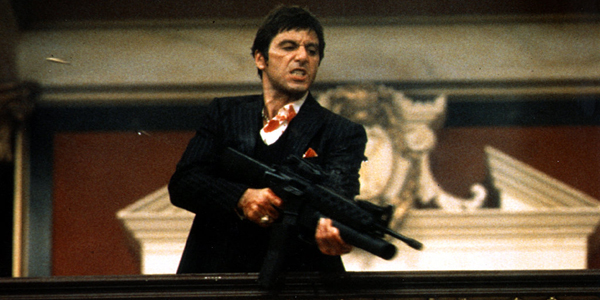
Whereas Abel Ferrara chose to show his crime lord Frank White already at the peak of his game, contemplating a way in which to make amends for his contribution to the degradation caused by drugs in his community, Brian De Palma goes the other way in this intensely violent depiction of the rise and fall of the legendary Cuban drug dealer Tony Montana. A list of movies about the drug trade would be incomplete without Scarface, a film which was derided by many critics at the time of its release for being excessive in its gore and profanity but which is now widely regarded as a true classic. Al Pacino's towering performance in the central role is arguably the most intense and mesmerizing of his career, while De Palma's direction is as slick and assured as anything else in his filmography. Eminently quotable - although mostly unsuitable for printing here - and with some of the most iconic scenes in film history, Scarface is also that rare breed of remake, one which honours the spirit of the original while taking it in fresh and invigorating new directions. Whether or not the same will be said of the latest remake remains to be seen.

1. City Of God

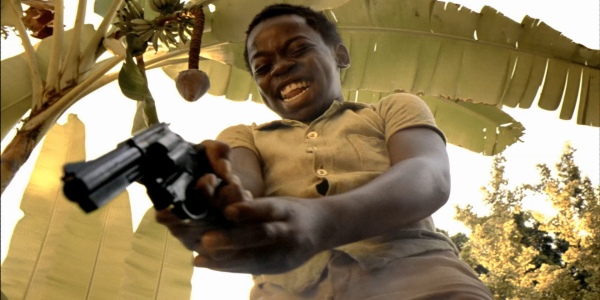
The opening quick-edit montage in which a camera chases a chicken hectically around the dirt-ridden alleyways of a Rio de Janerio slums establish immediately the flair for style Fernando Meirelles and co-director Katia Lund had at their disposal - Brazilian film City of God looks like the kind of film Guy Ritchie would like to make if he had just a little bit more talent. Adapted from the novel of the same name by Paulo Lins, City of God shows the violence and corruption of illicit drugs at its most extreme and debased, exploring a world where absolutely no one is safe from its influence and children possess the same degree of ruthlessness and ambition as the adults. In the Brazilian favelas such as these life is at its cheapest, massacres are a part of every day life and escaping to a new life seems impossible. Shot with a degree of virtuosity few directors can match, City of God is a visceral experience which throws the audience into the fray head first and expects them to cling on for survival. It also has moments of beauty which feel almost surreal against the backdrop of aggression and bloodshed, and the cast of non-professional actors adds to its raw vitality. Agree or disagree with the choices in this list? Why not post a comment below?

Contributor
Contributor

Andrew Dilks hasn't written a bio just yet, but if they had... it would appear here.