5 Hugely Influential Films You've Never Heard Of
 Film, like all things, began somewhere. It hasnt always been the way it is, with its Hollywood formulas, average shot lengths and genre conventions; like some kind of organism, it evolved that way (and, hopefully, will always continue to evolve). The five films Ill talk about here are the five that started it all, and the ones youre not likely to have heard of. Without these five films, cinema simply wouldnt be where it is today. These films advanced the art-form and brought it forward, and the films of today are forever indebted to them. Youll notice that theyre all old films; this is not me being a philistine and saying that cinema stopped moving in 1941; I merely wanted to go to the core of it all, with the very first films that lay the absolute basics. Im going at this from a purely technical point of view, looking at the films that brought about changes and revolutions in the method of film-making. For example, including Jaws or Star Wars with relation to the modern-blockbuster might be valid, but those are mere trends, whereas the Battleship Potemkin invented the montage. There is also a little bit (a lot) of subjective opinion in here. Limiting myself to five has meant that I have had to drop a considerable few films- where, for example, is the Jazz Singer, which was the first sound film? And Cupid Angling from 1918, the first colour movie? And where is Nosferatu, for introducing the big reveal of the scary movie monster? Whilst those films are good, and changed cinema in the early days, I frankly dont think theyre as good as the ones on this list, and prefer this five. Also, its a pet hate of mine that the film Ive chosen as number one rarely ever gets noticed in these kinds of lists, so this is to redress that balance. So here we are; the five most hugely influential films youve never heard of.
5. Citizen Kane (1941)
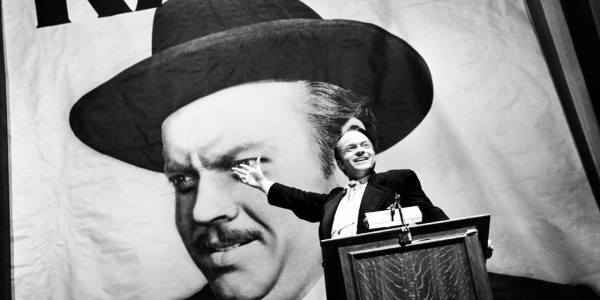 Okay, admittedly a lot of you have probably heard of this one. Its the one you know to be really, really important, but youve either never sat down to watch it, or have watched it and found it a little bit cold and uninvolving, a film meant for historians, film students, but not for the average guy. Ive always put this down to the fact that the films breakthroughs are so basic as to be almost unnoticeable- it set up the very foundations for modern cinema. People watch it, and see things that they can get from a newer movie, and thats that. However, one must consider that this was the first film to do those very, very basic things. From a narrative point of view, it is mightily influential, because it played with the basics of narrative structure, what was a given in those days. For example, the film begins with the death of Kane, then goes through the rise of Kane, and then becomes one long flashback intertwined with the reporter slowly piecing together the man. Where most films in that era went from A to B, this one goes on a merry tour and ends goodness knows where, leaving other films in the dust. The deep focus photography is another thing that is often mentioned, but leaves most people scratching their heads. Having everything in focus at the same time was uncommon 1942; it forces the backgrounds and sets to come alive, when films of that era could be curiously stagnant. Director/writer/star Orson Welles also makes excellent use of pans, zooms, tilts, low angles and even the use of ceilings to achieve an artistic effect. It may not be the first film to use these techniques, but it is the first to use them all in such harmony and synthesis. Just look at a film more of you are more likely to know; the Shining, with the tracking shots behind Danny on his trike. Theres a very good chance that without this film, that shot may not have happened the same way, if at all, and the same for the thousands of other shots influenced by this might film. That may not have endeared Citizen Kane to you too much, and I doubt Ive changed any opinions either, but thats the film from a purely technical point of view, and thats what it did; an unparalleled achievement, which accounts for why people still discuss it to this day.
4. Battleship Potemkin (1925)
 This is another, slightly more well known film, although less so than Citizen Kane, which has dual seats in cinematic history as being both a striking piece of political propaganda, and also inventing the montage. Director Sergei Eisenstein had a theory that, as opposed to the traditional editing of movies in that day, a procession of images could be shown for greater emotional effect. This wouldnt have worked if the images in the montage werent striking or notable, but they are for their cruel, cold brutality and impact. One of the abiding images of the film, of the woman having been shot in the eye, with the blood pouring out, is a nasty one even today. It approaches you on a visceral level. There are plenty of other such images in this film, such as the maggots on the meat and the angry soldiers lining up on the ship, and the way the film has been spoofed and referenced over the years, most famously in the montage in the Untouchables as Kevin Costner tries to save the baby in the pram, mirroring the scene in this where the babys pram falls down the Odessa steps. The film might be propaganda, and as such highly distorted (there was no real attack on the steps, for example), but when one considers the brute impact of this film, and the technical innovation on display from Eisenstein, this pales into insignificance. As a piece of art wrangled from difficult circumstances and a less than noble aim, it is nearly unmatched See it, be excited, and know that youve witnessed the very first example of one of the basic techniques of cinema.
3. Fantasmagorie (1908)
 This is widely regarded to be one of the first (if not the first) animated movies ever. It has no story, but is instead a collection of drawings and scenarios, all of which morph into each other, based around the adventures of a small stick man. It might only be a minute long and one hundred and three years old, but it remains singularly impressive and really very adorable for a picture of a stickman morphing into various objects in his surroundings. Its important, because you could make the case that without it, the animated movie just wouldnt have happened. Drawn/directed by Parisian Emile Cohl, the film is either little more than a curio or a phenomenal artistic achievement depending on how you look at it, but Im firmly in the second camp. The film exudes a certain exciting charm- this was the first time anything like this had ever been done- and remains lovably innocent. The animation itself might not be Pixar quality, but for a work of its time it is remarkable; it has been describes as stream of consciousness animation, and this fits nicely. Its almost surreal, as images tumble in and out of each other, objects morph into other objects, which are used by the little stickman protagonist, who himself turns into another object which interacts with the surroundings, and so on. Its really best seen two or three times, which is lucky given the short length, as well as the fact that it is very easily found on Youtube. As a film, its adorable. As a document of one of the first examples of an artform, it is unmissable.
2. Voyage Dans La Lune (1902)
 Of all the films in this list, this one has the most relevance to narrative cinema and the modern blockbuster (as well as the modern blockbusters of the previous decades). To put it bluntly, this was one of the first films to set up the very basic rule that cinema could lie, and tell a fictional narrative, however crude it may be. Above all, it singlehandedly invented special effects, and the cut from the moon with no rocket to the rocket sticking out of the moons eye might seem unsophisticated now, but that this was the first film to try anything like this is a stupendous thing indeed. The story behind this film is nearly as interesting as the film itself. Basically, the director George Méliés was recording cars driving down a street in 1896 because thats all films really were in those days. As he was recording, something jammed his camera, and he fiddled with it, got it fixed, and started recording again. Looking back over the footage, he saw that there was a change from before and after the camera got jammed; the cars previously there had changed- what later became known as the stop trick, a basic yet very important technique. This was Méliés great Eureka moment; he had essentially discovered the capability of editing to create a false truth, aka fiction. While his earlier films did similar techniques, this can be seen as one of the first epics, truly exploring the vast capabilities of the ability to lie. It might be relatively basic, and the following year The Great Train Robbery offered up a much more coherent narrative that is more like what were used to today, but this came first, in my view, and manages to tell a fairly good story all of its own. The very fact that Méliés discovery came about by some kind of happy accident makes this film even more of a miracle. The other films on this list, largely, came about through artists experimenting with some kind of purpose or goal in mind, but that this one arose through a mistake with a camera seriously makes one question whether cinema might have gone the same way, had Méliés not decided to film the road on that busy day.
1. Man With A Movie Camera (1929)
 This is, frankly, an awesome movie. Narrative might have been on its way and special effects were a fairly real prospect, but you just will not find a film more ahead of its time than this in my opinion. Directed by Dziga Vertov, it documents a day in the life of Russia in 1927, and its a radical, surrealistic, avant-garde masterpiece that on the surface level is just a barrage of unflinching, beautiful images and shots, but a little further down, reveals itself to be a film of unparalleled importance in terms of cinematic development. The filmic equivalent of a grand symphony, with rhythms and nuances and grooves, this is a dazzling, dizzying and unforgettable experience, predating everything that came after it for the next 50 years. The hyperkinetic editing of Darren Aronofsky and Danny Boyle was here first. The social comment of Mike Leigh was here first. The floaty, non-narrative bound ethereal gorgeousness of Terrence Malick was here first. Split screen was here first. Stop-motion was here first. The jump-cut was here first. Overhead shots were here first. It even uses techniques that are rarely used today, such as in the mind-blowing sequence where the film breaks the fourth wall and shows us how the film was made. You heard that right; in this film, you get to see how it was made. Its also an important political film, because it was made at the tail-end of a period of new liberalism in Russia, before Stalin stamped his iron foot down. The film portrays many things that you dont even see in the movies of today; such as women and men in the nude, and even a scene of actual childbirth. These scenes occur not as an example of liberalism just because, but as part of the films purpose to show all life, these scenes are justified. So, not only did it progress the art form technically, but content-wise the film is daring as well. Youll notice that there is another important film on this list, also from Russia. This is a bit of a side-point, but in the early days of cinema, they really were ahead of the times, and the artists they had in their country were at the top of their craft, true scientists, experimenting with techniques and getting it all absolutely right. I try to avoid moulinexing my interests, but that these early breakthroughs were stopped by the political circumstances has always struck me as the most tragic example of the politicians just not getting art, and simply viewing it as a means to an end for propaganda purposes. Examples of this were later seen in Russia, where Andrei Tarkovsky kept being told that he could make two films a year, but due to the nature of the political regime, one every three years under excruciating circumstances was more like it. It leads one to wonder if cinema might have evolved quicker, had politics not got in the way. Wonder all you like, though, and at the end all you can analyse is what you have in front of you- and what a film to have in front you here! Films this beautiful are, frankly very rare, with beautiful being the operative word. Its a gorgeous piece of unforgettable film-making that left everything made at that time in the dust, along with most films being made today. If you care about films even a little bit, then it is impossible not to be excited by this stupendous piece of art. Without it, movies wouldnt be worth watching.