10 Biggest Nails In The Final Fantasy Series' Coffin

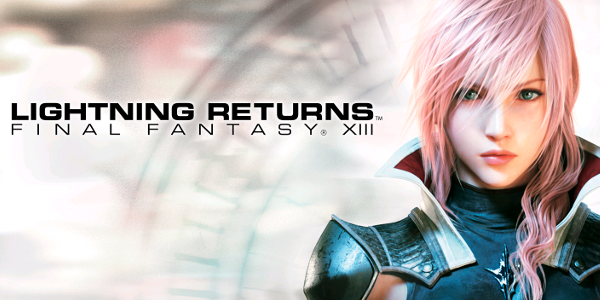
Lightning Returns dropped to almost universally negative reviews, but the series has been waning for years now.
Final Fantasy - simply uttering those words used to bring with it fond memories of sitting in front of a Super Nintendo for hours on end, controller covered in junk food and sweat as you moved your way from town to town, dungeon to dungeon, talking and strategising your way through a world that was new and a storyline that had you hooked with characters that were memorable and rich. Not anymore. Final Fantasy is anything but a fine wine - in fact it's the exact opposite: the older the franchise becomes, the worse it gets - and instead the taste of the nostalgia left swimming in our mouths, we are left with something bitter and acrid, something that leaves more and more fans disheartened at the once great title. What happened? Final Fantasy (along with Dragon Warrior/Quest) defined the RPG genre. And now? Over the years, the title has, frankly, dug its own grave, and we as fans and gamers alike are ready to bury the franchise and leave it to rest, never to be unearthed again.

10. Goodbye Squaresoft, Hello Square Enix
This was the start of it, wasn't it? Before Square merged with Enix, they were putting out quality Final Fantasy titles. Sure, there were some problems - Tidus being a whiny brat for one - but that didn't stop them from having great storylines, unique magic systems, open worlds, and sidequests. We still had Chocobos and Moogles and we still had challenging boss battles and villains with real motives. Ten titles came out under Square's regime and some of them go down as not only the greatest RPGs ever, but also the greatest games ever created. Final Fantasy IV, VI, VII, and IX all fall under Square's deft hands. They gave us Kefka, Cloud, Cecil, Terra and Zidane. They gave what the fans wanted, which brings us to...

9. Cash, Cash, Cash

It isn't about the fans anymore, it's about making money with re-releases, mobile apps, DLCs, and whatever else the company can do to market their product and get us shelling out extra money. That's the core problem: it's a product, not a creation. Games should be treated the way an artist treats his own painting; with care and precision. A game, like a painting, a novel or any work of art, shouldn't be thrown to the public until it has been thoroughly scrutinised, edited and made to the best of its ability. There are always going to be flaws because nothing is perfect, but the franchise has turned into a business and lost what made it such a compelling concept in the first place.

8. One-Dimensional Characters

With the business side of things out of the way, let's look at the decline of Final Fantasy's content. If we looked at past titles like Final Fantasy VI, for instance, we had a villain so gripping and ruthless that by the time it came to fight him we wanted to tear the dude in two. We had a woman struggling with her identity and another attempting suicide over her own guilt. We had two brothers, one whose kingdom was the last hope against the tyranny of an empire, and the other trying to find himself after leaving his life of royalty behind. We had a thief wanting to do good, a father wanting to mend a relationship with his daughter and a man who was grieving from the death of his wife and daughter, searching for vengeance against the Empire. And that's only half the cast. Many of the earlier titles have this same pattern; enthralling characters with histories that get the gamer invested emotionally into who they are and whether or not they will survive. How could we forget Aeris' death in Final Fantasy VII? It's heart-stopping to anyone who has picked up the game and been introduced to the little flower girl who lived in the chapel. The Final Fantasy franchise lost that sometime after Final Fantasy X. Did we care what happened to any of the characters after 13's ending? Paper was thicker than the majority of Final Fantasy 13's cast - Snow, Hope, and Lightning being the main annoyances. Okay, Hope's mother died, but he was so annoying it killed the emotional blow that it should have been.

7. Storyline

Storyline is a difficult concept: if you make it too simple, gamers aren't interested, but if you make it too complex, gamers get lost - it's hard to perfect, but lately it's as if the franchise hasn't even bothered to try. Final Fantasy 13 (and the subsequent sequels) overshot the storyline, bombarding the gamer within the first hour with a hundred different plot points and aspects of the world we weren't ready to understand. In the writing world, it's called an "infodump" - putting a bunch of information in just to specifically explain to the reader - in this case the gamer - what is unfolding. It was too much, too fast. Older gamers may have been fine with it but newcomers struggled to catch on. A perfect contrast to the example above is the introduction in Final Fantasy VII: all we know is Cloud is with a group who is on their way to blow up a reactor. It's enough to get us hooked and it's enough to get us asking questions - all the while we are learning the gameplay mechanics, and it's only after the action is settled that we learn what's going on, all through Cloud's eyes. We, like him, are along for the ride in the beginning. We can identify with him and instead of being told what's going on, we learn with him through the dialogue and actions of the characters. The same thing happened in Final Fantasy X: Sin shows up to Zanarkand, and like Tidus we too are losing our minds as we wonder what is going on. It's Auron who arrives and drags us along for the ride.

6. Recycling Characters

This is a big one. The only thing that's worse than one-dimensional characters are characters who are being recycled through multiple generations of the franchise. And the worst part? Square Enix wasn't even trying to hide the fact that Lightning is the woman version of Cloud. They confirmed it and then revealed for Lightning Returns that they would have a DLC costume so she could wear Cloud's soldier uniform. Making the woman version of anything is a poor excuse for a character. If you want to make a female character, make her a character - with flaws, strengths, passions and hobbies, not somebody who is a facsimile of a former character. In short, make her human. Too many times as of late, the franchise has used characters from the past, put them into new clothes, thrown on a new face, and put them into a new game - Lulu and Vivian both were black mages, but that was the only thing they had in common. Now, it's different; characters are replaceable, and they shouldn't be.

5. Graphics

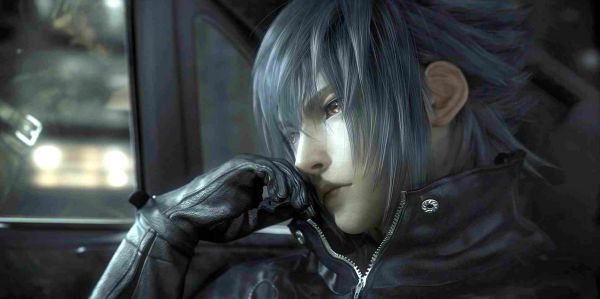
That's the name of the game - graphics. Forget storyline, forget characters, it's whomever has the greatest engine that rules the day. But is it really? And should it be? Everyone has seen the trailer for Final Fantasy 15 and its show-stopping graphics. Many people believe it could revive the Final Fantasy franchise - and it just might - but are graphics really what we as gamers care about when so many other things fall to the wayside because of it? It doesn't look like it, given the prevalence of gamers who revel in the nostalgia of old school games like IV, VI, and VII and condemn games like 12 and 13. What does it mean? It means that unless Square Enix changes their tune and starts devoting more time to storyline and characters, no one is going to care about another Final Fantasy game, regardless if the graphics cause our eyeballs to pop out of our sockets - that's not what keeps us gamers coming back again and again. They should know that by now.

4. Linearity Vs. Open World Gameplay

Remember in Final Fantasy VI when about halfway through the game the world opened up and all of the sudden you could literally go anywhere and do anything, complete side-quests, unlock hidden summons, etc? Final Fantasy 13 didn't do it - it looked like they did when Lightning and the gang had to cross those plains, but it was only filled with monsters, no new characters, hidden weapons, Chocobos or Moogles. Final Fantasy X tried to do the same thing with the calm lands, but like 13, you had to keep moving forward - you could never go back. Let's compare those games with Final Fantasy VII and IX. When you hit Kalm Town in Final Fantasy VII and the world itself literally seemed to expand, you thought to yourself, "All right, this is going to be a killer game," and it was. Final Fantasy IX did the same thing - you got an airship and that meant you could go anywhere and do anything. At the core is one major difference that adds another nail in the Final Fantasy coffin: autonomy. The player doesn't have the freewill to go and do as he or she pleases anymore; granted, Final Fantasy 13-2 tried to make up for that title's linearity, but it wasn't the same. The autonomy to pick and choose where you wanted to go when you wanted it, was a hallmark of the franchise. It's something they've lost and need back.

3. Boss Battles

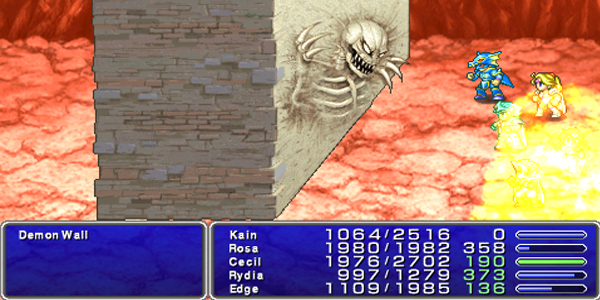
There was something thrilling about the older boss battles in the Final Fantasy franchise - the Demon Wall in Final Fantasy IV for one: they were challenging and you had to strategise to get past them. Maybe this is more of an opinionated entry, but do the boss battles seem a little less engaging now? A few levels higher here and a few more weapons there and then all it will take is hitting the attack button a hundred times and the battle is over. It wasn't always like that: boss battles used to be hard. Final Fantasy has always had hard final bosses too - even 13 was pretty difficult - but we're talking about every boss; the Demon Wall wasn't even the final boss in Final Fantasy IV, and Seymour wasn't the final boss in Ten either but he required a specific strategy to beat him - four times to be exact. Some bosses required using magic, others required physical attacks, while others required a combination of both. Let's hope Final Fantasy 15 brings this back.

2. Side-Quests

Some may argue that open-world gameplay and side-quests are the same, not so. Open-world gameplay can involve visiting towns, levelling-up, getting new weapons and armour at shops, but that's nothing like side-quests. The latter are additional quests specifically added by developers so that the gamer can spend more time unlocking new summons, weapons, finding hidden characters, and completing additional parts of the game. Final Fantasy 13 and X had a bit of this - 13 less so - but none of them compared to Final Fantasy VII's Golden Saucer or searching an entire ocean for a sunken ship. What have sidequests turned into? DLC (Downloadable Content), where the gamer has to pay to play more. Years ago developers were dedicated to doing everything they could to get the gamer to be trapped in the world that they had built, but now it's expected that if we want more we have to pay for it. Granted, 13 was nearly 80 hours in gameplay if you completed every quest including the main storyline, but the goal was always to complete the game, not get lost in the world - that's what we used to do. In previous games we found ourselves not caring that we weren't unlocking anything, but just that we were having a damn good time playing the side-quests (VII's motorcycle game was always fun). The card games and X's Blitzball are other examples; people could spend hours, sometimes days, just playing those games simply because we enjoyed them.

1. Not Knowing Who Your Fans Are

One of the biggest nails in the coffin comes from a glaring oversight the developers have made over the years; they have forgotten who their fans are. Most of us who are fans have grown up with the franchise since the first Final Fantasy hit the shelves - that puts the demographics of those who are hardcore Final Fantasy fans between ages of 20 to 30 and maybe even 40. Meanwhile, new fans are constantly coming onboard after they pick up one and start to play. Therefore, the developers are at a crossroads; they have to appeal to not only us but also the younger generation - however oftentimes one of the two gets neglected. The games need to begin appealing to the older generation once more, while still maintaining the attention of the youth. Games need to be darker, characters need to be not be "the loner" (Squall) or "the whiner" (Tidus) - they have to be real and handle struggles we can relate to - it's not easy. One of the biggest drawbacks of being such a long franchise is the fact that now their demographic spans from ages 10 to 60 (seriously, grandmas play some of these games). This is probably something that if Square Enix catches in time they can recover from, but it's going to take a lot more to recover from the rest of the problems that they have built over the years. The company and developers need to stop thinking about themselves (yes, we know, they did listen to our demands after FF13) and remember what creating an RPG - no, not just an RPG, a Final Fantasy RPG - is all about.

Contributor
Contributor

Matthew Moffitt hasn't written a bio just yet, but if they had... it would appear here.